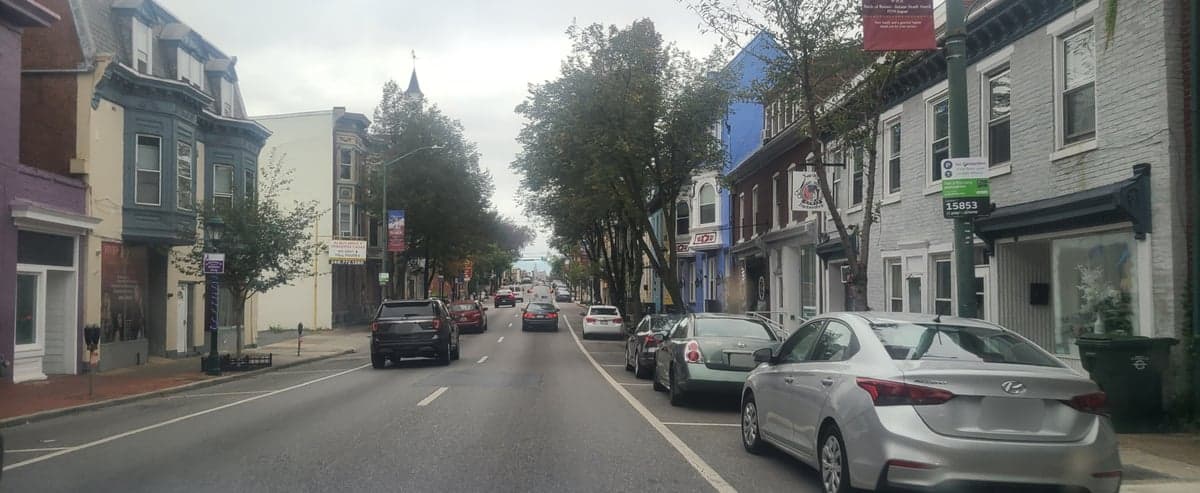
Photo: Wikipedia
Quality of Life in Hagerstown, MD
A high quality of life with strong walkability, manageable living costs, healthy neighborhood signals, and solid amenity access.
What does Quality of Life tell us?
Quality of Life blends cost of living, nearby amenities, socioeconomic signals, and neighborhood character. City-level scores represent the whole municipality; individual neighborhoods can differ.
What does this tell us?
Quality of Life blends cost of living, nearby amenities, socioeconomic signals, and neighborhood character. City-level scores represent the whole municipality; individual neighborhoods can differ.
Cost of Living
17% below national average
The Real Cost of Living in Hagerstown, MD for 2026
| Tier | Individual | Family (4) |
|---|---|---|
| Survival | $17k | $31k |
| Comfortable | $40k | $59k |
| Luxury | $90k+ | $140k+ |
| Elite (Top 5%) | $107k+ | $167k+ |
84%
The Area Signal
A metric tracking the socioeconomic signals of the area.
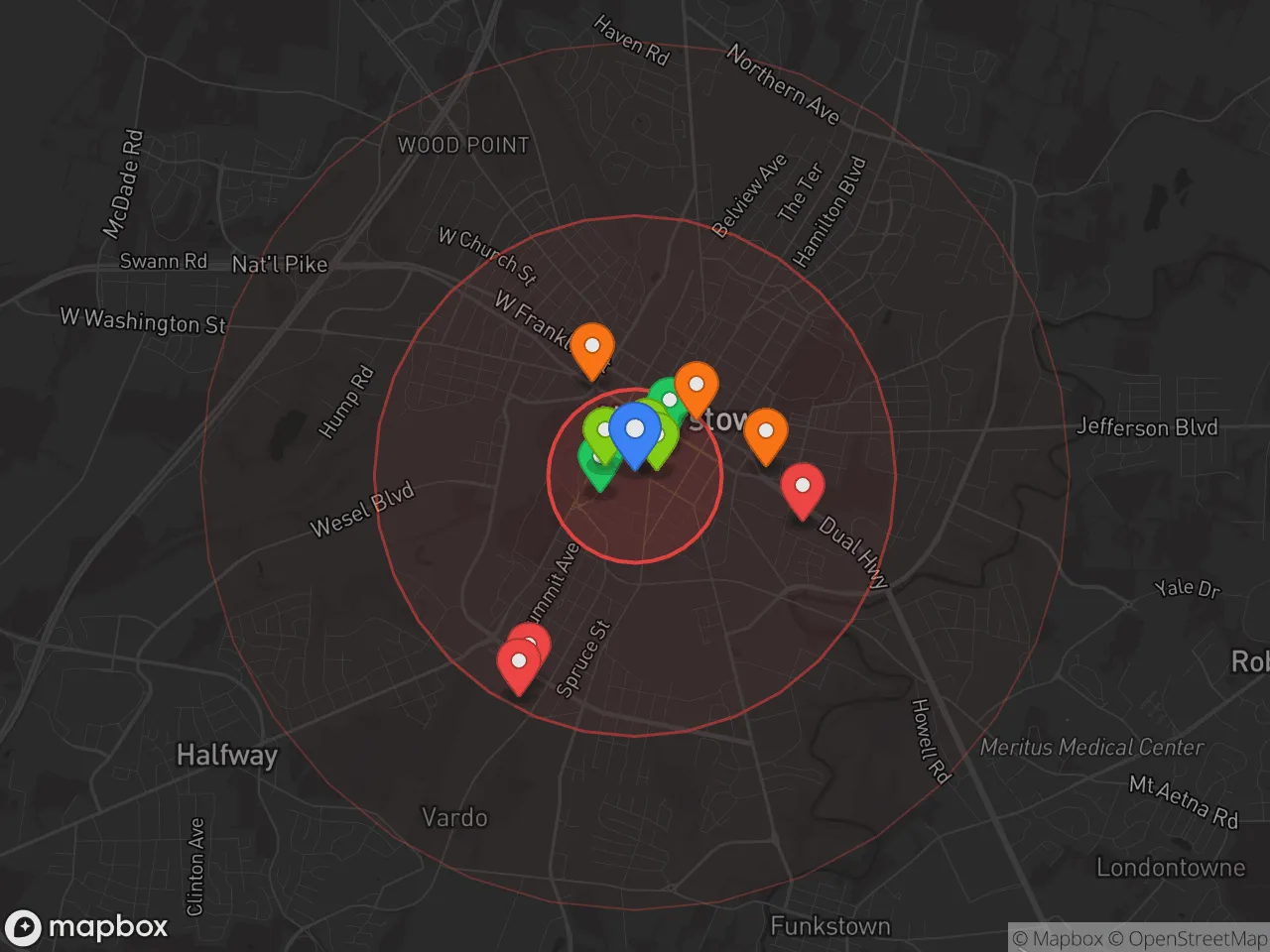
Hobbies
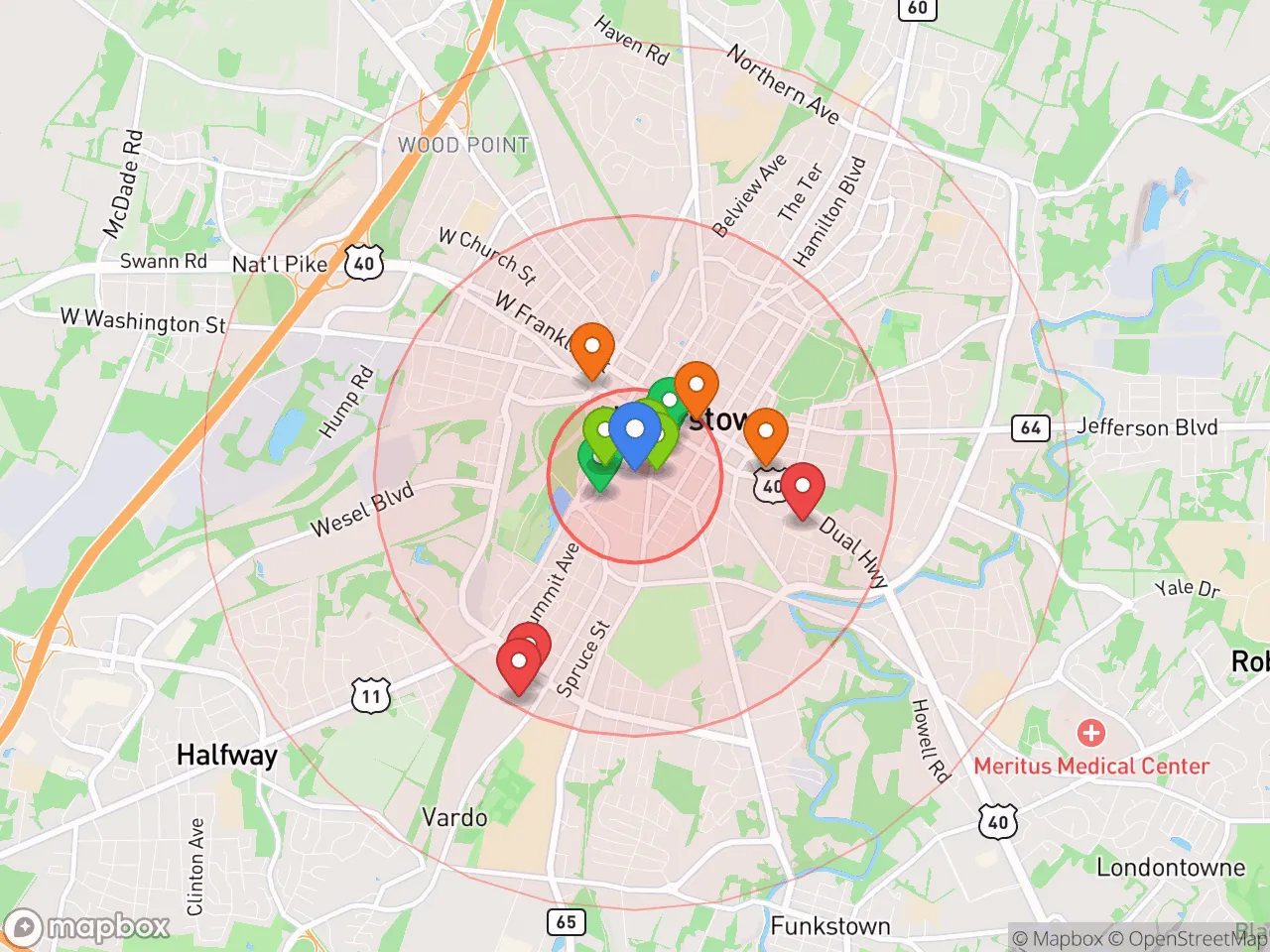
Explore the areaGroceries
7 within 10 miles
Gas
20 within 10 miles
Hospital
9 within 20 miles
Airport
IAD — Washington Dulles International
Post Office
USPS — Hagerstown, MD
Critical Amenities
Quality-of-Life Analysis
Hagerstown, Maryland, presents a notably affordable quality of life that attracts a mix of working-class families, first-time homebuyers, and commuters seeking relief from the high costs of the Washington D.C. and Baltimore metros. With a cost of living index of 83—well below the national average of 100—the city offers a tangible financial advantage without sacrificing access to major urban job centers. The population skews toward middle-income households and retirees drawn by the region's slower pace, though the area also sees an influx of younger professionals who work remotely or commute along the I-81 and I-70 corridors.
How housing costs and everyday expenses compare to nearby cities
The most compelling draw to Hagerstown is its housing market. The median home value sits at $207,700, a figure that is roughly half the national median and dramatically lower than the $450,000+ averages seen in nearby Frederick or the D.C. suburbs. Median rent is equally accessible at $1,041, making it one of the most affordable rental markets in the Washington-Arlington-Alexandria combined statistical area. This affordability extends to groceries, utilities, and transportation, all of which are priced below the U.S. norm. The average commute time of 25.5 minutes is slightly above the national average but far shorter than the hour-plus commutes common among those living farther out in West Virginia or Pennsylvania. For residents who work locally—at Meritus Health, the Washington County government, or logistics hubs along I-81—the commute is often under 20 minutes, a significant quality-of-life advantage over regional peers.
What daily life is like for families: schools, parks, and local amenities
Daily life in Hagerstown revolves around a modest but functional mix of amenities. The Washington County Public Schools system serves the city, with standout options like Boonsboro High School and Williamsport High School consistently ranking among Maryland's top 50. For younger children, the city offers several well-regarded magnet programs and the Barbara Ingram School for the Arts, a regional draw for creative students. Outdoor recreation is anchored by Hagerstown City Park, a 50-acre green space with a lake, a historic bandshell, and the Washington County Museum of Fine Arts. The nearby Antietam National Battlefield and Greenbrier State Park provide hiking, fishing, and camping within a 15-minute drive. Retail and dining are concentrated along the Valley Mall corridor and the revitalized downtown, which has seen new breweries, coffee shops, and a farmers' market open in recent years. Healthcare access is solid, anchored by Meritus Medical Center, the region's largest hospital and employer. The overall rhythm is quieter than a suburb of Baltimore or D.C., with fewer late-night options but a strong sense of community and lower crime rates than similarly sized Maryland cities like Cumberland or Salisbury.
Hagerstown is best suited for those who prioritize financial breathing room over urban excitement. Remote workers, tradespeople, and early-career professionals who can secure local employment will find a low-stress lifestyle with genuine homeownership opportunity. Families will appreciate the school options and park access, while retirees benefit from the low cost of living and proximity to the Appalachian Trail and Chesapeake Bay. The city is not a cultural hub, but for anyone willing to trade a longer commute or a smaller social scene for a mortgage under $1,200 a month, Hagerstown delivers a stable, grounded quality of life that is increasingly rare in the Mid-Atlantic.

Crime in Hagerstown, MD
Higher crime rates than 57% of comparable U.S. locations.
Violent CrimeViolent Crime Analysis
Property CrimeProperty Crime Analysis
Crime Analysis
Hagerstown, Maryland, presents a mixed safety profile that demands careful consideration from potential residents. The city's violent crime rate stands at 351.4 incidents per 100,000 residents, while property crime reaches 1,814.9 per 100,000, figures that place it above national averages and warrant a thorough examination of local conditions and justice system dynamics.
Crime in context
Hagerstown's violent crime rate is roughly 1.5 times higher than the national average of approximately 230 per 100,000, while its property crime rate exceeds the U.S. median of about 1,950 per 100,000 by a narrower margin. Compared to Maryland's statewide violent crime rate of roughly 400 per 100,000, Hagerstown sits slightly below that figure but remains elevated relative to safer suburban communities in Washington County. The city's proximity to the Baltimore-Washington metropolitan corridor contributes to its crime dynamics, as does the presence of liberal and progressive judicial philosophies in the region. Washington County's elected state's attorney and district court judges, operating under a progressive framework that prioritizes rehabilitation over incarceration, have been associated with higher recidivism rates and reduced deterrent effects, a pattern observed in many large metro-adjacent jurisdictions. This ideological approach, while sympathetic to offenders, directly correlates with more criminals remaining on the street and diminished justice for victims and the public.
What residents experience
Property crime dominates the local landscape, with theft, burglary, and motor vehicle theft being the most common offenses. Residents report that vehicle break-ins and package thefts are routine occurrences, particularly in downtown neighborhoods and near the city's commercial corridors along Dual Highway and Potomac Street. Violent incidents, while less frequent, include aggravated assaults and robberies that often cluster around specific blocks rather than spreading uniformly. The city's police department has implemented community policing initiatives, but staffing shortages and the aforementioned progressive justice policies have limited their effectiveness. Residents should exercise standard urban precautions: securing vehicles, using outdoor lighting, and avoiding isolated areas after dark. The presence of a progressive district attorney's office means that even when arrests are made, plea deals and reduced sentences are common, undermining public safety and victim restitution.
Neighborhood-level variation is significant. The West End and areas near the city's historic core experience higher crime densities, while suburban-style developments on the city's periphery—such as those near the Hagerstown Premium Outlets or along Robinwood Drive—report lower incident rates. However, even these safer pockets are not immune to property crime spillover from adjacent high-crime zones. Prospective residents should consult the Hagerstown Police Department's online crime mapping tool and consider visiting neighborhoods at different times of day to gauge real-world conditions. The city's overall safety outlook is tempered by its justice system's ideological leanings, making it a location where vigilance and proactive security measures are essential for maintaining personal safety.
* Values derived from national, state, county, city and local statistics and may differ in a specific area. Last updated: 2026-04-22T01:48:30.000Z
Narrative content on this page is AI-generated and may contain mistakes. Verify any details that matter before acting on them.
ReloMaps may earn a commission from affiliate links at no extra cost to you.

