
Photo: Wikipedia
Find The Best Places To Live
in Greensboro
PRO TIP! You can paste a Zillow or Redfin link to get info on that property.
What It's Like Living in Greensboro, GA
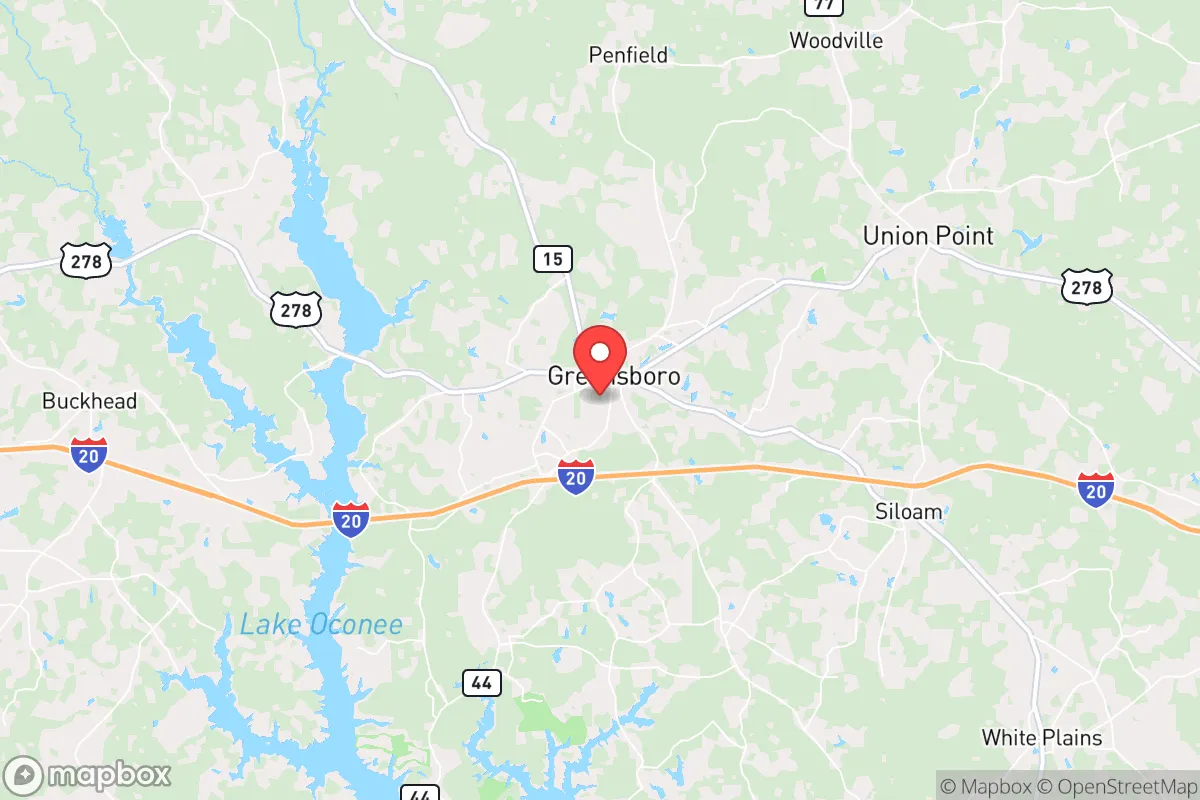
Greensboro, Georgia, is the kind of small town where the pace of life slows down to a comfortable crawl, and people actually know your name at the post office. With a population just north of 3,600, it sits on the western edge of Lake Oconee, giving it a split personality: part quiet, rural retirement community, part weekend playground for Atlanta families with lake houses. It’s not a place that tries to impress you with flashy attractions, but it has a steady, unpretentious charm that grows on people who value space, quiet, and a strong sense of neighborliness.
Daily Rhythm: Lake Mornings and Main Street Evenings
Most mornings in Greensboro start with coffee at The Local Cup on North Main Street, where you’ll see a mix of retirees in fishing shirts, contractors grabbing breakfast biscuits, and the occasional remote worker on a laptop. The town’s median age of 49.1 reflects its draw for empty-nesters and second-home owners, but there’s a younger crew too—families who work in healthcare, education, or at nearby Georgia Power’s Plant Scherer. The average commute of about 28 minutes is a real thing; many residents drive to jobs in Madison, Eatonton, or even Athens (45 minutes north) because local employment is limited. After work, weekends often revolve around the lake—boating, fishing, or just sitting on a dock with a cooler. The town itself has a Walmart and a Piggly Wiggly for basics, but for serious shopping or a night out, most people head to Greensboro’s own downtown or the more developed Lake Oconee area near the Ritz-Carlton Reynolds, about 10 minutes away.
Sports, Festivals, and the Lake Oconee Social Scene
High school football is the undisputed king of local sports. Greene County High School games on Friday nights are genuine community events—the bleachers fill with parents, alumni, and local business owners, and the marching band is a point of pride. There’s no pro or college team in town, but the University of Georgia Bulldogs in Athens are a 45-minute drive and dominate conversations during football season. Beyond sports, the town’s social calendar is anchored by the Greensboro Watermelon Festival in July, a classic small-town affair with a parade, carnival rides, and enough free watermelon to feed an army. The Lake Oconee area also hosts the Oconee Wine Festival in the fall and regular concerts at the Ritz-Carlton’s amphitheater, which draws national acts. For outdoor recreation, the Oconee River Greenway offers a paved walking and biking trail along the lake, and the nearby Oconee National Forest has miles of hiking and hunting land. The local bar scene is low-key—Yesterday’s Restaurant & Tavern is a reliable spot for burgers and live music on weekends, while The Grit in downtown is a newer gastropub that’s become a favorite for date nights.
Who Fits In—and Who Might Struggle
Greensboro works best for people who want a slower, quieter life and don’t mind driving for work or entertainment. The median household income of $42,508 is well below the national average, but the cost of living index of 56 (44% below the U.S. average) stretches that dollar surprisingly far. A median home value of $159,800 means a family can buy a solid three-bedroom house for what a studio apartment costs in Atlanta. That said, only about 25% of adults hold a college degree, and the job market leans heavily toward service, retail, and trades. Remote workers and retirees tend to thrive here because they aren’t dependent on local wages. Families with school-age children should know that the Greene County school system is small and resource-strapped—many parents supplement with private or homeschool options, though the schools themselves are tight-knit and deeply involved in community life. The violent crime rate of 224.7 per 100,000 is slightly above the national average, but most residents will tell you it’s concentrated in specific areas and rarely affects daily life; property crime (like boat thefts from lake docks) is a more common annoyance.
Honest Pros and Cons of Living in Greensboro
- Pro: The cost of living is genuinely low—you can live comfortably on a modest income, especially if you’re retired or work remotely.
- Pro: Lake Oconee is a huge asset for boating, fishing, and water sports, with public access points and a friendly, uncrowded feel compared to Georgia’s bigger lakes.
- Pro: The community is welcoming and safe in a neighborly way—people look out for each other, and it’s easy to get involved in church, civic clubs, or the local food bank.
- Con: Job opportunities are scarce and low-paying; most professionals commute 30-45 minutes or work remotely.
- Con: Entertainment options are limited—no movie theater, no bowling alley, and restaurants close early (often by 9 p.m.). You’ll drive to Athens or Atlanta for concerts, shopping malls, or any kind of nightlife.
- Con: Summers are hot and humid, and the lake crowds (especially holiday weekends) can turn the quiet roads into a traffic headache. The town’s infrastructure wasn’t built for peak tourist season.
Greensboro doesn’t pretend to be something it’s not. It’s a lake town with a rural soul, where the biggest decision of the week might be whether to grill burgers or head to the fish fry at the VFW. If you’re looking for a place where your dollar buys space and quiet, and you don’t mind trading urban amenities for a slower, more grounded rhythm, it’s worth a long weekend visit to see if the pace fits.

Similar small towns to Greensboro

* Values derived from national, state, county, city and local statistics and may differ in a specific area. Last updated: 2026-08-17T20:13:03.000Z
Narrative content on this page is AI-generated and may contain mistakes. Verify any details that matter before acting on them.
ReloMaps may earn a commission from affiliate links at no extra cost to you.

