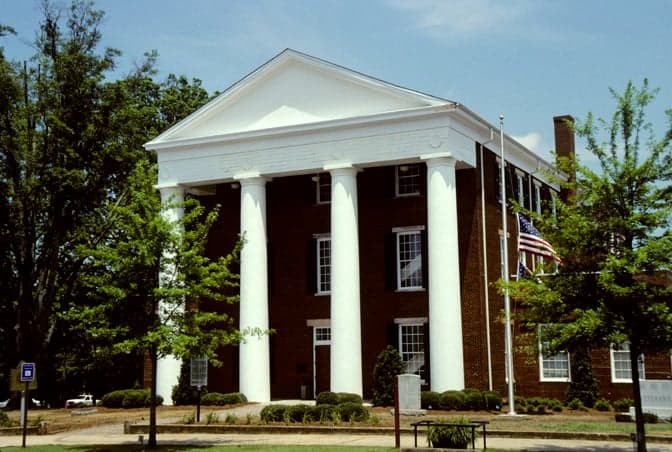
Photo: Wikipedia
Strategic Assessment of Greensboro, GA
Workable tactical position. Some exposure to population density or targets, but generally defensible in a crisis.
What does the Strategic Assessment tell us?
Our Strategic Assessment grades tactical survivability of an area. Major population centers, military targets, fallout zones, natural disasters, and border exposure all drive risk — lower exposure means a more defensible position in a crisis.
This is heavily inspired by Joel Skousen's Strategic Relocation book. Highly recommended you checkout the book ($)What does this tell us?
Our Strategic Assessment grades tactical survivability of an area. Major population centers, military targets, fallout zones, natural disasters, and border exposure all drive risk — lower exposure means a more defensible position in a crisis.
This is heavily inspired by Joel Skousen's Strategic Relocation book. Highly recommended you checkout the book ($)Strategic Pillars

Key Distances
Regional Safe Places
Below is our recommended "safe zones" in Georgia and the surrounding area based on our strategic heuristics. For most people, it's unrealistic to live in a “safe zone” full-time due to work, family or other personal reasons. They tend to be more rural. However, many of these areas are perfect for second homes and retreat properties that double as a vacation home or even a short-term rental.
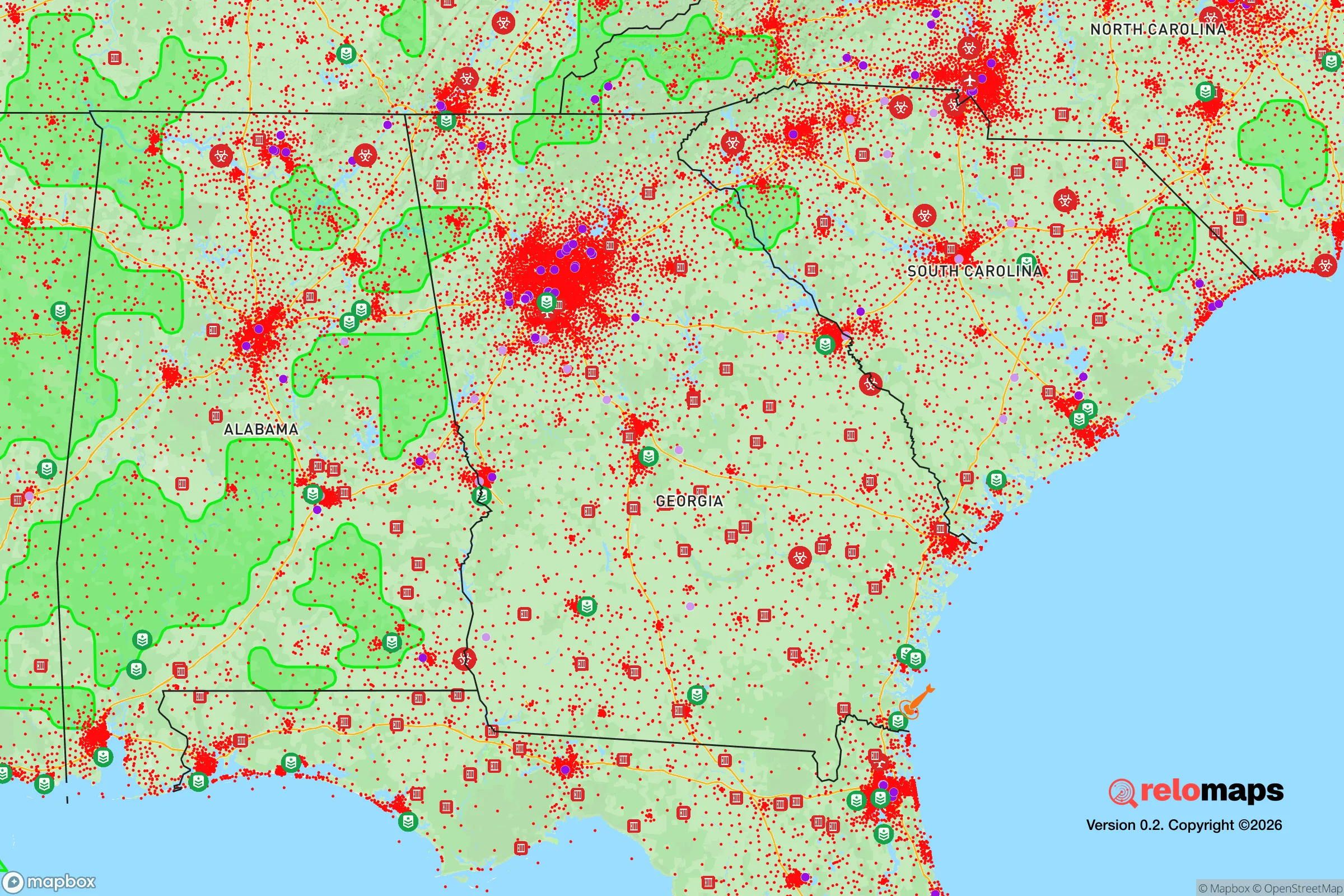
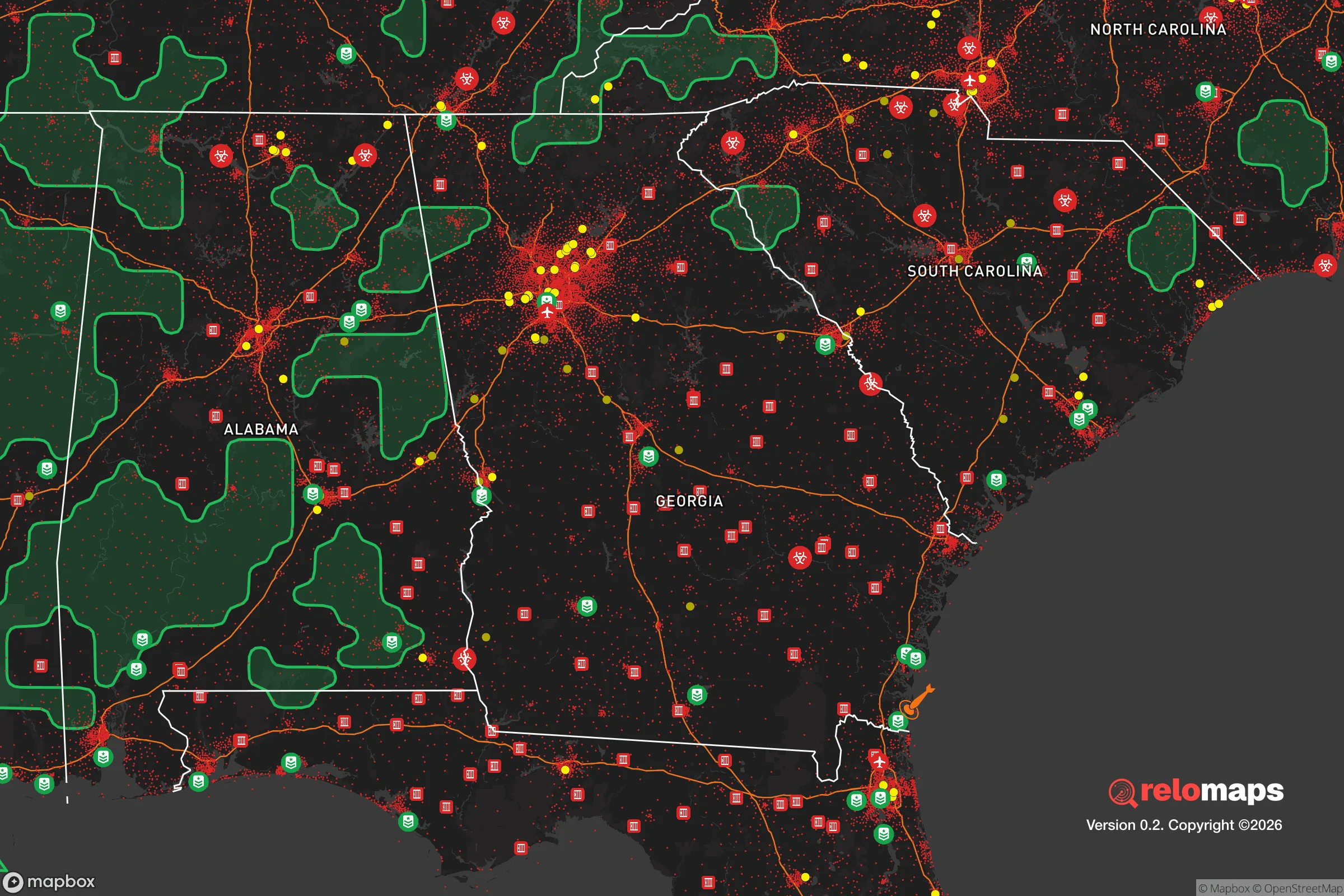


Important Note: For informational purposes only. This does not mean nothing bad ever happens in the green zones. Please use common sense. This is based on public data and modeled with AI. We tried to take a conservative approach but mistakes happen. We update this regularly as new information becomes available.
Solar Generator Recommendations
Backup power matters more here than in safer locations. We've picked three solar generators across budgets and capacity tiers — start with the budget unit if you only need a few essentials, or step up if you want to run a fridge and HVAC for days at a time.

Jackery Portable Power Station Explorer 300
Budget OptionPower on the Go: Weighing only 11 lbs, it's convenient to set up and store with book-sized foldable solar panels

BLUETTI Portable Power Station AC180
Designed for both indoor and outdoor scenarios, AC180 is highly capable as it has a robost capacity and continuous output power.

EF ECOFLOW DELTA Pro Ultra Power Station
Upgraded PickEcoFlow DELTA Pro Ultra is a whole-home energy system designed to grow with your family. Integrated with the Smart Home Panel 2, it scales to meet your evolving energy needs — keeping your home powered, intelligent, and secure through every stage of life.
We earn a commission, at no additional cost to you.
Strategic Assessment Analysis
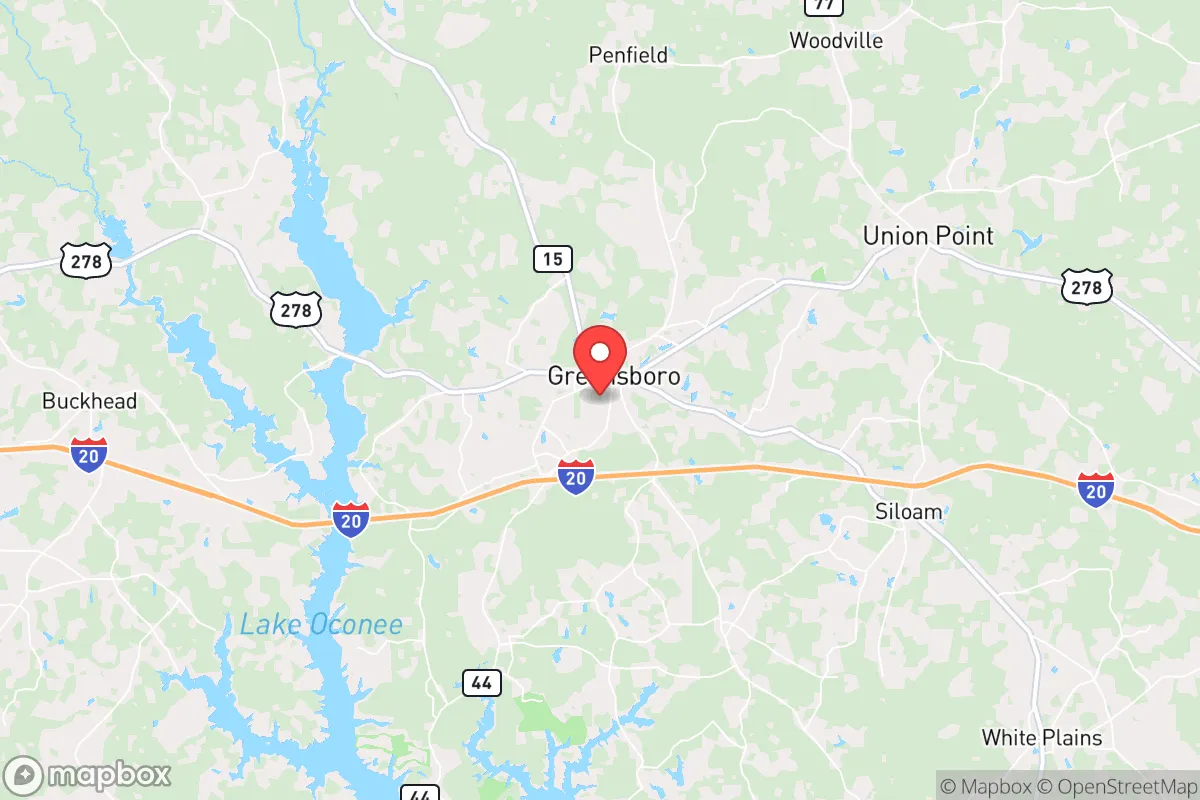
Greensboro, Georgia, offers a compelling mix of strategic depth and practical vulnerability for the relocation-minded reader prioritizing resilience and self-sufficiency. Situated roughly 75 miles east of Atlanta and 30 miles south of Athens, this Greene County seat sits on the western shore of Lake Oconee, a 19,000-acre reservoir that provides both a natural water buffer and a significant resource for long-term sustainability. The area’s modest population—around 3,600 in town and roughly 18,000 county-wide—combined with its distance from major metropolitan centers, gives it a distinct advantage in terms of low population density and reduced exposure to cascading urban failures, though its proximity to key infrastructure and potential fallout targets requires careful consideration.
Geographic position and natural advantages for long-term sustainability
Greensboro’s primary geographic asset is its position within the Piedmont region, a zone of rolling hills and clay soils that offers better drainage and more defensible terrain than the flat coastal plain to the south. The area sits at an elevation of roughly 600 feet, which provides a modest but meaningful buffer against storm surge and sea-level rise—irrelevant for most disaster scenarios but useful for general flood avoidance. The real prize is Lake Oconee, a man-made reservoir created by Georgia Power in 1979 for hydroelectric generation. This body of water is a reliable, year-round source of freshwater that can support fishing, irrigation, and basic household needs even during drought conditions, which are the most common natural hazard in this region. The lake’s shoreline is heavily developed with retirement and vacation communities, but the water itself is publicly accessible and regulated by the Georgia Department of Natural Resources, meaning a relocator with a small boat or shoreline access has a tangible water security advantage over inland locations without such a resource. The surrounding Greene County is heavily forested—roughly 60% timberland—providing ample firewood, building material, and game habitat. The climate is humid subtropical, with hot summers and mild winters, allowing for year-round gardening and a longer growing season than points north. Winters rarely see sustained freezing, which reduces the risk of pipe bursts and crop loss, though occasional ice storms can knock out power for days.
Risks, exposures, and proximity to fallout-relevant landmarks
The most significant risk for Greensboro is its location within the broader Atlanta metropolitan shadow. While the town itself is rural, it lies within a 90-minute drive of Hartsfield-Jackson Atlanta International Airport, the busiest airport in the world, and is directly under the flight paths of military and commercial air traffic. More critically, Greensboro is roughly 40 miles from the Vogtle Electric Generating Plant near Waynesboro, Georgia—the only nuclear power plant in the state with two operational reactors and two new units under construction. In a major radiological event, this distance places Greensboro within the 50-mile ingestion pathway zone, meaning fallout could contaminate local water and food supplies depending on wind patterns. The plant itself is a hardened target, but the risk is real and should be factored into any serious resilience assessment. Additionally, the town is about 30 miles from the Oconee Nuclear Station in South Carolina, compounding the exposure. On the natural hazard front, the area is not prone to hurricanes (the coast is 200 miles away), but severe thunderstorms, tornadoes (typically EF-0 to EF-2), and occasional ice storms are the primary weather threats. The region’s clay soils are prone to expansion and contraction, which can damage foundations and septic systems over time. There are no active fault lines, no volcanoes, and no tsunami risk. The biggest man-made risk beyond nuclear proximity is the CSX rail line that runs through downtown Greensboro, carrying hazardous materials including chlorine and ammonia through the town center—a derailment or leak could force an evacuation of the immediate area.
Practical resilience for a relocator: food, water, energy, and defensibility
For a relocator serious about self-sufficiency, Greensboro offers a mixed bag. Food security is above average for a small Southern town. The county has a working agricultural base—primarily poultry, cattle, and row crops like soybeans and corn—and there are multiple farmers’ markets, including the Greensboro Farmers Market on Saturdays from April through October. The local soil is acidic clay, which requires amendment for vegetable gardening, but raised beds and composting are common practices among residents. Hunting is legal and popular: deer, turkey, and small game are abundant in the Oconee National Forest, which borders the county to the south. Fishing in Lake Oconee is excellent for largemouth bass, crappie, and catfish. For water security, the lake is the obvious answer, but a relocator should note that most residential properties rely on private wells or municipal water from the lake. A well with a hand pump or a solar-powered pump is a wise investment, as power outages are common during storms. The municipal water system is vulnerable to pump failures and contamination events, so a backup filtration system (Berkey-type or similar) is recommended. Energy resilience is a weak point. Georgia Power is the sole provider, and the grid is aging. Outages lasting 24-48 hours occur several times a year, and longer outages (3-7 days) happen after major ice storms. Solar is viable—the area gets about 215 sunny days per year—but local permitting is straightforward, and there are no HOA restrictions in most rural areas that would prohibit panels. Propane is widely available for backup heating and cooking. Defensibility is moderate. The town itself is compact and walkable, with a historic courthouse square that could serve as a rally point, but most residential lots are on open roads with limited natural cover. The surrounding forest provides good concealment for those living on acreage, but the area is not mountainous or rugged. The nearest significant police presence is the Greene County Sheriff’s Office, which has about 20 sworn deputies for the entire county—meaning response times in rural areas can exceed 20 minutes. For a relocator, this means personal security is largely your own responsibility, which aligns with a self-sufficiency mindset but requires adequate training and equipment.
The overall strategic picture for Greensboro is one of moderate resilience with specific, manageable vulnerabilities. Its greatest strengths are the Lake Oconee water resource, the low population density, and the agricultural base that supports local food production. Its greatest weaknesses are the proximity to two nuclear power plants, the reliance on a fragile regional power grid, and the presence of a hazardous rail line through the town center. For a relocator who is willing to invest in well water backup, solar energy, and a solid food storage plan, Greensboro offers a defensible position that is close enough to Atlanta for supply runs and medical care but far enough to avoid the worst of urban collapse scenarios. The area is not a hardened bunker location, but it is a viable base for a prepared individual or family who understands that resilience is built through daily habits, not just location. The local culture is conservative, self-reliant, and welcoming to newcomers who respect the land and the community—traits that align well with the mindset of someone thinking seriously about long-term preparedness.

* Values derived from national, state, county, city and local statistics and may differ in a specific area. Last updated: 2026-08-17T20:13:03.000Z
Narrative content on this page is AI-generated and may contain mistakes. Verify any details that matter before acting on them.
ReloMaps may earn a commission from affiliate links at no extra cost to you.

