
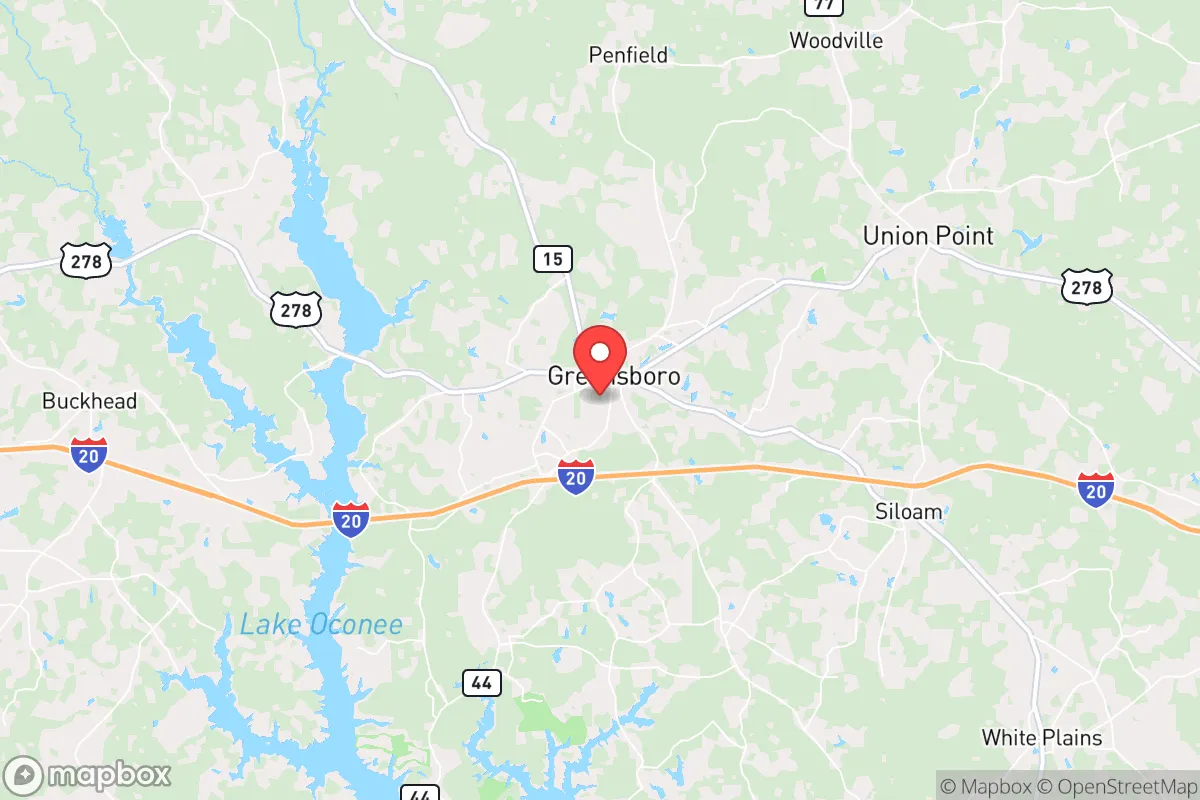
Photo: Wikipedia
Quality of Life in Greensboro, GA
Above-average quality of iife. The area offers a reasonable cost of living, decent mobility, and a mix of neighborhood amenities.
What does Quality of Life tell us?
Quality of Life blends cost of living, nearby amenities, socioeconomic signals, and neighborhood character. City-level scores represent the whole municipality; individual neighborhoods can differ.
What does this tell us?
Quality of Life blends cost of living, nearby amenities, socioeconomic signals, and neighborhood character. City-level scores represent the whole municipality; individual neighborhoods can differ.
Cost of Living
44% below national average
The Real Cost of Living in Greensboro, GA for 2026
| Tier | Individual | Family (4) |
|---|---|---|
| Survival | $11k | $21k |
| Comfortable | $31k | $46k |
| Luxury | $77k+ | $119k+ |
| Elite (Top 5%) | $171k+ | $265k+ |
93%
* top-5% income substituted from state-level data — local Census figures unavailable for small populations
The Area Signal
A metric tracking the socioeconomic signals of the area.
Hobbies
Explore the areaGroceries
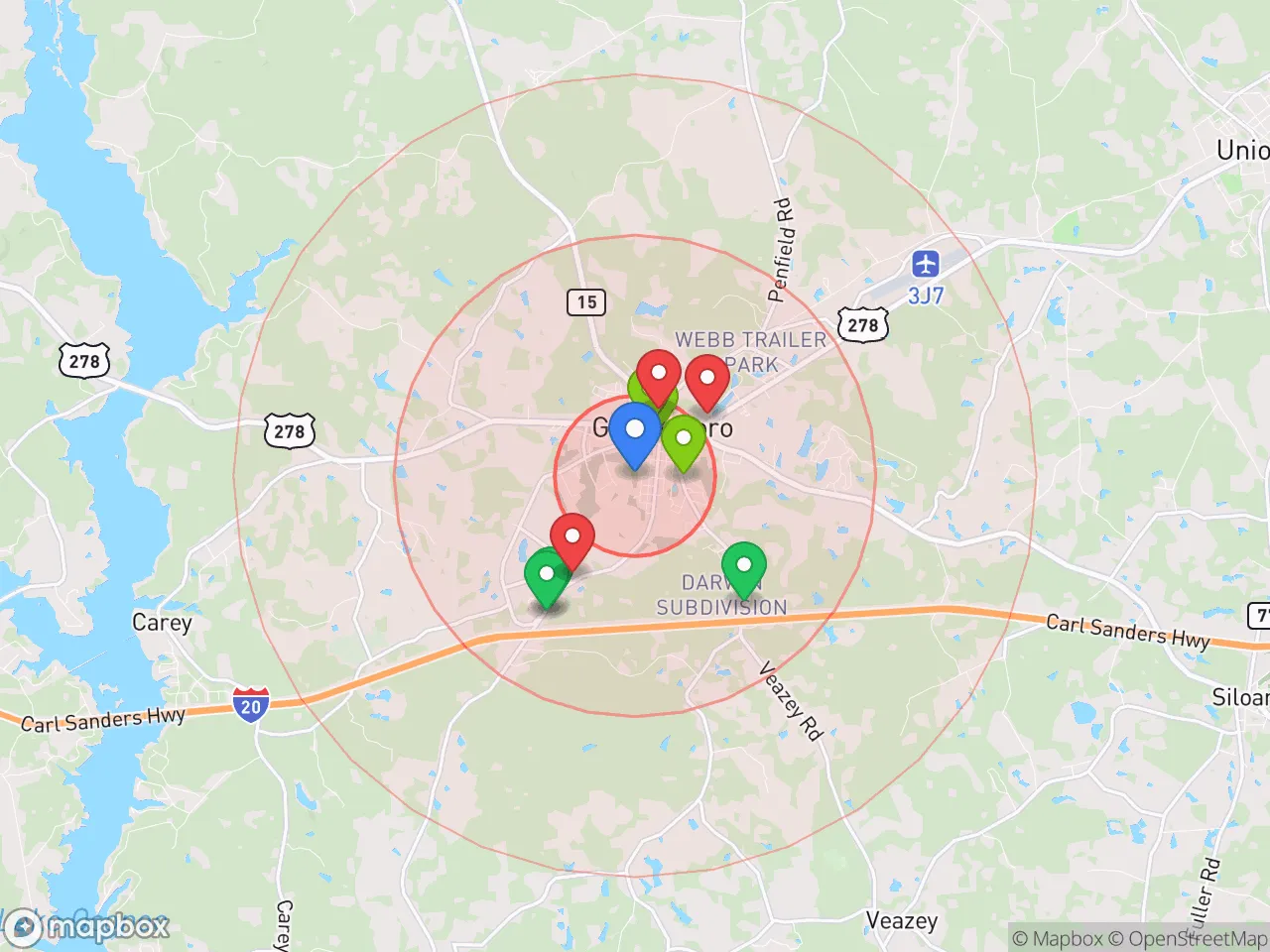
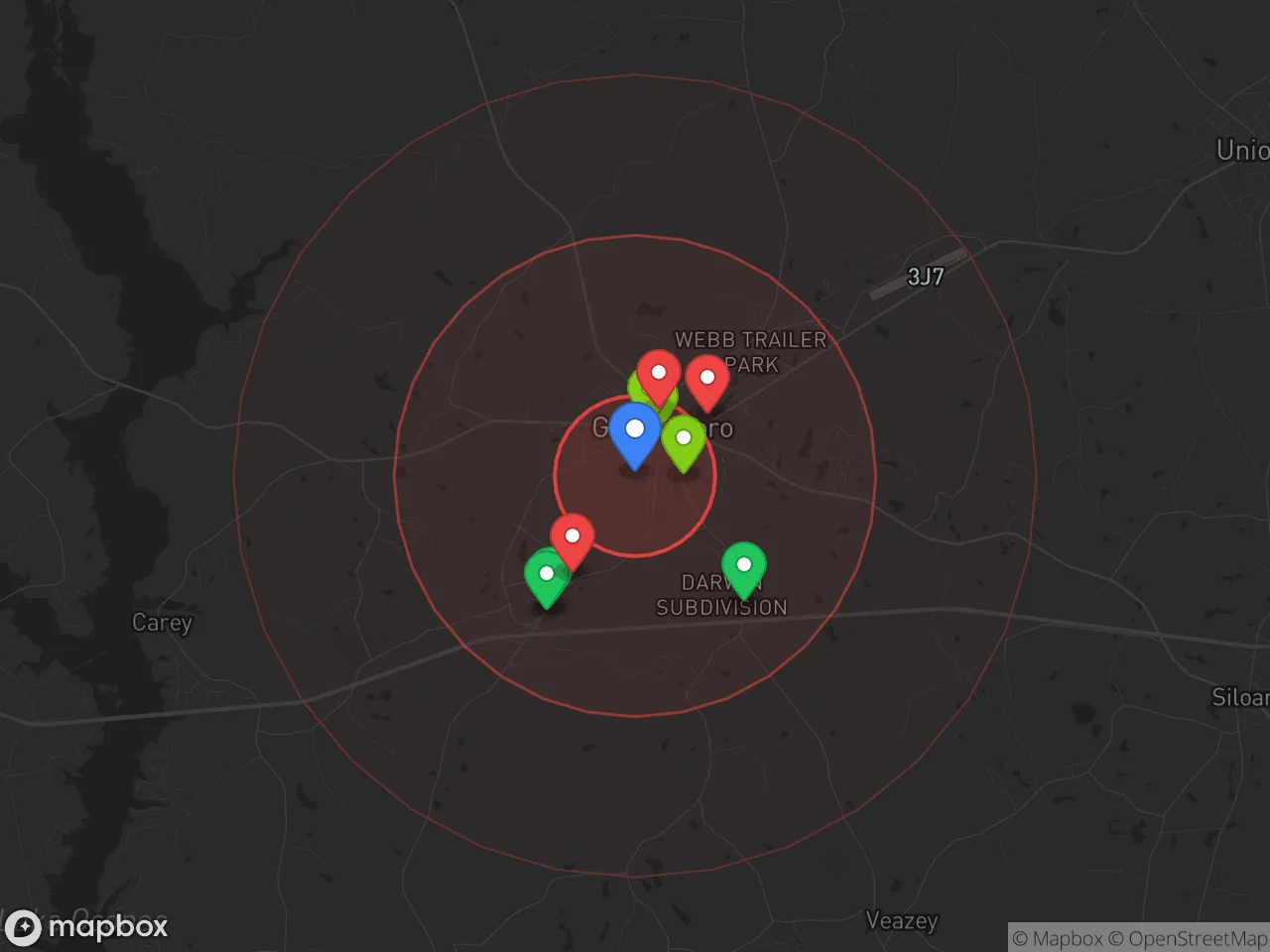
1 within 10 miles
Gas
6 within 10 miles
Hospital
3 within 20 miles
Airport
ATL — Hartsfield–Jackson Atlanta International
Post Office
USPS — Greensboro, GA
Critical Amenities
Quality-of-Life Analysis
Greensboro, Georgia, offers a quality of life defined by small-town tranquility and a notably low cost of living, attracting a mix of retirees, remote workers, and families seeking space and affordability. With a cost-of-living index of 56—well below the national average of 100—the area provides a financial cushion that is increasingly rare in metro Atlanta’s orbit. The population skews older and more settled, with a growing number of newcomers drawn by Lake Oconee’s recreational pull and the quiet pace of Greene County life.
Cost of living, housing, and how Greensboro compares to nearby towns
Greensboro’s housing market is a primary draw, with a median home value of $159,800 and median rent of just $643—figures that are roughly half of what buyers and renters face in nearby Athens or Madison. The cost-of-living index of 56 means everyday expenses like groceries, utilities, and transportation are significantly cheaper than the U.S. norm. However, this affordability comes with trade-offs: the average commute of 28.3 minutes is longer than in denser suburbs, reflecting the area’s rural layout and the need to drive to larger employment centers like Greensboro’s own industrial base or into Athens (about 30 miles north) for specialized jobs. Compared to Lake Oconee’s pricier lakefront communities—where second homes can top $500,000—Greensboro’s inland neighborhoods offer a more attainable entry point for full-time residents.
Local amenities, schools, and what daily life feels like
Daily life in Greensboro revolves around a compact historic downtown, anchored by the Greene County Courthouse and a handful of locally owned restaurants and shops. The Greene County School District serves roughly 2,000 students, with Greene County High School offering a modest student-teacher ratio of about 14:1, though advanced coursework options are limited compared to larger districts. For recreation, residents rely heavily on Lake Oconee—boating, fishing, and golf at venues like the Reynolds Lake Oconee resort are central to the area’s identity. Healthcare access is a notable gap: the nearest hospital with emergency services is St. Mary’s Good Samaritan Hospital in Greensboro itself, but specialized care requires a 30-minute drive to Athens or a 90-minute trip to Atlanta. The rhythm is unhurried, with community events like the annual Greensboro Watermelon Festival drawing crowds, but nightlife and cultural amenities are sparse.
Who thrives in Greensboro—and who might not
Greensboro is best suited for those who prioritize affordability, outdoor recreation, and a slow pace over urban convenience and career density. Retirees and remote workers with stable incomes will find the low housing costs and lake access especially appealing, while families may appreciate the safety and space but should weigh the limited school options and longer commutes. Professionals in fields like manufacturing, logistics, or healthcare can find local employment at plants like Mohawk Industries or the Greene County Regional Airport’s industrial park, but those seeking high-paying white-collar jobs will likely need to commute to Athens or Atlanta. For anyone seeking vibrant nightlife, diverse dining, or top-tier public schools, Greensboro will feel too quiet; for those wanting a low-stress, lake-adjacent lifestyle at a fraction of the cost of comparable towns, it is a strong fit.

Crime in Greensboro, GA
Lower crime rates than 79% of comparable U.S. locations.
Violent CrimeViolent Crime Analysis
Property CrimeProperty Crime Analysis
Crime Analysis
Greensboro, Georgia, presents a mixed safety profile for prospective residents. The town’s violent crime rate of 224.7 per 100,000 residents is notably lower than the national average, but its property crime rate of 814.6 per 100,000 exceeds both state and national benchmarks. As a small city situated within commuting distance of the Atlanta metropolitan area, Greensboro is not immune to the broader regional crime trends influenced by nearby urban centers.
Crime in context
Greensboro’s violent crime rate of 224.7 per 100,000 is approximately 36% below the U.S. average of roughly 380 per 100,000, placing it in a safer tier for personal safety compared to many similarly sized Georgia towns. However, the property crime rate of 814.6 per 100,000 is about 15% higher than the national average of roughly 700 per 100,000. This disparity means residents face a greater risk of theft, burglary, and vehicle break-ins than the typical American community. The proximity to the Atlanta metro area—where progressive district attorneys in counties like Fulton and DeKalb have been criticized for lenient sentencing and reduced prosecution of property offenses—can contribute to a spillover effect, as criminals may target smaller, less policed jurisdictions like Greensboro.
What residents experience
Daily life in Greensboro is generally quiet, but property crime is the primary concern for most households. Residents report that unlocked vehicles and sheds are frequent targets, especially in neighborhoods near Lake Oconee, where seasonal tourism brings transient populations. Violent incidents are rare and typically isolated to domestic disputes or altercations among known individuals, not random street crime. The local police department maintains a visible presence, but staffing levels are modest, meaning response times can lag during peak tourist seasons. For families and retirees, the practical takeaway is that basic precautions—like locking doors, installing outdoor lighting, and using a home security system—are essential to avoid becoming a statistic.
Neighborhood-level variation
Safety in Greensboro is not uniform. The historic downtown core and established lakefront communities like Reynolds Plantation enjoy lower crime rates due to private security patrols and higher property values. In contrast, areas along the U.S. 278 corridor and some older subdivisions near the Greene County line see higher property crime volumes. Neighborhoods with active homeowners’ associations and neighborhood watch programs report significantly fewer incidents than those without organized oversight. Prospective residents should consult the Greene County Sheriff’s Office online crime map and speak with local real estate agents about specific subdivisions before committing to a lease or purchase.
* Values derived from national, state, county, city and local statistics and may differ in a specific area. Last updated: 2026-08-17T20:13:03.000Z
Narrative content on this page is AI-generated and may contain mistakes. Verify any details that matter before acting on them.
ReloMaps may earn a commission from affiliate links at no extra cost to you.

