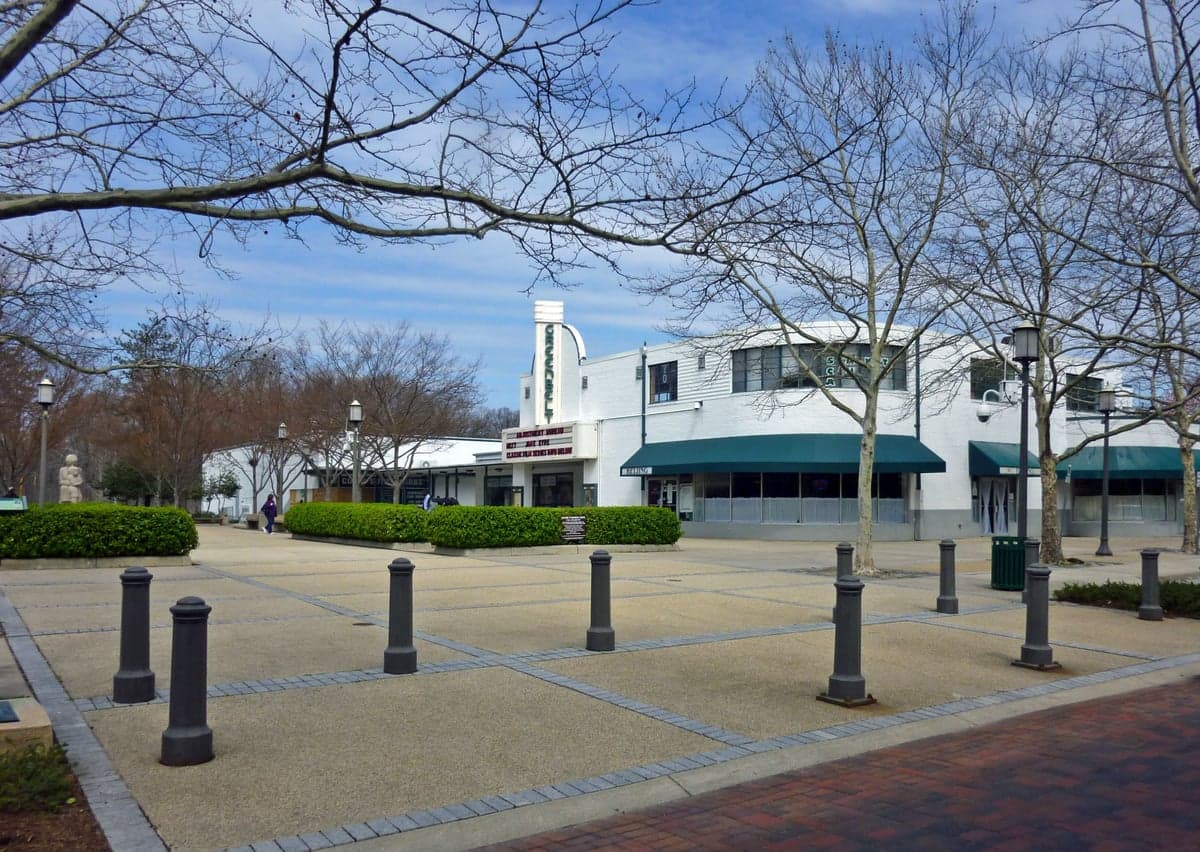
Photo: Wikipedia
Personal Sovereignty in Greenbelt, MD
Viable for self-reliance. Generally workable, though some barriers may limit total independence.
What does Personal Sovereignty tell us?
Personal Sovereignty measures your capacity for self-reliance and independence with minimal government friction. Higher scores mean fewer barriers between you and the way you want to live... but it assumes you have the space you need and good neighbors.
What does this tell us?
Personal Sovereignty measures your capacity for self-reliance and independence with minimal government friction. Higher scores mean fewer barriers between you and the way you want to live... but it assumes you have the space you need and good neighbors.
State Policy
Energy independence: Importer (8% of energy produced in-state)
Personal Liberty
Homesteading

Personal Liberty Analysis
Greenbelt, Maryland, presents a challenging environment for personal sovereignty, where the state's aggressive regulatory posture and high tax burden significantly constrain individual autonomy. As a planned community originally designed with progressive ideals, Greenbelt now operates under the full weight of Prince George's County and Maryland state governance, which consistently prioritizes collective mandates over individual freedoms. For those with a survivalist or prepper mindset, this area demands careful consideration of how much control you are willing to cede to government authorities in exchange for proximity to Washington, D.C.
Tax burden and regulatory posture: How much does Maryland take from your paycheck and freedom?
Maryland's tax structure is among the most aggressive in the nation, directly impacting your ability to build wealth and self-reliance. The state imposes a progressive income tax with rates ranging from 2% to 5.75%, and Prince George's County adds its own local income tax of 3.2%, meaning your combined marginal rate can exceed 8.95% before federal taxes. Property taxes in Greenbelt are also steep, with the county's rate hovering around $1.34 per $100 of assessed value, plus additional city taxes, pushing effective rates well above the national average. Sales tax stands at 6%, applied to most goods and services, and the state aggressively pursues use taxes on online purchases. The regulatory environment is equally burdensome: Maryland has some of the strictest environmental regulations on the East Coast, impacting everything from vehicle emissions testing to home construction permits. The state's energy policies, including a push for electrification and restrictions on natural gas in new construction, limit your ability to choose how you power your home. For a prepper, this means every dollar earned is harder to keep, and every project—from building a shed to installing a backup generator—faces layers of permitting and inspection.
Self-defense and gun law specifics: Can you legally protect your home and family in Greenbelt?
Maryland's gun laws are among the most restrictive in the country, making self-defense a legally complex and costly endeavor. The state requires a Handgun Qualification License (HQL) to purchase a handgun, which involves fingerprinting, a background check, and an approved training course—a process that can take weeks and cost over $100. Additionally, Maryland has a "may issue" concealed carry regime that, while loosened after the Bruen decision, still requires a permit with demonstrated "good and substantial reason" that goes beyond general self-defense. The state bans so-called "assault weapons" and limits magazine capacity to 10 rounds, directly restricting the types of firearms a prepper might consider essential for defense. Prince George's County has its own local gun laws, including a ban on carrying firearms in county parks and recreational areas, further limiting where you can legally defend yourself. Stand-your-ground laws do not exist in Maryland; you have a duty to retreat if safely possible before using deadly force. For a family concerned with home defense, this legal landscape means you must be intimately familiar with use-of-force statutes and may face significant legal costs even in a justified shooting. The state's red flag law also allows for temporary seizure of firearms based on a petition, a tool that can be abused by vindictive neighbors or family members.
Self-reliance and homesteading viability: Lot sizes, zoning, and off-grid feasibility
Greenbelt's urban and suburban zoning makes traditional homesteading nearly impossible. The city is characterized by small lots, typically ranging from 5,000 to 10,000 square feet, with many homes in planned communities that have strict homeowners' association (HOA) covenants. These HOAs often prohibit vegetable gardens visible from the street, limit the number of pets, and ban structures like chicken coops or greenhouses. Prince George's County zoning codes require minimum lot sizes of 7,500 square feet for single-family homes, but even then, agricultural uses are heavily restricted in residential zones. Keeping chickens is allowed in some areas but requires a permit and is limited to hens only, with no roosters. Larger livestock like goats or pigs are prohibited on standard residential lots. Off-grid living is effectively illegal: Maryland requires connection to the electrical grid for new construction, and solar panels must be grid-tied to qualify for net metering. Rainwater harvesting is permitted but regulated, and composting toilets face strict health department approval. For a prepper seeking to reduce dependence on municipal systems, Greenbelt offers little room for self-sufficiency. The best you can hope for is a small vegetable patch and a backup generator, but true homesteading requires moving to more rural parts of the state, like Garrett or Allegany counties.
Personal liberties: Parental rights, medical autonomy, speech, and property
Maryland's progressive governance extends deeply into personal liberties, often overriding parental and individual choice. Parental rights are under constant pressure: the state mandates comprehensive sex education in public schools, and parents cannot opt their children out of lessons on sexual orientation or gender identity. Medical autonomy is similarly constrained—Maryland has strict vaccine mandates for school attendance, and during public health emergencies, the governor has broad powers to enforce quarantines and treatment orders. The state also operates a prescription drug monitoring program that tracks all controlled substance prescriptions, limiting your ability to manage your own healthcare without government oversight. Free speech is constitutionally protected, but Maryland has enacted laws that restrict certain types of political speech, including a ban on carrying firearms within 100 feet of polling places, which can be interpreted broadly. Property rights are weakened by the state's strong eminent domain powers and aggressive tax sale processes: if you fall behind on property taxes, the county can sell your home at auction with minimal notice. For a conservative-leaning individual, these policies create an environment where the state is an active participant in family decisions, medical choices, and property ownership, leaving little room for the kind of personal sovereignty that preppers value.
Overall, Greenbelt ranks poorly for personal sovereignty compared to other areas in the Mid-Atlantic. While it offers proximity to federal jobs and urban amenities, the trade-off is a dense web of taxes, regulations, and restrictions that limit your ability to live independently. For a survivalist or prepper, the area's high cost of living, restrictive gun laws, and limited homesteading potential make it a place to pass through rather than settle down. If you must be near D.C. for work, consider the more rural fringes of Maryland or even neighboring states like West Virginia or Pennsylvania, where tax burdens are lower, gun rights are stronger, and zoning allows for genuine self-reliance. Greenbelt is a place where the state's hand is heavy, and personal sovereignty is a constant negotiation rather than a given right.

* Values derived from national, state, county, city and local statistics and may differ in a specific area. Last updated: 2026-04-22T01:16:10.000Z
Narrative content on this page is AI-generated and may contain mistakes. Verify any details that matter before acting on them.
ReloMaps may earn a commission from affiliate links at no extra cost to you.

