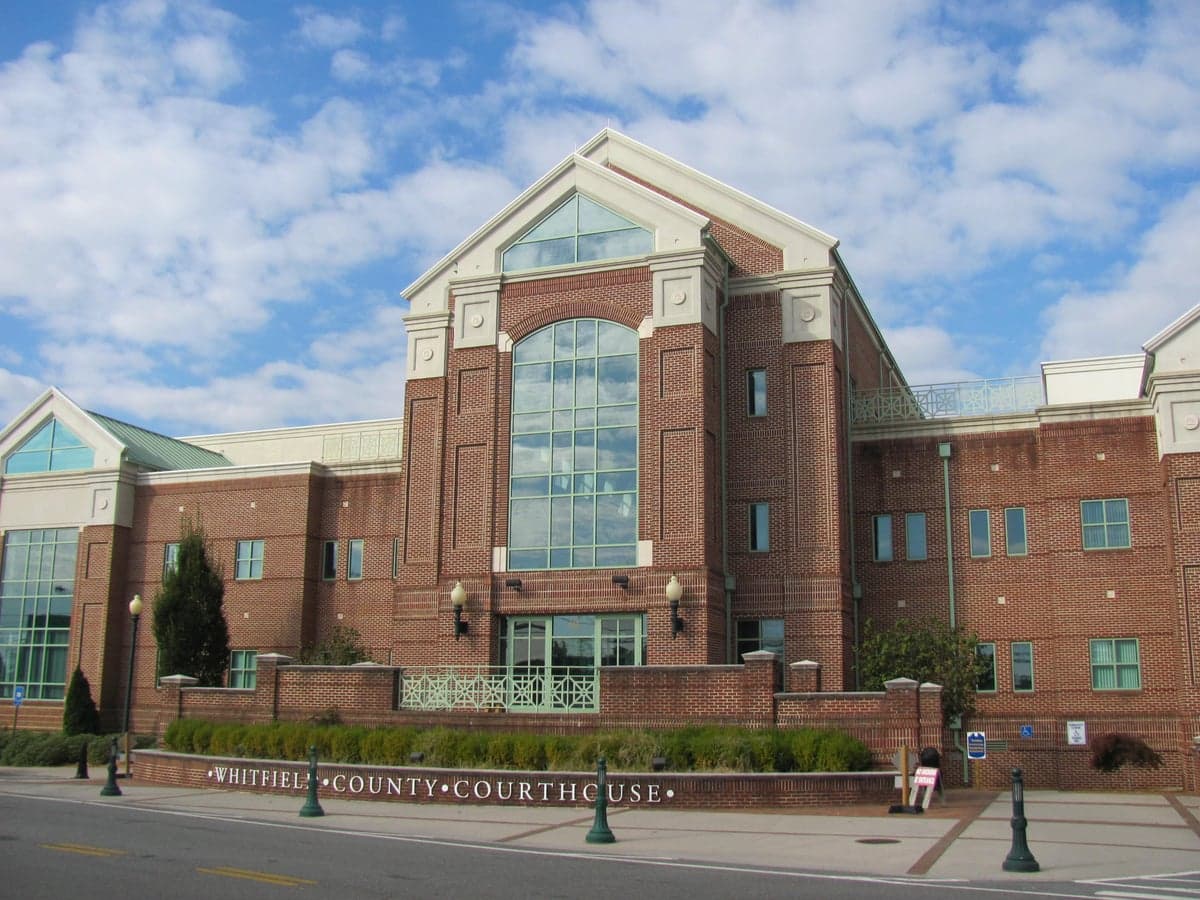
Photo: Wikipedia
Personal Sovereignty in Whitfield County
Moderate friction. Expect trade-offs in some aspect of personal liberty and independence.
What does Personal Sovereignty tell us?
Personal Sovereignty measures your capacity for self-reliance and independence with minimal government friction. Higher scores mean fewer barriers between you and the way you want to live... but it assumes you have the space you need and good neighbors.
What does this tell us?
Personal Sovereignty measures your capacity for self-reliance and independence with minimal government friction. Higher scores mean fewer barriers between you and the way you want to live... but it assumes you have the space you need and good neighbors.
State Policy
Energy independence: Importer (12% of energy produced in-state)
Personal Liberty

Personal Liberty Analysis
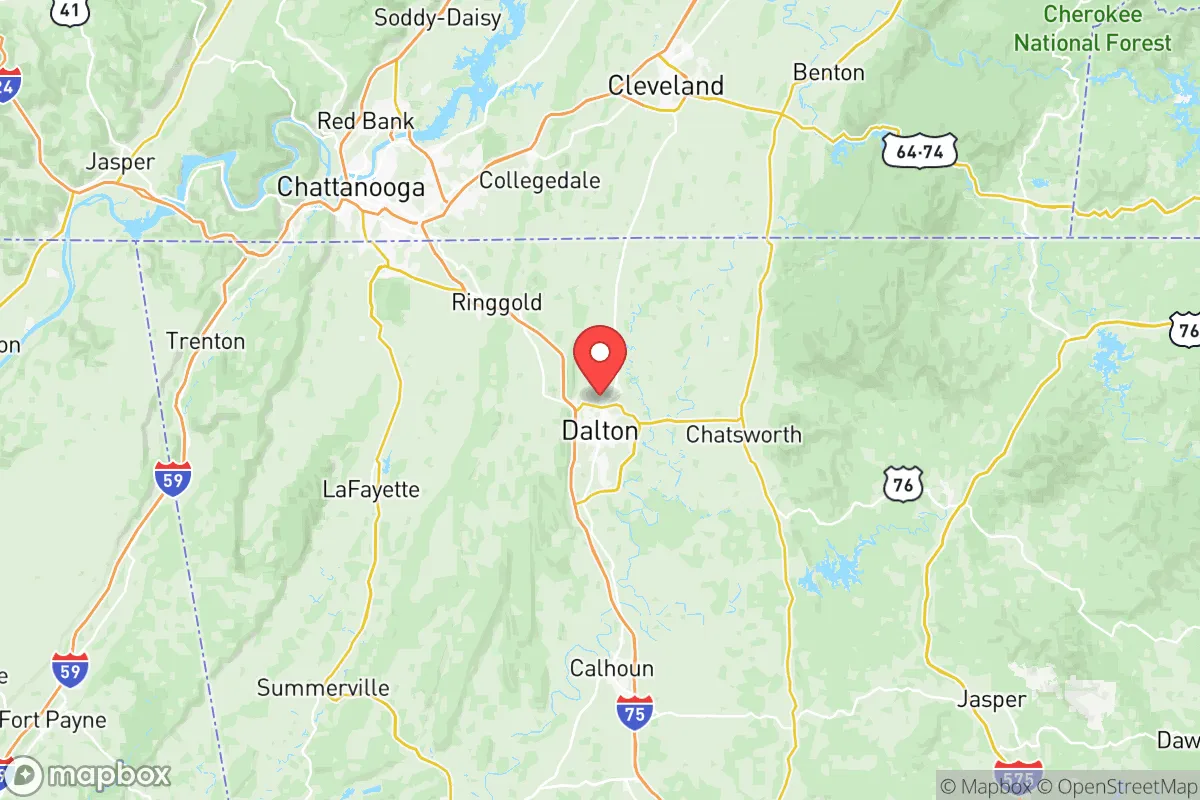
Whitfield County, Georgia, offers a notably high degree of personal sovereignty, grounded in Georgia’s broader legal framework of limited government, strong property rights, and permissive self-defense laws. For individuals and families prioritizing autonomy, the county presents a regulatory environment that is generally light-touch, particularly when compared to metro Atlanta or states with more expansive zoning and tax structures. The county seat, Dalton, anchors the region’s economic and political life, while smaller communities like Tunnel Hill, Cohutta, and Varnell provide distinctly different settings for self-reliant living, each with its own local character and practical freedoms.
Tax burden and regulatory posture in Whitfield County
Georgia’s state-level tax structure is among the most favorable in the Southeast for those seeking to keep more of their earnings. There is no state inheritance tax, no estate tax, and no tax on Social Security income. The state’s flat income tax rate, currently 5.49% as of 2025, is scheduled to decline incrementally toward 4.99% in coming years, providing a predictable downward trajectory. In Whitfield County specifically, the combined state and local sales tax rate is 7%, which is moderate for the region. Property taxes are assessed at 40% of fair market value, with a millage rate that varies by jurisdiction — Dalton’s city rate is higher than the unincorporated county rate, so residents in Tunnel Hill or Cohutta typically pay less in property tax for comparable homes. The county does not impose any special-purpose local-option sales tax (SPLOST) beyond the standard, meaning fewer layers of local taxation. Regulatory posture is business-friendly: Whitfield County operates under a traditional zoning code, but enforcement is less aggressive than in metropolitan counties. Home-based businesses, small workshops, and agricultural uses are generally permitted in unincorporated areas without excessive permitting. The county’s planning department is responsive but not overbearing, and variances for property use are routinely granted when they align with the comprehensive plan. For a reader accustomed to onerous municipal codes, the regulatory atmosphere here feels notably permissive.
Self-defense and gun law specifics in Whitfield County
Georgia is a strong Second Amendment state, and Whitfield County reflects that culture in both law and practice. The state operates under permitless carry (constitutional carry) for anyone 21 or older who is legally allowed to possess a firearm — no license, no training, no permit required for open or concealed carry. For those who still want a Georgia Weapons Carry License (for reciprocity with other states), the Whitfield County Probate Court processes applications efficiently, typically within 30 days. The county sheriff’s office is known for a pro-2A posture; there are no local ordinances that restrict magazine capacity, firearm types, or storage requirements beyond state law. Stand-your-ground and castle doctrine statutes are fully in effect, meaning there is no duty to retreat in any place where a person is lawfully present. Use of deadly force is legally justified when a reasonable person would believe it necessary to prevent death, great bodily harm, or a forcible felony. In practice, this means a homeowner in Cohutta or Varnell who defends their property against an intruder enjoys broad legal protection. Gun ranges and firearms retailers are plentiful in the Dalton area, and there are no county-level waiting periods or registration schemes. For the self-defense-minded individual, Whitfield County offers one of the most legally unambiguous environments in the Southeast.
Self-reliance and homesteading viability: lot sizes, zoning, and off-grid feasibility
Whitfield County’s geography and zoning create a genuine spectrum for self-reliant living. In the unincorporated areas — particularly around Cohutta, Varnell, and the western slopes near the Tennessee line — minimum lot sizes in agricultural-residential zones are typically one to three acres, making small-scale homesteading feasible. The county’s zoning code explicitly permits keeping livestock, including chickens, goats, and cattle, on parcels of sufficient size, with no requirement for a special permit in most agricultural districts. Off-grid living is legally viable but requires attention to state and local health codes. Georgia law does not mandate connection to a municipal water or sewer system; private wells and septic systems are standard in rural areas. The Whitfield County Environmental Health Department inspects and permits septic systems, but the process is straightforward for standard gravity-fed systems. Solar panels are permitted without special county-level restrictions, and net metering is available through Georgia Power, though the utility’s buyback rates are less generous than in some states. Rainwater collection is legal and unregulated at the county level. The primary constraint for full off-grid living is the requirement for a permanent dwelling to meet the state minimum building code — yurts, tiny houses on wheels, and converted shipping containers face more scrutiny unless they are classified as recreational vehicles or accessory structures. In Dalton proper, zoning is more restrictive, with smaller lots and prohibitions on livestock, so homesteaders should focus on the outlying communities. Tunnel Hill, with its rural character and proximity to the Chattahoochee National Forest, offers particularly good access to timber and water resources for those serious about self-sufficiency.
Personal liberties: parental rights, medical autonomy, speech, and property
Georgia law provides strong protections for parental rights, codified in statute and reinforced by court precedent. Parents in Whitfield County have the legal authority to direct their children’s education, healthcare, and religious upbringing without undue state interference. Homeschooling is straightforward: parents file a declaration of intent with the Georgia Department of Education, teach a list of required subjects, and submit an annual progress report — there are no standardized testing mandates for homeschoolers, no home visits, and no curriculum approval process. The county has a robust homeschool community, with several local co-ops and support groups operating in Dalton and Tunnel Hill. Medical autonomy is generally respected, though Georgia does not have a broad medical freedom statute. Vaccination requirements for school attendance exist, but philosophical exemptions are not recognized; religious exemptions are available but have become more contested in recent years. For adults, there are no state-level mandates for medical treatments, and the state has not enacted any broad public health emergency powers that override individual consent since the COVID-19 pandemic. Free speech protections are robust, with no county-level ordinances restricting political expression, signage, or public assembly beyond standard time-place-manner regulations. Property rights are strongly protected under Georgia’s constitution, which requires just compensation for any taking and limits the use of eminent domain to traditional public uses — economic development takings are prohibited. Whitfield County’s tax assessor is generally responsive to appeals, and property owners have a clear process for challenging valuations. For the reader who values the ability to live, speak, and raise a family without excessive government oversight, the legal environment here is among the most accommodating in the region.
Overall, Whitfield County ranks as a high-sovereignty location within Georgia, comparable to other North Georgia counties like Murray or Gordon but with better infrastructure and economic opportunity. The combination of low and declining taxes, permissive gun laws, viable off-grid and homesteading options, and strong protections for parental and property rights creates an environment where personal autonomy is the default rather than the exception. For a family or individual moving from a high-regulation state, the adjustment is likely to feel like a significant expansion of personal freedom — particularly in the outlying communities of Cohutta, Varnell, and Tunnel Hill, where the regulatory footprint is lightest and the culture of self-reliance is most deeply embedded.

* Values derived from national, state, county, city and local statistics and may differ in a specific area. Last updated: 2026-08-08T12:28:50.000Z
Narrative content on this page is AI-generated and may contain mistakes. Verify any details that matter before acting on them.
ReloMaps may earn a commission from affiliate links at no extra cost to you.

