
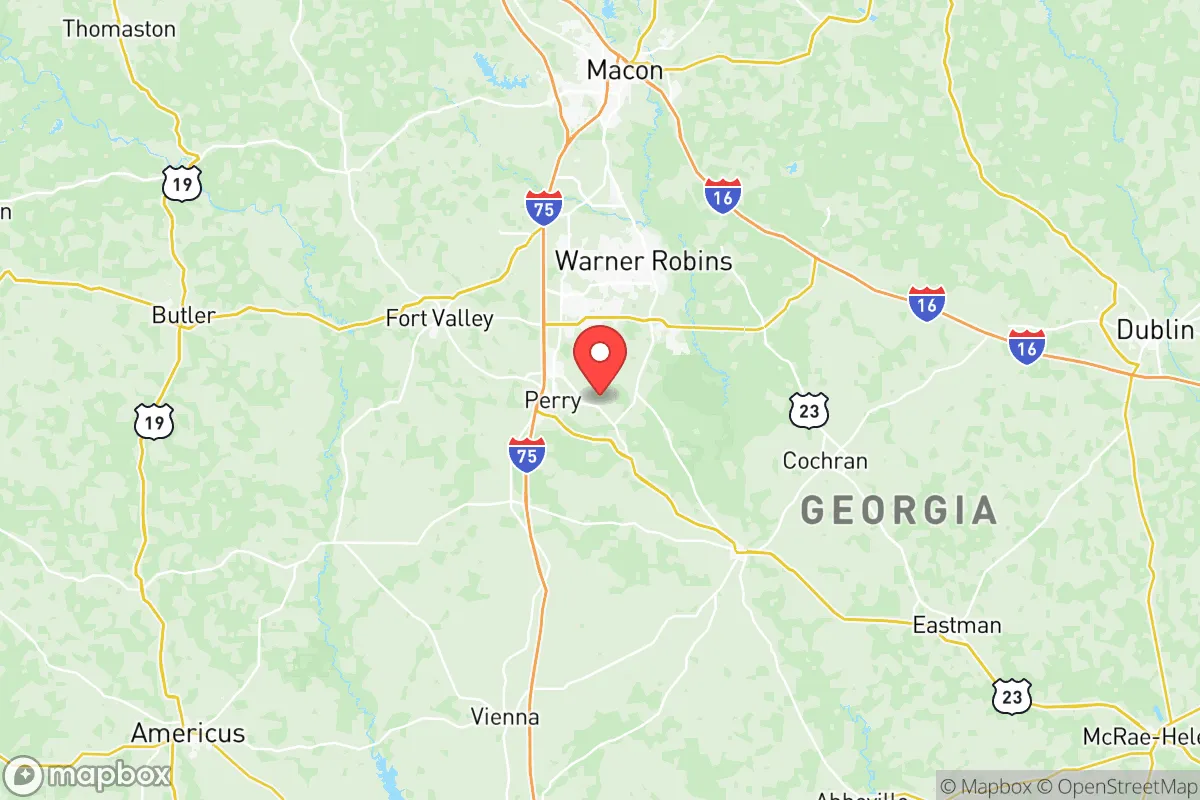
Photo: Wikipedia
Personal Sovereignty in Houston County
Viable for self-reliance. Generally workable, though some barriers may limit total independence.
What does Personal Sovereignty tell us?
Personal Sovereignty measures your capacity for self-reliance and independence with minimal government friction. Higher scores mean fewer barriers between you and the way you want to live... but it assumes you have the space you need and good neighbors.
What does this tell us?
Personal Sovereignty measures your capacity for self-reliance and independence with minimal government friction. Higher scores mean fewer barriers between you and the way you want to live... but it assumes you have the space you need and good neighbors.
State Policy
Energy independence: Importer (12% of energy produced in-state)
Personal Liberty
Homesteading

Personal Liberty Analysis
Houston County, Georgia, offers a notably high degree of personal sovereignty, grounded in Georgia’s strong preemption laws and a local culture that values self-reliance. The county’s regulatory environment is generally light-touch, particularly outside the city limits of Warner Robins and Perry, where county-level zoning is minimal and property rights are respected. For individuals and families seeking to maximize personal autonomy—from tax burden to self-defense to homesteading—Houston County presents a compelling balance of rural freedom and suburban convenience, though the specific experience varies significantly between the urbanized core and the outlying communities like Kathleen, Bonaire, and Elko.
Tax burden and regulatory posture in Houston County
Georgia’s state-level tax structure is relatively friendly to personal sovereignty, with a flat income tax rate of 5.49% (as of 2025) and no state-level estate or inheritance tax. Houston County’s property tax millage rate is competitive, typically ranging from 28 to 32 mills depending on the specific city and school district, which is moderate for the state but lower than metro Atlanta counties. The county’s regulatory posture is characterized by limited business licensing requirements and no county-wide zoning in unincorporated areas, though the cities of Warner Robins and Perry enforce their own zoning codes. For example, Warner Robins has more stringent commercial and residential regulations, while Kathleen and Bonaire—both unincorporated—allow for greater flexibility in land use, such as operating a home-based business or keeping livestock without special permits. The county’s approach to building permits is straightforward, with inspections focused on safety rather than aesthetic or environmental mandates, making it easier for property owners to modify their homes or land without bureaucratic delays.
Self-defense and gun law specifics in Houston County
Georgia is a constitutional carry state, meaning no permit is required to carry a firearm openly or concealed for anyone legally allowed to possess a gun. Houston County’s local law enforcement, including the Houston County Sheriff’s Office, is known for a pro-Second Amendment stance, with no additional local restrictions beyond state law. The county has a strong gun culture, reflected in the presence of multiple shooting ranges and gun shops, particularly in Warner Robins and Perry. Stand-your-ground laws apply statewide, and there is no duty to retreat in any place where a person is lawfully present. For those seeking to purchase firearms, background checks are handled through the Georgia Crime Information Center, and private sales between individuals are legal without a background check. The county’s concealed carry permit process, while optional, is efficient, with the sheriff’s office typically issuing permits within 30 days. Elko, a small unincorporated community, exemplifies the rural self-defense ethos, where firearm ownership is nearly universal and local law enforcement rarely interferes with lawful carry.
Self-reliance and homesteading viability in Houston County
Homesteading and self-reliance are highly viable in Houston County, particularly in its rural areas. Minimum lot sizes in unincorporated zones are typically 1 to 5 acres, with no county-wide restrictions on keeping chickens, goats, or even larger livestock like cattle or horses. Kathleen and Bonaire are popular for small-scale homesteading, with many properties featuring gardens, orchards, and outbuildings. Off-grid living is feasible, though Georgia’s building codes require a septic system and well for any habitable structure, and solar panels are permitted without special permits. The county does not enforce strict setback requirements for alternative energy systems, and rainwater collection is legal. Elko and the area around Perry offer larger parcels—often 10 acres or more—where residents can practice more extensive self-sufficiency, including hunting and fishing on private land. The county’s agricultural extension office provides resources for soil testing, pest management, and livestock care, supporting a DIY lifestyle. However, within the city limits of Warner Robins, zoning restricts livestock and limits lot sizes to under an acre, making full homesteading impractical there.
Personal liberties in Houston County: parental rights, medical autonomy, speech, and property
Georgia law strongly protects parental rights, including the right to direct a child’s education, medical care, and religious upbringing. Houston County’s school system, while public, allows for homeschooling with minimal oversight—parents need only submit a declaration of intent and provide an annual assessment. Medical autonomy is supported by Georgia’s broad health freedom laws, which allow for the use of alternative treatments and dietary supplements without state interference. The county has a robust property rights culture, with no county-wide rent control or restrictive covenants in unincorporated areas, though subdivisions in Warner Robins and Perry may have homeowners’ associations (HOAs) that impose rules. Free speech is protected under Georgia’s constitution, and the county has no local ordinances restricting political expression or assembly. Property rights are further strengthened by Georgia’s right-to-farm law, which protects agricultural operations from nuisance lawsuits, a boon for homesteaders in Kathleen and Bonaire. The county’s approach to medical freedom is exemplified by the presence of independent pharmacies and a lack of local vaccine mandates, though federal and state health regulations still apply.
Overall, Houston County offers a high degree of personal sovereignty relative to other areas in Georgia and the Southeast. Its combination of constitutional carry, low taxes, minimal zoning in rural areas, and strong property rights places it among the more freedom-oriented counties in the state. For comparison, it is significantly more autonomy-friendly than metro Atlanta counties like Fulton or DeKalb, which have higher taxes, stricter gun laws, and more regulatory oversight. While not as libertarian as some rural counties in north Georgia, Houston County’s balance of suburban amenities and rural self-reliance makes it a strong choice for individuals and families prioritizing personal independence. The key is choosing the right location within the county—Kathleen, Bonaire, and Elko offer the greatest freedom for homesteaders and self-reliant individuals, while Warner Robins and Perry provide more structure for those who prefer a lighter regulatory touch within a community setting.

* Values derived from national, state, county, city and local statistics and may differ in a specific area. Last updated: 2026-06-16T18:42:19.000Z
Narrative content on this page is AI-generated and may contain mistakes. Verify any details that matter before acting on them.
ReloMaps may earn a commission from affiliate links at no extra cost to you.

