Demographics of Hall County
Affluence Level in Hall County
A middle-class area roughly in line with national averages across income, home values, education, and employment.
People of Hall County
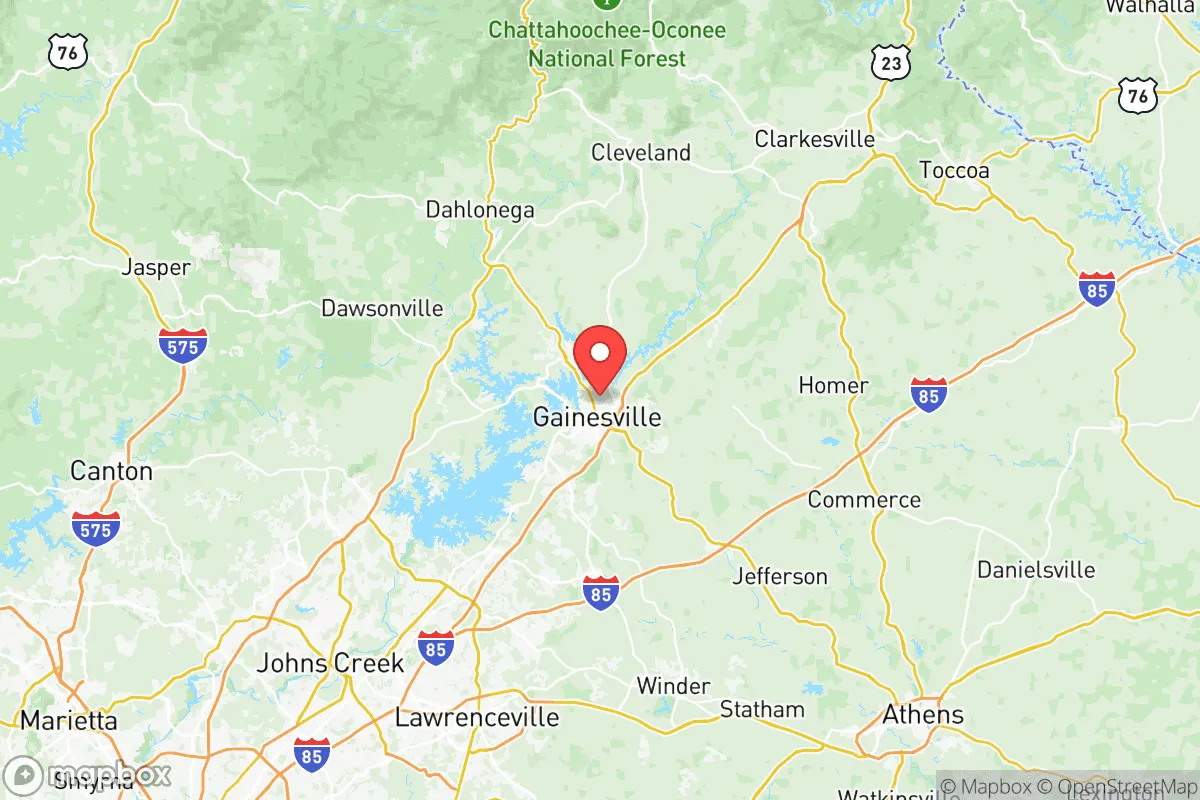
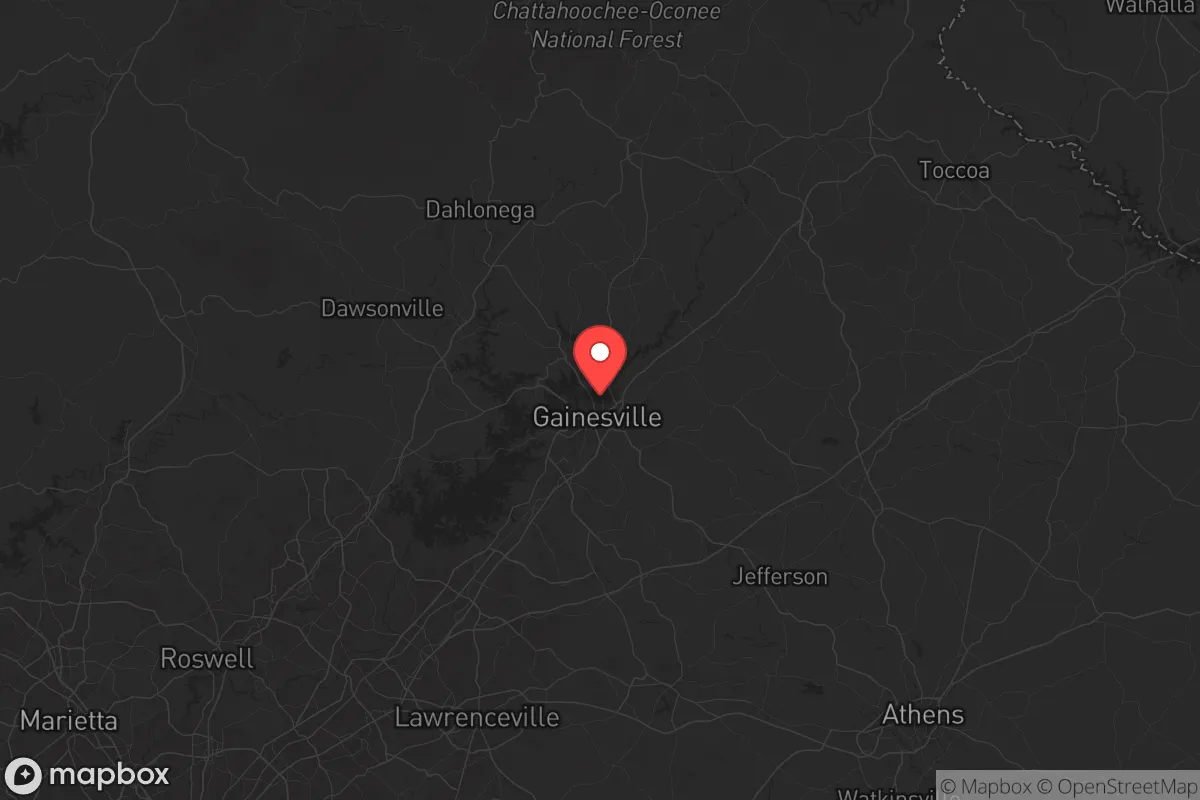
The people of Hall County, Georgia, today number 208,395 and form a community defined by its rapid growth, its significant and growing Hispanic population, and its role as the economic and cultural hub of Northeast Georgia. The county seat, Gainesville, anchors a region where a historically white, Southern, and agricultural population has been reshaped by waves of immigration and suburban expansion, creating a distinctive blend of old-line families, new Latino residents, and professionals drawn by Lake Lanier and the region's manufacturing base. With a population that is 58.9% white, 28.6% Hispanic, 6.6% Black, and 1.7% East/Southeast Asian, Hall County is one of the most ethnically diverse counties in North Georgia, a transformation that has occurred largely since the 1990s.
Settlement & growth (pre-1960)
Before American settlement, the area now known as Hall County was part of the vast homeland of the Cherokee Nation. The Cherokee established towns and farms along the Chattahoochee River and its tributaries, with the village of Gainesville itself originating as a Cherokee settlement called Moccasin Springs. The Cherokee were forcibly removed in the 1830s via the Trail of Tears, and the land was distributed to white settlers through the Georgia land lotteries. The earliest American settlers were primarily of English, Scots-Irish, and German descent, migrating from the older coastal areas of Virginia, North Carolina, and South Carolina. They were drawn by the promise of cheap, fertile land in the Piedmont region, and they established small farms and trading posts. The town of Gainesville was officially incorporated in 1821 and quickly became the county seat and commercial center.
The arrival of the railroad in the 1850s transformed Hall County from an isolated agricultural area into a transportation hub. The Atlanta & Charlotte Air Line Railway connected Gainesville to the wider region, and the town became a major shipping point for cotton, timber, and later, poultry. The post-Civil War period saw the establishment of a small but significant Black population, many of whom were formerly enslaved people who remained in the area as sharecroppers and laborers. Communities like New Holland and Lula became centers of Black life, with their own churches, schools, and businesses. The early 20th century brought the rise of the poultry industry, which would come to define Hall County's economy. The first commercial poultry processing plant opened in Gainesville in the 1930s, and by the 1950s, the county was being called the "Poultry Capital of the World." This industry attracted a wave of white workers from the surrounding Appalachian region, as well as a smaller number of Black workers from the Deep South. The population grew steadily, reaching 40,000 by 1950, but remained overwhelmingly white and native-born.
Modern era (post-1965)
The 1965 Hart-Cellar Act had a delayed but profound effect on Hall County. The initial post-1965 immigrants to the area were a small number of East/Southeast Asian professionals, primarily from Korea and the Philippines, who were drawn by jobs in the medical and academic sectors in Gainesville. However, the truly transformative demographic shift began in the 1990s, driven by the expansion of the poultry processing industry. Poultry plants in Gainesville, Oakwood, and Murrayville began actively recruiting workers from Mexico and Central America, offering steady employment in a labor-intensive industry that native-born workers were increasingly leaving. This created a chain migration that brought tens of thousands of Hispanic immigrants to Hall County over the next three decades. The Hispanic population grew from less than 5% in 1990 to 28.6% today, making Hall County one of the most heavily Latino counties in the Southeast. The primary countries of origin are Mexico, Guatemala, and El Salvador. These immigrants initially settled in mobile home parks and apartment complexes near the poultry plants in Oakwood and Gainesville, but have since spread throughout the county, with significant concentrations in Flowery Branch and Clermont.
Simultaneously, Hall County experienced a wave of domestic migration from the Rust Belt and coastal states. The construction of Lake Lanier in the 1950s created a massive recreational asset, and by the 1990s, the lake's shoreline was being developed with upscale subdivisions and second homes. This attracted affluent retirees and telecommuters from Atlanta, Florida, and the Northeast, who settled in lakefront communities like Flowery Branch and Buford. The county's population more than doubled between 1990 and 2020, from 95,000 to over 200,000. This growth has been accompanied by suburban sprawl, with new subdivisions and shopping centers spreading along the I-985 corridor. The Black population, which had been declining as a share of the total since the mid-20th century, has stabilized at 6.6%, with many Black residents living in established communities in Gainesville and New Holland. The East/Southeast Asian population, at 1.7%, remains small but is concentrated in professional and business-owner roles in Gainesville. The Indian subcontinent population, at 0.4%, is a very recent arrival, primarily professionals in the medical and technology sectors.
The future
Hall County's population is projected to continue growing, likely reaching 250,000-300,000 by 2040, driven by continued domestic migration from the Atlanta metro area and the Southeast, as well as natural increase among the Hispanic population. The county is becoming more diverse, with the Hispanic share expected to rise to 35-40% over the next two decades, while the white share will continue to decline. The new growth is dispersing across the county, with the most rapid development occurring in the southern part of the county, in Flowery Branch and Oakwood, and along the Lake Lanier shoreline. The poultry industry will remain a major employer, but the county is also attracting logistics and distribution centers, as well as healthcare and education jobs. The cultural identity of Hall County is evolving from a predominantly white, rural, and conservative Southern community into a more diverse, suburban, and economically stratified one. The Hispanic community is becoming increasingly integrated, with second-generation Latinos moving into professional and political roles. The county's politics, historically solidly Republican, are showing signs of becoming more competitive as the population diversifies and suburbanites bring more moderate views.
For someone moving to Hall County now, the area offers a mix of traditional Southern culture, a growing Latino influence, and the amenities of a lake-oriented suburban lifestyle. The key dynamic to understand is the tension between the old and the new: the established white and Black communities in Gainesville and the rural areas, and the rapidly growing Hispanic and suburban populations. The county is becoming a place where a poultry plant worker from Guatemala and a telecommuter from New York might live in the same subdivision, a reality that is reshaping the region's identity in real time. The schools, churches, and local government are all adapting to this new diversity, making Hall County a microcosm of the broader demographic transformation of the American South.

* Values derived from national, state, county, city and local statistics and may differ in a specific area. Last updated: 2026-07-02T23:05:23.000Z
Narrative content on this page is AI-generated and may contain mistakes. Verify any details that matter before acting on them.
ReloMaps may earn a commission from affiliate links at no extra cost to you.

