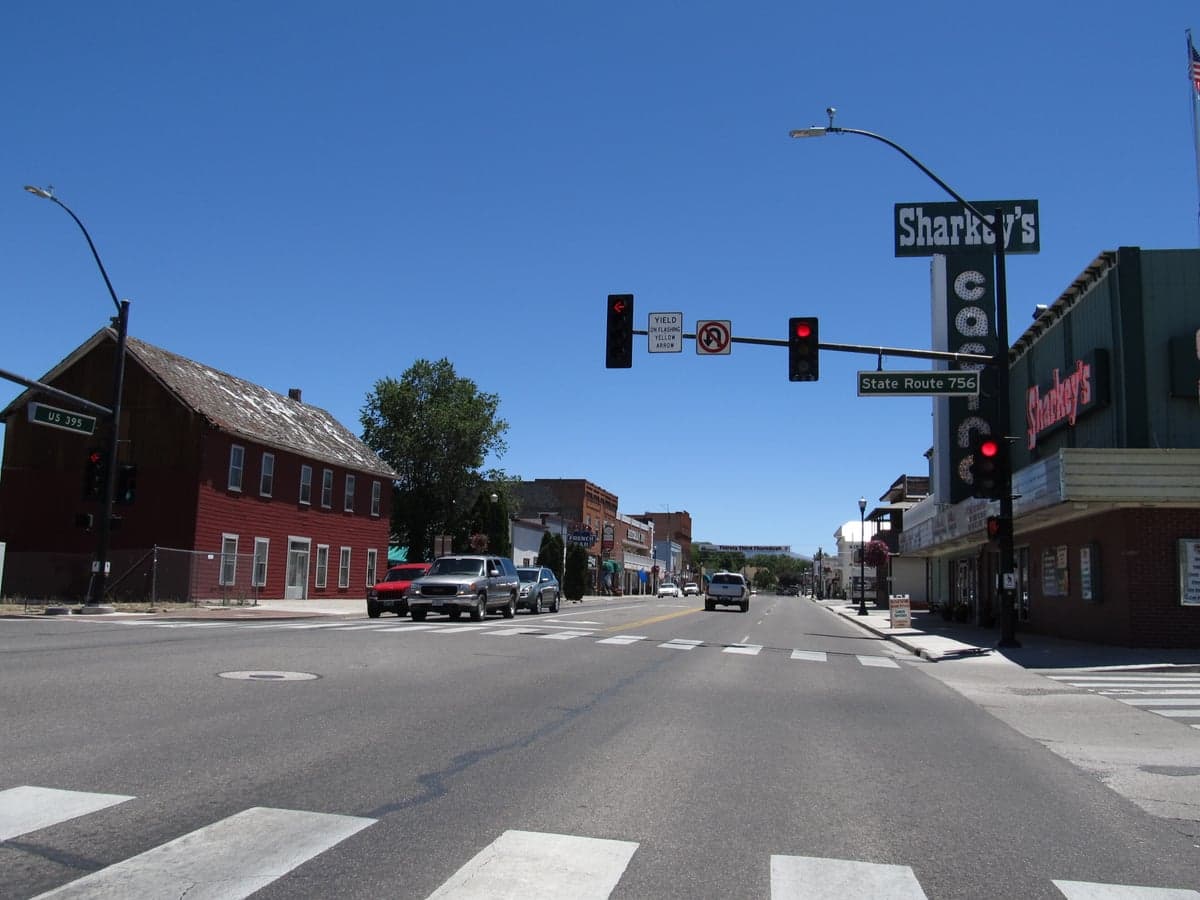
Photo: Wikipedia
Strategic Assessment of Gardnerville, NV
Strong survivability profile. Good buffer from population centers, with manageable environmental and tactical risks.
What does the Strategic Assessment tell us?
Our Strategic Assessment grades tactical survivability of an area. Major population centers, military targets, fallout zones, natural disasters, and border exposure all drive risk — lower exposure means a more defensible position in a crisis.
This is heavily inspired by Joel Skousen's Strategic Relocation book. Highly recommended you checkout the book ($)What does this tell us?
Our Strategic Assessment grades tactical survivability of an area. Major population centers, military targets, fallout zones, natural disasters, and border exposure all drive risk — lower exposure means a more defensible position in a crisis.
This is heavily inspired by Joel Skousen's Strategic Relocation book. Highly recommended you checkout the book ($)Strategic Pillars
Key Distances
Regional Safe Places
Below is our recommended "safe zones" in Nevada and the surrounding area based on our strategic heuristics. For most people, it's unrealistic to live in a “safe zone” full-time due to work, family or other personal reasons. They tend to be more rural. However, many of these areas are perfect for second homes and retreat properties that double as a vacation home or even a short-term rental.
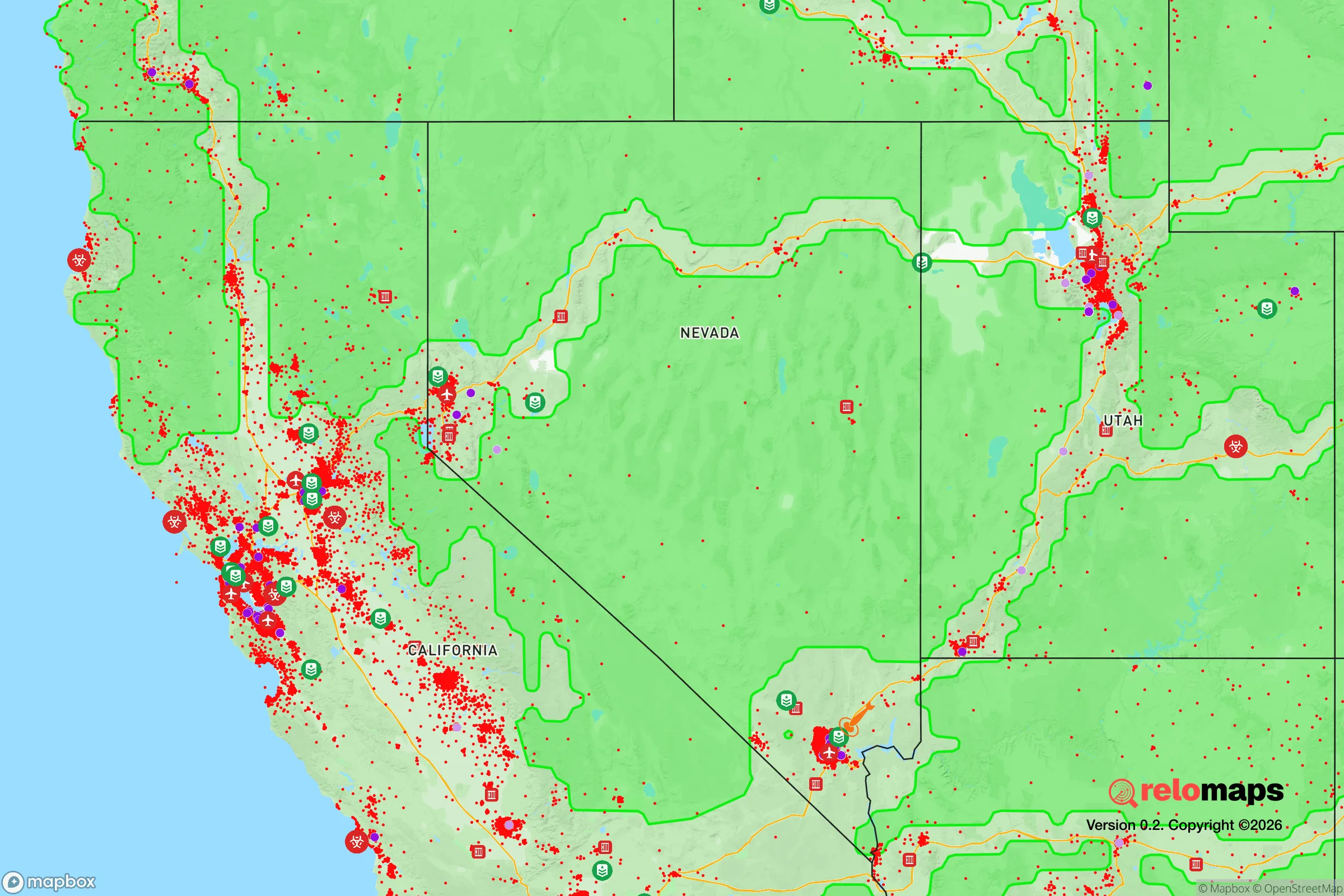
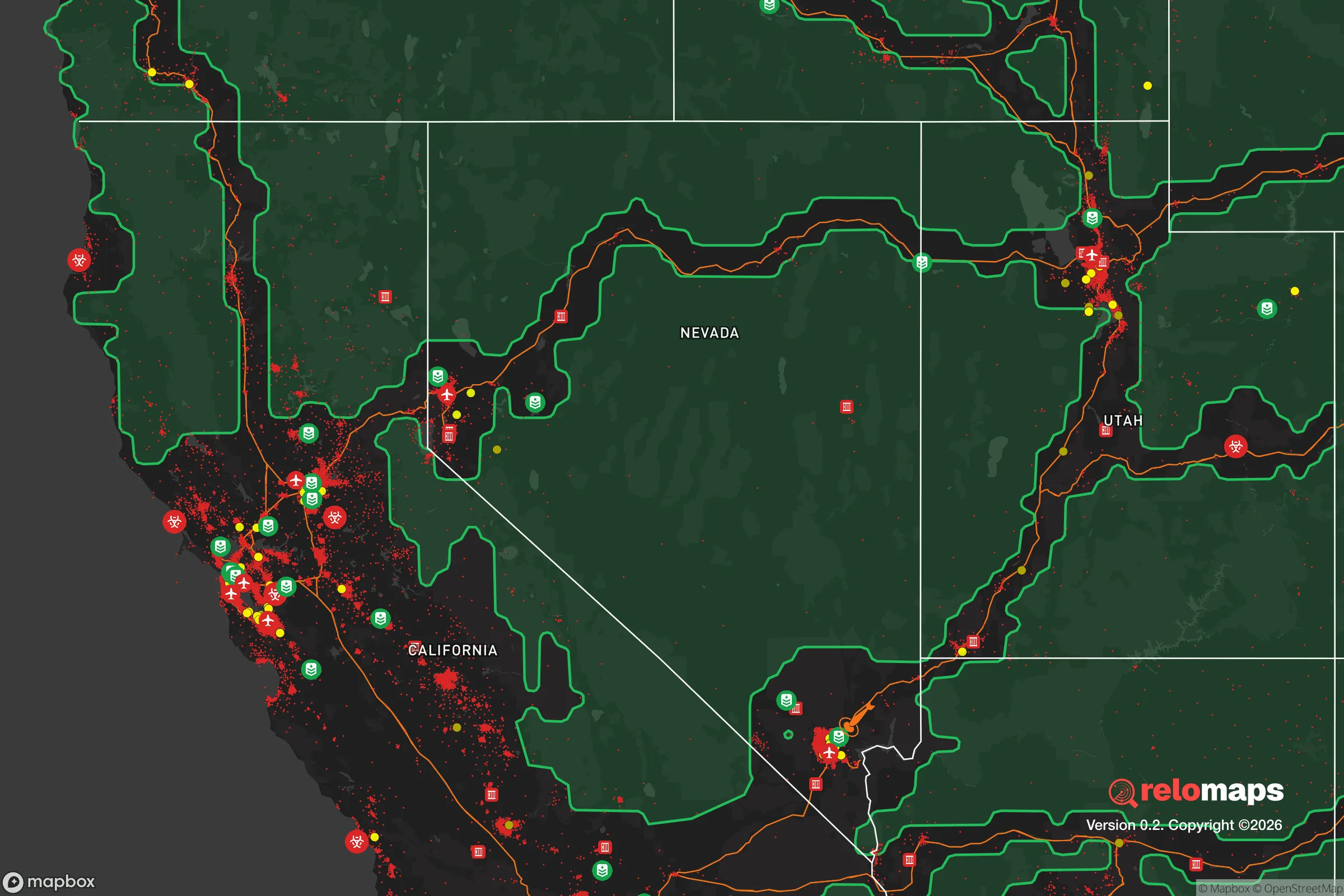


Important Note: For informational purposes only. This does not mean nothing bad ever happens in the green zones. Please use common sense. This is based on public data and modeled with AI. We tried to take a conservative approach but mistakes happen. We update this regularly as new information becomes available.
Solar Generator Recommendations
Backup power matters more here than in safer locations. We've picked three solar generators across budgets and capacity tiers — start with the budget unit if you only need a few essentials, or step up if you want to run a fridge and HVAC for days at a time.
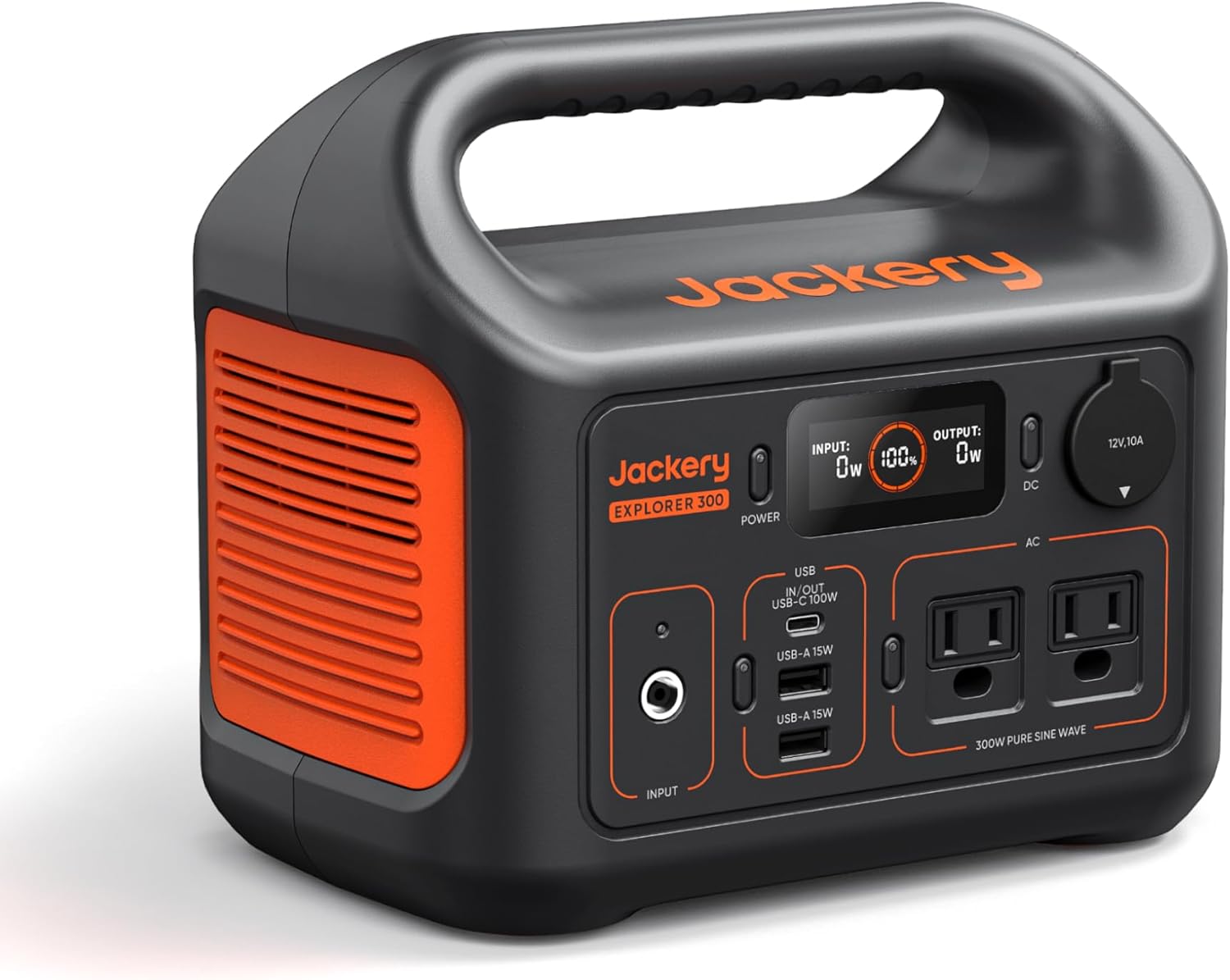
Jackery Portable Power Station Explorer 300
Budget OptionPower on the Go: Weighing only 11 lbs, it's convenient to set up and store with book-sized foldable solar panels

BLUETTI Portable Power Station AC180
Designed for both indoor and outdoor scenarios, AC180 is highly capable as it has a robost capacity and continuous output power.

EF ECOFLOW DELTA Pro Ultra Power Station
Upgraded PickEcoFlow DELTA Pro Ultra is a whole-home energy system designed to grow with your family. Integrated with the Smart Home Panel 2, it scales to meet your evolving energy needs — keeping your home powered, intelligent, and secure through every stage of life.
We earn a commission, at no additional cost to you.
Strategic Assessment Analysis
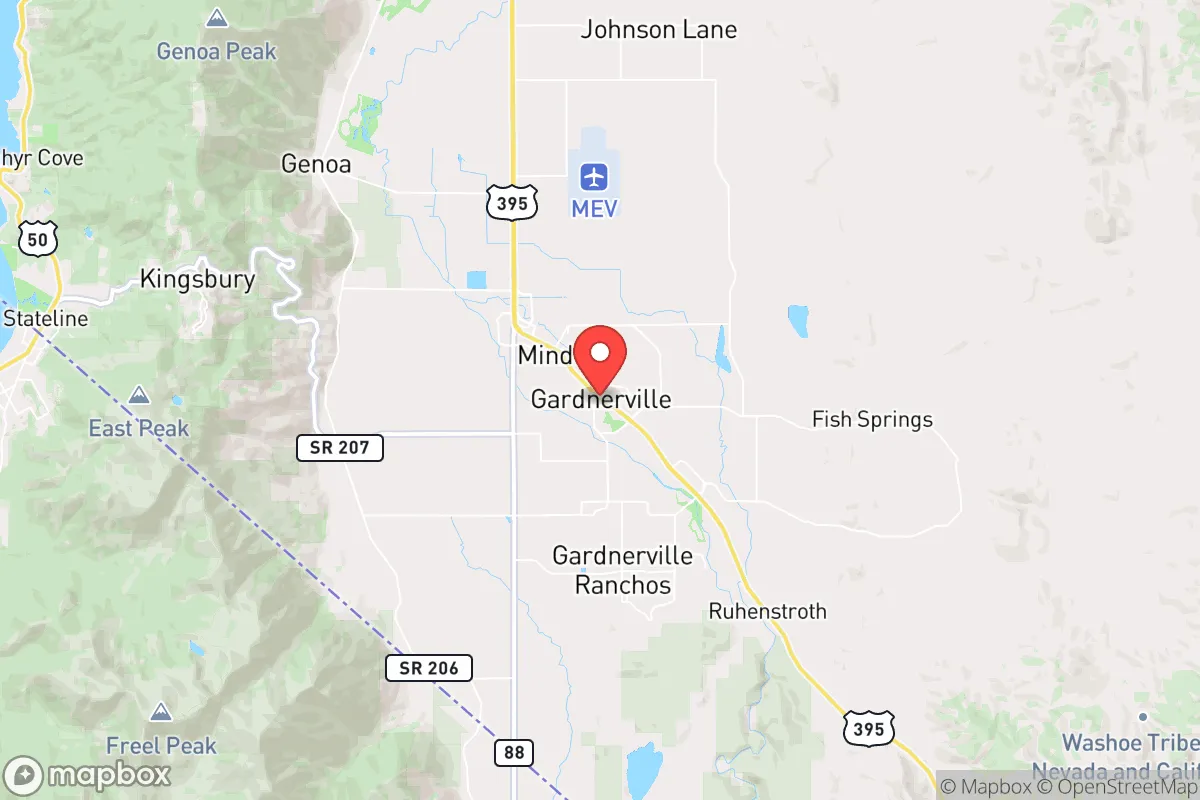
Gardnerville, Nevada, offers a compelling strategic position for those prioritizing resilience and self-sufficiency, balancing proximity to critical resources with a meaningful buffer from the concentrated risks of major urban centers. Located in the Carson Valley at the eastern base of the Sierra Nevada, the town sits roughly 45 miles south of Reno and 15 miles east of the California state line, placing it within a day’s drive of the Bay Area but far enough to avoid the immediate fallout of a major metropolitan disruption. The area’s agricultural heritage, reliable water supply from the Sierra snowpack, and relatively low population density (around 6,000 residents in town, with about 50,000 in Douglas County) make it a practical choice for relocators who want a balance of access and isolation, not a survivalist bunker.
Geographic position and natural advantages for long-term stability
Gardnerville’s primary strategic asset is its location in the Carson Valley, a high desert basin at roughly 4,800 feet elevation that benefits from a unique microclimate. The Sierra Nevada to the west acts as a massive rain shadow, but the valley itself receives enough precipitation to support irrigated agriculture—hay, alfalfa, and livestock—which is rare in the Great Basin. This agricultural base provides a local food supply that many Western towns lack, with the Carson Valley being one of the few areas in Nevada with a genuine farming economy. The Carson River, fed by Sierra snowmelt, runs through the valley and provides a reliable surface water source, supplemented by groundwater from the basin’s aquifer. For a relocator thinking about water security, this is a significant advantage: the area is not dependent on the Colorado River or the over-allocated Truckee system, and local water rights are generally senior and well-defined. The surrounding mountains—the Pine Nut Range to the east and the Sierras to the west—offer natural defensibility, with limited access points into the valley via US-395 and NV-88. This geography makes Gardnerville less vulnerable to the kind of cascading infrastructure failures that can cripple a flat, sprawling city.
Risks, exposures, and proximity to fallout-relevant landmarks
No location is risk-free, and Gardnerville has specific exposures that a strategic relocator must weigh. The most immediate natural risk is wildfire: the valley is surrounded by dry, fire-prone forests and rangelands, and the 2021 Tamarack Fire and the 2022 Mosquito Fire both came within 20 miles, causing evacuations and air quality issues. The wildland-urban interface is real here, and homes on the valley’s western edge near the Sierras face higher risk. Earthquake risk is moderate—the area sits near the Walker Lane seismic zone, and while major quakes are infrequent, the 2020 Monte Cristo earthquake (magnitude 6.5) was felt strongly. Flooding is a lesser concern, though the Carson River can overtop its banks during heavy snowmelt years. On the man-made risk side, Gardnerville’s distance from major targets is a strength, but it is not immune. The town is roughly 60 miles from the Nevada National Security Site (formerly the Nevada Test Site) and about 90 miles from the Hawthorne Army Depot, a massive ammunition storage facility. While a direct strike on these facilities is unlikely, a major event at either could produce fallout or supply chain disruptions. More practically, Gardnerville sits along US-395, a major north-south evacuation corridor from California, meaning that in a crisis, the town could see significant through-traffic or temporary population surges from Reno or the Bay Area. The nearby Lake Tahoe basin, a major tourist destination, also funnels visitors through the valley, which could strain local resources during a regional emergency.
Practical resilience for a relocator: food, water, energy, and defensibility
For a relocator serious about self-sufficiency, Gardnerville’s practical resilience is above average for the Western US. Water is the strongest pillar: the Carson Valley has senior water rights and a functioning irrigation system, and many rural properties come with their own wells or shares in local ditch companies. The average well depth is around 100-200 feet, and the aquifer is generally productive, though new wells require permitting and can be expensive. Food production is viable: the growing season is short (about 100-120 frost-free days) but reliable for cold-hardy crops, and the valley has a strong network of local ranchers, farmers’ markets, and a USDA-inspected meat processing facility in nearby Minden. For those willing to raise livestock, the area is one of the few in Nevada where small-scale cattle or poultry operations are practical. Energy resilience is mixed: NV Energy provides grid power, and outages are common during winter storms and high winds, but solar potential is excellent—the valley averages over 300 sunny days per year—and net metering is available. Off-grid solar is feasible, though battery storage is recommended due to occasional multi-day outages. Natural gas is available in town but not in rural areas, so propane is common for heating and cooking. Defensibility is a double-edged sword: the valley’s limited access points make it easier to secure, but they also mean that a single road closure (from a wildfire, avalanche, or earthquake) could cut off the area from outside supply. The Minden-Tahoe Airport (a general aviation field) provides an alternative egress, and the Carson Valley has a small but active emergency services community, including a local CERT team and a well-regarded sheriff’s office. Medical care is adequate for routine needs—Carson Valley Medical Center is a critical access hospital—but major trauma or specialized care requires a 45-minute drive to Reno.
The overall strategic picture for Gardnerville is that of a solid, middle-ground relocation choice for the resilience-minded relocator. It is not a remote bug-out location—it has a functioning town with schools, grocery stores, and a hospital—but it is far enough from major population centers to avoid the worst of a cascading urban collapse. The agricultural base and water security are genuine advantages that few towns in the Intermountain West can match, and the community is generally self-reliant and conservative in its politics, which aligns with the values of many in this audience. The main trade-offs are wildfire risk and the potential for corridor congestion during a regional evacuation. For a family or individual who wants to be prepared without going off-grid entirely, Gardnerville offers a realistic, defensible, and livable option—provided you buy on the valley floor, secure your own water rights, and have a plan for the two weeks of smoke that come with every fire season.

* Values derived from national, state, county, city and local statistics and may differ in a specific area. Last updated: 2026-11-02T17:40:03.000Z
Narrative content on this page is AI-generated and may contain mistakes. Verify any details that matter before acting on them.
ReloMaps may earn a commission from affiliate links at no extra cost to you.

