Photo: Wikipedia
Political ClimatePolitical Climate in Gardnerville, NV
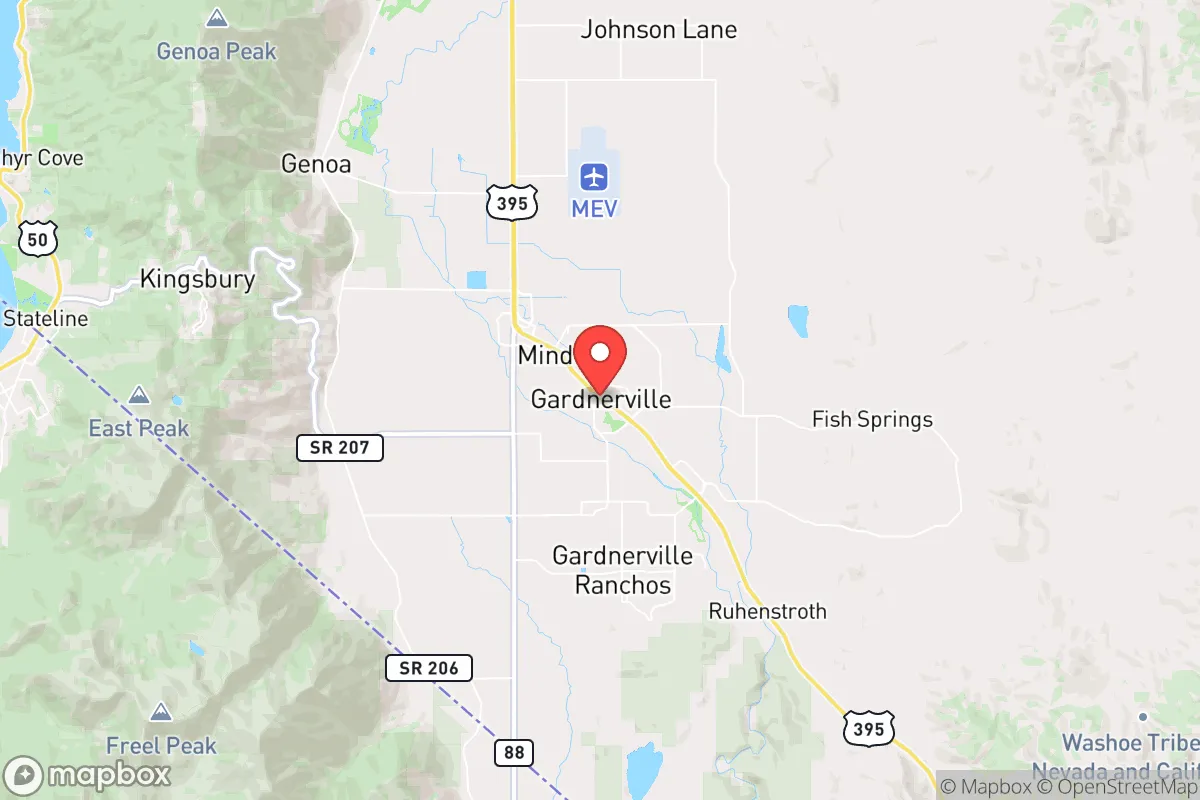
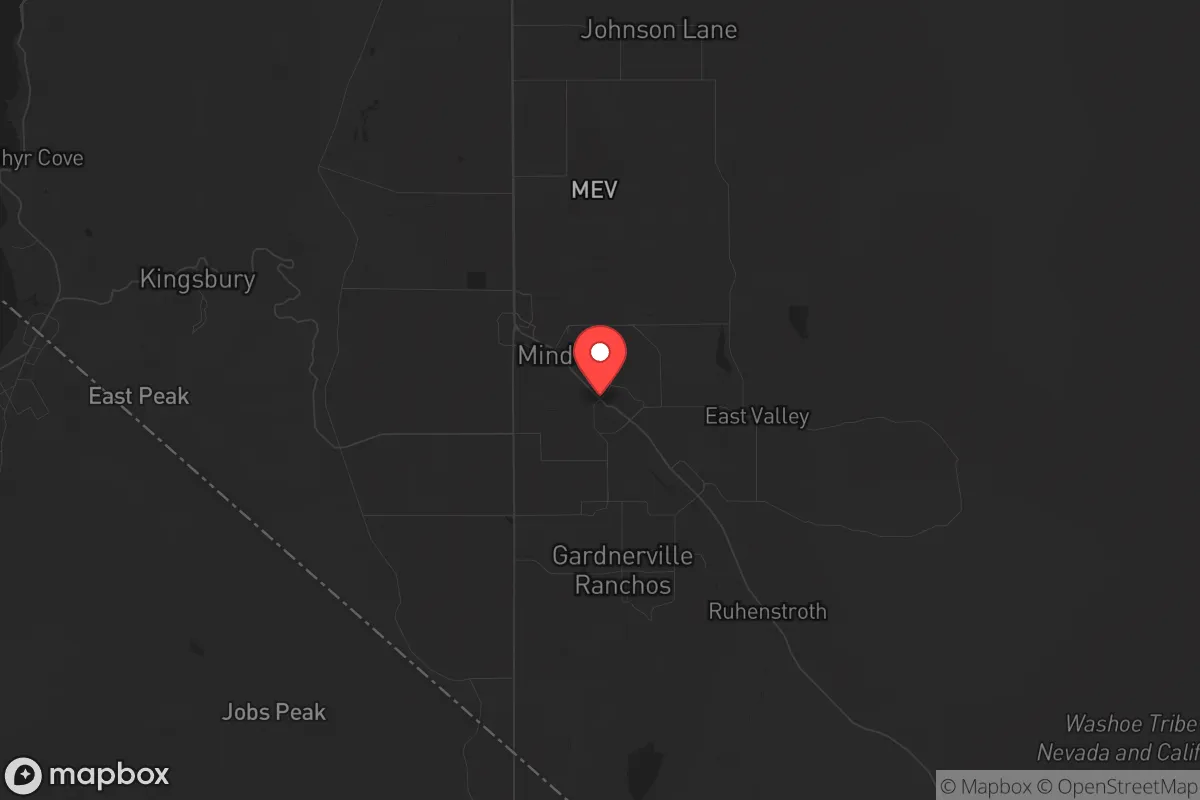
District shown is the primary district for this city’s centroid. Cities may span multiple districts.
Local Political AnalysisPolitical Analysis of Gardnerville, NV
Gardnerville sits in one of the reddest pockets of the Silver State, with a Cook Partisan Voting Index of R+7 — a full six points more Republican-leaning than Nevada as a whole at R+1. That gap isn't an abstraction; it shows up in yard signs along Highway 395, in the Douglas County commission chambers, and in the fact that Douglas County has delivered lopsided Republican margins in every presidential cycle since 2000, often topping 60 percent. The trajectory, if anything, has hardened: growth spilling south from Reno and Carson City has brought new voters, but it's also brought newcomers who moved here partly *for* the rural, low-tax, low-regulation feel — which tends to reinforce the lean rather than dilute it.
How it compares to the rest of Nevada
The contrast with the state's population centers is stark. Clark County (Las Vegas) and Washoe County (Reno) are where Nevada's Democratic majorities are manufactured, and they're a two-hour-plus drive away in opposite directions. Carson City, just 20 minutes north, is genuinely competitive — a purple-ish capital city where state workers and retirees split fairly evenly. And South Lake Tahoe, 30 minutes west across the state line, is solidly blue California. So Gardnerville residents live in a conservative island surrounded by a swingy capital, a blue mountain town, and a state that still votes Democratic in most statewide federal races. That's the practical reality: Douglas County's voice is loud locally and diluted statewide, because roughly 70 percent of Nevada's voters live in Clark County alone.
What this means for residents
For conservative residents, local politics feels responsive. Douglas County commissioners, the sheriff, and school board members generally reflect the majority, and issues like water rights, growth limits, and opposition to state-level mandates (firearm regulations, land-use rules out of Carson City) get a sympathetic hearing. For liberal residents, the experience is different but not hostile — you're outvoted locally, your state-level vote carries more weight proportionally in a small county, and the practical advice longtime locals give is to pick your battles: school board and library debates have drawn crowds, while day-to-day neighborliness rarely turns political. Turnout in Douglas County routinely exceeds 80 percent in presidential years, so the majority really does show up.
The cultural and policy distinctions that matter
The lean isn't just electoral — it's baked into land-use fights, water politics (the Carson Valley groundwater debate has been the defining local issue for a decade), and a live-and-let-live rural ethos that predates the partisan labels. Old-timers will tell you the valley was always conservative but quieter about it; the Trump-era signage and school board activism are newer. Looking ahead, the near-term picture is more of the same — R+7 or slightly redder as growth continues. The longer-term question is water and housing costs: if the valley can't absorb growth, the politics may stay frozen in amber; if it booms, expect the Carson City-style purple creep to arrive eventually. Either way, don't expect Gardnerville to flip blue this decade.

State Political ClimatePolitical Climate in Nevada
State Political AnalysisPolitical Environment in the State
Nevada has settled into an unusual position for a western state: a Cook Partisan Voting Index of R+1 that masks one of the most volatile electoral profiles in the country. Democrats dominate the state's federal delegation and legislature, Republicans have won the governorship in three of the last four elections, and the state has voted for the Democratic presidential candidate in every cycle since 2008 — but by margins that shrank from 12 points in 2008 to under 3 points in 2024. The coalition driving this is a Las Vegas machine built on the Culinary Union and Clark County's service economy, set against a fast-growing Republican-leaning exurban and rural base. Over the past two decades the state has moved from a swing state that leaned blue to a genuine toss-up, and the 2022 election of Republican Governor Joe Lombardo over Democrat Steve Sisolak confirmed that neither party can count on it.
Urban vs. rural divide
The political map of Nevada is essentially a map of water. Clark County — Las Vegas, Henderson, North Las Vegas — holds roughly 73% of the state's population and votes reliably Democratic, powered by the Culinary Union's get-out-the-vote operation and a large Latino and Black electorate. Washoe County, anchored by Reno and Sparks, is the true bellwether: it flipped to Trump in 2024 after voting Democratic for years, and it usually decides statewide races. Everything else is deep red. Elko, in the gold-mining northeast, is among the most Republican counties in the West; Lyon County (Fernley, Dayton) and Douglas County (Minden, Gardnerville) on the Carson Valley edge are solid conservative strongholds. The interesting middle ground is the exurban ring — places like Summerlin on Las Vegas's west edge, Boulder City to its southeast, and the fast-growing master-planned communities in Henderson's foothills — where affluent, security-minded transplants have pushed once-purple precincts rightward. Rural Nevada's grievance politics are real: the "Battle Born" county movement and the 2020 push by Elko and Lyon county commissioners to explore transferring federal land to state control reflect a long-standing frustration with Washington owning roughly 80% of the state's acreage.
Policy environment
Nevada has no state income tax, which is the single biggest draw for relocating families and retirees, but it compensates with a relatively high sales tax (Clark County sits around 8.4%) and among the highest gaming and tourism taxes in the nation. Property taxes are capped by the state's 2005 abatement law at roughly 3% annual growth for owner-occupied homes, which keeps long-term residents' bills low but creates sharp disparities between old and new owners. The state's regulatory posture is permissive on business formation and land development but heavy on occupational licensing. Education is a persistent weak spot: Nevada ranks near the bottom nationally in K-12 outcomes, and the 2019 Education Savings Account expansion was gutted by a court ruling, leaving school choice advocates frustrated. On healthcare, Nevada expanded Medicaid under the ACA in 2014 and has a public option law passed in 2021. Election law is a live battleground: the legislature made Nevada a universal mail-ballot state in 2021, and Republicans have challenged the system repeatedly.
Recent policy direction
The Lombardo years have produced a split-screen. On guns, Nevada requires background checks on private sales (passed by ballot in 2016) and Lombardo signed a 2023 law raising the purchase age to 21 and banning bump stocks, which drew a lawsuit from the NRA and grumbling from rural sheriffs. On education, Lombardo pushed a $5,000-per-pupil "Opportunity Scholarship" universal ESA program in 2023 that ultimately passed in a scaled-back form after a Democratic Senate balked. On parental rights, the legislature has debated curriculum transparency bills but nothing as sweeping as Florida's. On privacy and surveillance, Nevada passed a 2019 consumer privacy law and has no significant facial-recognition restrictions; the state's automatic voter registration at the DMV has been in place since 2020. On medical autonomy, Nevada enshrined abortion rights in statute via the 1990 referendum and voters will decide a 2024 constitutional amendment (Question 6) to lock it in — a measure that passed handily. On property rights, the state's 2019 rent-cap debate and the ongoing push to reform the rooftop-solar net-metering rules are the flashpoints. On voting, the universal mail-ballot law and same-day registration remain in place despite GOP litigation.
Civil unrest & political movements
Nevada's protest history runs hot and cold. The 2014 Bundy standoff in Clark County and the 2016 Malheur occupation drew national attention to rural land-rights militancy, and the "No To NDOT" and anti-mask protests of 2020-21 in Las Vegas and Carson City were visible. On the left, the Culinary Union is the state's most powerful organized force, and its 2023 contract fight with the Strip resorts was a genuine labor flashpoint. Immigration politics are complicated: Nevada has a significant undocumented population and no statewide sanctuary law, but Clark County sheriff's cooperation with ICE has been contested. Election integrity controversies have been persistent since 2020, with the Nevada Republican Party and activists like former state assemblywoman Annie Black pressing for hand-count audits; a 2022 Nye County hand-count experiment drew national coverage. Secession talk is fringe but present in rural counties. A new resident will notice the yard signs, the talk-radio intensity, and the fact that politics here is less about ideology than about land, water, and who controls the Strip.
Projection
Over the next five to ten years, expect Nevada to stay a genuine swing state but with a Republican tilt that grows slowly. The drivers are demographic: in-migration from California is slowing but continues, and the arrivals skew older, wealthier, and more Republican than the native-born population. Clark County's Latino vote shifted measurably toward Trump in 2024, and if that holds, the Democratic firewall weakens. Washoe County will remain the tipping point. The state's water crisis — the Colorado River's declining flows — will dominate policy regardless of who holds power, and it will force hard choices about growth in Las Vegas and Henderson. Expect continued fights over school choice, election administration, and land-use reform. The state will likely remain a place where a conservative governor and a Democratic legislature coexist, which means gridlock on the biggest cultural questions and pragmatism on taxes and water.
For a new resident, the practical takeaway is that Nevada rewards people who value low taxes and personal autonomy but punishes those who expect strong public schools or generous social services. Conservatives will find a friendly tax climate, a growing gun-rights and school-choice movement, and rural counties that feel like a different state. Liberals will find a durable Democratic machine in Las Vegas, protected abortion rights, and a union culture that still matters. The state's politics are less about red versus blue than about growth, water, and the Strip — and that is unlikely to change in the next decade.
* Values derived from national, state, county, city and local statistics and may differ in a specific area. Last updated: 2026-11-02T17:40:03.000Z
Narrative content on this page is AI-generated and may contain mistakes. Verify any details that matter before acting on them.
ReloMaps may earn a commission from affiliate links at no extra cost to you.

