Photo: Wikipedia
Demographics of Gardnerville, NV
Affluence Level in Gardnerville, NV
A middle-class area roughly in line with national averages across income, home values, education, and employment.
People of Gardnerville, NV
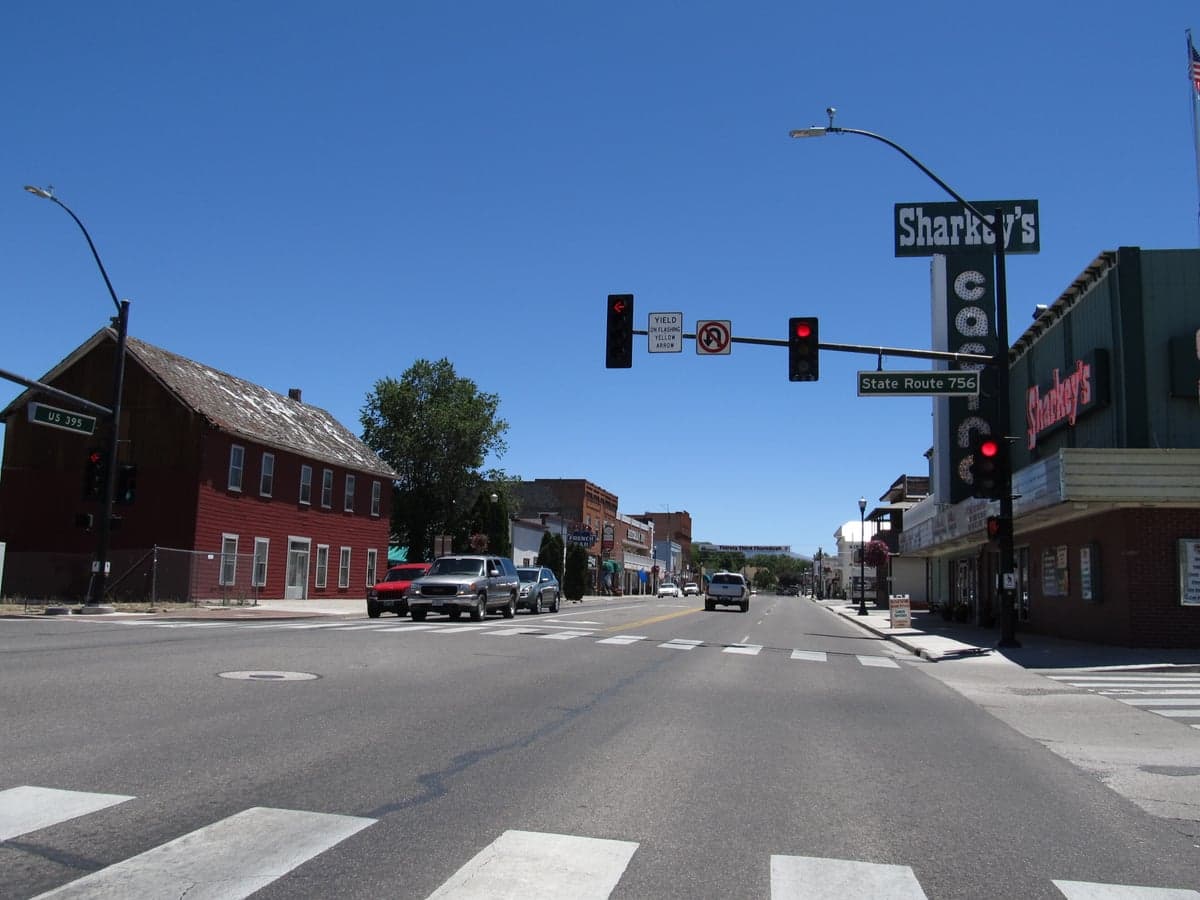
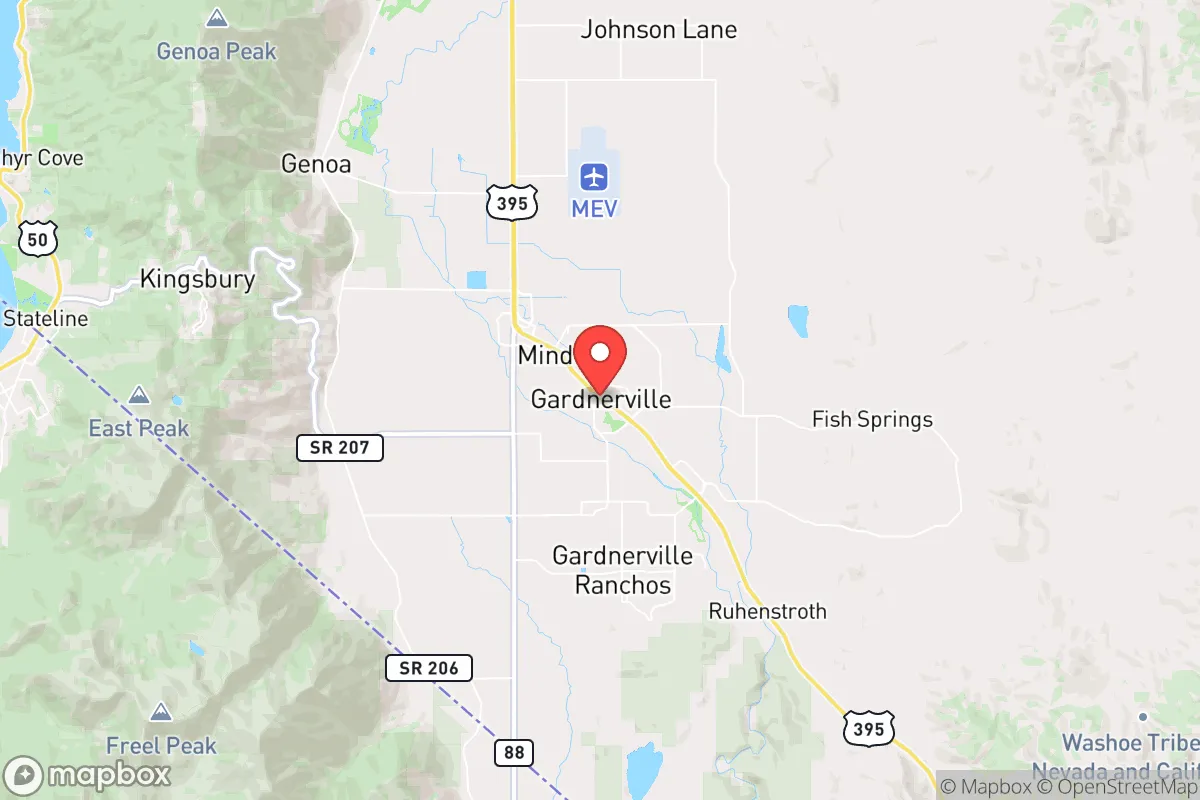
Gardnerville is a small Carson Valley town of 5,811 residents where the population is still overwhelmingly native-born — only 3.0% foreign-born — and shaped less by immigration than by generations of families who came for ranch land, timber, and the railroad and stayed. The town is 76.2% White and 16.1% Hispanic, with East/Southeast Asian residents at 1.5% and Indian-subcontinent residents at 0.4%; the Black population is statistically negligible. Its identity is agricultural at the core, with a historic downtown strung along Highway 395 and newer subdivisions spreading toward Minden and the foothills of the Sierra Nevada.
How the city was settled and grew
Gardnerville is not a colonial settlement; it was founded in 1879 as a railroad and ranching town, and its people arrived in distinct waves tied to land and work. The town grew up around the V&T Railroad spur and the cattle and hay economy of the Carson Valley, drawing Basque and Northern European herders, Swiss and German dairy families, and Italian truck-farming households who settled the grid streets of Old Town Gardnerville near the downtown core. Basque families ran sheep and boarded at the Basque hotels that anchored the main street, and their descendants remain among the valley's ranching and hospitality families. A separate cluster of Mexican and Mexican-American laborers took root along the Highway 395 corridor and in the older worker housing at the town's edges, forming the base of today's Hispanic community. Through the mid-20th century the population stayed small and agricultural, with the Minden-Gardnerville pair functioning as one labor and retail market and the surrounding East Valley ranch parcels held by the same families for generations.
Modern era (post-1965)
The post-1965 era reshaped Gardnerville less through the Hart-Celler immigration reforms than through domestic in-migration. As California's Bay Area and Sacramento suburbs grew expensive, retirees, remote workers, and tradespeople moved over the Sierra into the Carson Valley, and Douglas County's population roughly tripled between 1980 and 2020. That growth filled the subdivisions south and east of downtown — the Chichester area and the newer tracts off Centerville Lane and Muller Parkway — with commuters and retirees rather than farm families. The Hispanic share held and grew through this period, concentrated in the older housing stock near downtown and along the 395 frontage, while the foreign-born share stayed low at 3.0%, reflecting a population that is mostly second- and third-generation rather than newly arrived. East/Southeast Asian residents (1.5%) and Indian-subcontinent residents (0.4%) arrived mainly as professionals and small-business owners in the 1990s and 2000s, dispersing into the newer subdivisions rather than forming an enclave. The college-educated share reached 32.9%, well above the rural Nevada average but below the California metros many newcomers left.
The future
Gardnerville's population is likely to keep growing modestly and to diversify slowly rather than rapidly. The town's Hispanic share — already 16.1% — will probably rise as second- and third-generation families grow, and the White share will edge down as older residents age in place and younger in-migrants arrive. Because foreign-born residents are just 3.0%, the town is not on a path to the immigrant-driven diversification seen in Las Vegas or Reno; its change will come from natural increase and domestic migration. New housing will concentrate in the Centerville Lane and Chichester growth areas and along the Minden boundary, while Old Town and the 395 corridor retain the older, more Hispanic and working-class character. The cultural identity — a ranching town with a strong Basque and agricultural memory — will persist even as the share of residents with direct ties to that history shrinks.
For someone moving in now, Gardnerville is becoming a small but steadily growing exurban town: still majority White and native-born, still anchored by its agricultural past, but adding commuters, retirees, and a slowly expanding Hispanic middle class. Buyers should expect a place that values continuity over rapid change, where the older neighborhoods near downtown carry the town's history and the newer subdivisions carry its future.

* Values derived from national, state, county, city and local statistics and may differ in a specific area. Last updated: 2026-11-02T17:40:03.000Z
Narrative content on this page is AI-generated and may contain mistakes. Verify any details that matter before acting on them.
ReloMaps may earn a commission from affiliate links at no extra cost to you.

