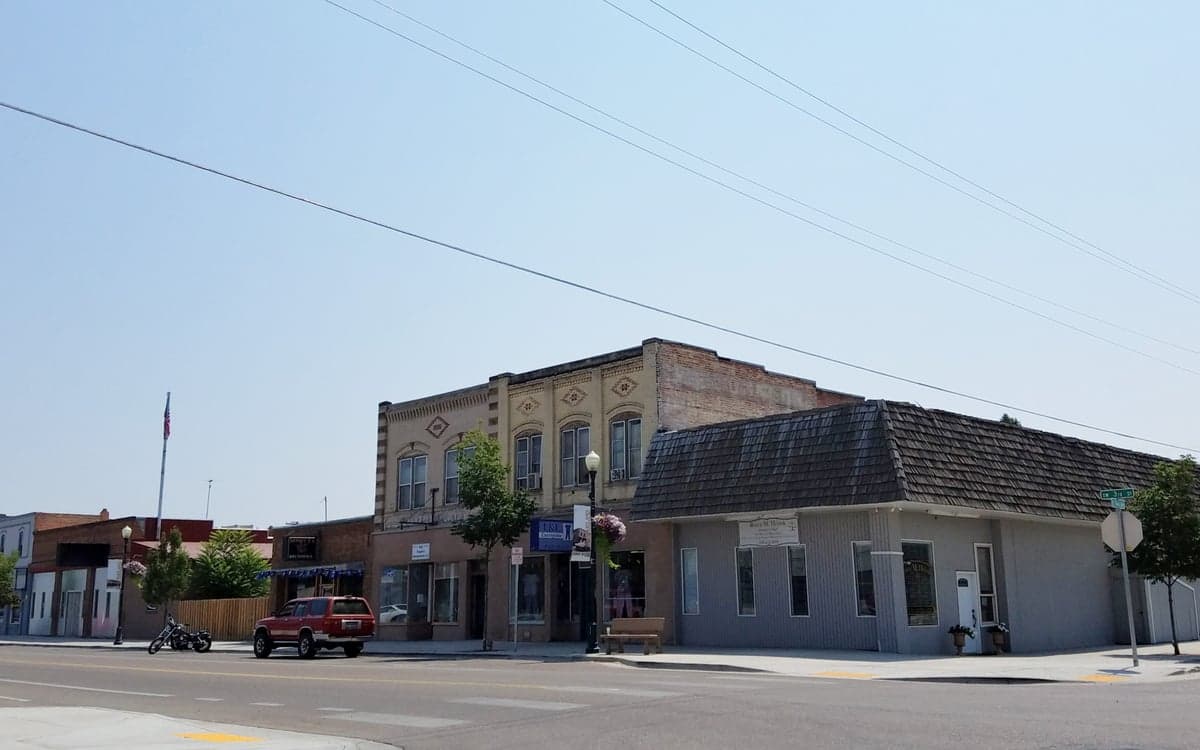
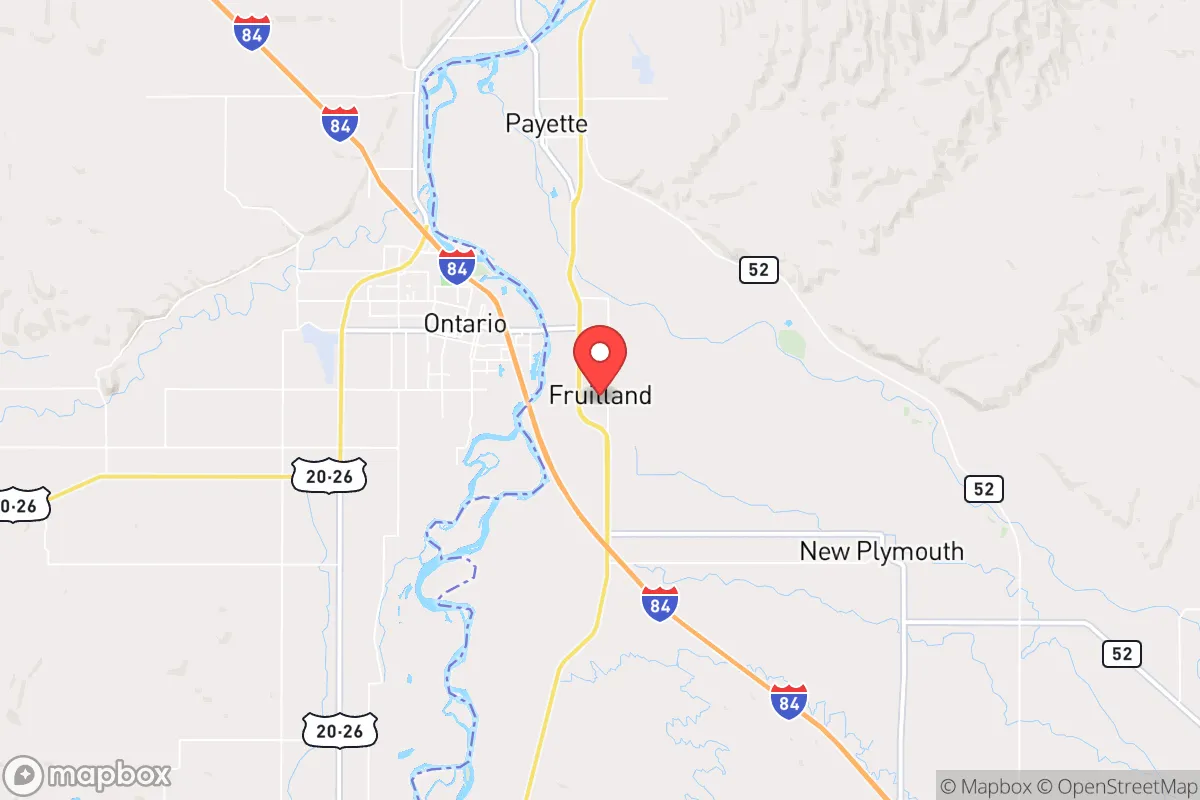
Photo: Wikipedia
Political ClimatePolitical Climate in Fruitland, ID
District shown is the primary district for this city’s centroid. Cities may span multiple districts.
Local Political AnalysisPolitical Analysis of Fruitland, ID
Fruitland, Idaho, is about as solidly conservative as it gets, and that’s not changing anytime soon. The Cook PVI of R+22 tells you the story in a single number—this area votes Republican by a massive margin, and it’s been that way for decades. You don’t see much swing here; the last time Fruitland went blue in a presidential race was probably before most of us were born. The political lean is deeply rooted in a belief in limited government, personal responsibility, and a healthy skepticism of federal overreach. If you’re looking for a place where your vote actually counts in a conservative direction, this is it.
How it compares
Drive twenty miles west to Ontario, Oregon, and you’ll feel a subtle shift—it’s still conservative, but with a bit more purple around the edges, especially in local races. Head east toward Boise, and the contrast is stark: that’s a blue island in a red state, with all the progressive policies and higher taxes that come with it. Fruitland sits in Payette County, which is even more conservative than neighboring Canyon County (home to Nampa and Caldwell). Those towns have seen some growth-driven drift toward the center, but Fruitland has stayed the course. It’s a place where the local school board isn’t pushing critical theory, and the city council isn’t entertaining zoning changes that favor high-density housing or bike lanes over private property rights. Compared to the chaos you see in Portland or Seattle, Fruitland feels like a time capsule of common sense.
What this means for residents
For folks living here, the political climate translates directly into daily life. You’re not going to see mask mandates or business shutdowns like you did in other parts of the country—local leaders trusted residents to make their own choices during the pandemic, and that trust was repaid. Property taxes are low, and there’s no city income tax. The county sheriff isn’t afraid to push back on state or federal directives that feel like overreach, and the Second Amendment is treated as a right, not a privilege. That said, there’s a quiet concern among longtime residents about the influx of people from California and Oregon who bring different voting habits. If that trend accelerates, you could see the local balance shift over the next ten to fifteen years. For now, though, the culture is still one where neighbors look out for each other without expecting the government to solve every problem.
One cultural distinction worth noting: Fruitland has a strong agricultural backbone, and that shapes the local politics. Farmers and ranchers here don’t have much patience for environmental regulations that hurt their bottom line or land-use restrictions that feel arbitrary. You’ll also find a robust network of churches and civic groups that reinforce conservative values without being preachy. The biggest red flag for the future is the potential for Boise-style growth to creep westward—more traffic, more housing pressure, and more progressive transplants. If that happens, the political character of Fruitland could start to fray. But for now, it’s a place where you can still live free from the kind of government overreach that’s become common in so many other parts of the country.

State Political ClimatePolitical Climate in Idaho
State Political AnalysisPolitical Environment in the State
Idaho is one of the most reliably Republican states in the nation, with a deep-red partisan lean that has only intensified over the past two decades. The state voted for Donald Trump by over 30 points in both 2020 and 2024, and Republicans hold every statewide office, supermajorities in both legislative chambers, and all four congressional seats. The dominant coalition is a blend of rural conservatives, Mormon cultural conservatives in the southeast, and a growing wave of out-of-state transplants—many from California and the Pacific Northwest—who are fleeing progressive policies in their home states and reinforcing Idaho’s conservative character. Over the last 10-20 years, the state has shifted from a more libertarian-leaning Western independence to an explicitly culture-war-focused Republicanism, driven by rapid population growth in the Treasure Valley and a backlash against federal overreach.
Urban vs. rural divide
The political map of Idaho breaks cleanly along the urban-rural axis, but with a twist: even the state’s largest city, Boise, is not as liberal as its reputation suggests. Ada County (Boise) has trended purple in recent cycles—Trump won it by just 2 points in 2020—but the surrounding suburbs like Meridian, Eagle, and Kuna are deeply conservative and growing fast. The real blue pockets are limited to Blaine County (Sun Valley/Ketchum), a wealthy resort area that votes like a coastal enclave, and Latah County (Moscow), home to the University of Idaho. Meanwhile, the rural expanse—from Idaho Falls in the east to Coeur d’Alene in the north—votes 70-80% Republican. The Treasure Valley (Boise, Nampa, Caldwell) is the political engine: it produces the bulk of the state’s votes, and its suburban growth is pushing the entire state further right. The rural north, centered on Lewiston and the Panhandle, is reliably red but increasingly frustrated with Boise’s dominance, fueling occasional secession talk in the “North Idaho” movement.
Policy environment
Idaho’s policy environment is a conservative dream—low taxes, minimal regulation, and a government that actively resists federal overreach. The state has a flat income tax of 5.8% (down from 6.5% in 2023), no corporate income tax on pass-through entities, and property taxes that are among the lowest in the West. The legislature has passed multiple rounds of tax cuts since 2020, including a 2024 bill that accelerated the income tax reduction and expanded the grocery tax credit. Education policy is a flashpoint: Idaho has one of the strongest school choice environments in the nation, with charter schools, open enrollment, and a new Education Savings Account (ESA) program signed in 2025 that lets parents use state funds for private school or homeschooling. The state also passed a Parents’ Bill of Rights in 2023, requiring schools to notify parents of any curriculum involving sexuality or gender identity and to obtain consent before administering mental health surveys. On healthcare, Idaho rejected Medicaid expansion for years before voters forced it through in 2018, but the legislature has since added work requirements and a 12-month time limit. Election laws are strict: voter ID is required, same-day registration is not allowed, and the state banned ballot drop boxes in 2024. The overall regulatory posture is “leave us alone”—permitting for businesses is fast, zoning is light, and there is no state-level environmental review for most projects.
Trajectory & freedom
Idaho is becoming more free in the areas that matter most to conservatives—gun rights, parental rights, and tax freedom—but there are warning signs of creeping government overreach in other domains. The state passed constitutional carry in 2016 and has repeatedly preempted local gun ordinances, ensuring that no city can ban firearms in public spaces. In 2024, the legislature passed the “Second Amendment Protection Act,” which prohibits state and local law enforcement from enforcing any federal gun laws that violate the Idaho Constitution. On parental rights, the 2023 Parents’ Bill of Rights was followed by a 2025 law requiring schools to adopt a policy of “parental opt-in” for any sex education or gender-related instruction. Medical freedom is a mixed bag: Idaho banned all gender-affirming care for minors in 2023 and has strong conscience protections for healthcare providers who refuse to perform abortions or prescribe contraception. However, the state also expanded vaccine mandates for schoolchildren in 2024, a move that angered many libertarian-leaning residents. Property rights are generally strong—Idaho has a right-to-farm law that protects agricultural operations from nuisance lawsuits—but the rapid influx of new residents has driven up land prices and sparked local zoning battles in places like Boise and Ketchum. The biggest threat to freedom in Idaho is arguably the state’s own growth: as more people move in, the pressure for government services, infrastructure spending, and land-use regulation increases, and the legislature has shown a willingness to expand state power to manage it.
Civil unrest & political movements
Idaho has a long history of anti-government activism, but the modern flashpoints are more about culture wars than armed standoffs. The North Idaho region, particularly around Sandpoint and Bonners Ferry, has seen a resurgence of the “North Idaho” secession movement, which advocates for breaking away from the rest of the state to form a more conservative, rural-dominated entity. This is mostly rhetorical, but it reflects a real tension between the fast-growing Treasure Valley and the slower, more isolated north. Immigration politics are heated: Idaho has no sanctuary cities, and the legislature passed a law in 2024 requiring all law enforcement to cooperate with ICE. The state also saw a wave of protests in 2023-2024 over library books and school curricula, with conservative parents organizing to remove materials they considered pornographic or inappropriate. On the left, the main flashpoint is Boise, where a small but vocal activist community has organized around racial justice and LGBTQ rights, including a 2020 protest that turned into a standoff with police. The state’s election integrity has been a recurring issue: the 2024 law banning ballot drop boxes was a direct response to concerns about fraud, and the legislature has also tightened rules on absentee voting. A new resident would notice the political polarization most acutely in the Treasure Valley, where yard signs, bumper stickers, and local news coverage are heavily partisan, and where the culture war over schools and libraries is a constant topic of conversation.
Projection
Over the next 5-10 years, Idaho will likely become more conservative, not less, despite the influx of new residents. The in-migration is overwhelmingly from blue states—California, Oregon, Washington—but these are not progressive refugees; they are conservatives and libertarians fleeing high taxes, crime, and government overreach. The demographic shift is reinforcing the existing political structure: new arrivals tend to settle in the Treasure Valley suburbs, where they vote Republican and push the legislature further right. The biggest wild card is the state’s own success: rapid growth is straining infrastructure, schools, and housing, and the legislature will have to decide whether to raise taxes or cut services to keep up. The current trajectory suggests they will choose cuts, but that could create a backlash if roads, water, and schools deteriorate visibly. The culture war will continue to dominate—expect more laws on parental rights, school choice, and transgender issues—but the real test will be whether Idaho can maintain its low-tax, low-regulation model while absorbing hundreds of thousands of new residents. The most likely outcome is a state that is even more Republican, even more culturally conservative, and even more resistant to federal authority, but with growing internal tensions between the libertarian “leave me alone” faction and the more activist “government should enforce morality” faction.
Bottom line for a new resident: If you are moving to Idaho for freedom, you will find it—lower taxes, fewer regulations, and a government that respects your rights to own guns, educate your kids, and run your business. But you will also find a state that is rapidly changing, with growing pains that include traffic, housing costs, and political fights over schools and libraries. The key is to pick your location carefully: the Treasure Valley suburbs offer the best mix of opportunity and conservative values, while the rural north and east offer more isolation and slower growth. Just be prepared for the culture war to be a constant presence—Idaho is not a place where politics stays out of daily life.
* Values derived from national, state, county, city and local statistics and may differ in a specific area. Last updated: 2026-05-03T04:44:57.000Z
Narrative content on this page is AI-generated and may contain mistakes. Verify any details that matter before acting on them.
ReloMaps may earn a commission from affiliate links at no extra cost to you.

