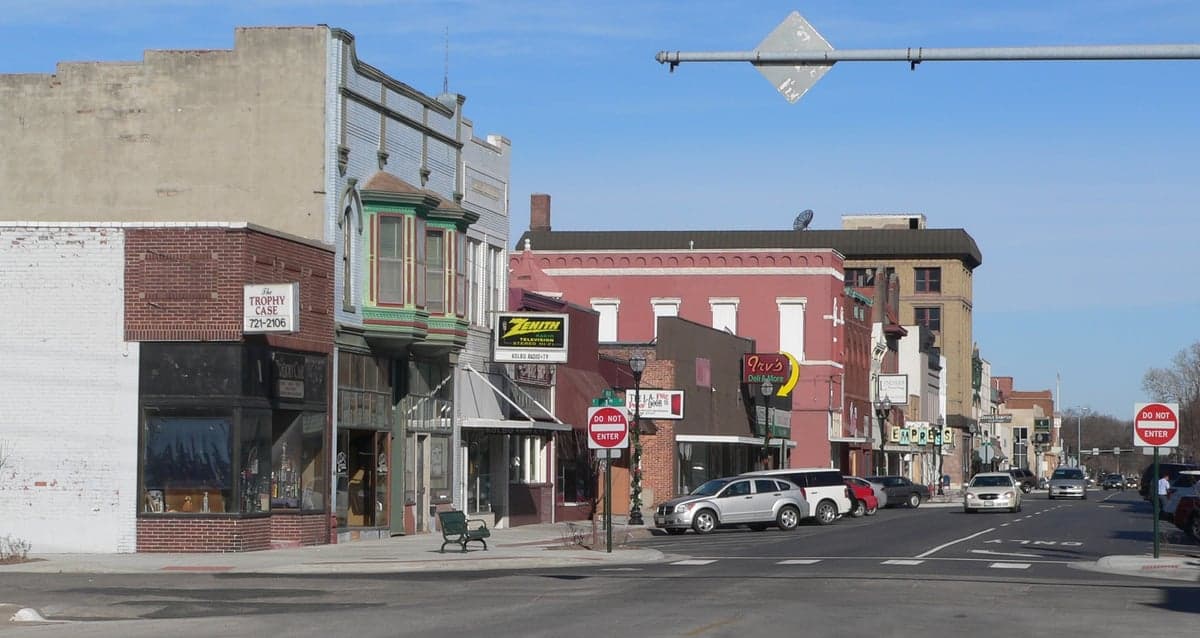
Photo: Wikipedia
Political ClimatePolitical Climate in Fremont, NE
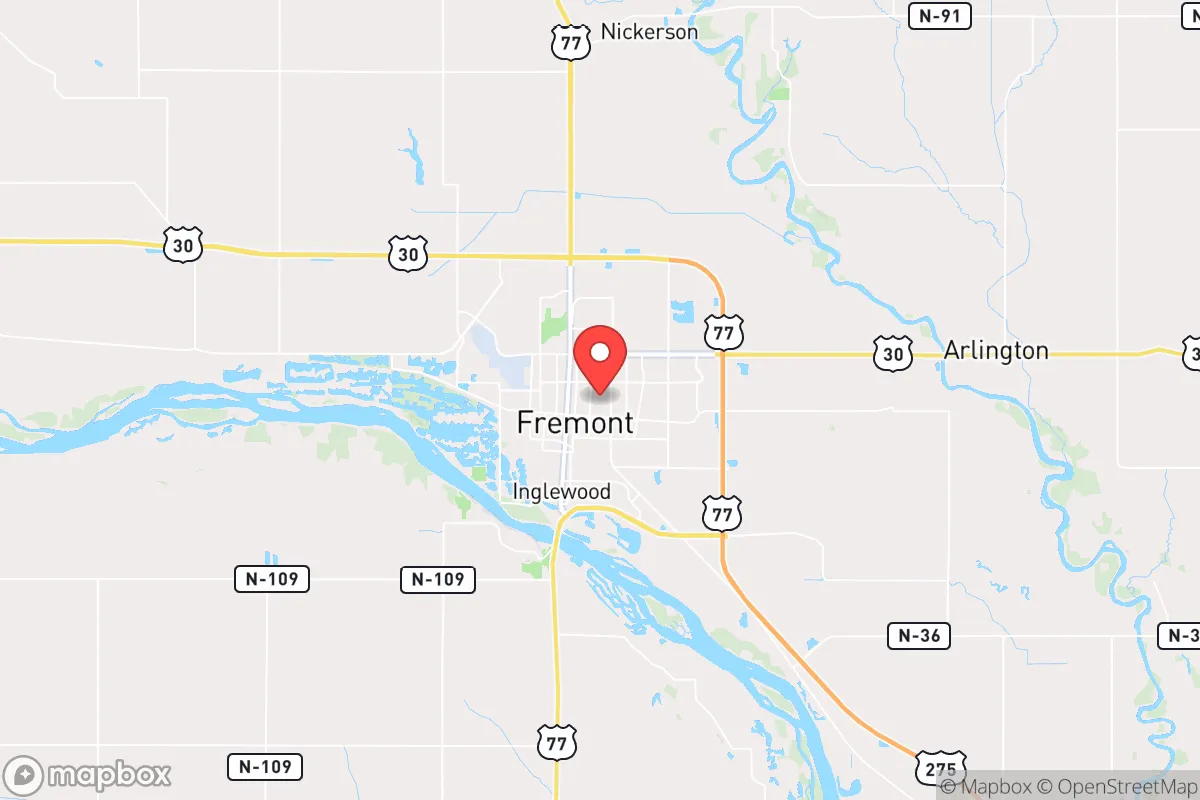
District shown is the primary district for this city’s centroid. Cities may span multiple districts.
Local Political AnalysisPolitical Analysis of Fremont, NE
Fremont, Nebraska, has long been a solidly conservative community, and that hasn't changed much, even as the rest of the country gets pulled in different directions. The Cook Partisan Voting Index (PVI) of R+6 tells you the baseline: this area reliably votes Republican, and it's not a close call. But if you've lived here a while, you know the real story is in the slow, creeping shifts—the kind that make you wonder if the next generation will feel the same way about personal freedom and limited government that we do.
How it compares
Drive twenty minutes south to Lincoln, and you're in a different world—a blue island where progressive policies on taxes, zoning, and even public health mandates are the norm. Omaha, an hour east, is even more pronounced, with city councils that seem to think they know better than you how to run your life. Fremont, by contrast, still feels like the Dodge County seat it's always been: a place where people mind their own business and expect the same from their government. Surrounding towns like Hooper and Scribner lean even further right, but Fremont is the economic hub, so it gets the attention. The contrast with Lincoln isn't just political; it's cultural. Down there, you see more government overreach into things like property rights and school curriculum. Up here, folks still believe the best government is the one that stays out of your way.
What this means for residents
For the people who actually live here, the R+6 lean means a few practical things. First, your tax dollars aren't being funneled into pet projects that sound good on paper but don't help your family. The city council and county board have historically been cautious about spending, which is a relief when you see neighboring towns pile up debt for bike lanes and public art. Second, there's a real resistance to the kind of progressive social engineering you see in bigger cities—like mandatory diversity training for small businesses or housing policies that prioritize newcomers over long-time residents. That's not to say Fremont is perfect; there's always pressure from state-level mandates coming out of Lincoln. But locally, the political climate still respects the idea that you know what's best for your own home and your own wallet. The concern, though, is that as the state's urban centers grow, they'll try to drag Fremont along with them. You can already see it in school board races and city council elections, where candidates backed by outside money push for "equity" initiatives that sound a lot like government control dressed up as compassion.
What the future looks like
Looking ahead, the long-term trend is the real worry. Fremont's population is aging, and younger families moving in often come from places like Omaha or even out of state, bringing different ideas about the role of government. If you've been here since the '90s, you remember when the biggest political fights were about keeping the downtown alive and keeping property taxes low. Now, you hear talk about "affordable housing mandates" and "climate action plans"—phrases that used to belong to Lincoln or Portland, not Fremont. The R+6 rating might hold for another cycle or two, but if the progressive wave keeps washing east from the coast, it'll lap at our doorstep too. For now, the best defense is staying involved—showing up at school board meetings, voting in every primary, and reminding your neighbors that freedom isn't free. It's a constant fight, but that's what makes Fremont worth fighting for.

State Political ClimatePolitical Climate in Nebraska
State Political AnalysisPolitical Environment in the State
Nebraska is a reliably Republican state, but it’s not the deep-red monolith many outsiders assume. The state’s electoral college split—awarding one vote per congressional district—has made the 2nd District (Omaha) a genuine battleground, while the rest of the state votes solidly red. Over the last 20 years, the rural-urban divide has widened dramatically: Omaha and Lincoln have drifted left, while the rest of Nebraska has hardened its conservative stance. The net result is a state that still leans +19 R in presidential races, but with a growing progressive foothold in its two largest cities that keeps things interesting.
Urban vs. rural divide
The political map of Nebraska is a study in contrasts. Omaha’s 2nd Congressional District is the only competitive seat in the state, flipping between parties and voting for Joe Biden in 2020 by a narrow 6.5 points. Lincoln, home to the University of Nebraska, has also trended blue—Biden won Lancaster County by 8 points in 2020, a flip from Trump’s 3-point win there in 2016. Meanwhile, the rest of the state is deeply Republican. Scottsbluff in the Panhandle, Norfolk in the northeast, and Kearney in central Nebraska all vote R by 30-40 point margins. The rural counties along the Platte River and in the Sandhills are among the most Republican in the nation—Arthur County gave Trump 88% of the vote in 2020. The divide isn’t just urban vs. rural; it’s also suburban. Sarpy County, south of Omaha, is a fast-growing conservative stronghold that voted +23 R in 2024, while Dodge County (Fremont) remains reliably red. The key takeaway: if you’re moving to Omaha or Lincoln, you’ll encounter a more mixed political environment; anywhere else, you’re in solidly conservative territory.
Policy environment
Nebraska’s policy posture is broadly conservative, but with some notable wrinkles. The state has a unicameral, nonpartisan legislature—the only one in the country—which often blunts the sharpest partisan edges. On taxes, Nebraska has a flat income tax rate of 5.84% (set to drop to 3.99% by 2027 under LB 754), and no tax on Social Security benefits. Property taxes are high, though, averaging 1.7% of home value, which is a persistent complaint. The state has a constitutional carry law (no permit needed to conceal a firearm), and it’s a right-to-work state. On education, Nebraska has a robust school choice program (the Opportunity Scholarship Act, LB 753), which provides tax-credit scholarships for private school tuition. Healthcare policy is mixed: the state expanded Medicaid under the Affordable Care Act via a 2018 ballot initiative, but it also has some of the strictest abortion laws in the Midwest—a 12-week ban passed in 2023 (LB 574), with exceptions for rape, incest, and medical emergencies. Election laws are moderately restrictive: voter ID is required (passed in 2021, implemented in 2024), and same-day registration is not allowed. Overall, the policy environment leans conservative on guns, taxes, and education, but the unicameral system can produce surprises—like the 2023 law banning gender-affirming care for minors, which passed with bipartisan support.
Trajectory & freedom
Nebraska is moving in a decidedly more freedom-oriented direction on several fronts, but there are warning signs. On the positive side, constitutional carry (LB 77, 2023) was a major win for gun rights, eliminating the permit requirement for concealed carry. The Opportunity Scholarship Act (LB 753, 2023) expanded educational freedom by creating tax-credit scholarships for private and parochial schools. The state also passed a parental bill of rights (LB 107, 2024), requiring schools to notify parents of curriculum changes and medical services. On the concerning side, the 12-week abortion ban (LB 574, 2023) was a compromise that left both sides unhappy—pro-lifers wanted a total ban, while pro-choice advocates saw it as an infringement. More troubling for conservatives is the growing influence of Omaha and Lincoln in the legislature. In 2023, a bill to ban sanctuary cities (LB 106) failed, and Omaha’s city council has debated adding sexual orientation and gender identity to its non-discrimination ordinance—a move that could preempt state law. The biggest red flag is property tax reform: despite years of promises, the legislature has failed to deliver meaningful relief, and property taxes continue to rise, especially in fast-growing areas like Sarpy County. The trajectory is mixed—more freedom on guns and education, but stagnation on taxes and creeping urban progressivism.
Civil unrest & political movements
Nebraska has seen relatively little civil unrest compared to coastal states, but there have been flashpoints. The 2020 George Floyd protests in Omaha turned violent, with looting and fires in the downtown area, leading to a heavy National Guard presence. More recently, the 2023 abortion ban protests drew thousands to the state capitol in Lincoln, with activists on both sides clashing verbally but not physically. The immigration debate is a live issue in Fremont, which passed an ordinance in 2010 (upheld by the courts) banning the hiring or renting to undocumented immigrants—a policy that remains controversial. On the right, the Nebraska Republican Party has seen a grassroots takeover by the “MAGA” wing, with the 2022 state convention electing a slate of hardline delegates. There’s also a small but vocal “Greater Nebraska” secession movement that periodically floats the idea of splitting the state into two—a response to Omaha and Lincoln’s growing political power. Election integrity has been a hot topic: the 2020 election saw no major fraud, but the 2021 voter ID law (LB 535) was passed in response to widespread concerns. For a new resident, the political atmosphere is generally calm, but you’ll notice the tension between the urban blue islands and the red rural sea—especially during legislative sessions.
Projection
Over the next 5-10 years, Nebraska is likely to become more politically divided, not less. The Omaha metro area is growing faster than the rest of the state, driven by tech and insurance jobs (e.g., Google’s data center, Mutual of Omaha’s expansion). This will make the 2nd District even more competitive and could flip the state legislature’s nonpartisan balance toward a more progressive tilt. Meanwhile, rural counties are losing population, which will amplify their political voice through the legislature’s district apportionment—but also make them more defensive. The unicameral system will likely face pressure to become partisan, as both sides grow frustrated with its consensus-driven approach. On policy, expect more school choice expansion and continued property tax battles, but also potential fights over transgender rights and medical marijuana (which failed in 2020 but is gaining support). The biggest wildcard is in-migration: if Nebraska attracts more conservative families from blue states (drawn by low crime and good schools), the rural-urban divide could stabilize. If it attracts more tech workers to Omaha, the leftward drift will accelerate. For a conservative moving in now, the next decade will feel like a holding action—holding the line in the legislature while watching Omaha and Lincoln slowly shift.
Bottom line for a new resident: If you’re moving to rural or small-town Nebraska, you’ll find a deeply conservative, freedom-friendly environment with low crime, good schools, and a strong sense of community. If you’re moving to Omaha or Lincoln, be prepared for a more mixed political climate—you’ll have conservative neighbors, but the local government and media will lean left. The state’s overall trajectory is toward more division, but the policy environment remains broadly favorable for conservatives, especially on guns, education, and taxes. Just keep an eye on property taxes and the growing influence of the urban corridor—those are the two forces that could change everything.
* Values derived from national, state, county, city and local statistics and may differ in a specific area. Last updated: 2026-10-10T16:27:29.000Z
Narrative content on this page is AI-generated and may contain mistakes. Verify any details that matter before acting on them.
ReloMaps may earn a commission from affiliate links at no extra cost to you.

