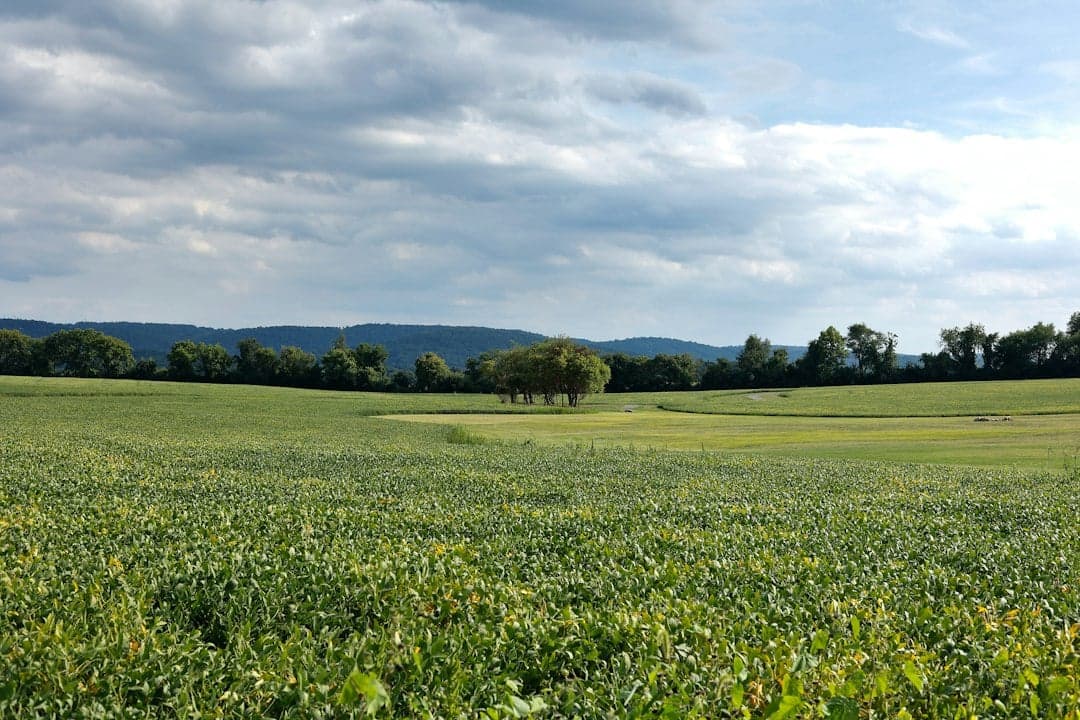
Photo: Sherebyah Tisbi via Unsplash
Strategic Assessment of Franklin Township, NJ
Multiple tactical vulnerabilities. Population density, target proximity, or disaster risk are likely compounding. A retreat property and exit planning is required.
What does the Strategic Assessment tell us?
Our Strategic Assessment grades tactical survivability of an area. Major population centers, military targets, fallout zones, natural disasters, and border exposure all drive risk — lower exposure means a more defensible position in a crisis.
This is heavily inspired by Joel Skousen's Strategic Relocation book. Highly recommended you checkout the book ($)What does this tell us?
Our Strategic Assessment grades tactical survivability of an area. Major population centers, military targets, fallout zones, natural disasters, and border exposure all drive risk — lower exposure means a more defensible position in a crisis.
This is heavily inspired by Joel Skousen's Strategic Relocation book. Highly recommended you checkout the book ($)Strategic Pillars

Key Distances
Regional Safe Places
Below is our recommended "safe zones" in New Jersey and the surrounding area based on our strategic heuristics. For most people, it's unrealistic to live in a “safe zone” full-time due to work, family or other personal reasons. They tend to be more rural. However, many of these areas are perfect for second homes and retreat properties that double as a vacation home or even a short-term rental.
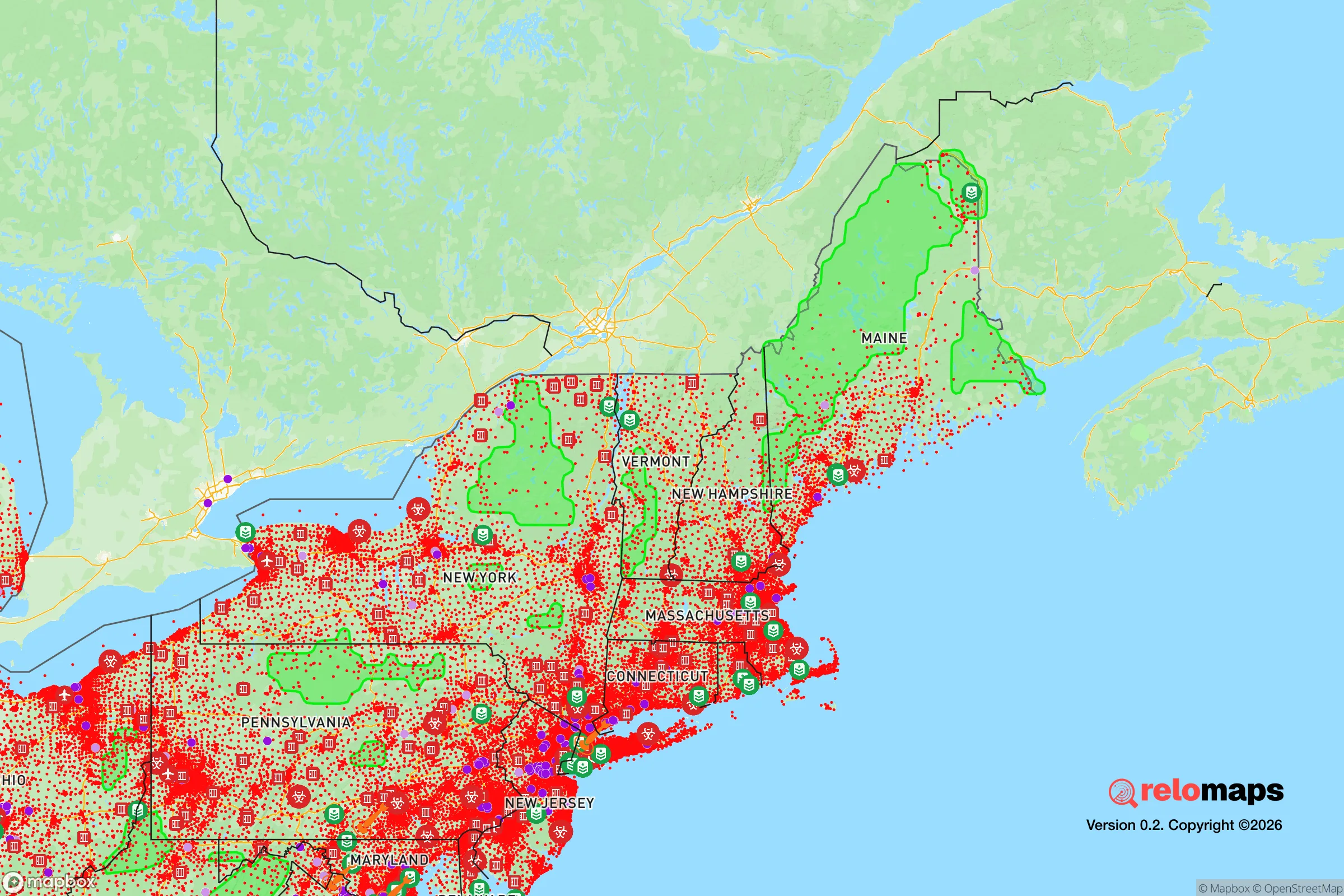
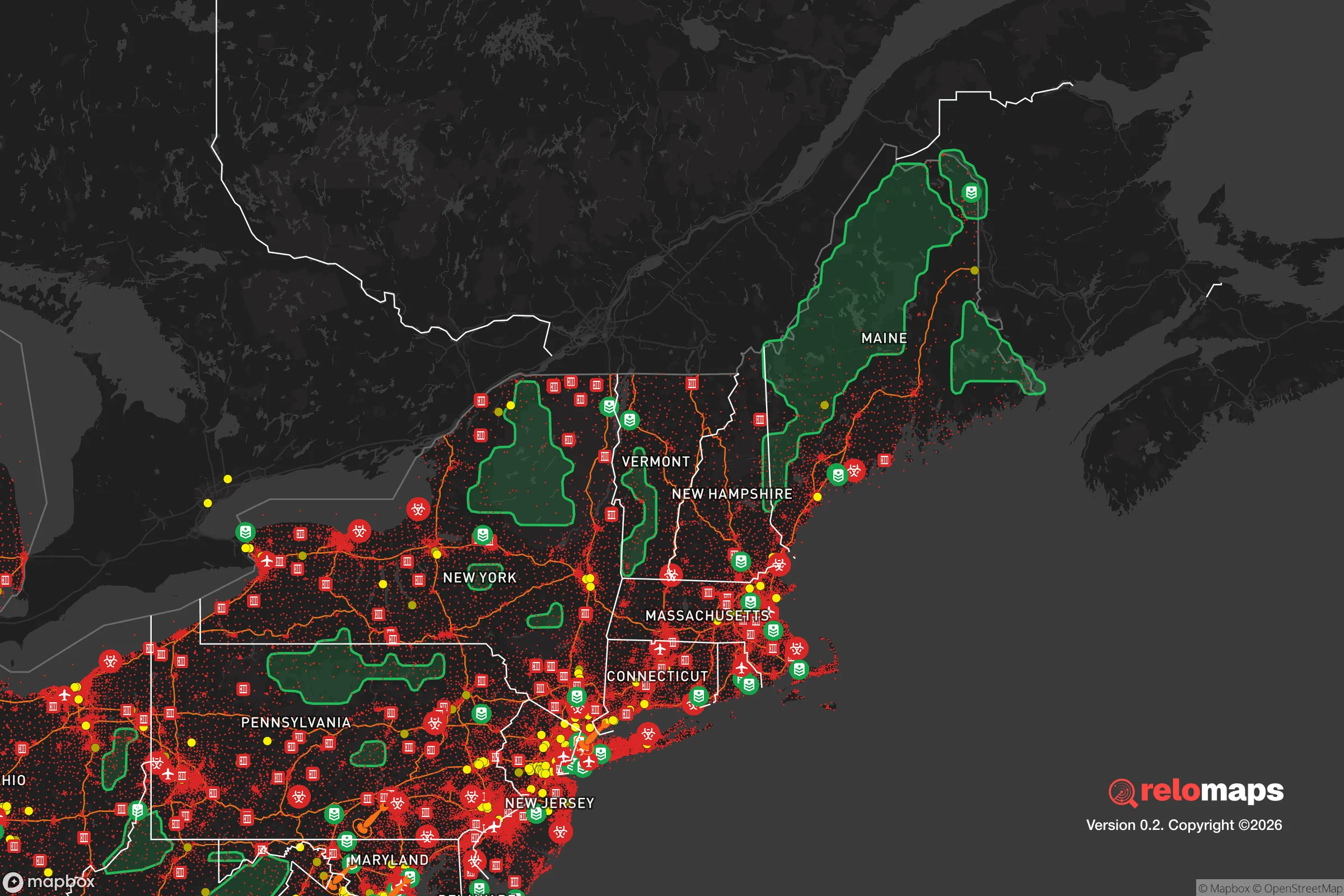


Important Note: For informational purposes only. This does not mean nothing bad ever happens in the green zones. Please use common sense. This is based on public data and modeled with AI. We tried to take a conservative approach but mistakes happen. We update this regularly as new information becomes available.
Solar Generator Recommendations
Backup power matters more here than in safer locations. We've picked three solar generators across budgets and capacity tiers — start with the budget unit if you only need a few essentials, or step up if you want to run a fridge and HVAC for days at a time.

Jackery Portable Power Station Explorer 300
Budget OptionPower on the Go: Weighing only 11 lbs, it's convenient to set up and store with book-sized foldable solar panels

BLUETTI Portable Power Station AC180
Designed for both indoor and outdoor scenarios, AC180 is highly capable as it has a robost capacity and continuous output power.

EF ECOFLOW DELTA Pro Ultra Power Station
Upgraded PickEcoFlow DELTA Pro Ultra is a whole-home energy system designed to grow with your family. Integrated with the Smart Home Panel 2, it scales to meet your evolving energy needs — keeping your home powered, intelligent, and secure through every stage of life.
We earn a commission, at no additional cost to you.
Strategic Assessment Analysis
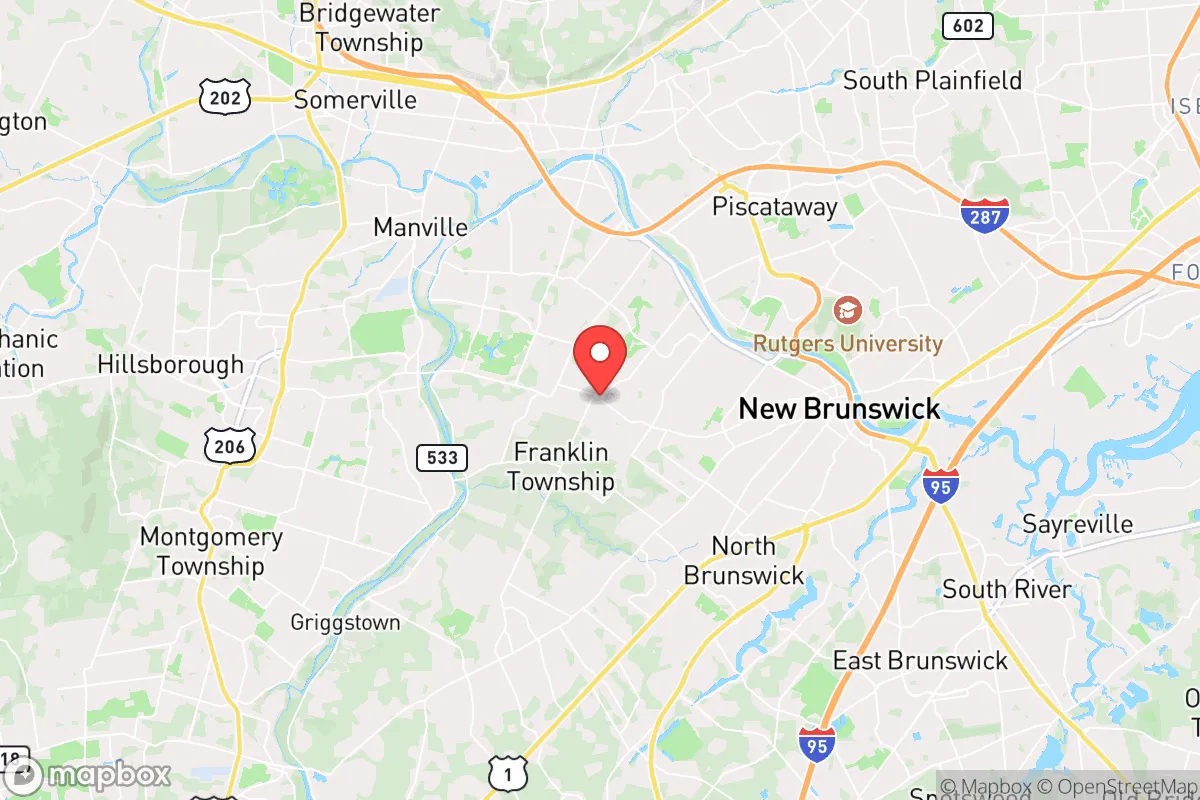
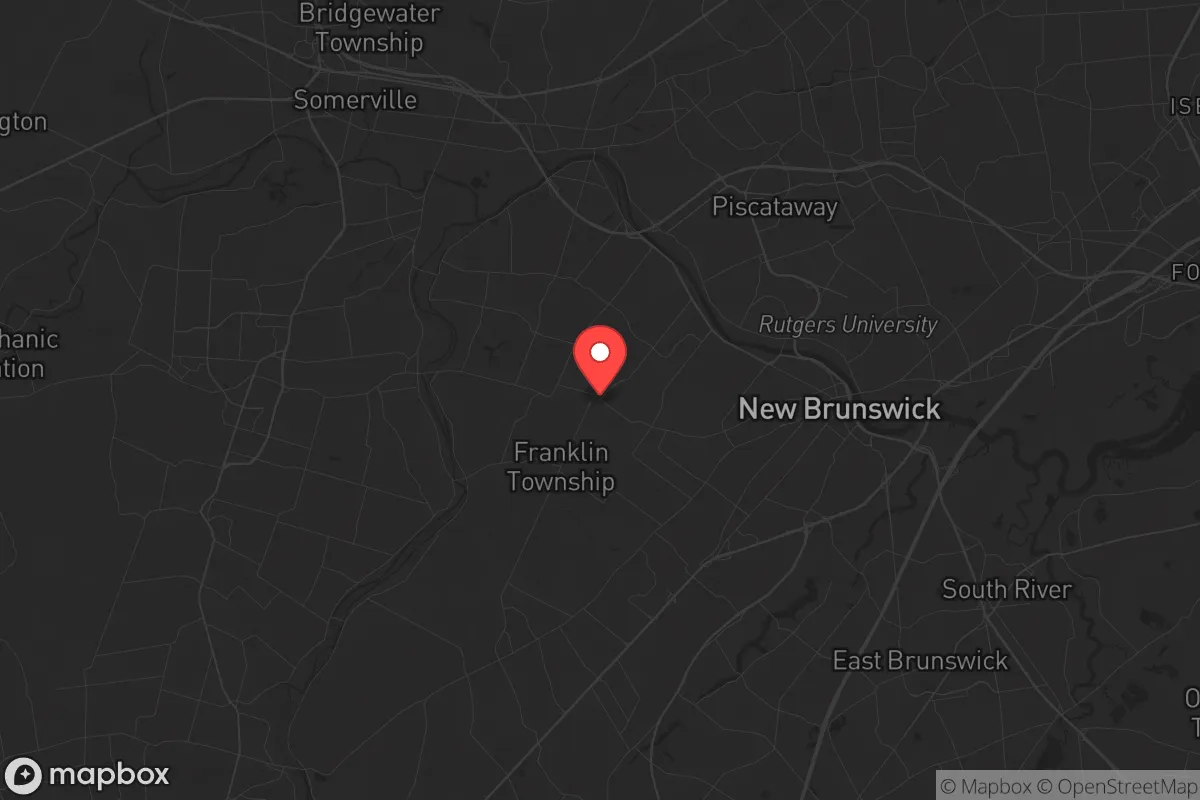
Franklin Township, New Jersey, occupies a strategic position that balances proximity to major metropolitan resources with a degree of geographic insulation that appeals to disaster-preparedness-minded relocators. Located in Somerset County, roughly 40 miles southwest of New York City and 30 miles north of Philadelphia, the township sits within the Raritan Valley region, offering a mix of suburban development, preserved farmland, and natural buffers. For a reader weighing self-sufficiency and resilience, Franklin Township presents a nuanced picture: it is not a remote bunker site, but its access to water resources, agricultural land, and multiple transportation corridors gives it a functional advantage over denser urban alternatives, provided one understands the trade-offs in risk exposure.
Geographic position and natural advantages for disaster readiness
Franklin Township’s geography is defined by its location within the Piedmont region, characterized by rolling hills, the Raritan River watershed, and a network of streams and lakes. The area sits on the Newark Basin, with relatively stable geology—earthquake risk is low compared to the West Coast, and the region is not prone to sinkholes or volcanic activity. The township’s elevation ranges from roughly 50 to 200 feet above sea level, which reduces flood risk in most residential areas, though low-lying zones near the Raritan River and its tributaries (such as the Millstone River) are in FEMA-designated floodplains. For a relocator, this means that careful property selection—avoiding the 100-year flood zones—can mitigate one of the region’s primary natural hazards: inland flooding from nor’easters or hurricane remnants. The area’s tree canopy is substantial, with preserved open spaces like the 500-acre Franklin Township Environmental Center and the 1,200-acre Colonial Park providing natural windbreaks and potential foraging or timber resources in a prolonged emergency. The township’s position along the Raritan River also offers a surface water source, though its quality and accessibility depend on treatment and legal access—a factor for those planning well-drilling or rainwater catchment.
Risks, exposures, and proximity to fallout-relevant landmarks
The most significant risk for Franklin Township in a disaster-readiness context is its proximity to high-value targets and infrastructure that could attract secondary effects. The township lies roughly 20 miles from Newark Liberty International Airport and 30 miles from the Port of New York and New Jersey, both of which are potential targets for conventional or asymmetric attacks. More critically, the area is within 50 miles of multiple nuclear power plants: the Salem and Hope Creek plants in southern New Jersey (about 60 miles southwest) and the Indian Point plant in New York (about 50 miles north, though decommissioned, spent fuel remains on site). The township is also within the 50-mile emergency planning zone for the Oyster Creek plant in Lacey Township, which is in decommissioning but still stores spent fuel. For a relocator concerned about radiological fallout, this proximity is a negative—prevailing winds from the southwest could carry contamination from the Salem/Hope Creek complex, while nor’easters from the northeast could push fallout from Indian Point. Additionally, Franklin Township is crossed by major transportation corridors: Interstate 287, Route 1, and the Northeast Corridor rail line, which carry hazardous materials and could become choke points or targets. The township’s population density (roughly 65,000 residents in 2024) means it is not a low-density retreat; evacuation routes could clog quickly, and the area’s reliance on the regional power grid (PSE&G) and water supply (from the Raritan River and groundwater wells) introduces single-point-of-failure risks during extended outages.
Practical resilience for a relocator: food, water, energy, and defensibility
For a relocator focused on self-sufficiency, Franklin Township offers several practical advantages, but they require active preparation. Food resilience is a notable strength: the township is part of Somerset County’s agricultural preservation program, with over 5,000 acres of preserved farmland within its borders. This includes working farms, community-supported agriculture (CSA) operations, and farmers’ markets (such as the Franklin Township Farmers Market at the municipal complex). A relocator could feasibly establish a substantial home garden on a half-acre or larger lot, and the local soil (primarily sandy loam) is workable with amendment. However, the growing season is moderate (roughly 170 frost-free days), and deer pressure is high—fencing is essential. Water resilience is more complex: the township’s municipal water supply comes from the Raritan River and groundwater wells, treated at the Raritan Water Treatment Plant. In a grid-down scenario, well owners with hand-pump backups have an advantage, but many suburban lots are on municipal water. Rainwater catchment is legal in New Jersey but limited to 100 gallons per roof without a permit, and the state’s average annual rainfall of 45 inches makes it viable for non-potable use. Energy resilience is a mixed picture: the area experiences occasional power outages from storms (Superstorm Sandy in 2012 left parts of the township without power for up to 10 days), but solar adoption is growing, and net metering is available. A relocator could install a grid-tied solar system with battery backup (e.g., Tesla Powerwall or Generac PWRcell) to cover critical loads, though HOA restrictions in some subdivisions may limit panel placement. Defensibility is limited by the township’s suburban layout: most neighborhoods have multiple access points, and the road network is dense. However, the presence of preserved open spaces and the D&R Canal towpath could serve as secondary movement corridors. The local police department (Franklin Township Police) has about 100 sworn officers, and the Somerset County Sheriff’s Office provides backup—but in a prolonged crisis, law enforcement capacity would be stretched thin. A relocator should prioritize a home with a basement (for storm shelter and storage) and consider a rural-adjacent lot near preserved farmland for buffer space.
Overall strategic picture for the disaster-conscious relocator
Franklin Township, NJ, is not a survivalist’s paradise, but it offers a defensible middle ground for a relocator who wants metropolitan access without being trapped in a dense urban core during a crisis. Its agricultural land, water resources, and relatively stable geology are genuine assets, while its proximity to nuclear plants, transportation corridors, and population centers are real liabilities that require mitigation through property selection and preparation. For a family or individual willing to invest in a well, solar+battery system, and a garden, the township provides a functional base for a “gray man” approach—blending into a suburban environment while maintaining independent capability. The key is to avoid the floodplains, secure a lot with well access, and build relationships with local farmers and the township’s Office of Emergency Management. In a regional disaster, Franklin Township would likely fare better than Newark or New Brunswick, but worse than a rural property in Hunterdon County. It is a calculated compromise, not a refuge. For the reader who values resilience but cannot relocate to a remote area, it is worth a serious look—with eyes open to the risks.

* Values derived from national, state, county, city and local statistics and may differ in a specific area. Last updated: 2026-09-20T15:54:40.000Z
Narrative content on this page is AI-generated and may contain mistakes. Verify any details that matter before acting on them.
ReloMaps may earn a commission from affiliate links at no extra cost to you.

