Photo: Sherebyah Tisbi via Unsplash
Quality of Life in Franklin Township, NJ
A livable area that tracks near national norms for affordability, walkability, and neighborhood health.
What does Quality of Life tell us?
Quality of Life blends cost of living, nearby amenities, socioeconomic signals, and neighborhood character. City-level scores represent the whole municipality; individual neighborhoods can differ.
What does this tell us?
Quality of Life blends cost of living, nearby amenities, socioeconomic signals, and neighborhood character. City-level scores represent the whole municipality; individual neighborhoods can differ.
Cost of Living
36% above national average
The Real Cost of Living in Franklin Township, NJ for 2026
| Tier | Individual | Family (4) |
|---|---|---|
| Survival | $21k | $39k |
| Comfortable | $94k | $139k |
| Luxury | $158k+ | $244k+ |
| Elite (Top 5%) | $185k+ | $287k+ |
100%
The Area Signal
A metric tracking the socioeconomic signals of the area.
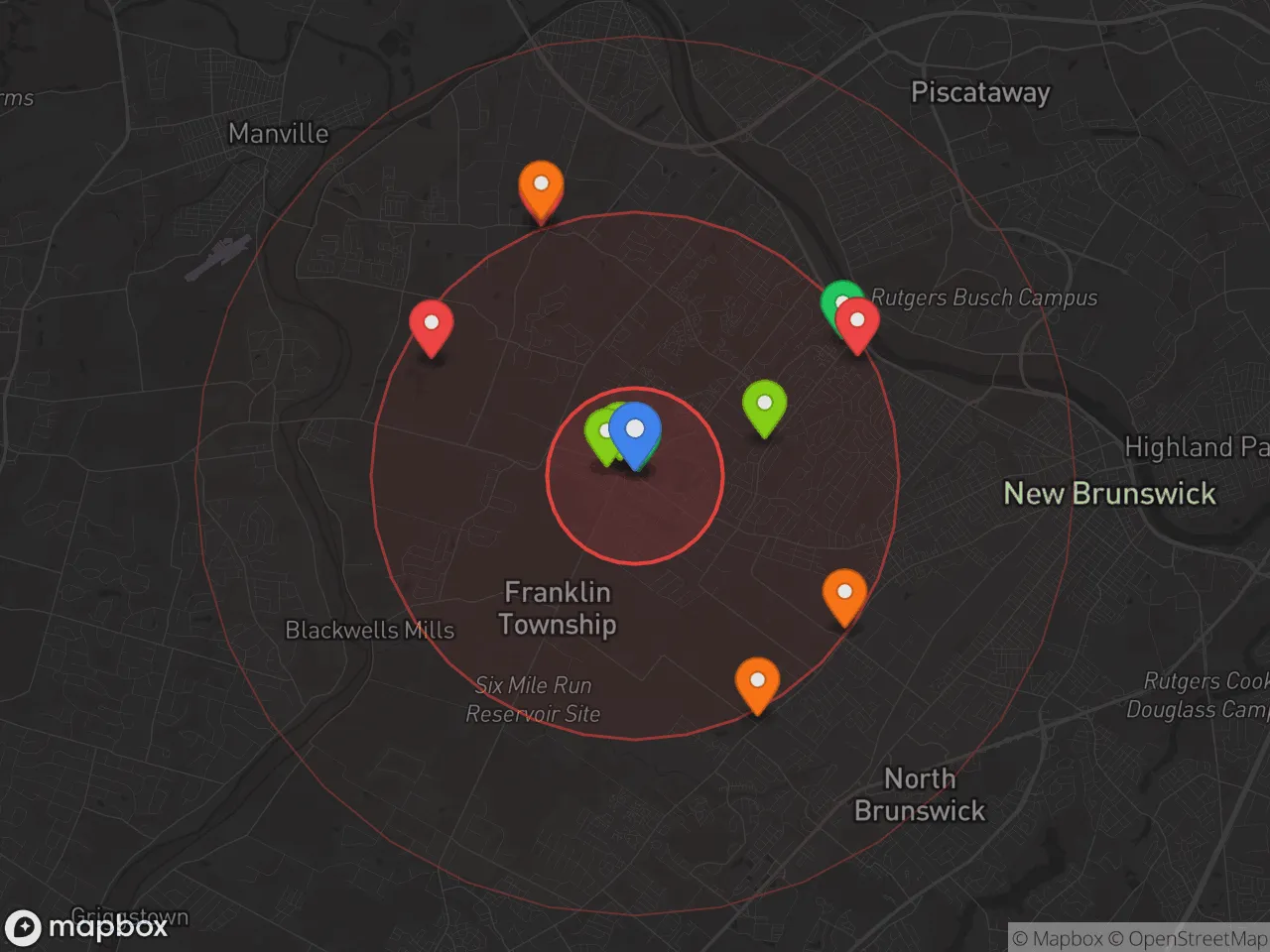
Hobbies
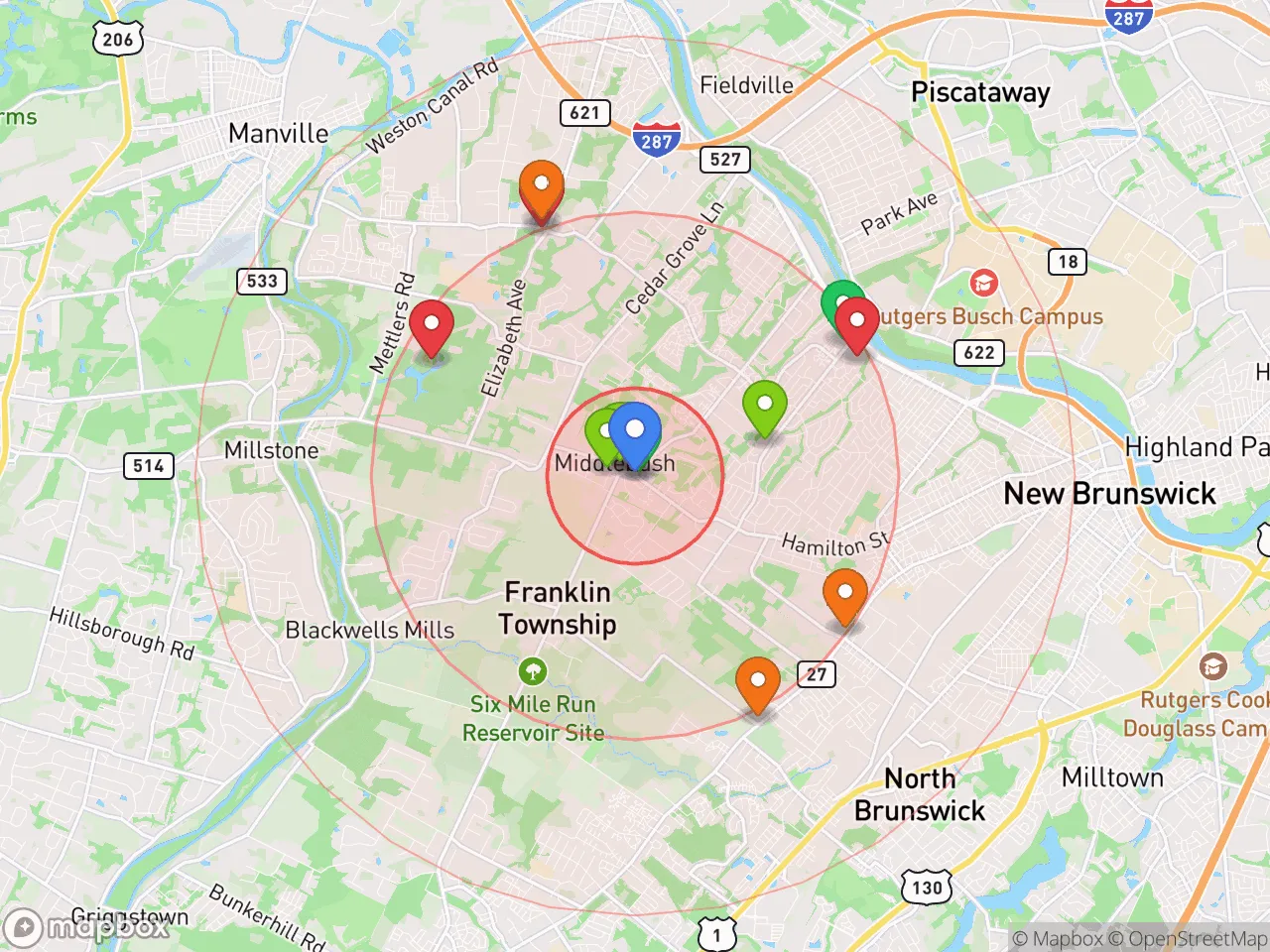
Explore the areaGroceries
9 within 10 miles
Gas
20 within 10 miles
Hospital
20 within 20 miles
Airport
EWR — Newark Liberty International
Post Office
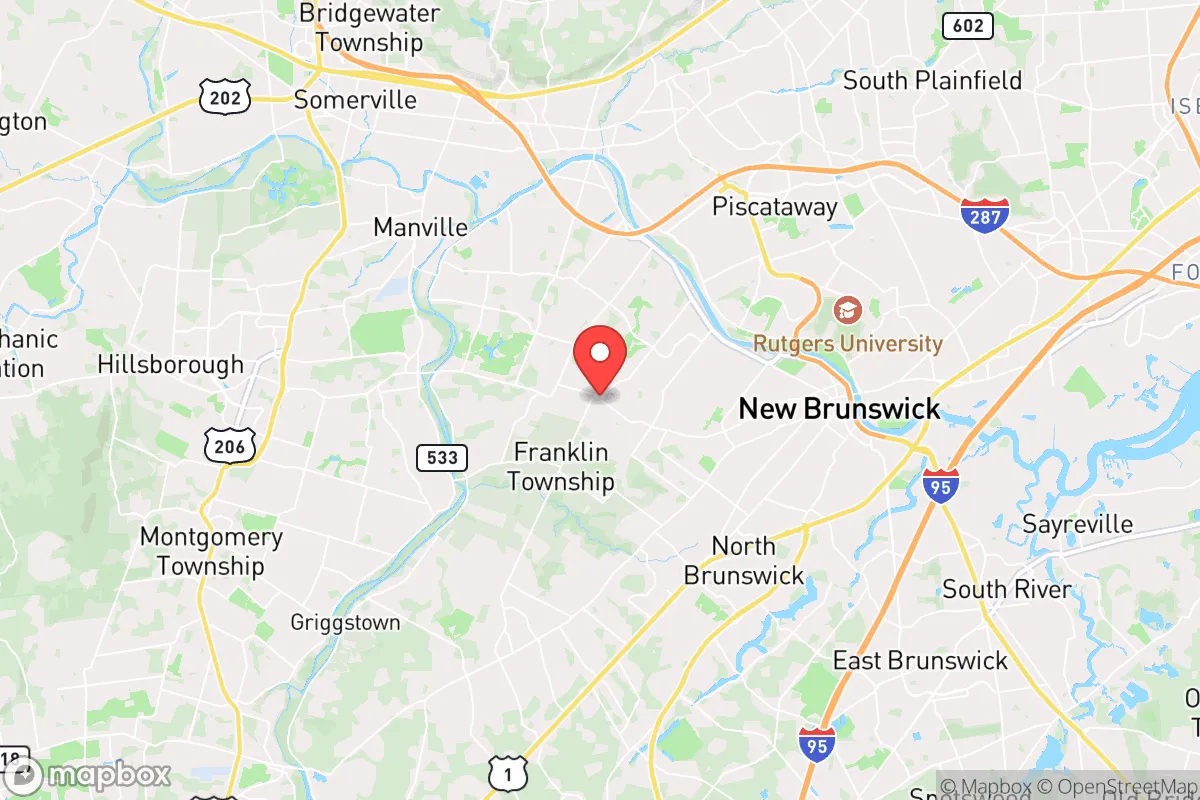
USPS — Franklin Township, NJ
Critical Amenities
Quality-of-Life Analysis
Franklin Township, New Jersey, is an affluent, family-oriented suburb in Somerset County where the cost of living index of 136 sits well above the national average of 100, attracting professionals and executives who commute to New York City and Philadelphia. The township’s population is notably diverse, with a significant Asian American community and a mix of young families, empty-nesters, and long-term residents who value its strong school system and suburban tranquility. Median home values of $486,200 and median rents of $1,292 reflect a market that is expensive by national standards but more attainable than in neighboring communities like Princeton or Bridgewater, where home prices often exceed $600,000.
Cost of living, housing, and affordability compared to nearby areas
Franklin Township’s cost of living index of 136 means everyday expenses—groceries, utilities, and transportation—are roughly 36% higher than the U.S. average, driven largely by housing and property taxes. The median home value of $486,200 is significantly lower than in Princeton ($750,000+) or New Brunswick ($400,000 for smaller homes), but still above the national median of roughly $350,000. Renters fare better: the median rent of $1,292 is well below the New Jersey state average of $1,600 and far cheaper than in nearby Edison ($1,500) or Highland Park ($1,400). Property taxes in Franklin Township average around $8,500 annually, which is typical for Somerset County but higher than in many Midwestern or Southern suburbs. For buyers, the trade-off is access to top-rated schools and a commute that averages 32.4 minutes—shorter than the 40+ minute commutes common in more distant exurbs like Hillsborough or Montgomery.
What daily life is like for families: schools, amenities, and commute
Daily life in Franklin Township revolves around its highly rated public school system, which includes Franklin High School and several elementary and middle schools that consistently earn A ratings on Niche. The township offers extensive parks and recreation, including the 200-acre Colonial Park with its gardens, tennis courts, and a popular farmers market. The average commute of 32.4 minutes is manageable for those working in New Brunswick (home to Rutgers University and Johnson & Johnson) or in northern New Jersey, with NJ Transit bus and train service providing direct access to New York City’s Penn Station in about 50 minutes. Shopping and dining are concentrated along Route 27 and at the Franklin Park Shopping Center, while the nearby Bridgewater Commons Mall offers upscale retail. The area lacks a vibrant nightlife scene, but families appreciate the low crime rate—violent crime is roughly 60% below the national average—and the abundance of youth sports leagues, libraries, and community events like the annual Franklin Township Day.
Franklin Township is best suited for professionals and families who prioritize strong public schools, a safe environment, and a manageable commute over urban excitement or ultra-low housing costs. The township’s diversity and suburban amenities make it a strong choice for those working in the pharmaceutical, tech, or education sectors in central New Jersey, while its proximity to major highways (I-287, I-95) and NJ Transit rail lines appeals to New York City commuters. Retirees may find the property taxes and cost of living prohibitive, but for families seeking a well-rounded, affluent suburb with a genuine community feel, Franklin Township delivers a high quality of life that justifies its premium price tag.

Crime in Franklin Township, NJ
Lower crime rates than 95% of comparable U.S. locations.
Violent CrimeViolent Crime Analysis
Property CrimeProperty Crime Analysis
Crime Analysis
Franklin Township, New Jersey, presents a crime profile that is significantly safer than both state and national averages, but its location within the broader liberal-leaning Somerset County and proximity to the progressive justice systems of major metro areas like Newark and New York City warrants a cautious assessment. The township’s violent crime rate stands at just 28.4 incidents per 100,000 residents, and its property crime rate is 403.4 per 100,000. While these figures are low, residents must remain aware that the surrounding region’s political and judicial environment—characterized by progressive district attorneys and lenient sentencing philosophies—can create a revolving door for offenders, undermining local safety gains.
Crime in context
Franklin Township’s violent crime rate is roughly 92% lower than the national average and about 85% lower than the New Jersey state average. Property crime, while higher than violent crime, still sits well below the national median. However, these statistics must be weighed against the reality of the larger metro area. The region’s progressive prosecutors and judges often prioritize rehabilitation over incarceration, leading to reduced sentences and early release for repeat offenders. This ideological approach, while well-intentioned, directly results in more criminals returning to the streets sooner, increasing the risk for suburban communities like Franklin Township that are within easy commuting distance of high-crime urban centers. The low local numbers do not insulate the township from spillover crime driven by these systemic policies.
What residents experience
Daily life in Franklin Township feels safe for most residents, with the most common incidents being theft from vehicles and package thefts rather than violent confrontations. The township’s police department maintains a visible presence, and neighborhood watch programs are active. Yet, the progressive judicial environment in Somerset County means that even when arrests are made, offenders often face minimal consequences. For example, non-violent property criminals may receive diversion programs or short probation terms, allowing them to re-offend quickly. This pattern frustrates victims and erodes trust in the justice system. Residents should take proactive measures—such as securing vehicles, installing cameras, and reporting suspicious activity—to compensate for a system that often prioritizes offender rights over public safety.
Neighborhood-level variation is notable within Franklin Township. Areas closer to the New Brunswick border and along major transit corridors like Route 27 and the NJ Transit rail line experience slightly higher property crime rates, likely due to easier access for transient offenders from nearby cities. In contrast, the more affluent, secluded neighborhoods in the eastern and southern parts of the township—such as those near the Colonial Park area—report fewer incidents. Prospective residents should research specific blocks and consider that even in a low-crime township, proximity to progressive urban justice systems can amplify risk. Choosing a home away from major thoroughfares and near active community patrols offers the best defense against the broader regional crime trends driven by lenient judicial policies.
* Values derived from national, state, county, city and local statistics and may differ in a specific area. Last updated: 2026-09-20T15:54:40.000Z
Narrative content on this page is AI-generated and may contain mistakes. Verify any details that matter before acting on them.
ReloMaps may earn a commission from affiliate links at no extra cost to you.

