Photo: Wikipedia
Political ClimatePolitical Climate in Franklin, NJ
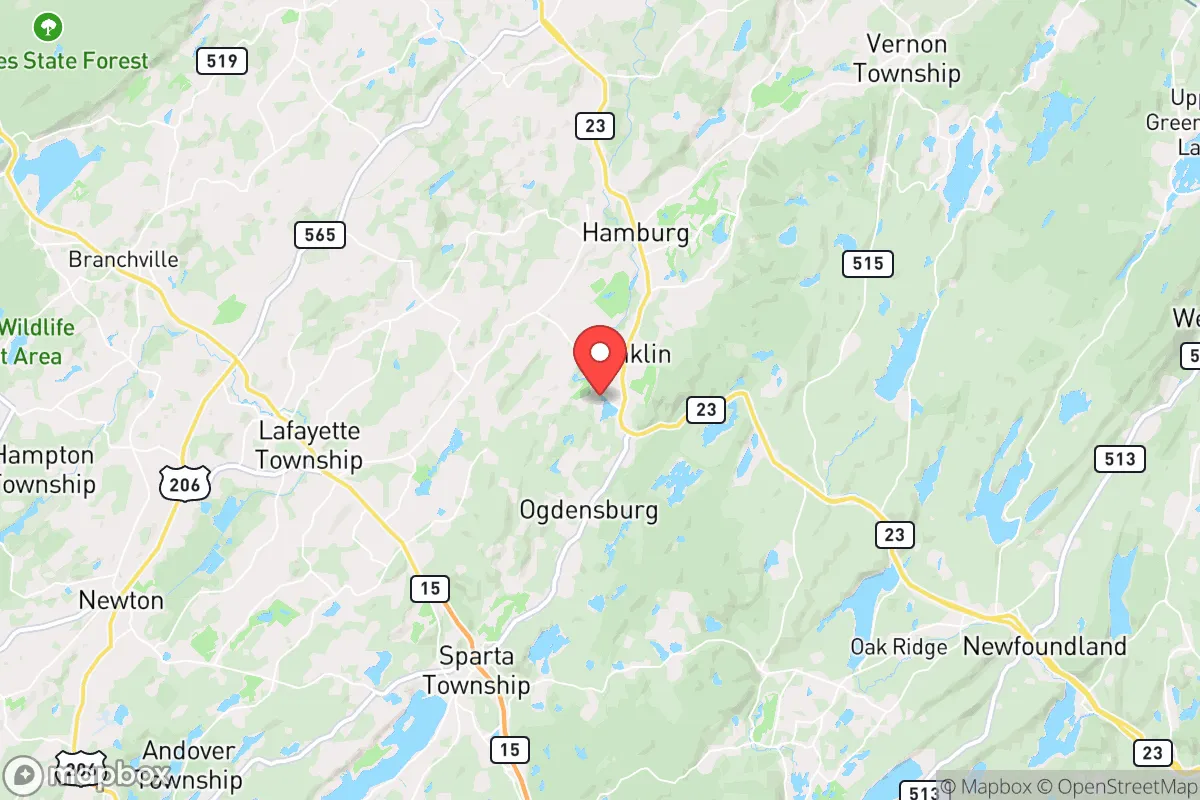
District shown is the primary district for this city’s centroid. Cities may span multiple districts.
Local Political AnalysisPolitical Analysis of Franklin, NJ
Franklin Township in Somerset County has a political climate that’s solidly Democratic but notably more moderate than the state as a whole, with a Cook PVI of D+2 compared to New Jersey’s D+5. This means the area leans left, but by a narrower margin than the rest of the state, and that gap has been a consistent feature for the last decade. You’ll see it in local elections, where Republicans can still win seats on the township council or school board, something that’s become rare in places like nearby New Brunswick or Highland Park. The trajectory is slowly trending bluer as younger families move in from more expensive towns like Princeton, but it’s not a dramatic shift — Franklin’s large, established Indian-American and Chinese-American communities have long been reliable Democratic voters, while older white residents in the Somerset section and around the historic villages tend to split tickets more often.
How it compares to New Jersey as a whole
The D+2 vs. D+5 difference is the key number. In statewide races, Franklin usually votes Democratic, but by a smaller percentage than the state average. For example, in the 2021 gubernatorial race, Phil Murphy won Franklin by about 12 points, while he carried the state by roughly 15 points. That’s a real gap, and it shows up in down-ballot races too. Contrast that with Bridgewater Township just to the north, which is R+1, or Hillsborough to the west, which is roughly even — Franklin sits right in the middle of a politically mixed corridor. The surrounding Somerset County as a whole is D+7, so Franklin is actually one of the more conservative-leaning towns in the county, which surprises a lot of people who assume all of central Jersey is uniformly blue. The state’s D+5 rating reflects the deep-blue strongholds of Essex and Hudson counties; Franklin’s D+2 is closer to the national average.
What this means for residents
For liberal residents, Franklin feels comfortable but not like a political monoculture. You’ll find plenty of neighbors who share your views, but you’ll also encounter conservative voices at town hall meetings or in Nextdoor threads, especially on issues like school funding and development. For conservative residents, the environment is manageable — you’re not in a deep-blue enclave where your views are unheard. Local Republican candidates can and do win, particularly in wards with older, single-family-home neighborhoods. The practical effect is that local policy tends to be pragmatic rather than ideological. The township council has passed progressive measures like a paid sick leave ordinance, but it’s also kept property taxes relatively moderate for the region. School board races are where the political divide shows up most, with debates over curriculum and library books reflecting the broader national split, but the outcomes are usually moderate compromises.
A cultural distinction worth noting is Franklin’s strong sense of local identity, which often trumps partisan labels. The township’s diversity — over 40% of residents are Asian-American, and there’s a significant South Asian business corridor along Route 27 — means that many political conversations start from a place of community priorities rather than national party lines. You’ll see Democratic candidates campaigning on infrastructure and school quality, not just national issues, and Republican candidates emphasizing fiscal responsibility and public safety. The long-term trajectory is probably a slow drift leftward as the population grows younger and more diverse, but Franklin’s D+2 lean has been remarkably stable for the past three election cycles. It’s a place where you can have a neighbor with a Biden sign next to one with a local Republican council candidate’s sign, and both feel heard at the annual town picnic.

State Political ClimatePolitical Climate in New Jersey
State Political AnalysisPolitical Environment in the State
New Jersey is a solidly Democratic state with a Cook PVI of D+5, but don't let that single number fool you — it's one of the most politically complex and internally divided states in the Northeast. Over the past 20 years, the state has shifted from a purple battleground where Republicans held the governor's mansion for 12 of 16 years (1994-2010) to a state where Democrats now control every lever of power, including both legislative chambers and the governorship since 2018. The trajectory is unmistakably blue, but the margins are thinner than the PVI suggests — in 2024, Kamala Harris won New Jersey by only about 5 points, down from Biden's 16-point margin in 2020, signaling a real rightward drift in the suburbs and exurbs that a conservative relocator should pay attention to.
Urban vs. rural divide
The political map of New Jersey is a tale of three distinct regions. The urban core — Newark, Jersey City, Paterson, and Elizabeth — is overwhelmingly Democratic, driven by dense minority populations, union households, and a strong public-sector workforce. These cities reliably deliver 70-80% of their votes to Democrats and are the engine of the state's blue lean. The suburban ring — places like Bergen County, Middlesex County, and Monmouth County — is where the real action is. These areas were once reliably Republican but have shifted leftward over the past decade, especially among college-educated women and Asian-American voters. In 2024, Bergen County flipped from a 5-point Biden win to a 3-point Harris loss, a swing of 8 points that helped explain the statewide tightening. The rural and exurban south and west — Sussex County, Warren County, Hunterdon County, and much of Ocean County — remains deeply Republican. Ocean County, anchored by Toms River and Lakewood, voted +18 for Trump in 2024, while Sussex County went +22. These areas are culturally and economically distinct from the north, with a strong gun-owning, tax-sensitive, and socially conservative base. The divide is not just partisan but cultural: the northern suburbs are increasingly diverse and professional, while the southern and western counties are whiter, older, and more working-class.
Policy environment
New Jersey's policy environment is defined by its tax structure, which is the most burdensome in the nation. The state has a progressive income tax with a top rate of 10.75% on income over $1 million, the second-highest corporate tax rate in the country at 11.5%, and property taxes that average over $9,500 annually — the highest in the U.S. For a conservative relocator, this is the single biggest practical concern. The regulatory posture is similarly heavy: New Jersey has some of the strictest environmental regulations in the country, a strong public-sector union presence, and a minimum wage that reached $15.13 per hour in 2025. On education policy, the state spends more per pupil than almost any other — over $25,000 annually — and has a robust system of public charter schools, though they face political headwinds from the teachers' unions. Healthcare is heavily regulated, with a state-based health insurance exchange and Medicaid expansion under the Affordable Care Act. Election laws are among the most accessible in the country: no-excuse mail-in voting, automatic voter registration at DMV, and same-day registration on Election Day. For a conservative, this environment means high taxes and heavy regulation, but also high-quality public services, excellent schools in many districts, and a well-funded safety net.
Recent policy direction
The last five years have seen a sharp leftward turn in state policy. In 2022, Governor Phil Murphy signed a comprehensive gun safety package that banned .50 caliber rifles, raised the purchase age for long guns to 21, and required microstamping on handguns — one of the strictest gun laws in the nation. In 2023, the state passed a parental rights bill that, unlike Florida's, actually expanded the rights of parents to opt their children out of LGBTQ-inclusive curriculum, but also required schools to notify parents of changes to a child's gender identity — a compromise that satisfied neither side. On abortion, New Jersey codified Roe v. Wade protections in 2022, allowing abortion up to viability and removing many restrictions. The state also passed a privacy law in 2023 that gives residents the right to opt out of data collection and requires companies to disclose what they collect. On property rights, the state has a strong eminent domain framework but also a robust affordable housing mandate that forces towns to zone for multi-family units. For a conservative, the direction is clear: more regulation, higher taxes, and expanded individual rights on social issues, but with some protections for parental involvement in schools. The voting access laws are among the most expansive in the country, which some conservatives argue undermines election integrity, though no major fraud has been documented.
Civil unrest & political movements
New Jersey has a history of organized political activism on both sides. The Black Lives Matter protests in 2020 were large and sustained, particularly in Newark and Trenton, leading to the passage of police reform legislation in 2021 that banned chokeholds and required body cameras. On the right, the New Jersey 2nd Amendment Society and local gun rights groups have been highly active, organizing rallies at the statehouse and successfully challenging some gun laws in court. The state's sanctuary policies are a flashpoint: New Jersey has a "Immigrant Trust Directive" that limits local law enforcement cooperation with federal immigration authorities, and several cities — including Newark, Jersey City, and Trenton — have declared themselves sanctuary cities. This has led to tension with the Trump administration and periodic ICE raids. Election integrity has been a persistent issue: in 2020, Trump's campaign filed multiple lawsuits in New Jersey alleging irregularities, all of which were dismissed. The state's secession or nullification rhetoric is minimal, though there is a small but vocal "New Jersey for Independence" movement that advocates for leaving the U.S. entirely — a fringe idea. A new resident would notice the visible presence of political bumper stickers, yard signs, and community organizing, especially in the suburbs where local school board meetings have become battlegrounds over curriculum and parental rights.
Projection
Over the next 5-10 years, New Jersey's political trajectory is likely to be one of continued Democratic dominance at the state level, but with a narrowing margin in statewide elections. The key demographic driver is the continued out-migration of conservative-leaning residents to lower-tax states like Florida, Texas, and the Carolinas — a trend that accelerated after the 2017 tax reform capped the state and local tax (SALT) deduction. At the same time, the state is attracting younger, more diverse, and more liberal residents to its urban and suburban cores, particularly in Hudson County and Essex County. The suburban swing we saw in 2024 — with Bergen and Middlesex counties moving right — may be a temporary reaction to inflation and crime, or it could signal a longer-term realignment of Asian-American and Jewish voters who are increasingly concerned about education policy and public safety. The rural areas will only get redder as they lose population and become more politically isolated. For a conservative moving in now, the expectation should be that the state will remain a Democratic stronghold, but with a more competitive flavor in statewide races — think of it as a "blue state with a red streak" where your vote matters more than in deep-blue states like California or New York. The tax burden is unlikely to decrease significantly, but the quality of life — schools, infrastructure, proximity to New York and Philadelphia — will remain high for those who can afford it.
Bottom line for a new resident: If you're a conservative moving to New Jersey, you're entering a state where your political views will be in the minority, but you'll find plenty of like-minded neighbors in the suburbs and exurbs — especially in Ocean, Sussex, and Hunterdon counties. You'll pay high taxes and deal with heavy regulation, but you'll also get excellent schools, world-class healthcare, and a vibrant economy. The political climate is contentious but not hostile; people are generally civil, and the state's diversity means you'll encounter a wide range of viewpoints. Just know that the policy direction is firmly leftward, and if you're looking for a place where your vote will reliably elect conservatives, this isn't it. But if you value the trade-offs — proximity to major cities, strong public services, and a high standard of living — New Jersey can still work for you, especially if you pick your town carefully.
* Values derived from national, state, county, city and local statistics and may differ in a specific area. Last updated: 2026-09-21T01:03:06.000Z
Narrative content on this page is AI-generated and may contain mistakes. Verify any details that matter before acting on them.
ReloMaps may earn a commission from affiliate links at no extra cost to you.

