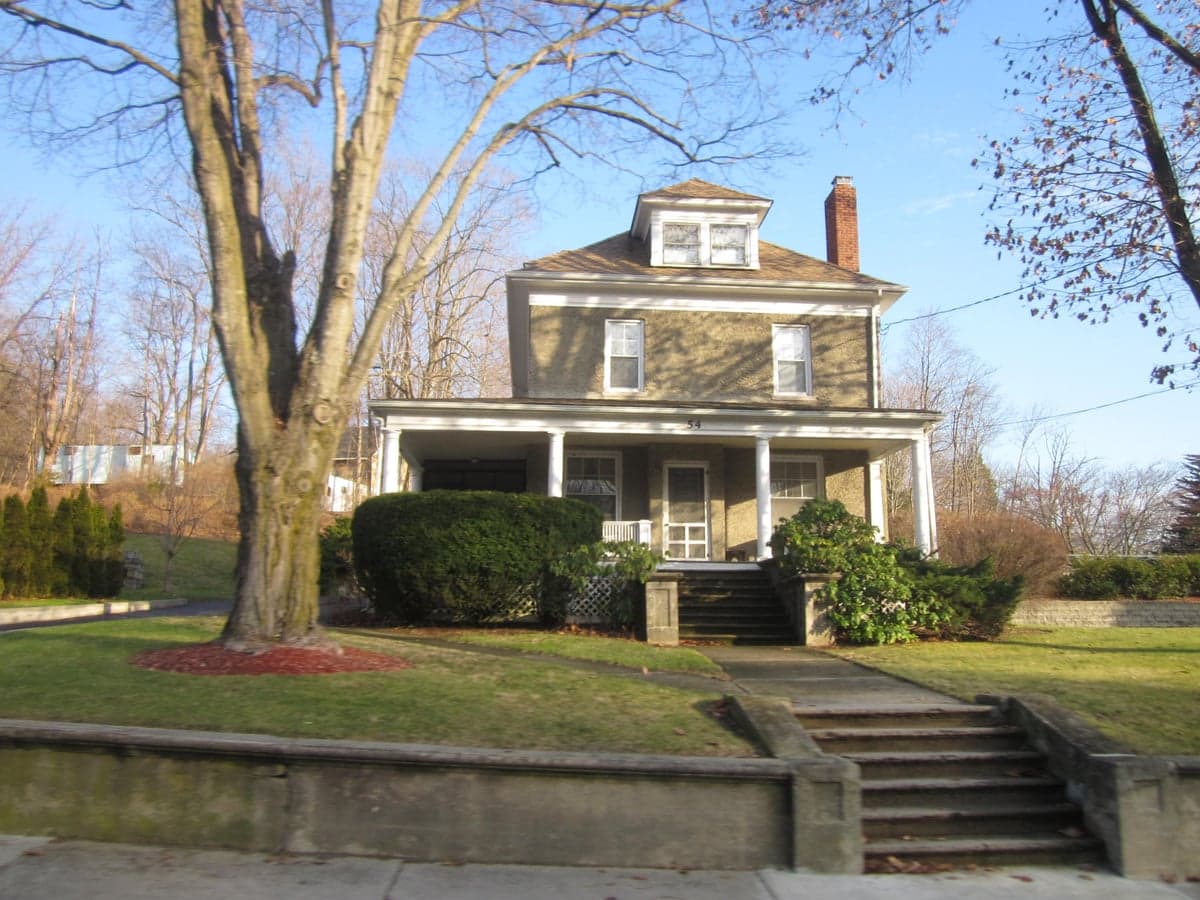
Photo: Wikipedia
Personal Sovereignty in Franklin, NJ
Viable for self-reliance. Generally workable, though some barriers may limit total independence.
What does Personal Sovereignty tell us?
Personal Sovereignty measures your capacity for self-reliance and independence with minimal government friction. Higher scores mean fewer barriers between you and the way you want to live... but it assumes you have the space you need and good neighbors.
What does this tell us?
Personal Sovereignty measures your capacity for self-reliance and independence with minimal government friction. Higher scores mean fewer barriers between you and the way you want to live... but it assumes you have the space you need and good neighbors.
State Policy
Energy independence: Importer (8% of energy produced in-state)
Personal Liberty
Homesteading

Personal Liberty Analysis
Franklin, New Jersey offers a mixed personal sovereignty environment shaped by its rural Sussex County character and the broader constraints of New Jersey state law. While the township itself maintains a relatively light touch on daily life compared to denser parts of the state, residents must navigate one of the nation's highest tax burdens and a regulatory framework that significantly limits self-defense options and off-grid independence. For a freedom-oriented individual or family, Franklin provides a quieter, more self-reliant lifestyle than much of New Jersey, but the state's overarching policies on taxes, gun rights, and property use create real boundaries that cannot be ignored.
Tax burden and regulatory posture in Sussex County
New Jersey consistently ranks among the highest-taxed states in the U.S., and Franklin residents feel that reality directly. The state's income tax is progressive, with rates from 1.4% to 10.75% for top earners, and the sales tax is 6.625%. Property taxes in Franklin are substantial: the average effective property tax rate in Sussex County hovers around 2.3% of assessed home value, meaning a $350,000 home carries roughly $8,050 in annual property taxes. This is a major ongoing cost for homeowners. The regulatory environment in Franklin itself is moderate for New Jersey. The township enforces standard building codes and zoning ordinances, but does not impose the additional layers of municipal regulation found in more urbanized communities. Permits for home renovations, sheds, or fences are required but generally processed without excessive delay. However, the state's regulatory footprint is heavy: environmental regulations under the New Jersey Department of Environmental Protection (NJDEP) can complicate land use, especially near wetlands or waterways, which are common in the area. For a resident seeking maximum autonomy, the tax burden is the primary friction point, while the local regulatory posture is manageable.
Self-defense and gun law specifics in New Jersey
New Jersey has some of the most restrictive gun laws in the United States, and Franklin residents must comply fully. The state requires a Firearms Purchaser Identification Card (FPID) for long guns and a separate permit for each handgun purchase, with a 30-day limit on handgun purchases. Concealed carry is permitted only with a "justifiable need" standard, which was tightened further after the 2022 Bruen decision; New Jersey now requires a demonstrated specific threat for issuance, making permits rare for ordinary citizens. The state bans "assault weapons" and standard-capacity magazines over 10 rounds. Self-defense law in New Jersey does not have a "Stand Your Ground" statute; instead, it imposes a duty to retreat if safely possible before using deadly force. Castle Doctrine applies inside one's home, but the legal landscape is complex and heavily favors prosecution in ambiguous cases. For a freedom-oriented resident, this means self-defense options are legally constrained. Safe storage laws also require firearms to be locked when not in use, adding another layer of regulation. Franklin's rural setting does not exempt residents from these state-level restrictions, so anyone prioritizing self-defense sovereignty should understand that New Jersey's legal environment is among the most restrictive nationally.
Self-reliance and homesteading viability in Franklin
Franklin's rural character offers genuine opportunities for self-reliance, but with important caveats. Lot sizes in the township vary widely, from standard suburban quarter-acre parcels to multi-acre tracts in more remote areas. Zoning in the township's rural districts permits keeping chickens, goats, and other small livestock on properties of sufficient size, typically one acre or more. Larger animals like horses or cattle are allowed on parcels of two acres or more, subject to setback requirements. Gardening and food preservation are unrestricted. However, off-grid living faces significant hurdles. New Jersey building codes require connection to the electrical grid for new construction, and while solar panels are permitted, net metering rules require utility interconnection. Completely disconnecting from the grid is effectively illegal for a primary residence. Rainwater collection is allowed for non-potable uses like irrigation, but potable water must come from a well or municipal supply. Septic systems are standard for rural properties and must meet NJDEP standards. Composting toilets are not approved for primary residences. For a homesteader, Franklin offers a viable semi-self-reliant lifestyle with gardening, livestock, and solar, but full off-grid independence is not legally achievable under current state regulations.
Personal liberties in Franklin: parental rights, medical autonomy, speech, and property
Parental rights in New Jersey are generally strong in education, with parents able to choose public, private, or homeschool options. Homeschooling is legal with minimal regulation: parents must provide "equivalent instruction" but do not need to register with the district or follow a state-mandated curriculum. Medical autonomy is more constrained. New Jersey has mandatory vaccination requirements for school attendance, with only medical exemptions allowed; philosophical or religious exemptions are not recognized. The state also has a robust public health apparatus that can impose mandates during emergencies. Free speech and assembly rights are protected under the First Amendment, and Franklin's rural character means fewer local ordinances restricting expressive activity compared to urban areas. Property rights are subject to the state's strong eminent domain authority and environmental regulations. The New Jersey Pinelands Commission, which oversees land use in parts of the state, does not directly affect Franklin, but the Highlands Water Protection and Planning Act does apply to portions of Sussex County, potentially restricting development on certain parcels. For a property owner, this means due diligence on environmental designations is essential before purchasing land for development or intensive use.
Overall, Franklin offers a moderate level of personal sovereignty relative to other areas of New Jersey, but falls well short of the autonomy available in many parts of the South, Midwest, or Mountain West. The tax burden is high, gun laws are restrictive, and full off-grid independence is not feasible. However, the township's rural zoning, low population density, and local tolerance for self-reliant activities like gardening and livestock keeping provide a meaningful buffer from the more intrusive regulatory environments found in New Jersey's suburbs and cities. For a freedom-oriented individual or family willing to accept the state's structural constraints, Franklin represents one of the better options within New Jersey for a lifestyle centered on personal responsibility and independence. Those seeking maximum sovereignty should consider states with lower taxes, constitutional carry, and fewer land-use restrictions, but for those tied to the region for work or family, Franklin provides a workable middle ground.

* Values derived from national, state, county, city and local statistics and may differ in a specific area. Last updated: 2026-09-21T01:03:06.000Z
Narrative content on this page is AI-generated and may contain mistakes. Verify any details that matter before acting on them.
ReloMaps may earn a commission from affiliate links at no extra cost to you.

