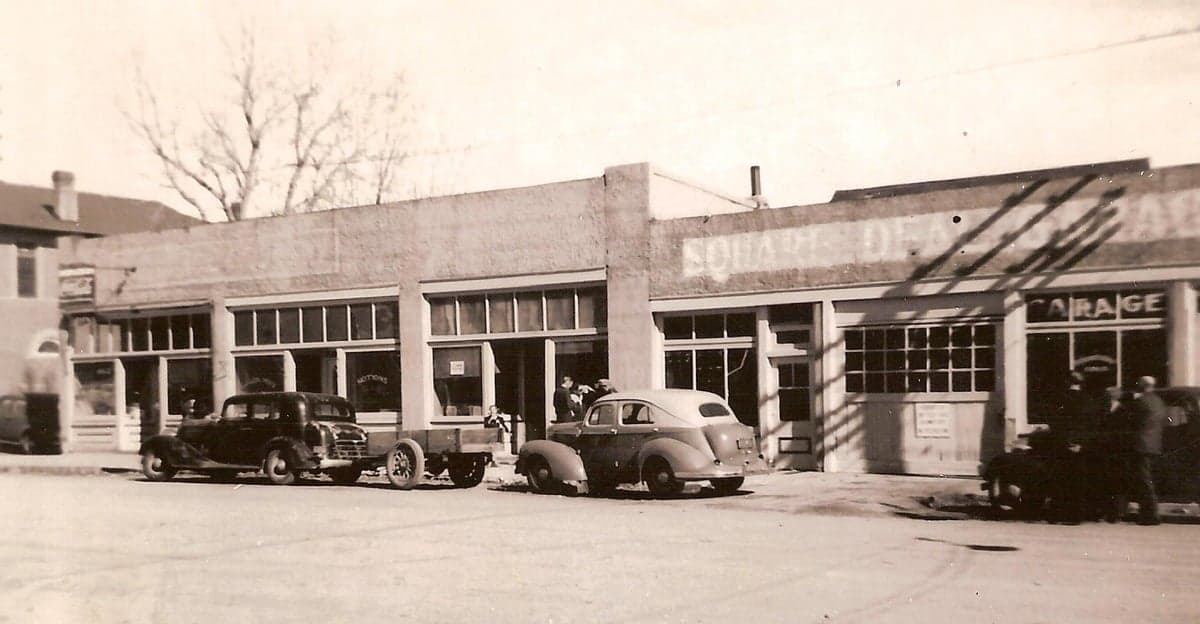
Photo: Wikipedia
Political ClimatePolitical Climate in Fountain, CO
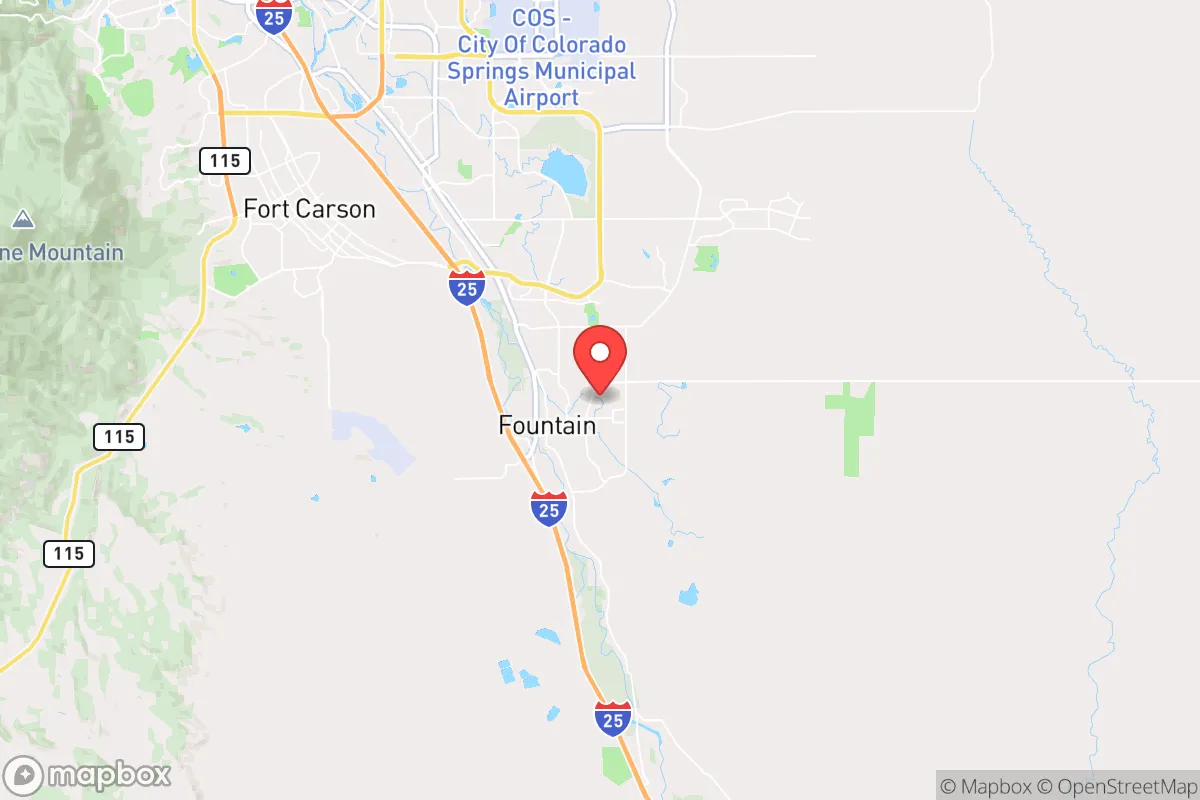
District shown is the primary district for this city’s centroid. Cities may span multiple districts.
Local Political AnalysisPolitical Analysis of Fountain, CO
Fountain, Colorado, has long been a solidly conservative community, and that hasn't changed much at the core, but you can feel the winds shifting if you pay attention. The Cook PVI of R+5 tells the story: this is still a Republican-leaning area, but it's not the deep red stronghold it was twenty years ago. Back then, you could count on a straight-ticket Republican vote in every local race, and folks were proud of it. Now, you see more split-ticket voting, especially in the city council and school board races, and a growing number of transplants from California and the Front Range are bringing their politics with them. The trajectory is concerning if you value limited government and personal freedom, because the pressure to adopt progressive policies is real, even if the election results still lean red.
How it compares
To really understand Fountain, you have to look at the neighbors. Drive ten minutes north to Colorado Springs, and you're in a much more reliably conservative area, with a strong military and evangelical presence that keeps things firmly right-of-center. But head south to Pueblo, and you're in a blue-collar Democratic stronghold. Fountain sits right in the middle, and it's becoming a kind of political buffer zone. The contrast is stark: Colorado Springs has a city council that actively fights against state-level overreach on things like property rights and gun control, while Pueblo embraces a more progressive, union-driven agenda. Fountain used to be a carbon copy of the Springs, but now you see more yard signs for moderate Democrats and even a few "Defund the Police" types in the newer subdivisions. It's not a takeover, but it's a noticeable shift that makes you wonder what the next decade will bring.
What this means for residents
For a long-time resident like me, the biggest red flag is the creeping government overreach into our personal freedoms. We're seeing it in the school district, where there's constant pressure to adopt critical race theory and gender ideology curricula, even though most parents here just want their kids to learn math and reading. The city council has also flirted with "equity" ordinances that sound nice but really just give the government more power to dictate how businesses operate. If you value your Second Amendment rights, you should know that Fountain is still a safe haven compared to Denver or Boulder, but the anti-gun activists are getting louder at city meetings. The property tax situation is another worry: as the area grows, there's a push for more public spending and higher taxes, which directly impacts your freedom to keep what you earn. The long-term trend is concerning because once these progressive policies get a foothold, they're very hard to root out.
The cultural and policy distinctions here are subtle but important. Fountain still has a strong "live and let live" attitude, and most folks are friendly and respectful, even if they disagree politically. But you can see the divide in the newer housing developments versus the older neighborhoods. The old-timers fly American flags and have "Don't Tread on Me" bumper stickers; the newcomers have "In This House We Believe" signs. The city has also started a "diversity, equity, and inclusion" committee, which is a classic government overreach move—creating a permanent bureaucracy to push a progressive agenda. If you're looking for a place where you can still raise your kids with traditional values and minimal government interference, Fountain is still a good bet, but you'll need to stay engaged and vote in every local election. The next five years will determine whether we hold the line or slide into the same kind of progressive mess that's ruining so many other Colorado towns.

State Political ClimatePolitical Climate in Colorado
State Political AnalysisPolitical Environment in the State
Colorado has shifted from a classic purple swing state to a solidly blue-leaning state over the past two decades, with Democrats now controlling the governorship, both U.S. Senate seats, and both chambers of the state legislature. The state voted for Hillary Clinton by 5 points in 2016, Joe Biden by 13 points in 2020, and Kamala Harris by roughly 11 points in 2024, reflecting a durable leftward tilt driven by explosive growth in the Denver metro and Front Range corridor. For a conservative considering relocation, the key takeaway is that while the state retains pockets of deep-red territory, the political center of gravity has moved decisively left, and state-level policy increasingly reflects that reality.
Urban vs. rural divide
The political map of Colorado is a tale of two landscapes: the urban Front Range and everything else. The Denver metro area, including Denver County, Jefferson County, Arapahoe County, and Boulder County, generates roughly two-thirds of the state’s vote and leans heavily Democratic. Boulder County is one of the most liberal jurisdictions in the nation, routinely voting 75-80% Democratic. Colorado Springs (El Paso County) remains the largest reliably conservative stronghold, voting +15 R in 2024, but its influence is diluted by the sheer population weight of Denver and its suburbs. The Western Slope, including towns like Grand Junction and Montrose, leans Republican, while rural Eastern Plains counties like Yuma and Kit Carson vote 70-80% Republican but have tiny populations. The key suburban battlegrounds—Arapahoe, Jefferson, and Larimer counties—have all trended blue over the past decade, with Jefferson County flipping from red to blue in 2018 and staying there. The 2024 election saw no major county-level flips, confirming the current alignment.
Policy environment
Colorado’s policy environment is now unmistakably progressive, with a tax and regulatory posture that will feel restrictive to many conservatives. The state income tax rate is a flat 4.4%, down from 4.63% after a 2020 ballot measure, but property taxes have risen sharply due to a 2023 legislative overhaul that removed Gallagher Amendment protections, leading to a 30-40% increase in residential assessments in some counties. The state has a strict regulatory climate for energy, with a 2019 law (SB 19-181) that effectively banned new oil and gas drilling in many areas and gave local governments veto power over permits. Education policy is dominated by the Colorado Department of Education, which has pushed critical race theory-aligned curriculum standards and gender identity policies that allow students to use preferred names and pronouns without parental consent. Healthcare is heavily regulated, with a state-run insurance exchange and Medicaid expansion under the Affordable Care Act. Election laws have been loosened significantly: Colorado was one of the first states to implement universal mail-in voting (2013), same-day voter registration, and automatic voter registration, which critics argue reduces election integrity. The state also has no voter ID requirement for mail ballots, though in-person voters must show ID.
Trajectory & freedom
Colorado is becoming less free by nearly any measure of personal liberty that conservatives care about. The most glaring example is gun rights: in 2023, the legislature passed a package of gun control bills including a ban on so-called "assault weapons" (SB 23-169), a 3-day waiting period for all firearm purchases, and a raising of the minimum purchase age to 21. These laws went into effect in 2024 despite legal challenges. Parental rights have been eroded by the 2023 "Jared Polis" administration’s support for policies that allow schools to withhold information about a child’s gender identity from parents. Medical autonomy took a hit with the 2022 passage of Proposition 122, which legalized psilocybin therapy but also created a state-regulated psychedelic "healing centers" framework that some see as government overreach into alternative medicine. Property rights are under pressure from a 2024 law (HB 24-1313) that allows local governments to impose rent control measures, a first in Colorado history. On the positive side for conservatives, Colorado remains a right-to-work state (since 1943) and has no state-level capital gains tax on the sale of a primary residence, though that could change. The overall trajectory is clearly toward more government intervention in daily life.
Civil unrest & political movements
Colorado has seen its share of political flashpoints. The 2020 George Floyd protests in Denver turned violent, with property damage and looting in the downtown area, and the city’s defund-the-police movement led to a 2021 budget cut of $15 million from the police department, though some funding was later restored. On the right, the "Colorado Project" and "Moms for Liberty" chapters have been active in school board races, particularly in Douglas County and El Paso County, pushing back against critical race theory and gender ideology in schools. Immigration politics are a growing tension: Denver declared itself a "sanctuary city" in 2019, and in 2023-2024, the city struggled to house thousands of migrants bused from Texas, leading to a $180 million emergency spending bill and visible encampments. Election integrity remains a hot-button issue: Colorado’s universal mail-in system was challenged in court after the 2020 election, but no major fraud was proven, though critics point to the lack of voter ID for mail ballots as a vulnerability. The "Colorado State of Mind" secession movement in the Eastern Plains (the "51st state" idea) has fizzled but reflects deep rural frustration with Denver’s dominance.
Projection
Over the next 5-10 years, Colorado will likely become more Democratic and more progressive. In-migration patterns are the key driver: the state is adding roughly 100,000 new residents per year, with the vast majority settling in the Denver metro and Boulder areas, drawn by tech jobs, outdoor recreation, and a lifestyle that skews young and left-leaning. The 2024 election saw Democrats hold the governorship and both Senate seats, and the state legislature’s Democratic supermajority is likely to expand further after the 2026 midterms. The rural vote will continue to be marginalized as population growth concentrates in blue counties. Expect more gun control, more environmental regulation, and more progressive education and healthcare policies. A state-level wealth tax or capital gains tax is a real possibility within the next decade, given the legislature’s appetite for revenue. For a conservative moving in now, the state will feel increasingly like a blue-state enclave, with the only real redoubt being Colorado Springs and a few rural counties. The days of Colorado as a swing state are over.
For a conservative considering relocation, Colorado offers stunning natural beauty and a strong economy, but the political and policy environment is increasingly hostile to traditional values of limited government, parental rights, and gun ownership. If you’re moving here, expect to pay higher taxes, navigate a regulatory maze, and live in a state where your vote for statewide office will be consistently outnumbered. The best bet for a conservative is to target El Paso County (Colorado Springs) or a rural county like Mesa or Weld, where local governance still leans right, but state-level policy will continue to override local preferences. Bottom line: Colorado is a beautiful place to visit, but a challenging place to live if you value personal freedom as conservatives define it.
* Values derived from national, state, county, city and local statistics and may differ in a specific area. Last updated: 2026-04-25T07:48:17.000Z
Narrative content on this page is AI-generated and may contain mistakes. Verify any details that matter before acting on them.
ReloMaps may earn a commission from affiliate links at no extra cost to you.

