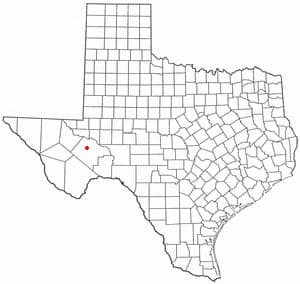
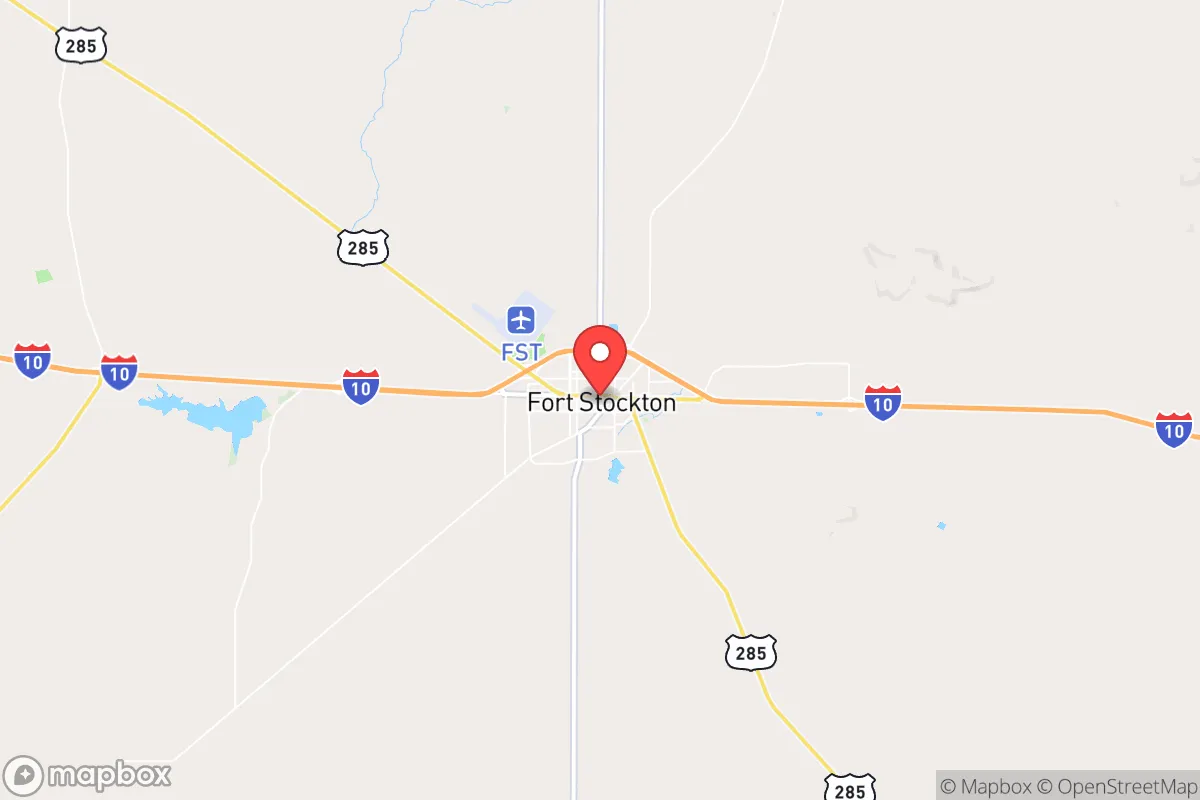
Photo: Wikipedia
Personal Sovereignty in Fort Stockton, TX
Viable for self-reliance. Generally workable, though some barriers may limit total independence.
What does Personal Sovereignty tell us?
Personal Sovereignty measures your capacity for self-reliance and independence with minimal government friction. Higher scores mean fewer barriers between you and the way you want to live... but it assumes you have the space you need and good neighbors.
What does this tell us?
Personal Sovereignty measures your capacity for self-reliance and independence with minimal government friction. Higher scores mean fewer barriers between you and the way you want to live... but it assumes you have the space you need and good neighbors.
State Policy
Energy independence: Net exporter (195% of energy produced in-state)
Personal Liberty
Homesteading

Personal Liberty Analysis
Fort Stockton, Texas, offers a personal sovereignty environment that is among the most hands-off in the United States, driven by a combination of Texas state law, a small-city municipal posture, and the practical realities of life in the remote Permian Basin. The city operates with a light regulatory touch, low local taxation, and a culture that expects residents to handle their own affairs, from property maintenance to personal security. For individuals and families who prioritize autonomy over government services, Fort Stockton presents a landscape where the default answer from local authorities is typically "yes" or "it's your problem to solve."
Tax burden and regulatory posture in a low-tax state
Texas has no state income tax, and Fort Stockton keeps its local tax burden correspondingly lean. The city's property tax rate is approximately $0.55 per $100 of assessed valuation, which is well below the state average for incorporated cities. Combined with Pecos County and school district levies, the total effective property tax rate lands around 1.2–1.4% of market value — moderate by Texas standards but low compared to high-tax states like California or New York. Sales tax in Fort Stockton is 8.25%, the state-mandated base plus local options, which is standard for Texas. There are no local income taxes, no vehicle property taxes, and no municipal business license fees for most home-based enterprises. The regulatory environment is minimal: zoning is basic, there is no citywide rental inspection program, and the permitting process for home additions or fences is straightforward, typically requiring only a simple building permit. The city does not enforce HOA-style aesthetic rules outside of basic health and safety codes. For a resident running a small repair business from a garage or keeping a few livestock on a residential lot, the city's posture is largely permissive — as long as neighbors don't complain, authorities stay out of the way.
Self-defense and gun law specifics in Texas
Fort Stockton sits in a state with some of the most expansive self-defense laws in the country. Texas is a constitutional carry state — since September 2021, any adult who can legally possess a firearm may carry it openly or concealed without a permit. Fort Stockton has no local ordinances restricting this right; the city does not impose waiting periods, magazine capacity limits, or additional registration requirements beyond state law. The Castle Doctrine and Stand Your Ground statutes apply fully in Pecos County, meaning a resident has no duty to retreat before using deadly force in their home, vehicle, or workplace, and the law presumes a reasonable fear of death or great bodily harm if an intruder unlawfully enters an occupied dwelling. Local law enforcement, including the Fort Stockton Police Department and the Pecos County Sheriff's Office, are generally supportive of gun rights; there is no history of aggressive enforcement of "unlawful carrying" charges against permitless carriers. For those who want a License to Carry (LTC) for reciprocity in other states, the process is straightforward — a background check and a four-hour class — and the county sheriff's office processes applications without unnecessary delay. The nearest gun ranges are within a 15-minute drive, and private land shooting is common and legal outside city limits.
Self-reliance and homesteading viability in the high desert
Fort Stockton's geography and zoning create a mixed picture for homesteading and off-grid living. Within city limits, most residential lots are standard 60x100 feet to 80x120 feet, which limits space for large gardens or livestock. However, the city does allow chickens (hens only, no roosters) and small beekeeping with a simple permit, and there are no bans on clotheslines, rain barrels, or front-yard vegetable gardens. The real opportunity lies just outside city limits. Pecos County has no countywide zoning, and unincorporated land parcels of 1 to 10 acres are available within a 10-minute drive of downtown, often priced between $2,000 and $5,000 per acre. On these parcels, residents can keep horses, goats, cattle, or poultry without restriction; build a primary residence without a county building permit (though a septic system permit is required); and install solar panels, wind turbines, or rainwater collection systems. Off-grid feasibility is high: the area averages 270 sunny days per year, making solar power a reliable primary source. Well water is accessible at depths of 200–400 feet, with drilling costs around $15–$25 per foot. The city does not restrict composting toilets or greywater systems, though the county health department requires a septic system for any dwelling with plumbing. For those willing to live outside city limits, Fort Stockton offers one of the most permissive environments in Texas for self-reliant living.
Personal liberties: parental rights, medical autonomy, speech, and property
Texas state law provides a strong baseline for personal liberties that Fort Stockton does not erode. Parental rights are protected by statute: parents have the legal authority to direct their children's education, medical care, and religious upbringing, and the state has a "Parental Bill of Rights" that limits government interference. Fort Stockton's school district, Fort Stockton ISD, does not have policies that override these rights — there are no mandatory vaccine requirements beyond state law (which allows broad exemptions), and parents can opt their children out of sex education or any curriculum they find objectionable. Medical autonomy is similarly hands-off: Texas has no state mask mandates, no vaccine passports, and no restrictions on purchasing over-the-counter supplements or herbal remedies. The city does not have a local health department that imposes additional restrictions beyond state law. Free speech is robust; there are no local noise ordinances that would prevent political speech or religious expression in public spaces, and the city's park and sidewalk areas are open for demonstrations without a permit. Property rights are strongly protected: eminent domain is rarely used, and the city does not enforce aesthetic codes on private property. Residents can paint their homes any color, park multiple vehicles in their driveway, and store recreational equipment without HOA-style interference. The only notable restriction is a city ordinance against parking on unimproved surfaces (grass or dirt) in front yards, which is enforced primarily in residential neighborhoods.
Overall, Fort Stockton ranks among the most sovereignty-friendly small cities in Texas for a relocation-minded individual or family. The combination of no income tax, low property taxes, constitutional carry, minimal zoning, and strong state-level protections for parental and medical autonomy creates an environment where the government's role is deliberately limited. Compared to larger Texas cities like Austin or Houston — which have higher taxes, more restrictive gun ordinances, and active code enforcement — Fort Stockton offers a noticeably lighter regulatory touch. For a reader who values personal freedom and self-reliance, this is a place where the law and local culture align to let you live largely as you see fit, provided you handle the consequences yourself.

* Values derived from national, state, county, city and local statistics and may differ in a specific area. Last updated: 2026-11-08T15:23:32.000Z
Narrative content on this page is AI-generated and may contain mistakes. Verify any details that matter before acting on them.
ReloMaps may earn a commission from affiliate links at no extra cost to you.

