 Popular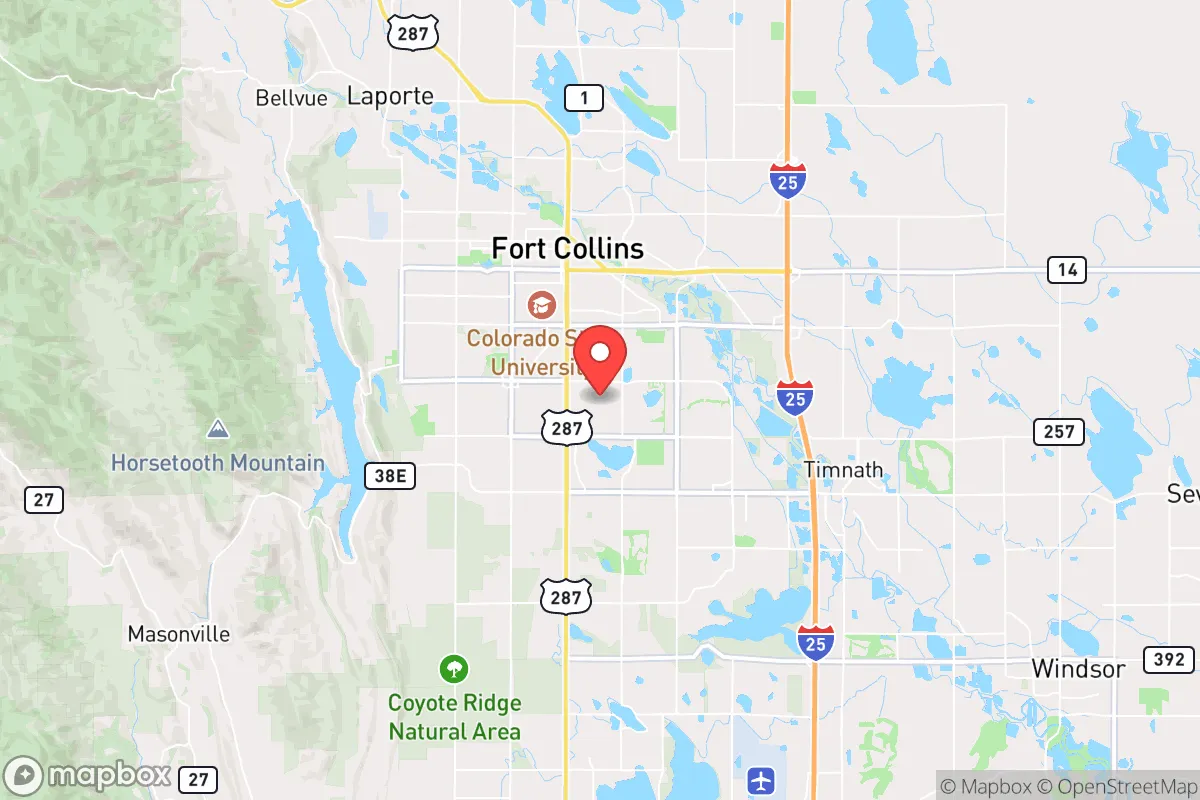
Photo: Wikipedia
Political ClimatePolitical Climate in Fort Collins, CO
District shown is the primary district for this city’s centroid. Cities may span multiple districts.
Local Political AnalysisPolitical Analysis of Fort Collins, CO
Fort Collins has shifted hard to the left over the past decade, and it’s not subtle anymore. The Cook PVI now sits at D+20, meaning the city votes about 20 points more Democratic than the national average—a number that would have seemed wild to anyone living here in the 1990s. Back then, you could still count on a competitive race for city council; now, the progressive machine runs the show, and the local GOP is basically a ghost operation. The trajectory is clear: each election cycle pushes the city further into one-party rule, with little room for dissenting voices on taxes, land use, or public safety.
How it compares
Drive 15 minutes east to Timnath or Windsor, and you’re in a completely different world—those towns still vote reliably red, with school boards that actually listen to parents and zoning boards that don’t treat single-family homes like a crime. Loveland, just south, is a purple battleground where conservatives can still win a seat now and then. But Fort Collins? It’s become an island of progressive orthodoxy surrounded by more balanced neighbors. The contrast is stark: while Larimer County as a whole is only D+5 or so, Fort Collins drags the whole county left because it holds nearly half the population. If you value local control and limited government, you’ll feel the squeeze here more than in any surrounding town.
What this means for residents
For everyday folks, the political tilt shows up in concrete ways. The city council has pushed through a ban on natural gas in new construction, effectively mandating all-electric homes whether you like it or not—a classic example of government picking winners and losers. Property taxes keep climbing to fund pet projects like bike lanes and “climate action” plans that have zero measurable impact on global temperatures. Meanwhile, police funding has been cut in favor of social worker programs, and property crime has ticked up noticeably since 2020. If you’re a small business owner, you’ve probably dealt with new paid sick leave mandates and zoning restrictions that make it harder to open a shop without jumping through hoops. The progressive majority genuinely believes more regulation equals better living, but longtime residents will tell you it just means higher costs and less freedom to run your life your own way.
Looking ahead, I don’t see this reversing anytime soon. The university (CSU) keeps churning out young, left-leaning voters, and the city’s growth is almost entirely from people moving in from California and the Front Range suburbs who bring their big-government expectations with them. The long-term concern is that Fort Collins becomes a one-party echo chamber where conservative voices are not just outvoted but actively marginalized—like what’s happened in Boulder. If you’re thinking of moving here, just know that your vote on local issues will likely be meaningless, and your personal choices about energy, housing, and even how you heat your home will be increasingly dictated by a city council that answers to activists, not taxpayers.

State Political ClimatePolitical Climate in Colorado
State Political AnalysisPolitical Environment in the State
Colorado has shifted from a classic purple swing state to a solidly blue-leaning state over the past two decades, driven by explosive growth in the Denver metro and Front Range corridor. The state’s overall partisan lean is now roughly D+9, with Democrats controlling the governorship, both chambers of the legislature, and all statewide offices. This wasn’t always the case—as recently as 2004, Colorado voted for George W. Bush, and it had a split legislature and a Democratic governor who governed from the center. The trajectory since then has been a steady march leftward, accelerated by massive in-migration from California and the Northeast, and by a Republican party that has struggled to adapt to the state’s changing demographics.
Urban vs. rural divide
The political map of Colorado is a textbook case of the urban-rural divide. The Denver metro area—including Denver, Aurora, Boulder, and Lakewood—accounts for roughly 60% of the state’s population and votes overwhelmingly Democratic. Boulder County is one of the most liberal counties in the nation, routinely giving Democrats 75-80% of the vote. The I-25 corridor from Fort Collins down to Colorado Springs is a mixed bag: Fort Collins and Loveland lean blue, while Colorado Springs remains a conservative stronghold, home to Focus on the Family and a large military presence. The Western Slope, including Grand Junction and Montrose, is reliably red, as are the Eastern Plains and the San Luis Valley. But these rural areas simply don’t have the population to counterbalance the Front Range. A key example: in 2020, El Paso County (Colorado Springs) voted for Trump by 10 points, but it was swamped by Denver and its suburbs. The state’s political future is essentially decided by the suburbs of Denver—places like Jefferson County, Arapahoe County, and Douglas County—which have been trending blue for a decade. Douglas County, once a GOP stronghold, voted for Biden in 2020 by a narrow margin, a seismic shift that signals the old suburban base is gone.
Policy environment
Colorado’s policy environment is now firmly progressive, with a few notable exceptions. The state has a flat income tax rate of 4.4% (voter-approved via TABOR, which limits tax increases), but property taxes are relatively low compared to the national average. However, the regulatory posture is heavy: the state has some of the strictest environmental regulations in the West, including a 2020 law that mandates a 50% reduction in greenhouse gas emissions by 2030. Education policy is dominated by the teachers’ unions, and school choice is under constant attack—the state’s voucher program was effectively killed by the courts in 2020. Healthcare is heavily regulated, with a state-run insurance exchange and a public option law passed in 2021. Election laws have been dramatically loosened: Colorado now has universal mail-in voting, same-day registration, and automatic voter registration, which critics argue erodes ballot security. The state also has a “red flag” gun law (2019) that allows for temporary seizure of firearms without due process, and a 2021 law requiring universal background checks for private sales. On the plus side for conservatives, Colorado is a “right-to-work” state, and the state’s oil and gas industry, while heavily regulated, still provides significant economic activity.
Trajectory & freedom
Colorado is becoming less free by almost any measure, especially for conservatives. The most concerning trend is the erosion of Second Amendment rights. The 2019 red flag law (HB19-1177) was followed by a 2021 law raising the minimum age to purchase a firearm to 21, and a 2023 law banning “ghost guns” and requiring serial numbers on homemade firearms. A 2024 law (SB24-131) banned the sale of certain semi-automatic firearms entirely, making Colorado one of the most restrictive states for gun owners in the country. Parental rights have also taken a hit: the 2023 “Judy’s Law” (SB23-190) allows minors to consent to gender-affirming care without parental notification, and the state’s Department of Education has pushed critical race theory and LGBTQ+ curriculum in public schools. Medical autonomy was curtailed by the 2021 “End of Life Options Act,” which legalized assisted suicide, and the state’s COVID-19 response included some of the longest-lasting mask mandates and business closures in the nation. Property rights are under pressure from the state’s aggressive land-use planning, including a 2023 law that effectively bans single-family zoning in most cities. On the positive side, Colorado has a strong TABOR (Taxpayer’s Bill of Rights) that limits tax increases without voter approval, though Democrats have found ways to work around it through fees and exemptions.
Civil unrest & political movements
Colorado has seen its share of political flashpoints. The 2020 protests in Denver were among the largest in the country, with the city declaring a curfew and deploying the National Guard. The “Defund the Police” movement gained traction in Denver, leading to a 2021 budget cut of $8.4 million from the police department, though much of that was later restored. On the right, the “Colorado Project” and various county-level secession movements have gained some traction, particularly in rural areas like Weld County and Moffat County, where residents feel ignored by the Denver-centric state government. The 2020 election integrity controversy was a major issue, with many rural counties calling for a forensic audit of the state’s mail-in voting system, though the state legislature blocked any such effort. Immigration politics are also a flashpoint: Colorado is a “sanctuary state” in practice, with a 2019 law (HB19-1124) limiting cooperation between local law enforcement and federal immigration authorities. The state has also seen a surge in illegal immigration, particularly in Denver, which has strained public resources. A new resident would notice the visible homeless encampments in Denver and the political tension around them—the city has a “right to rest” ordinance that effectively decriminalizes camping on public property.
Projection
Over the next 5-10 years, Colorado will likely become more progressive, not less. The demographic trends are clear: the state is growing fastest in the Denver metro and along the Front Range, with in-migration from blue states like California, New York, and Illinois. These new residents tend to be younger, more diverse, and more liberal. The rural areas will continue to lose population and political influence. The state’s Republican party is in disarray, with a bitter internal fight between moderates and Trump-aligned conservatives, and it has failed to win a statewide election since 2014. The most likely scenario is that Democrats will continue to hold a trifecta in state government, and will push for more gun control, higher taxes (through fees and exemptions to TABOR), and more progressive social policies. The only wild card is the possibility of a ballot initiative to repeal or weaken TABOR, which would allow for massive tax increases. A new resident moving in now should expect to find a state that is increasingly expensive, heavily regulated, and culturally aligned with the West Coast. The days of Colorado as a “purple” swing state are over.
Bottom line for a new resident: If you value low taxes, gun rights, parental control over education, and a limited government, Colorado is a tough place to live. The state’s natural beauty and outdoor lifestyle are undeniable, but the political climate is increasingly hostile to conservative values. You’ll find like-minded communities in Colorado Springs, Douglas County, and the Western Slope, but you’ll be fighting an uphill battle against a state government that is determined to turn Colorado into a mini-California. If you’re moving here, be prepared for a constant political fight—or consider whether the mountains are worth the cost to your freedom.
* Values derived from national, state, county, city and local statistics and may differ in a specific area. Last updated: 2026-04-25T04:19:49.000Z
Narrative content on this page is AI-generated and may contain mistakes. Verify any details that matter before acting on them.
ReloMaps may earn a commission from affiliate links at no extra cost to you.

