Photo: Wikipedia
Strategic Assessment of Sumter County
Workable tactical position. Some exposure to population density or targets, but generally defensible in a crisis.
What does the Strategic Assessment tell us?
Our Strategic Assessment grades tactical survivability of an area. Major population centers, military targets, fallout zones, natural disasters, and border exposure all drive risk — lower exposure means a more defensible position in a crisis.
This is heavily inspired by Joel Skousen's Strategic Relocation book. Highly recommended you checkout the book ($)What does this tell us?
Our Strategic Assessment grades tactical survivability of an area. Major population centers, military targets, fallout zones, natural disasters, and border exposure all drive risk — lower exposure means a more defensible position in a crisis.
This is heavily inspired by Joel Skousen's Strategic Relocation book. Highly recommended you checkout the book ($)Strategic Pillars

Key Distances
Strategic Assessment Analysis
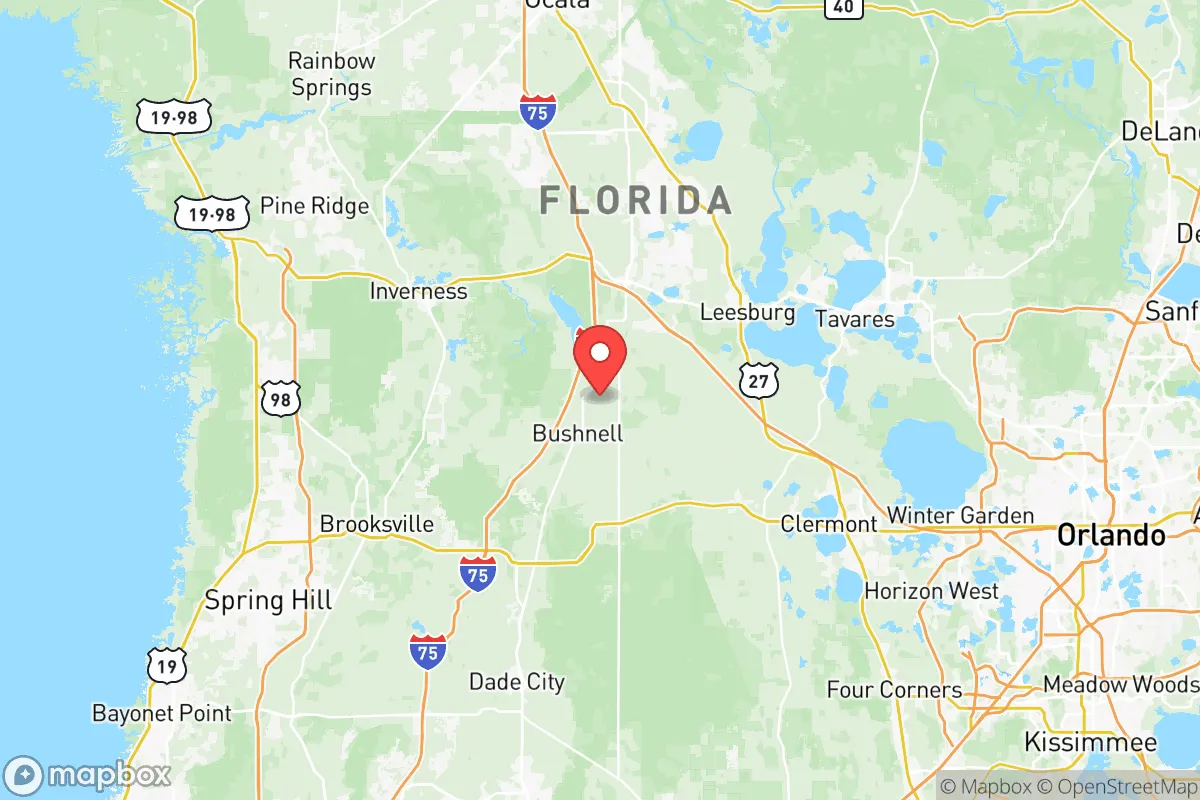
Sumter County, Florida, occupies a strategic position in the state’s interior, offering a blend of geographic isolation from coastal storm surges and proximity to critical infrastructure that makes it a serious contender for relocation-minded individuals and families focused on resilience. Located roughly 45 miles southwest of Ocala and 60 miles northwest of Orlando, the county sits at the crossroads of the Florida Peninsula, providing a buffer from the hurricane-prone coasts while maintaining access to major supply routes like I-75 and the Florida Turnpike. Its low population density—around 140,000 residents, concentrated heavily in The Villages retirement community—means the rest of the county remains rural, with ample space for self-sufficient living, though the area’s reliance on tourism and retirement income introduces economic vulnerabilities that a preparedness-minded relocator should weigh carefully.
Geographic position and natural advantages for disaster resilience
Sumter County’s interior location is its single greatest asset for disaster resilience. Unlike coastal counties, it is not directly exposed to storm surge, and its elevation—averaging 80 to 100 feet above sea level—reduces flood risk compared to much of Florida. The county sits atop the Floridan Aquifer, providing reliable groundwater access for wells, and its numerous lakes, including Lake Panasoffkee and the Withlacoochee River system, offer surface water sources for off-grid scenarios. The terrain is a mix of flatwoods, pine forests, and agricultural land, which supports hunting, foraging, and small-scale farming. The climate is humid subtropical, with a growing season that allows year-round food production, though summer heat and humidity can strain off-grid energy systems. The county’s position along the I-75 corridor also provides a direct evacuation route north, away from hurricane-prone southern Florida, while the Florida Turnpike offers a secondary option east toward the Atlantic coast. However, the same highways that enable evacuation also bring traffic from coastal populations during emergencies, potentially clogging routes—a factor to consider when planning bug-out scenarios.
Risks, exposures, and proximity to fallout-relevant landmarks
While Sumter County avoids coastal storm surge, it is not immune to hurricane-force winds, which can still cause structural damage and power outages. The county lies within the typical inland path of major hurricanes, and the 2024 hurricane season saw Category 1 winds and widespread tree damage in the area. Flooding is a localized risk near the Withlacoochee River and Lake Panasoffkee, but most of the county remains dry during heavy rains. More critically for a preparedness-minded reader, Sumter County is within a 100-mile radius of several high-value targets. MacDill Air Force Base in Tampa, about 90 miles southwest, is a major military command center that could be a primary target in a conflict scenario. The Port of Tampa, a major fuel and cargo hub, and the phosphate processing facilities in nearby Polk County (roughly 50 miles south) are industrial sites that could draw secondary fallout or disruption. The county’s proximity to Orlando (60 miles east) and its tourism infrastructure—including theme parks and convention centers—also places it within a potential evacuation zone for a metropolitan area of 2.5 million people. For a relocator prioritizing strategic depth, these distances are close enough to be concerning but far enough to avoid direct blast effects, assuming a limited nuclear exchange. The county’s rural character and lack of major military or industrial targets within its borders are net positives, but the surrounding region’s density of critical infrastructure means fallout risk cannot be dismissed entirely.
Practical resilience for a relocator: food, water, energy, and defensibility
Sumter County offers strong practical resilience for those willing to invest in self-sufficiency. The agricultural sector is robust, with over 200 farms producing cattle, hay, citrus, and vegetables, and the county’s farmers’ markets in Bushnell and Webster provide local food access even in normal times. For off-grid water, the Floridan Aquifer is accessible via wells at depths of 100 to 300 feet, and the county’s many lakes and rivers offer surface water for treatment. However, water rights and well permitting are regulated by the St. Johns River Water Management District, so relocators should verify property-specific access before purchase. Energy resilience is mixed: the county’s grid is served by Sumter Electric Cooperative (SECO), a member-owned utility that has invested in underground lines in newer developments, but rural areas still rely on overhead lines vulnerable to wind damage. Solar potential is excellent, with an average of 237 sunny days per year, but battery storage is essential for nighttime and cloudy periods. Defensibility is a key advantage: the county’s low population density and large rural tracts—many with long driveways and natural tree cover—provide privacy and chokepoints for security. The Villages, with its gated communities and private security, offers a different model of collective defense, but its dense layout could become a liability in a prolonged crisis. For a family seeking a homestead, areas around Center Hill, Webster, and rural Bushnell offer affordable land with good access to water and relative isolation from major population centers.
The overall strategic picture for Sumter County is one of moderate resilience with clear trade-offs. Its interior location and rural character provide genuine advantages for disaster preparedness—lower storm surge risk, abundant water, agricultural capacity, and defensible terrain—but its proximity to Tampa, Orlando, and Polk County’s industrial infrastructure introduces exposure to man-made risks that a serious relocator cannot ignore. The county’s economy, heavily dependent on The Villages and seasonal tourism, is not built for long-term self-sufficiency, meaning relocators must plan for their own food, water, and energy systems rather than relying on local supply chains. For a conservative-leaning individual or family willing to invest in off-grid infrastructure and maintain a low profile, Sumter County offers a viable base of operations in the Florida interior—but it is not a remote survivalist haven. It is a middle-ground option that balances access to resources with manageable risk, best suited for those who want to be within striking distance of urban amenities while maintaining a buffer from the coast’s most acute threats.

* Values derived from national, state, county, city and local statistics and may differ in a specific area. Last updated: 2026-07-05T11:05:15.000Z
Narrative content on this page is AI-generated and may contain mistakes. Verify any details that matter before acting on them.
ReloMaps may earn a commission from affiliate links at no extra cost to you.

