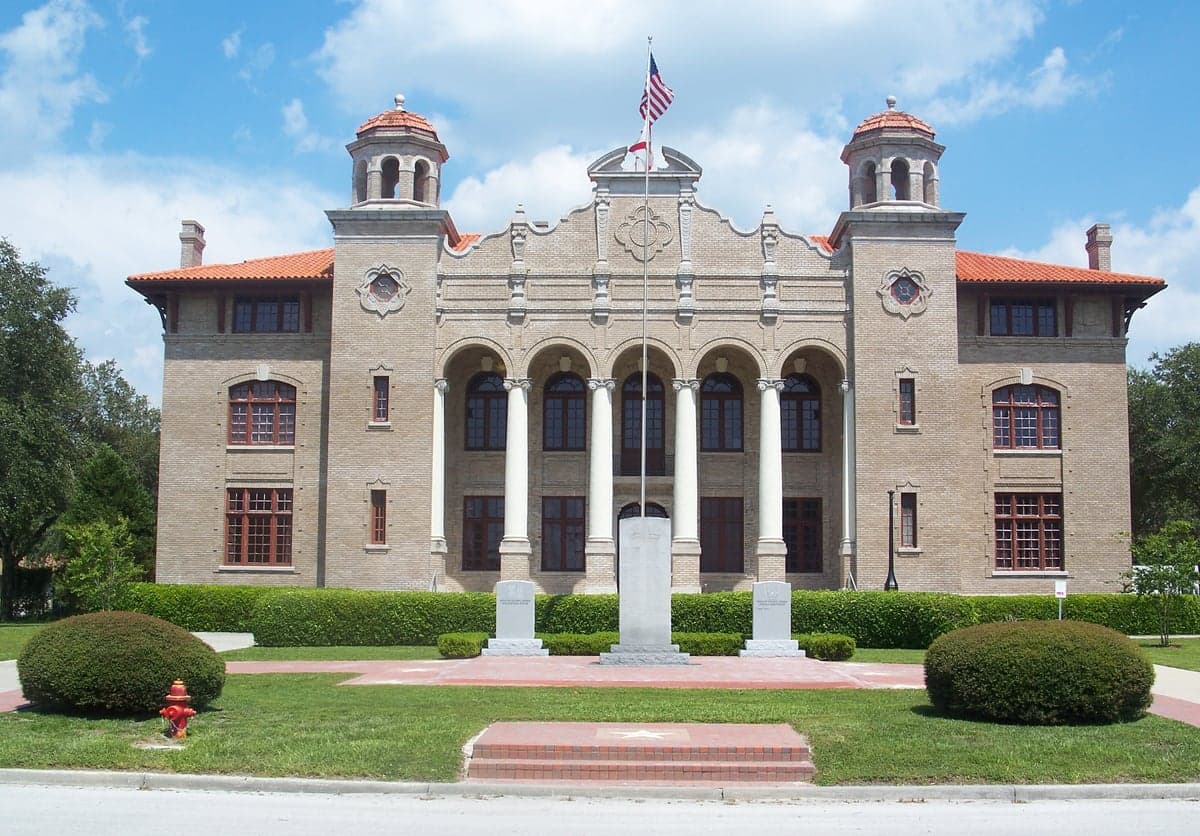
Photo: Wikipedia
Demographics of Sumter County
Affluence Level in Sumter County
A middle-class area roughly in line with national averages across income, home values, education, and employment.
People of Sumter County
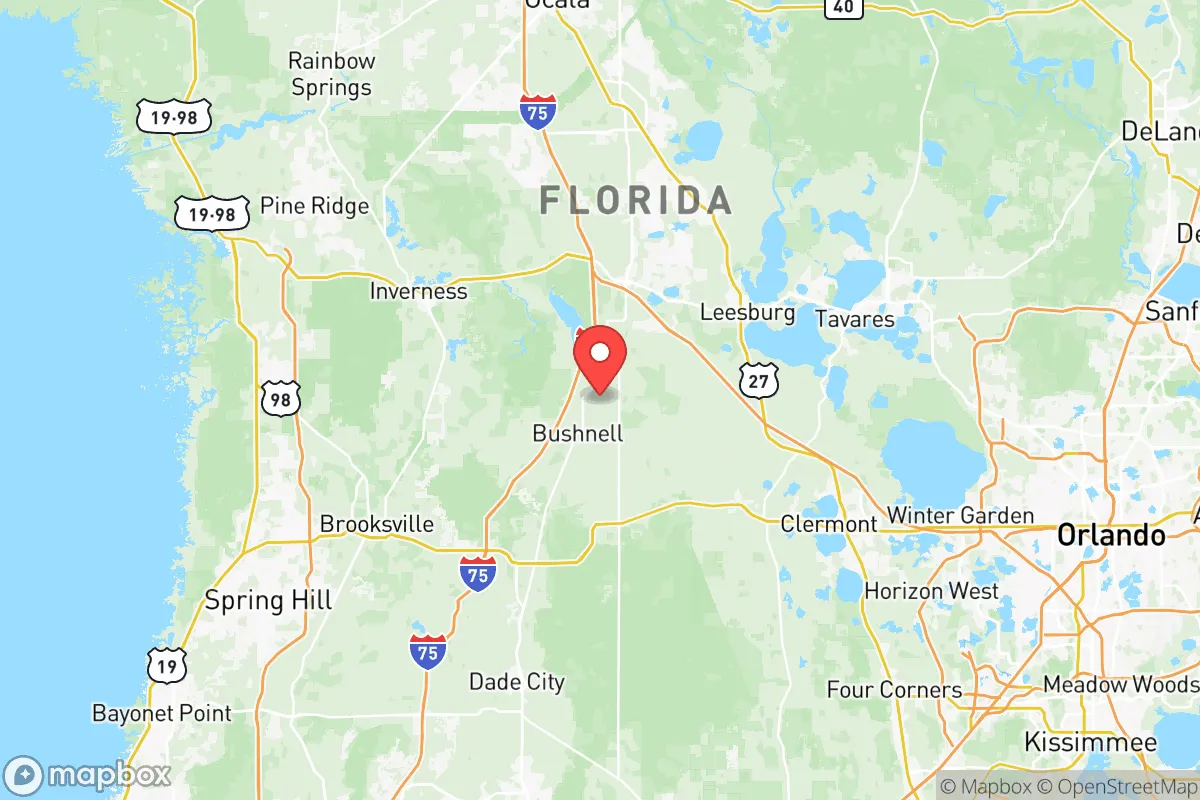
Sumter County, Florida, is home to roughly 137,500 residents, a population that is overwhelmingly white (84.1%) and native-born (only 2.1% foreign-born), with a notably older median age driven by the massive retirement community of The Villages. The county’s distinctive identity is shaped by a sharp divide: a fast-growing, amenity-rich retirement corridor in the north and a quieter, more rural southern half anchored by historic towns like Bushnell and Webster. This is a place where the population story is less about immigration and more about domestic migration—specifically, the decades-long influx of retirees from the Northeast and Midwest seeking a warm-weather, low-tax lifestyle.
Settlement & growth (pre-1960)
Long before Sumter County was established in 1853, the region was home to the Seminole people, who used the area’s rivers and hammocks for hunting and seasonal camps. The U.S. government forcibly removed most of the Seminole population during the Seminole Wars of the 1830s and 1840s, opening the land for white settlement. The county was carved from parts of Marion and Orange counties and named for General Thomas Sumter, a Revolutionary War hero from South Carolina.
The first permanent American settlers were primarily yeoman farmers from the Deep South—Georgia, the Carolinas, and Alabama—who arrived in the 1850s and 1860s. They were drawn by cheap land and the promise of cotton and timber. These early residents were overwhelmingly of English and Scots-Irish stock, and they established small, dispersed farming communities. The town of Bushnell, founded in the 1880s, became the county seat and a trading hub for the surrounding agricultural area. Webster, incorporated in 1900, grew as a center for citrus and vegetable farming, a role it still plays today with its famous weekly flea market. Coleman, founded in the 1880s, developed around the railroad and phosphate mining, an industry that brought a small but notable influx of African American laborers in the early 1900s. The town of Wildwood, established in the 1870s, served as a railroad stop and later a gateway for travelers heading south.
For nearly a century, Sumter County’s population grew slowly and remained overwhelmingly rural, agricultural, and white. The Great Depression hit the area hard, but the county’s economy stabilized somewhat with the expansion of the phosphate industry and the establishment of the Withlacoochee State Forest. The post-World War II era brought modest growth, but Sumter remained a backwater compared to Florida’s booming coastal cities. The county’s population in 1960 was just over 11,000—a figure that would remain largely unchanged for decades.
Modern era (post-1965)
The 1965 Hart-Cellar Act, which reshaped U.S. immigration, had almost no direct impact on Sumter County. The county’s foreign-born population remains minuscule at 2.1%, far below the national average. Instead, the defining demographic event of the modern era was the creation and explosive growth of The Villages, a massive age-restricted retirement community that straddles Sumter, Lake, and Marion counties. Development began in the 1970s but accelerated dramatically in the 1990s and 2000s, transforming Sumter County from a sleepy rural area into one of the fastest-growing counties in the United States.
The Villages drew its residents almost entirely from domestic migration—specifically, retirees from the Northeast (New York, New Jersey, Pennsylvania) and the Midwest (Ohio, Michigan, Illinois). These newcomers were overwhelmingly white, middle-class, and politically conservative, and they brought with them a demand for golf courses, recreation centers, and a highly managed, amenity-rich lifestyle. The population of Sumter County surged from roughly 53,000 in 2000 to over 137,000 today, with The Villages accounting for the vast majority of that growth. The county’s Hispanic population (6.1%) and Black population (6.7%) are both small, and the Asian population (1.0%) is even smaller. The Indian-subcontinent population is effectively zero. These minority groups are concentrated in the county’s older towns—Bushnell, Wildwood, and Coleman—rather than in The Villages, which remains overwhelmingly white.
Suburbanization in Sumter County has taken a unique form: it is not the typical bedroom-community sprawl of a major city, but rather the deliberate, master-planned expansion of a retirement destination. The Villages now has its own downtowns, medical facilities, and a vast network of golf cart paths. The county’s historic towns have been largely bypassed by this growth, though Wildwood has seen some spillover development and new commercial construction along the U.S. 301 corridor.
The future
Sumter County’s population is projected to continue growing, driven by the ongoing expansion of The Villages and the broader trend of Sun Belt retirement migration. The county is likely to become slightly more diverse over the next 10-20 years, as younger service workers and their families—many of whom are Hispanic or Black—move into the area to support the retirement economy. However, the core demographic of the county will remain older, white, and native-born. The county’s cultural identity will continue to be shaped by the values and preferences of its retiree majority: a focus on low taxes, conservative politics, and a quiet, recreational lifestyle.
New residential development is likely to concentrate in the northern part of the county, around The Villages and the expanding town of Wildwood, while the southern half—including Bushnell, Webster, and Coleman—will remain more rural and agricultural. The county’s small minority populations may grow in absolute numbers but are unlikely to shift the overall racial composition dramatically.
For someone moving in now, Sumter County offers a clear choice: the highly structured, amenity-filled retirement world of The Villages, or the quieter, more traditional small-town life of the county’s historic communities. The county is becoming more populous and more built-out, but its essential character—a destination for domestic retirees seeking a warm, low-tax, and politically conservative environment—is unlikely to change.

* Values derived from national, state, county, city and local statistics and may differ in a specific area. Last updated: 2026-07-05T11:05:15.000Z
Narrative content on this page is AI-generated and may contain mistakes. Verify any details that matter before acting on them.
ReloMaps may earn a commission from affiliate links at no extra cost to you.

