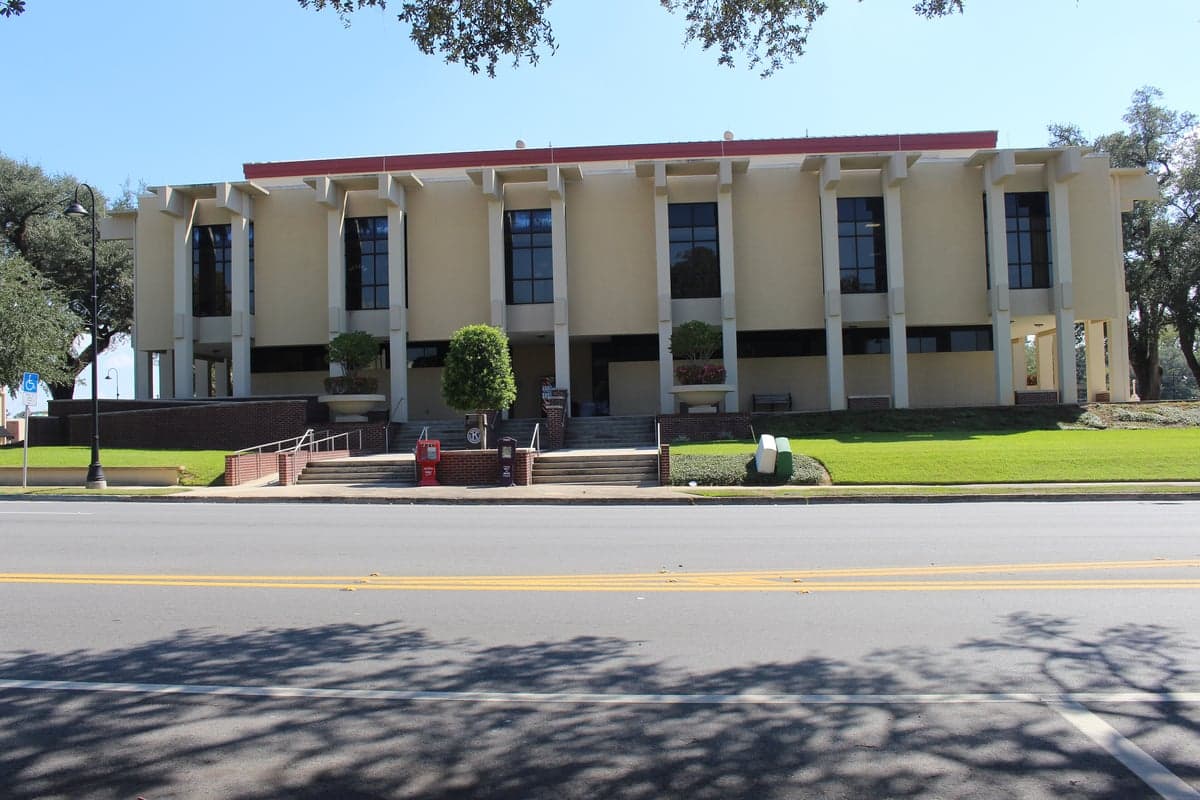
Photo: Wikipedia
Political ClimatePolitical Climate in Jackson County
Showing district-level results — no local-only data available.
Local Political AnalysisPolitical Analysis of Jackson County
Jackson County, Florida, is a reliably Republican stronghold with a Cook PVI of R+8, making it notably more conservative than the state of Florida as a whole, which sits at R+5. This isn't a new development; the county has been trending red for decades, but the shift has accelerated in the last two cycles, driven largely by rural cultural values and a growing distrust of state-level policies coming out of Tallahassee that some locals feel are too moderate. The real story here isn't just the partisan lean—it's the internal divide between the small, more diverse towns and the deeply conservative rural stretches that dominate the county's politics.
How it compares
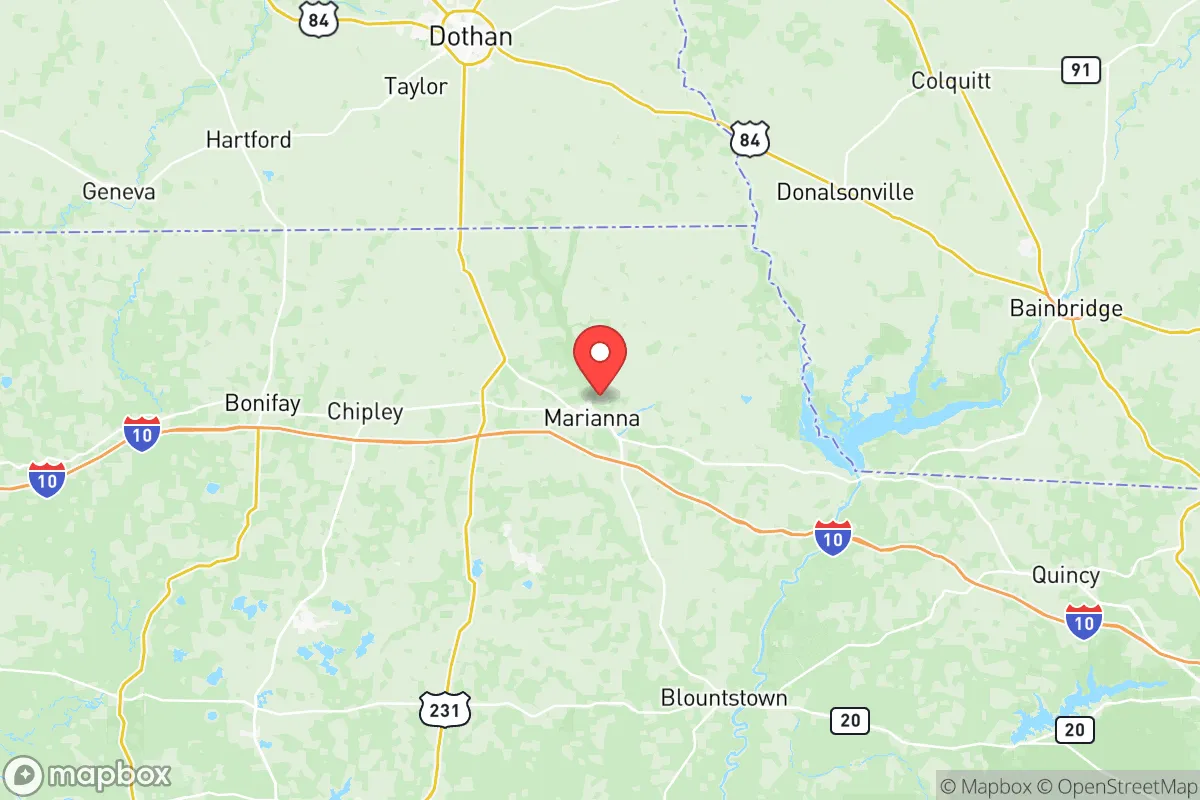
Compared to Florida's R+5 statewide average, Jackson County's R+8 rating means it votes about 3-4 points more Republican in presidential elections. In practice, that gap widens in down-ballot races. For example, in the 2024 election, the county gave Donald Trump over 68% of the vote, while the state as a whole hovered around 56%. The political geography inside the county is telling. The county seat, Marianna, is the most politically mixed area—its precincts around the historic downtown and near the Florida Panhandle Technical College often show a 10-15 point swing toward Democrats compared to the rest of the county. Graceville and Cottondale lean heavily red, often hitting 75%+ Republican, driven by older, rural, and agricultural communities. Sneads, along the Apalachicola River, is a bit of a swing precinct—it can go 60-40 Republican, but local school board races there are often competitive. The real outlier is Malone, a small town with a significant African American population that consistently votes 70%+ Democratic, making it the only reliably blue pocket in the county. So while the county is solidly red, it's not a monolith—there are real blue islands, especially in the historically Black communities and around Marianna's more educated, younger voters.
What this means for residents
For conservative residents, Jackson County is a comfortable place to live politically. Local government, from the county commission to the school board, is dominated by Republicans, and policy tends to reflect rural conservative priorities: low taxes, limited regulation, and a strong law-and-order approach. You'll see "In God We Trust" signs in government buildings, and the local sheriff's office is a powerful political force. For liberal residents, it's a different reality. While you won't face open hostility, you'll be in a clear minority. Democratic voters in Marianna or Malone often feel their voices are marginalized in countywide elections, and progressive policy ideas—like expanding public transit or affordable housing initiatives—rarely get a serious hearing. The practical effect is that many liberal-leaning residents either keep their politics private or focus their civic energy on local issues like library funding or school programs, where partisan lines are less sharp. The county's political culture is also notably more insular than the state's; there's less of the "transplant" energy you see in places like Tallahassee or Orlando, and more of a "we've always done it this way" attitude.
One cultural distinction that sets Jackson County apart from the rest of Florida is its deep-rooted, almost Southern Gothic sense of place. The county is heavily agricultural—peanuts, cotton, and cattle—and its politics are shaped by that rural economy. You won't find the coastal tourism or retiree-driven politics of the peninsula. Instead, the dominant issues are property rights, water access for farming, and opposition to any state mandates that feel like "Tallahassee telling us what to do." The county's strong gun culture and evangelical Christian influence are also more pronounced than in the state at large. For a new resident, the key takeaway is that Jackson County is a place where local relationships and personal reputation matter more than party registration. If you're conservative, you'll feel right at home. If you're liberal, you'll need to be patient, build trust, and focus on the issues where you can find common ground—like keeping the local hospital open or improving the rural roads.

State Political ClimatePolitical Climate in Florida
State Political AnalysisPolitical Environment in the State
Florida is a solidly Republican-leaning state with a Cook PVI of R+5, but calling it a simple red state misses the real story. The state’s political identity is a volatile mix of deep-red rural counties, purple suburban battlegrounds, and blue-leaning urban cores, creating a dynamic where statewide elections are often decided by a few percentage points. Over the last 10-20 years, Florida has shifted from a classic swing state—where it famously decided the 2000 presidential election—to a state that has consistently voted for Republican candidates in recent cycles, driven by an influx of conservative-leaning retirees and a growing Hispanic population in places like Miami-Dade that has moved rightward. The dominant coalition is a blend of traditional conservatives, libertarian-leaning transplants, and culturally conservative Hispanic voters, but the state’s politics remain fiercely competitive at the local level.
Urban vs. rural divide
The political map of Florida is a textbook study in geographic polarization. The major metros—Miami, Orlando, and Tampa—are the Democratic strongholds, with Miami-Dade County still voting blue but trending right, while Orange County (Orlando) and Hillsborough County (Tampa) remain reliably Democratic. The rural Panhandle, from Pensacola to Tallahassee, is deeply conservative, with counties like Okaloosa and Santa Rosa routinely delivering 70%+ Republican margins. The I-4 corridor, stretching from Tampa through Lakeland to Daytona Beach, is the state’s ultimate swing territory, where elections are won and lost. Suburbs like St. Augustine and Fort Myers have shifted right as retirees and families move in, while Gainesville (home to the University of Florida) remains a liberal island in a sea of red. The key takeaway: if you’re moving to a rural county, expect a deep-red environment; if you’re in a dense urban core, you’ll find a blue bubble; and if you’re in the suburbs, you’re living in the state’s political battleground.
Policy environment
Florida’s policy environment is defined by a low-tax, limited-government ethos that appeals to conservative relocators. There is no state income tax, which is a major draw, and property taxes are capped by the Save Our Homes amendment, limiting annual increases to 3% for homesteaded properties. The regulatory posture is business-friendly, with a right-to-work law and minimal union influence. Education policy has been a flashpoint: the state has a robust school choice program, including vouchers and charter schools, but also a controversial “Don’t Say Gay” law (HB 1557) that restricts classroom instruction on sexual orientation and gender identity. Healthcare policy leans toward market-based solutions, with a limited Medicaid expansion and a focus on telehealth deregulation. Election laws have tightened significantly since 2020, with stricter voter ID requirements, limits on drop boxes, and a ban on third-party ballot collection. For a conservative relocator, this environment is largely welcoming; for a liberal one, it can feel restrictive, especially on social issues.
Recent policy direction
Over the past five years, Florida has enacted a series of laws that signal a clear rightward shift on multiple fronts. On gun rights, the state passed permitless carry (HB 543) in 2023, allowing concealed carry without a permit, and maintains strong Stand Your Ground laws. Parental rights have been expanded through the “Parental Rights in Education” law (HB 1557) and a ban on gender-affirming care for minors (SB 254). Speech and privacy saw the creation of a state-level “Office of Election Crimes and Security” and a law (HB 7) that restricts workplace diversity training. Medical and bodily autonomy is tightly controlled: abortion is banned after 15 weeks (with a six-week ban signed in 2023, pending court challenges), and telehealth for abortion pills is restricted. Property rights are strong, with no state-level rent control and a pro-developer regulatory climate. Taxation remains low, with periodic sales tax holidays. Voting access has been narrowed, with a 2021 law (SB 90) adding new ID requirements and limiting mail-in ballot requests to one election cycle. For a relocator, these policies create a state that is highly permissive on gun and property rights, but restrictive on abortion and certain social issues.
Civil unrest & political movements
Florida has seen its share of political flashpoints, though large-scale civil unrest is less common than in states like Oregon or Minnesota. The 2020 Black Lives Matter protests in Miami and Orlando were significant but largely peaceful, with some property damage in downtown areas. Immigration politics are a constant undercurrent, especially in South Florida, where the state has taken a hard line against sanctuary cities—banning them by law in 2019—and has bused migrants to other states as a political statement. Election integrity controversies have been a major theme since 2020, with the creation of a dedicated election police unit and ongoing lawsuits over voter roll purges. There is no serious secession or nullification movement, but the state has aggressively challenged federal policies on immigration and COVID-19 mandates. A new resident will notice the political polarization in everyday life: bumper stickers, yard signs, and local news coverage are heavily partisan, especially in the I-4 corridor. The state’s politics are not subtle—they are worn on the sleeve.
Projection
Over the next 5-10 years, Florida is likely to remain Republican-leaning, but the margin could narrow as the state’s demographics continue to shift. The influx of conservative retirees from the Northeast and Midwest has been a key driver of the rightward trend, but younger, more diverse populations in Orlando and Tampa are growing and tend to vote more Democratic. The Hispanic vote, particularly in Miami-Dade, is the wild card: Cuban-American voters have moved right, but Puerto Rican and other Latino groups in Central Florida lean left. If the state’s housing affordability crisis worsens, it could slow in-migration and change the political calculus. Expect continued battles over abortion access, school choice, and election laws, with the state legislature likely to push further right on social issues. For someone moving in now, the state will probably be more conservative in 2034 than it is today, but the suburbs will remain the decisive battlegrounds.
For a new resident, the bottom line is that Florida offers a low-tax, business-friendly environment with strong property and gun rights, but it comes with a politically charged atmosphere and a government that is actively restrictive on abortion, LGBTQ+ issues, and voting access. If you’re a conservative, you’ll find a state that largely aligns with your values and a government that is responsive to your concerns. If you’re a liberal, you’ll find blue enclaves in the major cities and a state that is still competitive at the local level, but you’ll face an uphill battle on statewide policy. The practical takeaway: know which county you’re moving to, because the political reality in Miami is very different from Pensacola, and your daily experience will depend on that choice.
* Values derived from national, state, county, city and local statistics and may differ in a specific area. Last updated: 2026-07-29T14:38:27.000Z
Narrative content on this page is AI-generated and may contain mistakes. Verify any details that matter before acting on them.
ReloMaps may earn a commission from affiliate links at no extra cost to you.

