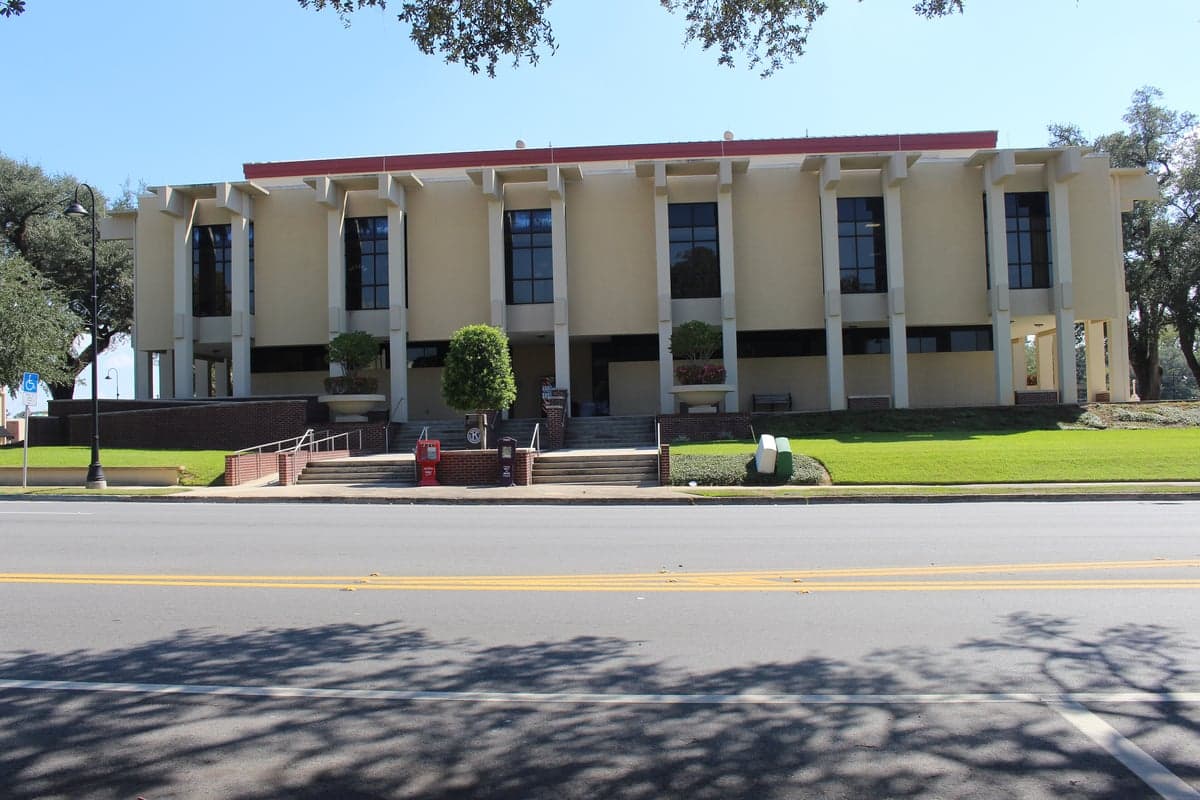
Photo: Wikipedia
Strategic Assessment of Jackson County
Workable tactical position. Some exposure to population density or targets, but generally defensible in a crisis.
What does the Strategic Assessment tell us?
Our Strategic Assessment grades tactical survivability of an area. Major population centers, military targets, fallout zones, natural disasters, and border exposure all drive risk — lower exposure means a more defensible position in a crisis.
This is heavily inspired by Joel Skousen's Strategic Relocation book. Highly recommended you checkout the book ($)What does this tell us?
Our Strategic Assessment grades tactical survivability of an area. Major population centers, military targets, fallout zones, natural disasters, and border exposure all drive risk — lower exposure means a more defensible position in a crisis.
This is heavily inspired by Joel Skousen's Strategic Relocation book. Highly recommended you checkout the book ($)Strategic Pillars

Key Distances
Strategic Assessment Analysis
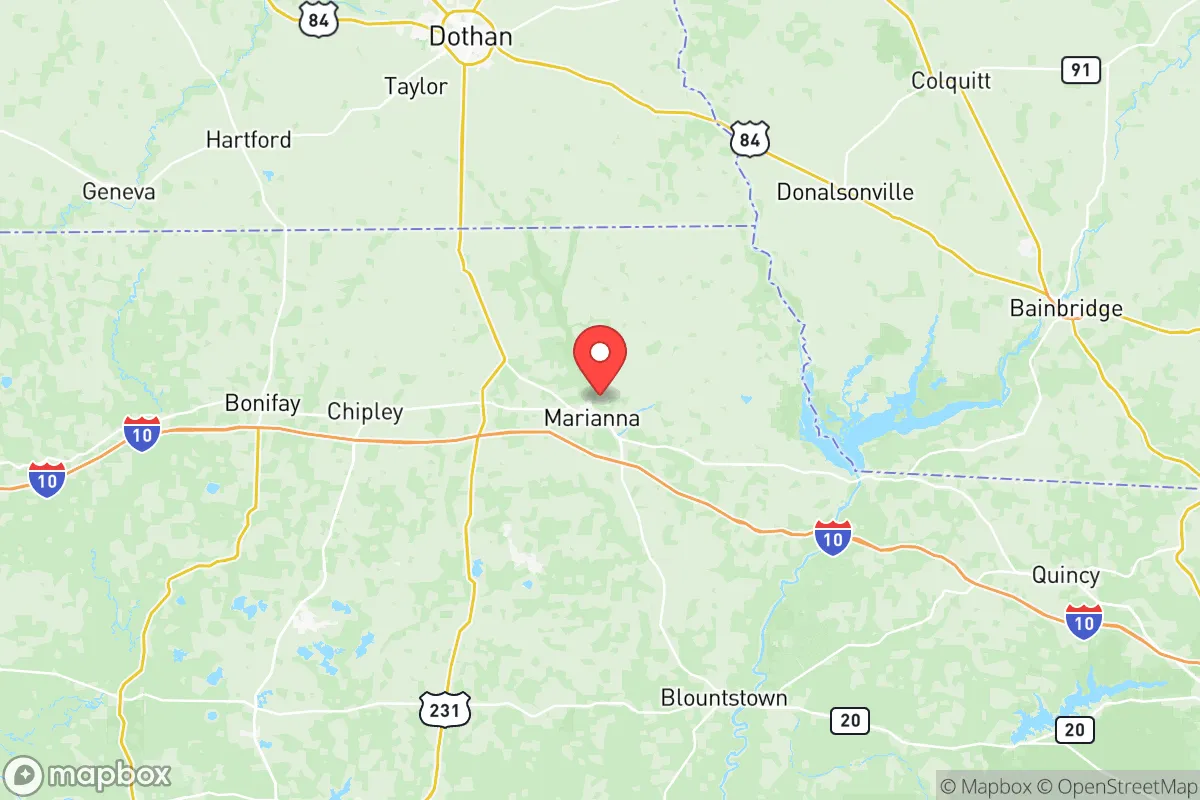
Jackson County, Florida, offers a compelling strategic position for relocators prioritizing resilience and self-sufficiency, blending the quiet isolation of the rural Panhandle with surprisingly robust logistical advantages. Located roughly 60 miles northwest of Tallahassee and 50 miles northeast of Panama City, the county sits at a crossroads where the Florida Panhandle meets the Alabama line, providing a buffer from the densest coastal populations while retaining access to critical infrastructure. For a reader weighing disaster readiness and long-term stability, Jackson County’s combination of low population density, abundant natural resources, and relative distance from major metropolitan targets makes it a noteworthy candidate worth serious consideration.
Geographic position and natural advantages for long-term stability
Jackson County’s geography is defined by its position along the Chipola River and the Apalachicola River system, which together form one of the most biodiverse and water-rich regions in the Southeast. The county seat, Marianna, sits atop a limestone ridge that provides natural drainage and reduces flood risk compared to low-lying coastal areas, a significant advantage for anyone concerned with storm surge or sea-level rise. The terrain is gently rolling, with hardwood forests and karst topography featuring numerous springs and caves—including the well-known Florida Caverns State Park—which offer natural shelter and water filtration potential. This landscape supports a temperate climate with distinct seasons, reducing the risk of extreme heat stress while still allowing for year-round food production. The county’s position roughly 50 miles inland from the Gulf of Mexico places it outside the most vulnerable hurricane zones, though it still experiences tropical weather systems; the 2018 Hurricane Michael caused significant tree damage and power outages here, but the area avoided the catastrophic storm surge that devastated Mexico Beach and Panama City. For a relocator, this inland buffer is a key asset: you get the rainfall and growing season of the Gulf Coast without the coastal evacuation pressures.
Risks, exposures, and proximity to fallout-relevant landmarks
While Jackson County’s rural character is a strength, it is not immune to risks, and a clear-eyed assessment must account for both natural and man-made exposures. The primary natural threat is inland flooding from prolonged rainfall, particularly along the Chipola River and its tributaries, which can rise rapidly during tropical systems; the 2024 flooding in nearby Sneads and Grand Ridge demonstrated how even modest storms can isolate communities when roads wash out. Tornadoes are a secondary concern, with the county sitting in the southern edge of Dixie Alley, and the 2018 Michael outbreak spawned several twisters here. On the man-made side, Jackson County’s proximity to two significant military installations—Tyndall Air Force Base near Panama City (roughly 50 miles south) and Fort Novosel (formerly Fort Rucker) in Alabama (about 40 miles northwest)—introduces a moderate risk profile. Tyndall, a key F-35 training base, and Fort Novosel, the Army’s primary helicopter training center, are both potential targets in a conflict scenario, though their distance reduces direct fallout risk. More concerning is the county’s location within 100 miles of the Port of Panama City, a major deepwater port handling petroleum products and chemicals, and the broader Gulf Coast refinery corridor stretching from Pensacola to Tampa. A major incident at any of these facilities could disrupt supply chains and create secondary hazards, but Jackson County’s inland position and prevailing wind patterns (typically from the south and east) offer some dispersion advantage. The county also hosts the Jackson County Correctional Facility near Marianna, a medium-security prison that could become a focal point during civil unrest, though its impact on surrounding rural areas is minimal.
Practical resilience for a relocator: food, water, energy, and defensibility
For someone serious about self-sufficiency, Jackson County delivers on the fundamentals. Water is abundant: the Floridan Aquifer lies beneath the entire county, with numerous springs and wells providing clean groundwater at depths of 50 to 200 feet, and the Chipola River offers a surface water backup with proper filtration. The county’s agricultural heritage is a major asset—Jackson County is one of Florida’s top producers of peanuts, cotton, and soybeans, with working farms and ranches throughout the area around Graceville, Cottondale, and Malone. This means local food production is not just possible but established, with farmers’ markets, roadside stands, and direct-from-farm sales common. For energy, the county is served by Gulf Power (now Florida Power & Light), but the rural grid is vulnerable to storm outages; many residents already rely on propane, generators, and solar as backups, and the area’s open farmland and south-facing slopes make solar panel installation practical. Defensibility is a mixed picture: the county’s low population density (roughly 47,000 people across 823 square miles) means neighbors are few and far between, which reduces social friction but also limits mutual aid. The terrain is mostly open farmland and pine plantations, offering limited natural cover, but the numerous caves and sinkholes provide unique shelter options. The county seat of Marianna has a small but functional hospital (Jackson Hospital) and a county sheriff’s office with a strong rural presence, but serious medical emergencies require a 45-minute drive to Panama City or Dothan, Alabama. For a relocator, the key takeaway is that Jackson County offers a solid foundation for a prepared lifestyle, but it demands proactive investment in off-grid systems and community building—this is not a place where you can show up and expect infrastructure to carry you.
The overall strategic picture for Jackson County is one of balanced opportunity: it avoids the extreme risks of coastal Florida while retaining access to the Gulf Coast’s economic and logistical networks. For a conservative-leaning relocator focused on disaster readiness, the county’s combination of abundant water, productive farmland, and low population density outweighs the moderate risks from hurricanes and nearby military targets. The area’s culture is deeply rooted in self-reliance, with a strong hunting and fishing tradition, active churches, and a network of small towns—Marianna, Graceville, Sneads—where neighbors still know each other. The downsides are real: limited healthcare, a weak job market outside agriculture and corrections, and the need for personal investment in backup power and water systems. But for someone willing to put in the work, Jackson County offers a defensible, resource-rich base that is close enough to civilization to be practical, yet far enough to be resilient. It is not a fallout shelter, but it is a solid, livable option for those who take preparedness seriously.

* Values derived from national, state, county, city and local statistics and may differ in a specific area. Last updated: 2026-07-29T14:38:27.000Z
Narrative content on this page is AI-generated and may contain mistakes. Verify any details that matter before acting on them.
ReloMaps may earn a commission from affiliate links at no extra cost to you.

