 Popular
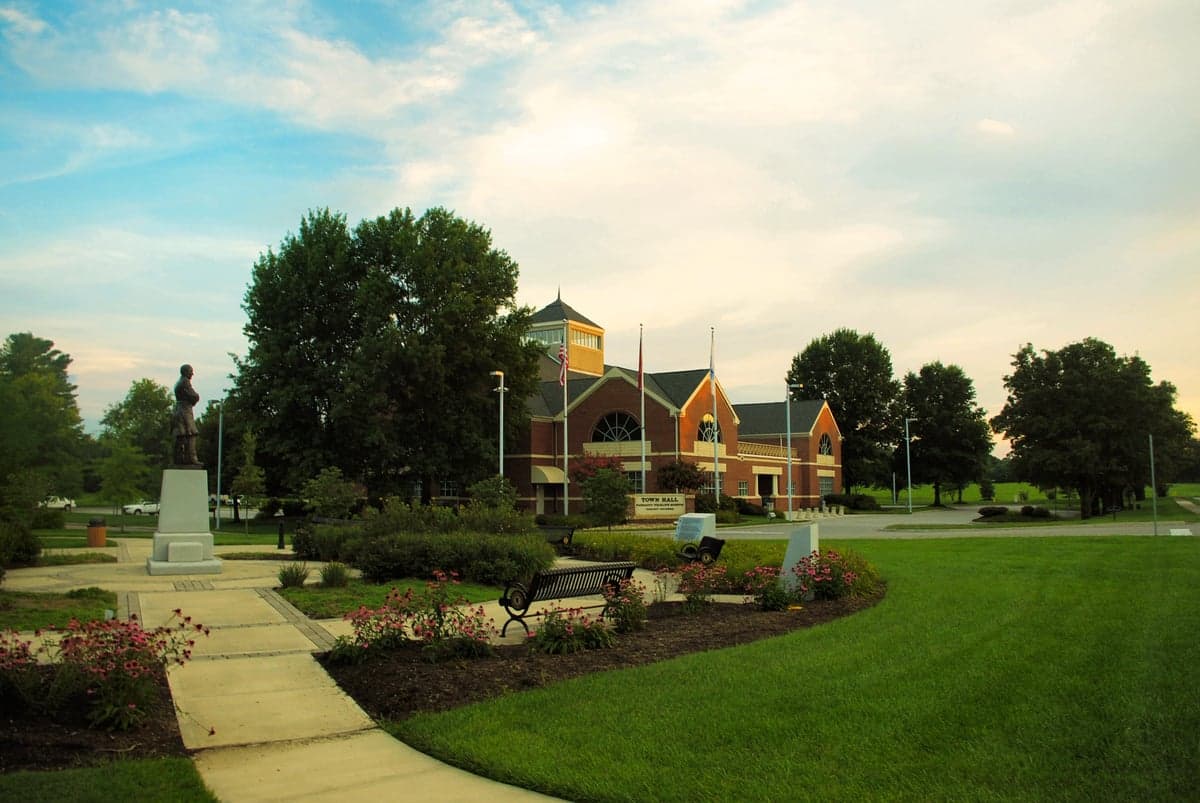
Photo: Wikipedia
Personal Sovereignty in Farragut, TN
Viable for self-reliance. Generally workable, though some barriers may limit total independence.
What does Personal Sovereignty tell us?
Personal Sovereignty measures your capacity for self-reliance and independence with minimal government friction. Higher scores mean fewer barriers between you and the way you want to live... but it assumes you have the space you need and good neighbors.
What does this tell us?
Personal Sovereignty measures your capacity for self-reliance and independence with minimal government friction. Higher scores mean fewer barriers between you and the way you want to live... but it assumes you have the space you need and good neighbors.
State Policy
Energy independence: Importer (25% of energy produced in-state)
Personal Liberty
Homesteading

Personal Liberty Analysis
Farragut, Tennessee offers a notably high degree of personal sovereignty compared to much of the country, particularly for those prioritizing minimal government intrusion into daily life. As a strategically located suburb of Knoxville, it combines the legal framework of a strong Second Amendment state with a low-tax, low-regulation environment that rewards self-reliance. For the survivalist or prepper mindset, Farragut provides a solid foundation for living on your own terms, though it is not a remote homestead—it’s a well-regulated community where local governance generally respects individual freedoms but does enforce zoning and property standards. The key is understanding where the state’s broad autonomy protections end and where local ordinances begin.
Tax burden and regulatory posture in Farragut
Tennessee’s lack of a state income tax is the single biggest financial win for personal sovereignty here. Farragut residents keep 100% of their earned income, with no state-level tax on wages, salaries, or retirement distributions. The sales tax rate in Farragut is 9.25% (7% state plus 2.25% local), which is high for everyday purchases but still lower than many states that also tax income. Property taxes are the main local burden, with a rate of roughly $2.30 per $100 of assessed value in Knox County, which is moderate for the region. For a $400,000 home, expect around $3,680 annually. The regulatory posture is business-friendly: no state-level permitting for firearms, no state-level business licensing for most sole proprietorships, and no state-level zoning that overrides local control. Farragut’s town government does enforce building codes and subdivision regulations, so you cannot simply build a bunker without permits, but the process is straightforward and not designed to block self-sufficient projects. The overall tax and regulatory climate is among the most favorable in the Southeast for those seeking to minimize government extraction from their labor and property.
Self-defense and gun law specifics in Farragut
Tennessee is a constitutional carry state, meaning no permit is required to carry a handgun openly or concealed for anyone legally allowed to possess a firearm. Farragut does not have any local ordinances that restrict this right—you can carry in most public spaces, including parks and sidewalks, without fear of local overreach. The state also has a strong “Stand Your Ground” law, with no duty to retreat before using deadly force if you are in a place you have a legal right to be. For preppers, this is critical: your home, vehicle, and occupied property are legally protected spaces where you can defend yourself without legal jeopardy, provided the threat is lawful. Magazine capacity is not restricted, and there is no state-level assault weapons ban. The only significant limitation is that carrying in schools, government buildings, and certain private businesses with posted signage is prohibited. For those building a defensive arsenal, Tennessee’s laws are among the most permissive in the nation, and Farragut’s local enforcement respects that framework. The sheriff’s office in Knox County is generally pro-Second Amendment, and permitless carry means no government database of gun owners exists at the state level.
Self-reliance and homesteading viability in Farragut
Farragut is a suburban town with lot sizes typically ranging from 0.25 to 1 acre in most residential subdivisions. True homesteading—raising livestock, large-scale gardening, or off-grid living—is limited by local zoning. The town’s zoning code restricts farm animals; chickens are allowed on lots of at least one acre with a permit, but pigs, goats, and cattle are generally prohibited in residential zones. For a prepper seeking food security, you can maintain a substantial vegetable garden and a few fruit trees on a standard lot, but you won’t be self-sufficient in meat or dairy without moving to unincorporated Knox County or Loudon County just south. Off-grid feasibility is low: the town requires connection to municipal water and sewer in most subdivisions, and solar panels are allowed but must comply with HOA rules if applicable. Many neighborhoods have HOAs that restrict external storage, sheds, and even clotheslines, so choose your subdivision carefully. For those willing to live 10–15 minutes outside town, rural parcels in adjacent areas offer 2–10 acre lots with fewer restrictions, allowing for rainwater collection, septic systems, and small-scale livestock. Farragut itself is best viewed as a base for self-reliance—good for gardening and defensive preparedness, but not for full off-grid independence.
Personal liberties in Farragut: parental rights, medical autonomy, speech, and property
Tennessee has strong legal protections for parental rights, with a state law that affirms parents have the fundamental right to direct the upbringing, education, and healthcare of their children. Farragut’s schools (part of Knox County Schools) generally respect this, though the district has faced debates over curriculum transparency. Medical autonomy is a mixed bag: Tennessee does not have a state-level vaccine mandate for adults, and the state passed laws limiting COVID-19 vaccine mandates by employers and schools. However, the state does require certain childhood immunizations for school attendance, with limited religious exemptions. For those seeking full medical freedom, Tennessee is better than many states but not a libertarian paradise—you can refuse most treatments, but emergency care and public health orders can override individual choice in rare cases. Free speech is robustly protected under the Tennessee Constitution, and Farragut has no local ordinances restricting political speech, signage, or assembly. Property rights are strong: Tennessee is a “right to farm” state, protecting agricultural uses from nuisance lawsuits, though this applies more to rural areas than Farragut’s suburbs. Eminent domain is limited to public projects, and the state has no statewide rent control or property use restrictions beyond standard zoning. Overall, the legal environment in Farragut leans heavily toward individual liberty, with the main constraints being local zoning and HOA rules rather than state overreach.
Compared to other areas in the Southeast, Farragut offers a balanced sovereignty profile: strong on taxes, guns, and parental rights, but moderate on homesteading and off-grid potential due to its suburban character. For a single individual or family with a prepper mindset, the town provides a secure, low-tax base with excellent defensive legal protections, but the trade-off is that you must comply with local zoning and HOA standards. If your priority is maximum autonomy with minimal government contact, rural Loudon or Monroe counties offer more freedom for self-sufficient living. But if you want a safe, well-run community where your rights are respected and your tax burden is low, Farragut is one of the best options in Tennessee—just be prepared to work within the local rules rather than ignoring them entirely.

* Values derived from national, state, county, city and local statistics and may differ in a specific area. Last updated: 2026-04-21T10:49:11.000Z
Narrative content on this page is AI-generated and may contain mistakes. Verify any details that matter before acting on them.
ReloMaps may earn a commission from affiliate links at no extra cost to you.

