 Popular
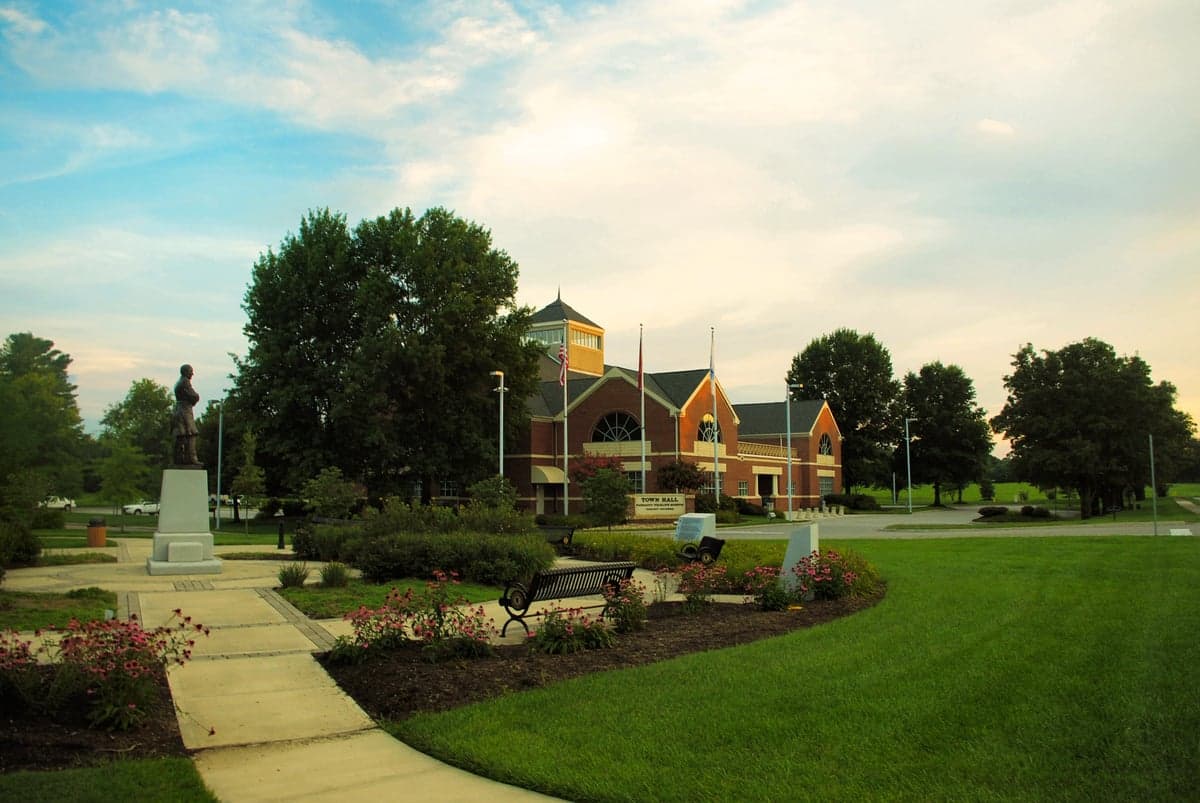
Photo: Wikipedia
Demographics of Farragut, TN
Affluence Level in Farragut, TN
An upper-middle-class area. Household wealth, education levels, and homeownership run ahead of national benchmarks.
People of Farragut, TN
The people of Farragut, Tennessee, today form a predominantly white, highly educated, and affluent community of 24,309 residents, with a distinctive identity as a family-oriented, low-crime suburb of Knoxville. The city is characterized by its 89.2% white population, a notably high 65.1% college education rate, and a very small foreign-born share of just 1.8%. This demographic profile reflects a community shaped by decades of domestic, white-collar migration rather than international immigration, creating a stable, culturally homogeneous environment that appeals strongly to conservative-leaning families and professionals seeking top-rated schools and safe neighborhoods.
How the city was settled and grew
Farragut’s human history is not one of colonial settlement or industrial boom, but of deliberate, post-war suburban planning. The area was sparsely populated farmland until the mid-20th century, named after Admiral David Glasgow Farragut, a Civil War naval hero born nearby. The first significant wave of population came in the 1960s and 1970s, driven by the expansion of the Tennessee Valley Authority (TVA) and the University of Tennessee in Knoxville. These employers drew engineers, administrators, and academics who sought larger lots and newer homes outside the city core. The earliest subdivisions, such as Village Green and Lovell Heights, were built during this period, attracting primarily white, middle-class families from within Tennessee and neighboring states. These neighborhoods remain stable, older enclaves with mature trees and established homeowners.
Modern era (post-1965)
The post-1965 Hart-Cellar Act had minimal impact on Farragut, as the city’s growth remained overwhelmingly domestic. The major demographic shift came in the 1980s and 1990s, when corporate relocations—particularly from companies like Denso Manufacturing and Sea Ray Boats—brought a wave of white-collar professionals from the Midwest and Northeast. These newcomers settled in newer, master-planned subdivisions such as Choto Hills and Thorn Grove, which offered large homes on cul-de-sacs and direct access to Farragut’s highly ranked schools. The city’s racial composition during this period remained nearly static: white population hovered above 90%, with small Black (0.9%) and Hispanic (3.2%) communities concentrated in older rental pockets near Kingston Pike. The East/Southeast Asian population (2.5%) and Indian-subcontinent population (1.5%) arrived primarily as professionals in engineering and healthcare, settling in newer developments like Turkey Creek and Concord Hills. These groups remain small and highly assimilated, with no distinct ethnic enclaves forming. The foreign-born share of 1.8% is among the lowest in Tennessee, reflecting Farragut’s limited draw for international migration.
The future
Farragut’s population is heading toward continued homogenization, not tribalization. The city is nearly built out, with little undeveloped land left for large-scale new construction. Future growth will come from infill development and the turnover of existing homes, which will likely attract a similar demographic: white, college-educated families seeking the same school system and low crime rates that drew the previous generation. The small Hispanic and Asian communities are plateauing, as there is no major employer or social infrastructure to drive further growth. The Indian-subcontinent population, while growing slightly, remains a thin professional layer rather than a community cluster. Over the next 10-20 years, Farragut will likely become slightly older and wealthier, as younger families are priced out by rising home values (median home price now exceeding $600,000). No new immigrant corridors are emerging, and the city’s identity as a stable, predominantly white, conservative suburb will persist.
For a conservative-leaning individual or family moving in now, Farragut offers a predictable, low-diversity environment where the population is stable, highly educated, and oriented around family life and civic engagement. The city is not becoming more diverse or cosmopolitan; it is deepening its existing character as a prosperous, safe, and culturally homogeneous suburb. New residents should expect a community where neighbors share similar backgrounds and values, and where demographic change is slow and incremental rather than transformative.

* Values derived from national, state, county, city and local statistics and may differ in a specific area. Last updated: 2026-04-21T10:49:11.000Z
Narrative content on this page is AI-generated and may contain mistakes. Verify any details that matter before acting on them.
ReloMaps may earn a commission from affiliate links at no extra cost to you.

