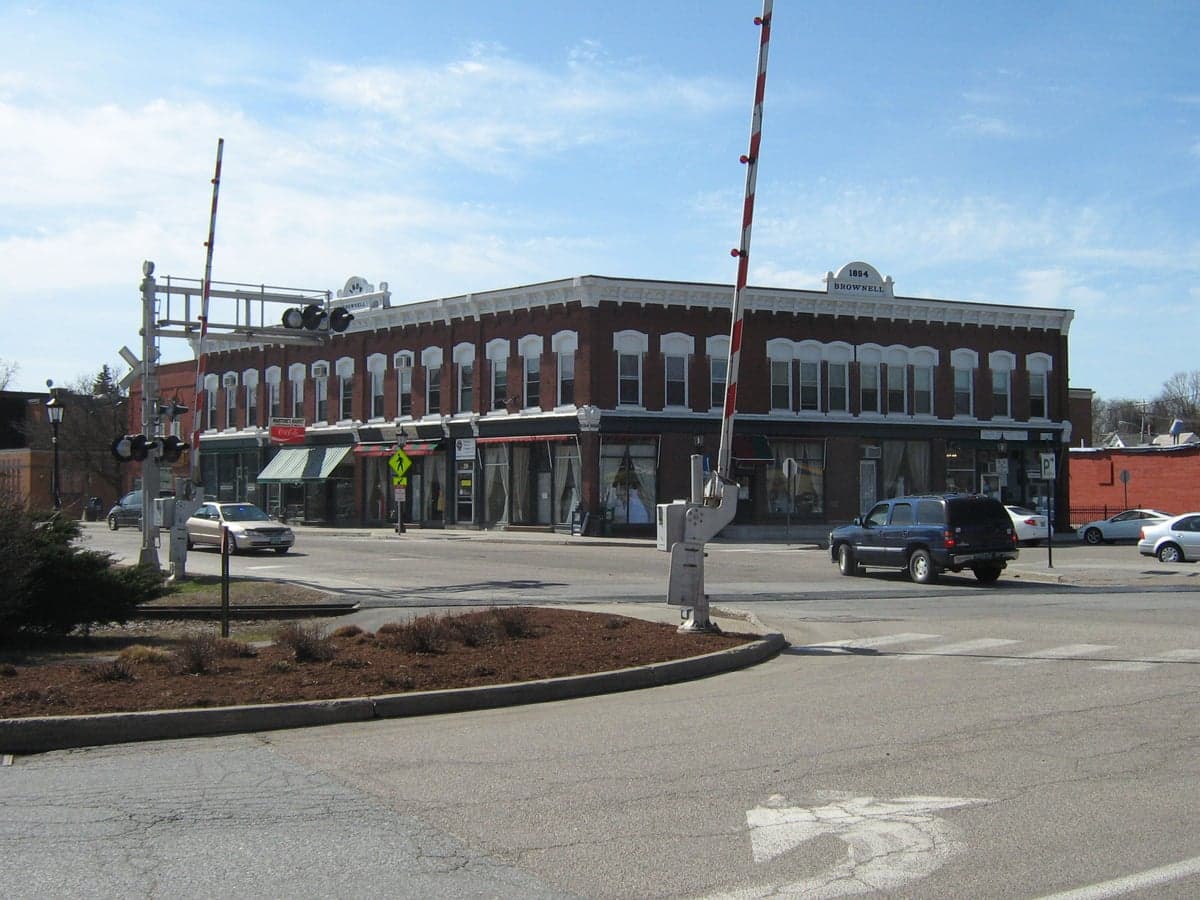
Photo: Wikipedia
Political ClimatePolitical Climate in Essex Junction, VT
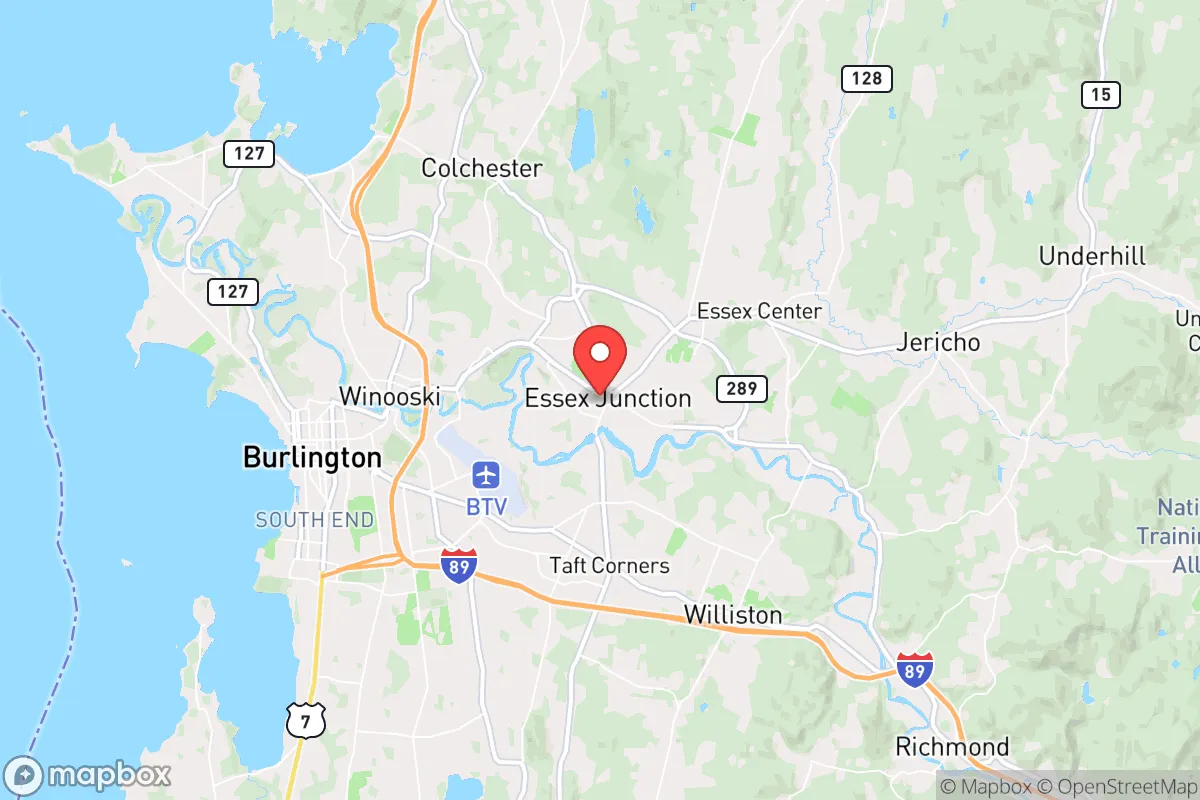
District shown is the primary district for this city’s centroid. Cities may span multiple districts.
Inherited from parent state — no local data available.
Local Political AnalysisPolitical Analysis of Essex Junction, VT
Essex Junction, Vermont, sits squarely in deep-blue territory, with a Cook PVI of D+17 that makes it one of the most reliably progressive enclaves in the state. The political lean here isn't subtle—it's baked into local elections, school board decisions, and even the way town meetings are run. If you've been around since the 1990s, you remember when Essex Junction was more of a middle-ground community, where folks from the farms and the tech park could find common ground. That's shifted hard over the last decade, and the trajectory points further left, not back to center.
How it compares
Drive ten minutes west to Williston or fifteen minutes south to Richmond, and you'll feel a different political breeze. Those towns still lean blue, but they're not as uniformly progressive—you'll see more Trump signs in yards, more pickup trucks with gun racks, and a general wariness of Burlington-style policies. Essex Junction, by contrast, is closer in spirit to Burlington itself, which is D+30 territory. The difference is that Essex Junction's progressive tilt feels more institutional: the school board pushes equity initiatives, the town council votes for higher density zoning, and the police department gets defunded-lite budgets every few years. Surrounding towns like Jericho and Underhill are more libertarian-leaning—they'll vote for a Republican governor but still support local gun rights and lower taxes. Essex Junction is the outlier in Chittenden County's eastern edge.
What this means for residents
If you value personal freedoms—like choosing your own healthcare, keeping your property taxes low, or sending your kids to a school that doesn't prioritize social justice over reading and math—Essex Junction is becoming a tougher place to live. The local government has embraced mandatory inclusionary zoning, which forces developers to set aside units for low-income housing, driving up costs for everyone else. The school district has adopted restorative justice discipline, which means your kid might get a talking-to instead of detention for vandalism. And the town council has passed plastic bag bans and gas-powered leaf blower restrictions, the kind of micro-regulations that feel like government overreach when you're just trying to mow your lawn. Property taxes are already among the highest in the state, and they're climbing faster than inflation because of new mandates from Montpelier that Essex Junction's representatives cheerlead.
For a long-time resident, the shift is frustrating. You used to be able to disagree with a neighbor over a zoning vote and still share a beer at the Essex Junction American Legion. Now, the local Facebook groups are full of people calling each other bigots over school board elections. The town's identity as a quiet, family-friendly suburb is being replaced by a progressive experiment that feels imported from Burlington. The Essex Junction Recreation & Parks Department now hosts drag story hours and climate activism workshops, which is fine if that's your thing, but it leaves little room for traditional community events like the Essex Junction Memorial Day parade, which has seen declining attendance as the town's culture shifts.
Looking ahead, the long-term trend is concerning. As more remote workers from Boston and New York move in, they bring their urban politics with them, voting for higher taxes and more regulations because they don't remember when Essex Junction was a place where you could leave your doors unlocked and not worry about the town telling you how to heat your home. The 2024 election results showed a 12-point swing leftward from 2020, even as surrounding towns held steady. If you're considering a move here, know that the political climate is not neutral—it's actively progressive, and it's only going to get more so. The personal freedoms that made Vermont attractive—like the "Live Free or Die" spirit that New Hampshire still has—are fading fast in Essex Junction.

State Political ClimatePolitical Climate in Vermont
State Political AnalysisPolitical Environment in the State
Vermont has long been painted as a deep-blue bastion, but the reality on the ground is more complicated than the national narrative suggests. The state’s overall partisan lean is solidly Democratic at the presidential level—voting for Joe Biden by roughly 35 points in 2020—but that top-line number masks a fierce urban-rural split and a libertarian streak that still runs through many towns. Over the last 10-20 years, the state has shifted leftward on social issues and gun control, yet it remains one of the most fiscally conservative places in New England when it comes to local budgets and property taxes. The dominant coalition is a mix of Burlington-area progressives and moderate Republicans from the Northeast Kingdom, but that coalition is fraying as in-migration from New York and Massachusetts accelerates the leftward tilt.
Urban vs. rural divide
The political map of Vermont is a study in contrasts. Burlington and its surrounding Chittenden County are the engine of the state’s progressive politics—home to Bernie Sanders’ base, the University of Vermont, and a dense concentration of government and nonprofit workers. This metro area reliably delivers 70-80% of its vote to Democratic candidates. Drive an hour east to Newport in Orleans County, and you’ll find a different world: Trump won Orleans by 20 points in 2020. The Northeast Kingdom (Essex, Orleans, Caledonia counties) is the state’s most reliably Republican region, driven by working-class logging, farming, and manufacturing communities. The Rutland area and Bennington County are swingier—Rutland City itself leans left, but the surrounding towns vote red. St. Johnsbury and Lyndonville in Caledonia County are notable for their independent-minded voters who often split tickets, supporting Republican governors like Phil Scott while voting for Democratic presidential candidates. The suburban ring around Burlington—places like Williston and South Burlington—has been trending bluer as remote workers from Boston and New York move in, diluting the old Yankee Republican base.
Policy environment
Vermont’s policy environment is a mixed bag for conservatives. On the plus side, the state has no sales tax and no right-to-work law, but it does have a progressive income tax that tops out at 8.75% for income over $213,150—one of the highest in the nation. Property taxes are also steep, averaging about 1.8% of assessed value, funding one of the highest per-pupil education spending levels in the country. The regulatory posture is heavy: Vermont has some of the strictest land-use laws in the U.S., including Act 250, which requires state-level permits for most development. On education, the state passed a universal school meals program and has a school choice system that allows students to attend any public school in their district, but charter schools are virtually nonexistent. Healthcare is dominated by the state’s single-payer-like Green Mountain Care system, though it’s not a true single-payer model. Election laws are among the most accessible in the country: automatic voter registration, no-excuse absentee voting, and same-day registration are all in place. Gun control is a major flashpoint—Vermont passed universal background checks, a 10-round magazine limit, and a red-flag law in 2018, a dramatic shift for a state that once had virtually no gun laws. For a conservative, the policy environment feels increasingly hostile to Second Amendment rights and economic freedom.
Trajectory & freedom
Vermont is becoming less free by most conservative metrics, especially in the last five years. The 2018 gun laws (Act 94) were a watershed moment, turning a state that had no permit requirement or magazine limit into one with some of the strictest gun laws in New England. In 2023, the legislature passed a ban on carrying firearms in hospitals and schools, and there’s ongoing talk of a “safe storage” mandate. On parental rights, Vermont passed a law in 2023 that allows minors as young as 12 to consent to gender-affirming care without parental notification—a major concern for conservative families. The state also enacted a “sanctuary” law for transgender individuals, barring law enforcement from cooperating with out-of-state investigations into gender-affirming care. On medical freedom, Vermont was one of the first states to legalize assisted suicide (1999) and recreational marijuana (2018), but it also imposed one of the strictest COVID-19 vaccine mandates for healthcare workers, which remains in effect. Property rights have been eroded by Act 250 and a 2023 law that limits short-term rentals in residential zones. The trajectory is clear: Vermont is moving toward a European-style social democracy, with high taxes, heavy regulation, and expanding government control over personal decisions.
Civil unrest & political movements
Vermont has seen its share of political flashpoints. The Burlington area experienced significant protests in 2020 following George Floyd’s death, with some property damage and clashes between left-wing activists and police. The state’s sanctuary policies have made it a destination for out-of-state homeless populations, straining social services in Burlington and Rutland. On the right, the Vermont Republican Party is a shadow of its former self, but grassroots groups like the Vermont Federation of Sportsmen’s Clubs and the Vermonters for a Better Vermont PAC have been active in fighting gun control and tax increases. The “Secession of the Northeast Kingdom” movement, while fringe, has gained some online traction among conservatives frustrated with Burlington’s dominance. Election integrity has been a minor issue—Vermont uses paper ballots and has strong audit laws, but the 2020 election saw a surge in mail-in voting that raised concerns among some conservatives about chain of custody. The most visible flashpoint for a new resident would be the gun control debate, which is a constant presence in local news and town hall meetings.
Projection
Over the next 5-10 years, Vermont will likely continue its leftward drift, driven by in-migration from high-tax states like New York and Massachusetts. The Burlington metro area will become even more progressive, while the rural Northeast Kingdom will hold steady or decline in population. The state’s aging population—Vermont has the second-oldest median age in the nation—means that younger, more liberal transplants will increasingly shape policy. Expect further gun control measures, possibly including a ban on semi-automatic rifles. The tax burden will likely increase as the state struggles to fund its generous social programs and pension obligations. For a conservative moving in now, the next decade will feel like a slow-motion erosion of the state’s traditional independence. The best bet for like-minded communities is the Northeast Kingdom or the Rutland area, where the old Yankee libertarian spirit still lingers.
For a new resident, the bottom line is this: Vermont offers stunning natural beauty and a slower pace of life, but it comes with a high price tag in taxes and a government that is increasingly comfortable telling you how to live. If you value low regulation, gun rights, and parental control, you’ll find yourself swimming against a strong tide. The state is a beautiful place to visit, but for a conservative looking to put down roots, it’s a tough sell unless you’re willing to fight for every inch of freedom.
* Values derived from national, state, county, city and local statistics and may differ in a specific area. Last updated: 2026-04-24T12:16:37.000Z
Narrative content on this page is AI-generated and may contain mistakes. Verify any details that matter before acting on them.
ReloMaps may earn a commission from affiliate links at no extra cost to you.

