Photo: Wikipedia
Strategic Assessment of Enterprise, NV
Meaningful friction. Expect exposure to either population pressure, blast zones, or natural disaster risk. Consider buying a retreat property.
What does the Strategic Assessment tell us?
Our Strategic Assessment grades tactical survivability of an area. Major population centers, military targets, fallout zones, natural disasters, and border exposure all drive risk — lower exposure means a more defensible position in a crisis.
This is heavily inspired by Joel Skousen's Strategic Relocation book. Highly recommended you checkout the book ($)What does this tell us?
Our Strategic Assessment grades tactical survivability of an area. Major population centers, military targets, fallout zones, natural disasters, and border exposure all drive risk — lower exposure means a more defensible position in a crisis.
This is heavily inspired by Joel Skousen's Strategic Relocation book. Highly recommended you checkout the book ($)Strategic Pillars

Key Distances
Regional Safe Places
Below is our recommended "safe zones" in Nevada and the surrounding area based on our strategic heuristics. For most people, it's unrealistic to live in a “safe zone” full-time due to work, family or other personal reasons. They tend to be more rural. However, many of these areas are perfect for second homes and retreat properties that double as a vacation home or even a short-term rental.
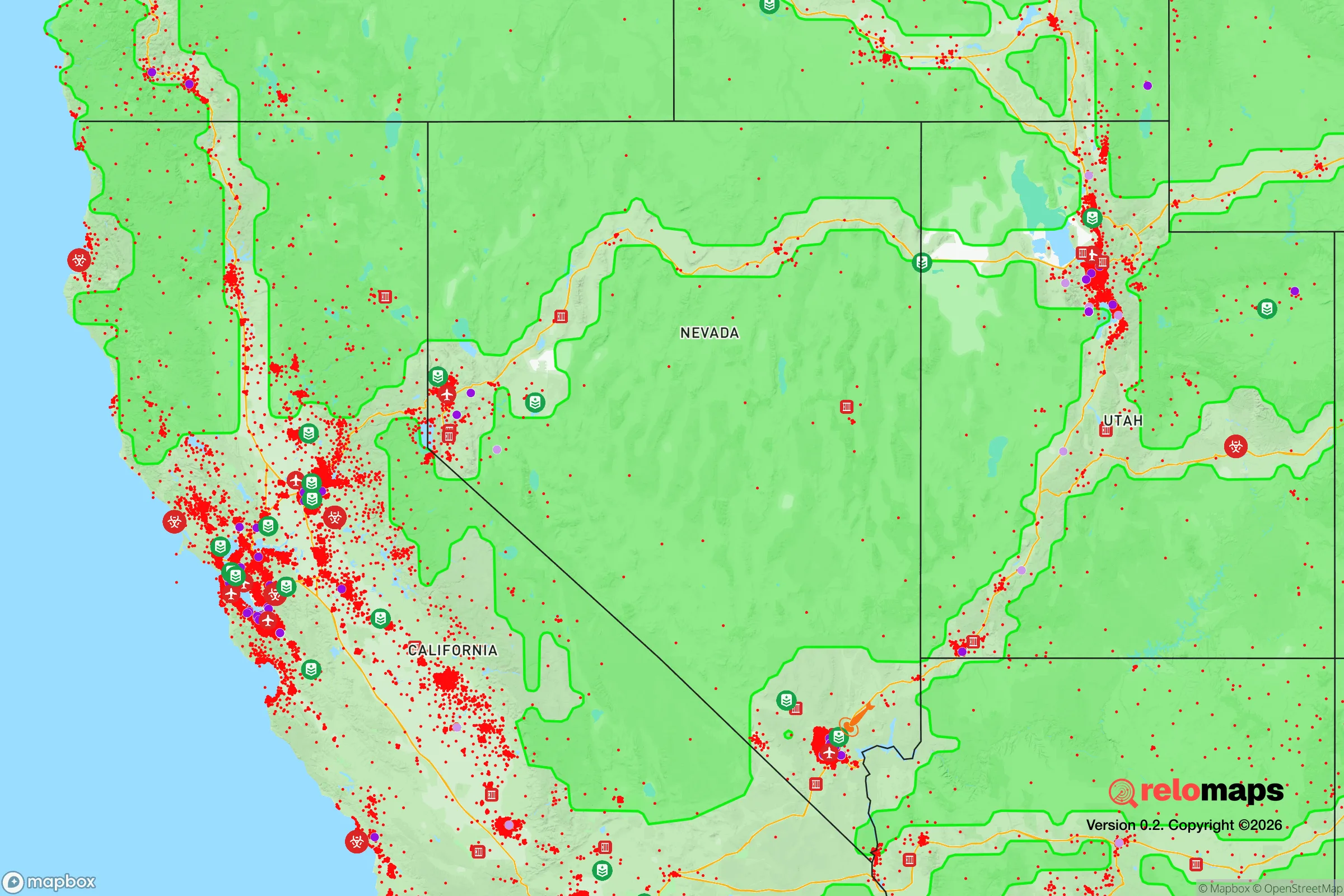
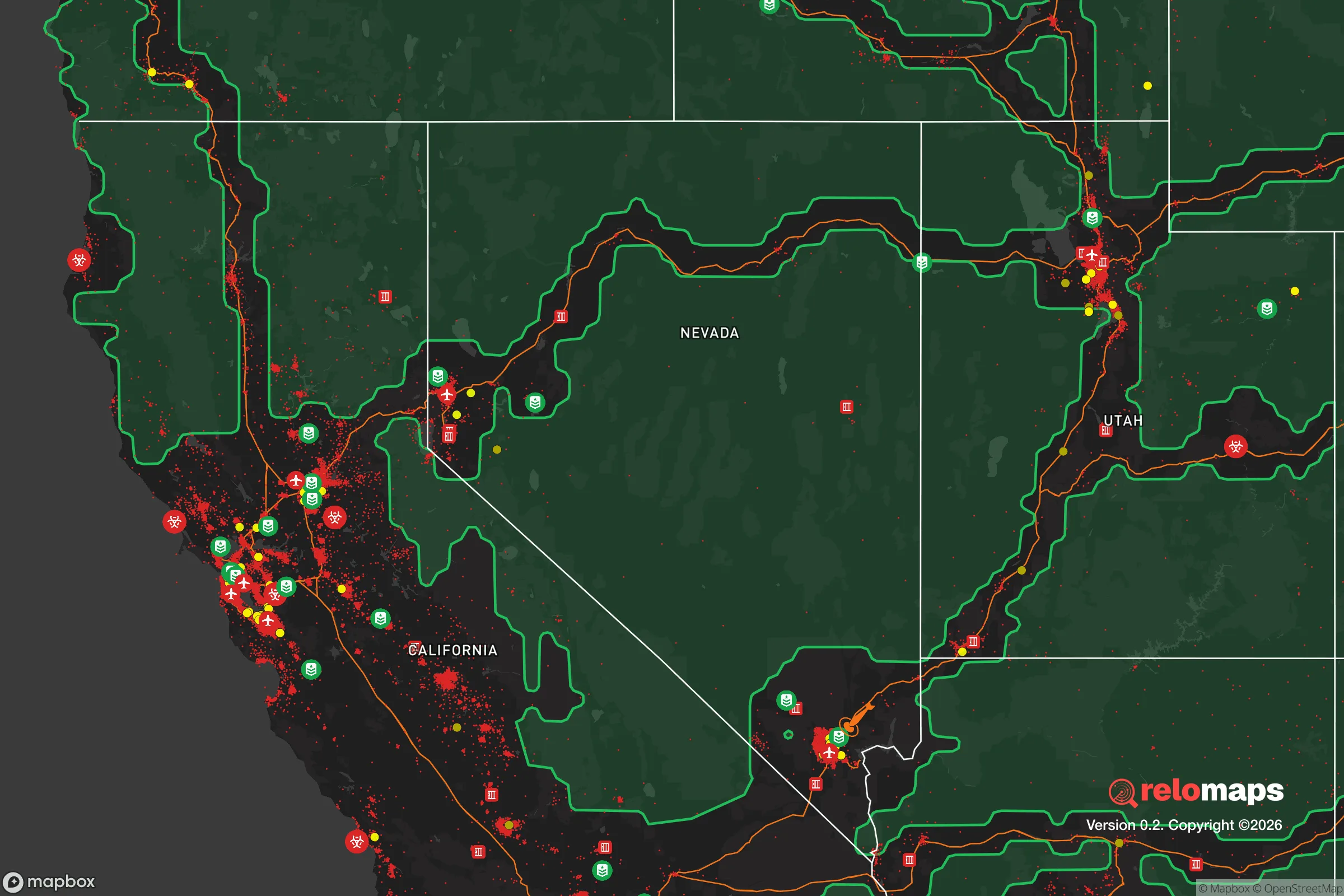


Important Note: For informational purposes only. This does not mean nothing bad ever happens in the green zones. Please use common sense. This is based on public data and modeled with AI. We tried to take a conservative approach but mistakes happen. We update this regularly as new information becomes available.
Solar Generator Recommendations
Backup power matters more here than in safer locations. We've picked three solar generators across budgets and capacity tiers — start with the budget unit if you only need a few essentials, or step up if you want to run a fridge and HVAC for days at a time.

Jackery Portable Power Station Explorer 300
Budget OptionPower on the Go: Weighing only 11 lbs, it's convenient to set up and store with book-sized foldable solar panels

BLUETTI Portable Power Station AC180
Designed for both indoor and outdoor scenarios, AC180 is highly capable as it has a robost capacity and continuous output power.

EF ECOFLOW DELTA Pro Ultra Power Station
Upgraded PickEcoFlow DELTA Pro Ultra is a whole-home energy system designed to grow with your family. Integrated with the Smart Home Panel 2, it scales to meet your evolving energy needs — keeping your home powered, intelligent, and secure through every stage of life.
We earn a commission, at no additional cost to you.
Strategic Assessment Analysis
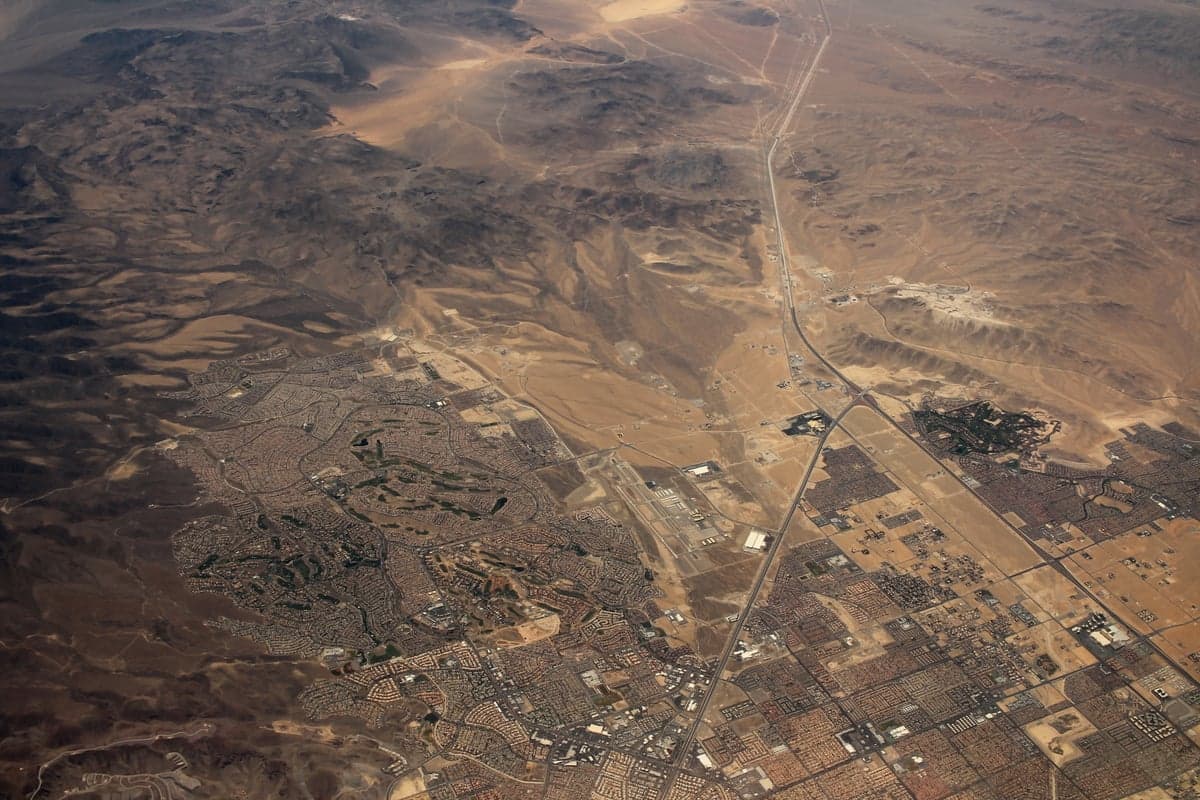
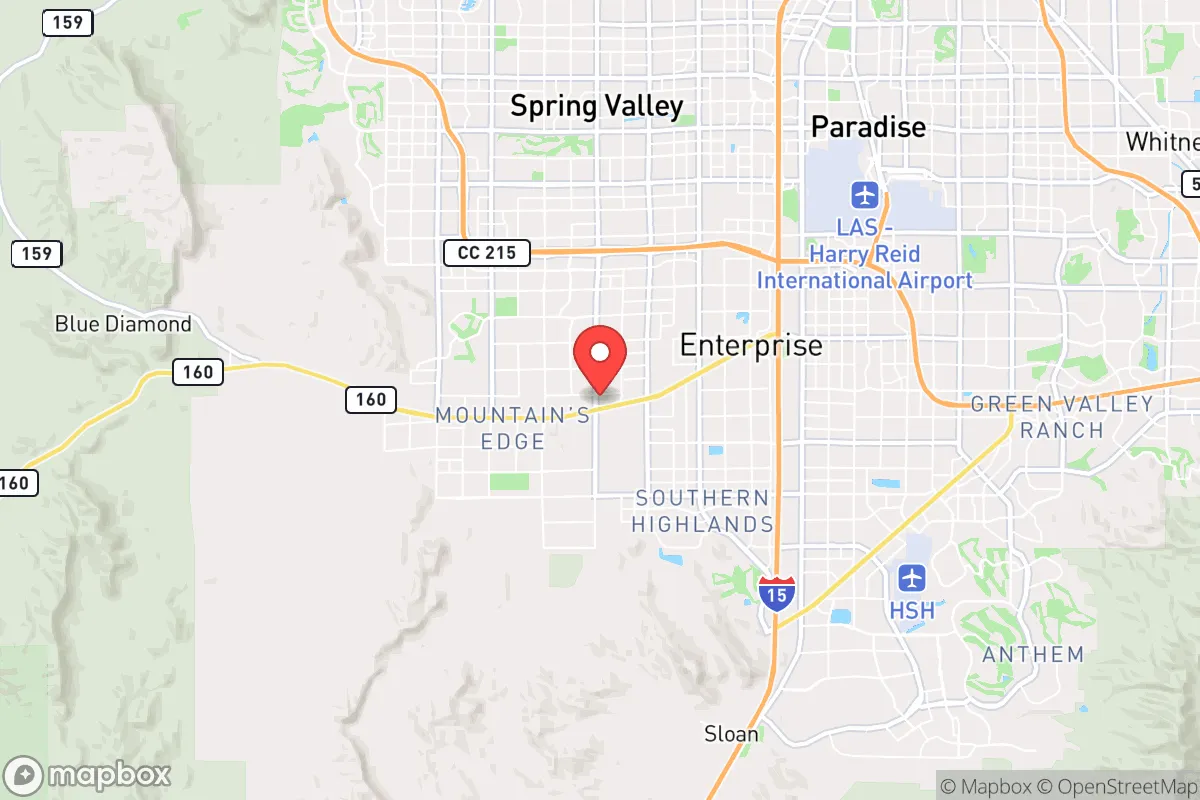
Enterprise, Nevada, sits in a precarious but potentially advantageous position for those prioritizing resilience and preparedness. Located just southwest of the Las Vegas Strip, this unincorporated community of roughly 220,000 residents offers a blend of suburban infrastructure and proximity to vast, sparsely populated desert terrain. Its strategic value lies in its access to multiple escape routes—Interstate 15, U.S. Route 95, and a network of state highways—while still being close enough to a major metropolitan area to source supplies and medical care in stable times. However, for a survivalist or prepper mindset, the area’s proximity to a dense urban center and its associated vulnerabilities demands a clear-eyed assessment of both its strengths and its serious risks.
Geographic position and natural advantages for long-term survival
Enterprise’s location at the edge of the Mojave Desert provides a few underappreciated natural advantages. The region’s arid climate means minimal risk of flooding, hurricanes, or tornadoes—common threats that can disrupt supply chains and destroy infrastructure elsewhere. The dry air also reduces corrosion and mold, making long-term food and equipment storage more reliable. The surrounding landscape, including the Red Rock Canyon National Conservation Area to the west and the Spring Mountains to the northwest, offers rugged terrain that can serve as a natural buffer against large-scale civil unrest spreading from the Strip. Elevation in parts of Enterprise reaches around 2,500 feet, providing some relief from the valley’s summer heat and offering vantage points for observation. The area’s low population density relative to the urban core—about 1,200 people per square mile versus Las Vegas’s 4,500—means less competition for resources in a crisis, though that advantage shrinks quickly if a mass evacuation is triggered.
Risks, exposures, and proximity to fallout-relevant landmarks
The most glaring vulnerability for Enterprise is its proximity to Las Vegas, a city of nearly 650,000 that draws 40 million tourists annually. In a scenario involving civil unrest, a mass casualty event, or a coordinated attack, the Strip and its surrounding infrastructure—casinos, convention centers, McCarran International Airport—become high-value targets. Enterprise sits roughly 10 miles from the airport and 12 miles from the Las Vegas Strip, placing it within the blast radius of a large conventional explosive device and well within the fallout zone of a dirty bomb or small nuclear device detonated downtown. The nearby Nellis Air Force Base, home to the Nevada Test and Training Range, is a strategic military asset that could itself become a target. Additionally, the Hoover Dam, about 30 miles southeast, is a critical infrastructure node; its destruction or sabotage would cut power and water to the entire region, including Enterprise. The city’s reliance on the Colorado River via the Southern Nevada Water Authority means a single point of failure for the area’s water supply. For a relocator, the risk of being caught in a mass panic evacuation along I-15 or the 215 Beltway is a serious concern—those roads can gridlock within minutes during a major event.
Practical resilience for a relocator: food, water, energy, and defensibility
For those committed to living in Enterprise with a prepper mindset, practical resilience requires deliberate planning. Water is the most critical issue. The municipal supply comes from Lake Mead, which has seen historic lows and is vulnerable to both drought and sabotage. A serious prepper should invest in a well—though groundwater in the Las Vegas Valley is limited and often brackish—or install a large-capacity rainwater catchment system. The area averages only 4 inches of rain per year, so storage of at least 50 gallons per person for a 30-day supply is a baseline. Food storage is more feasible: the dry climate extends the shelf life of freeze-dried and canned goods, and the nearby Las Vegas Valley offers multiple big-box retailers (Costco, Walmart, Sam’s Club) for bulk purchasing. However, those stores will be stripped within hours of a crisis, so a private stockpile is non-negotiable. Energy resilience is mixed. Solar power is viable year-round due to high insolation, but the summer heat reduces battery efficiency. A backup generator with a 500-gallon propane tank is a more reliable option, though propane delivery can be disrupted. Defensibility is a challenge in a suburban grid of tract homes and cul-de-sacs. A home on the western edge of Enterprise, near the foothills of the Spring Mountains, offers better natural chokepoints and line-of-sight than a house in the dense central neighborhoods. Fencing, reinforced doors, and a neighborhood watch network are practical steps, but the area’s layout makes it difficult to secure against a determined group. For those willing to commute, a rural property in nearby Pahrump (about 60 miles west) or Mesquite (80 miles northeast) provides far better defensibility and water access, though it sacrifices the convenience of Enterprise’s amenities.
The overall strategic picture for Enterprise is one of calculated trade-offs. It offers a relatively stable climate, multiple evacuation routes, and access to urban resources that can be leveraged in normal times. But its proximity to a high-profile target like the Las Vegas Strip, its dependence on a single water source, and its suburban layout make it a poor choice for those seeking true isolation or hardened defensibility. For a single individual or family willing to invest heavily in water storage, solar power, and home security, Enterprise can serve as a viable base—provided they have a clear bug-out plan for the first 72 hours of a crisis. For those who prioritize long-term survival over short-term convenience, the surrounding desert communities offer a more resilient alternative. Enterprise is not a fortress, but with the right preparations, it can be a defensible outpost on the edge of a volatile urban center.

* Values derived from national, state, county, city and local statistics and may differ in a specific area. Last updated: 2026-04-23T04:10:24.000Z
Narrative content on this page is AI-generated and may contain mistakes. Verify any details that matter before acting on them.
ReloMaps may earn a commission from affiliate links at no extra cost to you.

