Photo: Wikipedia
Personal Sovereignty in Enterprise, NV
Viable for self-reliance. Generally workable, though some barriers may limit total independence.
What does Personal Sovereignty tell us?
Personal Sovereignty measures your capacity for self-reliance and independence with minimal government friction. Higher scores mean fewer barriers between you and the way you want to live... but it assumes you have the space you need and good neighbors.
What does this tell us?
Personal Sovereignty measures your capacity for self-reliance and independence with minimal government friction. Higher scores mean fewer barriers between you and the way you want to live... but it assumes you have the space you need and good neighbors.
State Policy
Energy independence: Importer (15% of energy produced in-state)
Personal Liberty
Homesteading

Personal Liberty Analysis
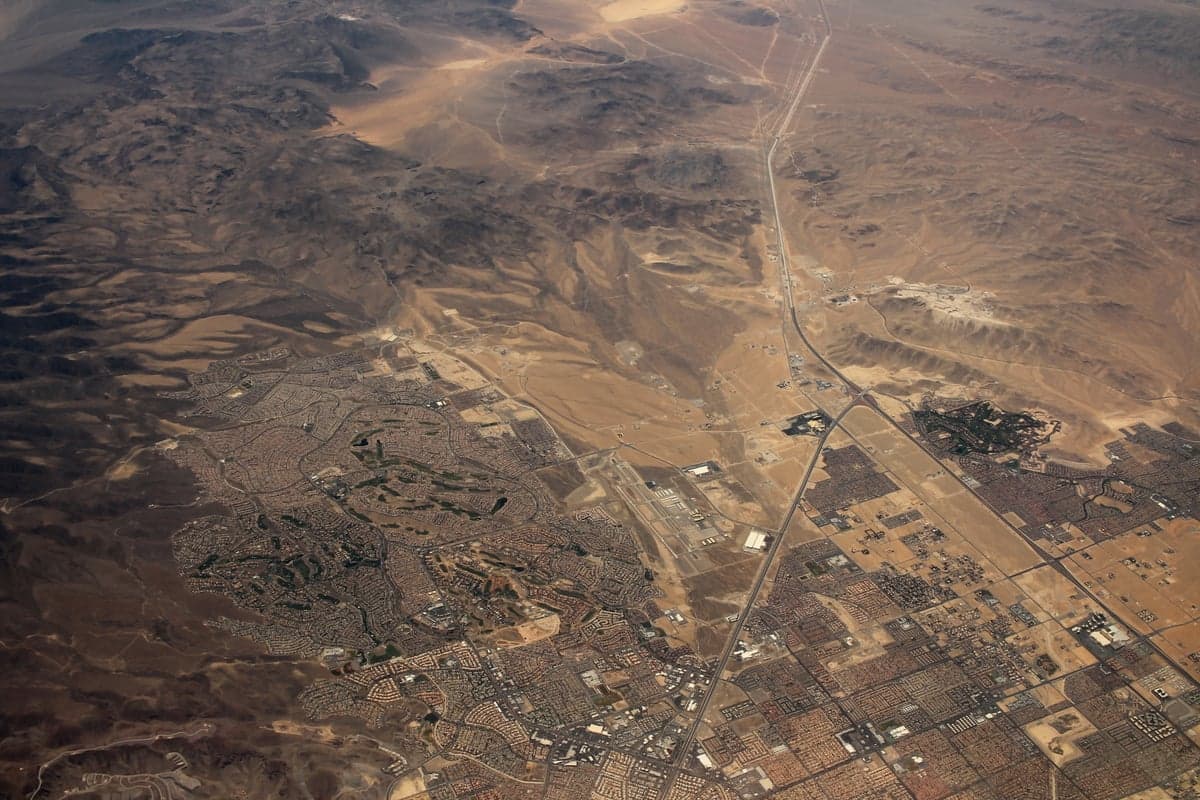
Enterprise, Nevada, offers a notably high degree of personal sovereignty compared to many urban and suburban areas in the United States, largely due to Nevada’s state-level legal framework that prioritizes individual autonomy over collective mandates. As an unincorporated township within Clark County, Enterprise benefits from the state’s lack of personal income tax, its strong right-to-carry gun laws, and a regulatory environment that generally respects property rights and parental decision-making. For the survivalist or prepper-minded individual, this translates into a base of operations where the government’s footprint is lighter than in states like California or New York, though the proximity to Las Vegas means some urban-style restrictions still apply. The key for anyone considering relocation here is understanding that while Nevada’s constitution and statutes provide a solid foundation for self-reliance, local county ordinances can introduce nuances that require careful navigation.
Tax burden and regulatory posture: How Nevada’s fiscal policies protect your earnings
Nevada’s tax structure is a major draw for those seeking to keep more of what they earn. The state imposes no personal income tax, no corporate income tax, and no franchise tax on individuals, meaning every dollar you earn stays in your pocket or your prepper supply budget. Sales tax in Enterprise is around 8.38% (Clark County rate), which is moderate, and property taxes are capped by the state’s “abatement” system, typically running 0.6% to 0.8% of assessed value—far lower than in high-tax states like Illinois or New Jersey. This low-tax environment directly supports personal sovereignty by reducing the financial leverage the government has over your choices. Regulatory posture is similarly favorable: Nevada is a “right-to-work” state, meaning you cannot be forced to join a union as a condition of employment, and business licensing is streamlined compared to coastal states. However, Clark County does enforce building codes and zoning regulations, so if you’re planning a fully off-grid setup, you’ll need to check specific allowances—more on that below.
Self-defense and gun law specifics: What Enterprise allows for armed preparedness
For the prepper, Nevada’s gun laws are among the most permissive in the West. Enterprise residents enjoy constitutional carry—no permit required to carry a concealed firearm for anyone legally allowed to possess a gun. The state also has a “Shall Issue” permit system if you want reciprocity with other states, but it’s not a barrier to daily carry. There is no state-level registration of firearms, no magazine capacity limits, and no “assault weapon” ban, meaning you can legally own AR-15s, standard-capacity magazines, and suppressors (with a federal tax stamp). Stand-your-ground laws are in effect, with no duty to retreat in any place you have a legal right to be. Castle doctrine protections extend to your vehicle and place of business. The only real limitation is that Clark County prohibits open carry in certain public buildings and parks, but concealed carry remains unrestricted. For a survivalist, this means you can maintain a fully stocked armory and carry daily without government permission slips—a critical factor in maintaining personal sovereignty in an uncertain world.
Self-reliance and homesteading viability: Lot sizes, zoning, and off-grid feasibility in Enterprise
Enterprise is a suburban area with a mix of master-planned communities and older neighborhoods, so true homesteading is limited but not impossible. Most residential lots range from 0.1 to 0.25 acres in newer subdivisions, though some older parcels near the edges of the township offer 0.5 to 1 acre lots. Zoning is primarily R-1 (single-family residential), which allows for gardens, small livestock like chickens (check HOA rules—many HOAs ban roosters and limit coop size), and even beekeeping with a Clark County permit. Off-grid feasibility is constrained by the desert environment: you’ll need a well (costly and uncertain in the Mojave), solar panels (allowed, but HOAs may require roof-mounted only), and a septic system if you’re outside sewer lines. The county does require connection to municipal water and sewer in most subdivisions, so true off-grid living is only viable on unincorporated parcels outside the urban growth boundary. Rainwater harvesting is legal but limited to 20,000 gallons per year without a permit. For the serious prepper, Enterprise is better as a base for supplies and community networking than as a self-sufficient homestead—consider rural Nye County (e.g., Pahrump) for larger acreage and fewer restrictions.
Personal liberties: Parental rights, medical autonomy, speech, and property protections
Nevada’s legal framework generally respects personal liberties, but there are important nuances. Parental rights are strong: the state has no universal vaccine mandate for schoolchildren (though individual school districts can require certain vaccines for attendance), and parents have broad authority over medical decisions for their children, including the ability to opt out of sex education. Medical autonomy is mixed—Nevada legalized recreational marijuana in 2016, which some preppers see as a personal freedom issue, but the state also has a robust public health system that can impose quarantine orders during emergencies. Free speech is protected under the First Amendment, and there are no state-level “hate speech” laws that criminalize political opinions. Property rights are solid: Nevada has strong eminent domain protections requiring “just compensation” and a public use test, and there is no state-level rent control. However, Clark County does enforce noise ordinances and building codes that can limit certain prepper activities like underground bunker construction (requires permits and engineering approvals). For parents, the ability to homeschool is unrestricted—no notification required, no curriculum approval, and no testing mandates—making it a haven for those who want to control their children’s education without government interference.
In the broader context of American personal sovereignty, Enterprise ranks well above average for an urban-adjacent area. The combination of no income tax, constitutional carry, strong property rights, and minimal homeschooling restrictions creates an environment where individuals and families can largely live as they see fit, free from the heavy hand of state overreach. The trade-offs are the suburban HOA culture (which can impose aesthetic and behavioral rules) and the desert climate (which limits off-grid self-sufficiency without significant investment). For the survivalist who wants proximity to Las Vegas’s job market and supply chains but values personal autonomy above all, Enterprise is a strategic choice—just be prepared to navigate local covenants and county codes that can nibble at the edges of your freedom. Compared to states like Oregon, Washington, or Colorado, where gun laws and tax burdens are tightening, Enterprise offers a more stable foundation for long-term self-reliance in an increasingly uncertain national landscape.

* Values derived from national, state, county, city and local statistics and may differ in a specific area. Last updated: 2026-04-23T04:10:24.000Z
Narrative content on this page is AI-generated and may contain mistakes. Verify any details that matter before acting on them.
ReloMaps may earn a commission from affiliate links at no extra cost to you.

