Photo: Wikipedia
Political ClimatePolitical Climate in Enterprise, NV
District shown is the primary district for this city’s centroid. Cities may span multiple districts.
Local Political AnalysisPolitical Analysis of Enterprise, NV
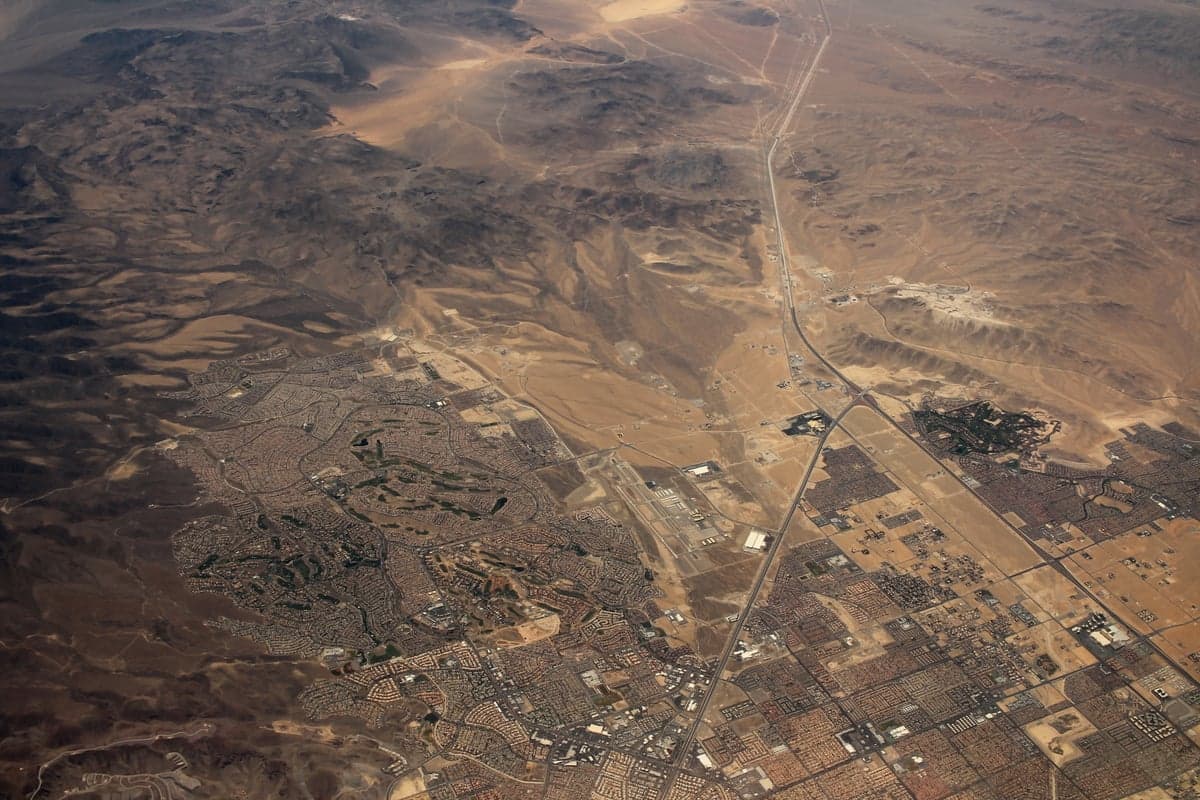
Enterprise, Nevada, sits in a political landscape that’s shifting under your feet, and if you’ve been here a while, you’ve felt it. The Cook PVI clocks the area at D+1, meaning it leans just barely Democratic, but that number doesn’t tell the whole story. This used to be a place where folks kept their heads down, worked hard, and expected the government to stay out of their business. Now, you’re seeing more of that progressive energy bleeding in from Las Vegas proper, and it’s changing the feel of the neighborhood.
How it compares
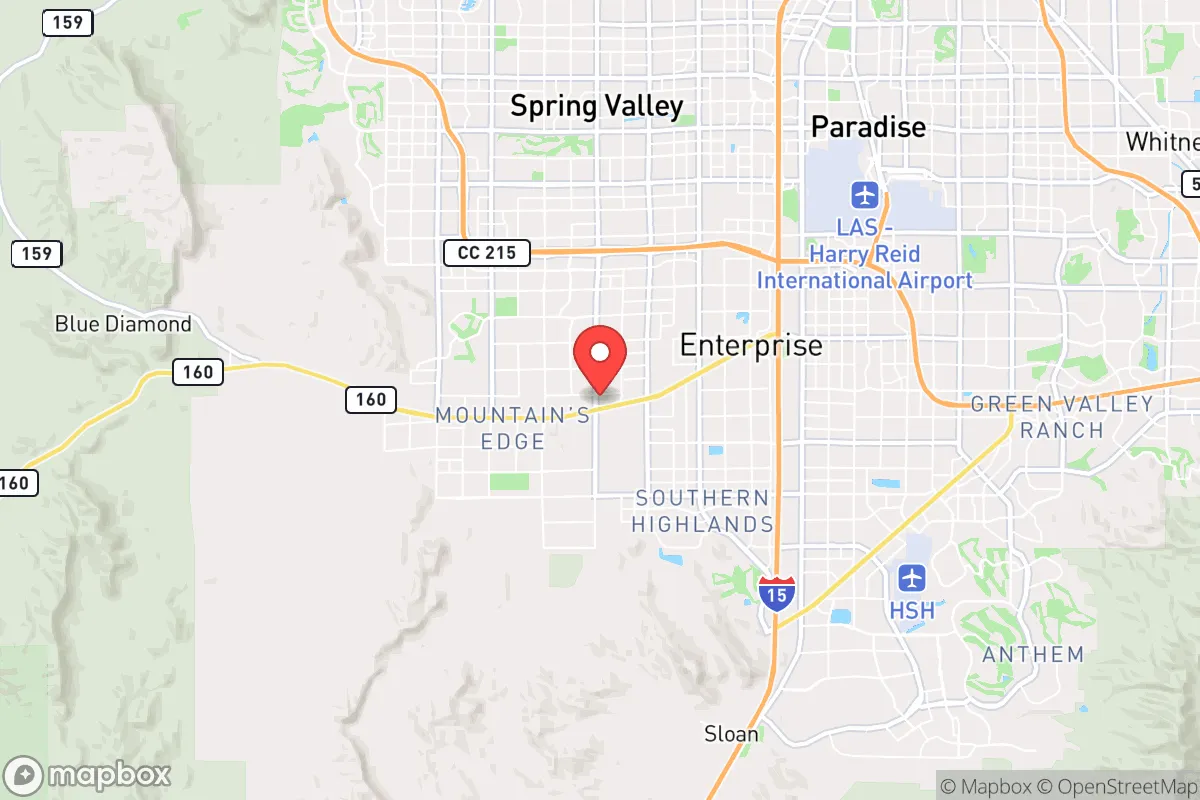
Drive ten minutes north into downtown Las Vegas, and you’re in a solidly blue stronghold—think D+15 or more, with all the big-city politics that come with it. Head west toward Summerlin, and you’ll find a more balanced mix, but still with a noticeable tilt toward the left. The real contrast is south, toward places like Blue Diamond or even Pahrump, where the politics swing hard red and people are a lot more skeptical of government overreach. Enterprise sits right in the middle, a kind of political buffer zone. It’s not as conservative as the rural outposts, but it’s not as deep blue as the Strip corridor. That D+1 rating means every local election can flip on a dime, and the progressive push from the county commission and state legislature is something you have to watch closely.
What this means for residents
For the average person living here, the biggest concern is how much the government is creeping into daily life. You see it in the rising property taxes and new fees that get passed down from Clark County, often justified with “affordable housing” or “infrastructure” talk, but it feels like a squeeze on your wallet. There’s also a growing push for more regulations on everything from short-term rentals to water usage, and while some of that makes sense in the desert, the one-size-fits-all approach from Carson City doesn’t always fit Enterprise. The school board and local planning commissions are where the real battles happen—those are the folks deciding how much your HOA can restrict you or whether a new development brings more traffic or more green space. If you value personal freedom, you’ve got to stay engaged, because the progressive agenda doesn’t stop at the city limits.
Culturally, Enterprise still has that old Nevada libertarian streak—people here generally want to be left alone to live their lives. But you’re seeing more transplants from California and other blue states, and they bring different expectations about what government should do. The local strip malls and housing tracts don’t have the same “live and let live” vibe they did ten years ago. There’s more talk about equity programs in the schools, more pressure on small businesses to comply with new labor rules, and a general sense that the county is trying to micromanage things that used to be common sense. Long-term, if the trend keeps up, Enterprise could slide further left, and that means more taxes, more red tape, and less room for the kind of personal responsibility that built this town. Keep an eye on the next few election cycles—that D+1 could be a warning sign or a wake-up call.

State Political ClimatePolitical Climate in Nevada
State Political AnalysisPolitical Environment in the State
Nevada has long been a classic swing state, but over the past 15 years it has shifted from a purple battleground to a light blue state, driven almost entirely by the explosive growth of the Las Vegas metro area. The state’s overall partisan lean is now roughly D+3, with Democrats holding the governorship, both U.S. Senate seats, and a majority in the state Assembly, though the state Senate is narrowly Republican. The trajectory has been concerning for conservatives: in 2004, George W. Bush won Nevada by 2.5 points; by 2020, Joe Biden carried it by 2.4 points, and in 2024, Donald Trump lost it by a similar margin despite flipping several other swing states. The key story is the urbanization of Clark County, which now casts nearly 73% of the state’s vote, and the simultaneous depopulation of rural counties that used to balance the scales.
Urban vs. rural divide
The political map of Nevada is a tale of two worlds. Clark County (Las Vegas, Henderson, North Las Vegas) is the Democratic engine, powered by a coalition of unionized casino workers, a growing Hispanic population, and transplants from California and the Midwest. In 2024, Clark County gave Democrats a 90,000-vote margin, enough to overcome the rest of the state. Washoe County (Reno, Sparks) is the true bellwether — it voted for Obama twice, then Trump in 2016 and 2020, then flipped back to Biden in 2024 by a razor-thin 1,200 votes. The rest of the state — the “Cow Counties” like Elko, Nye, and Lander — vote Republican by margins of 30-50 points. Elko County in particular is a conservative stronghold, with a mining and ranching economy that resents Carson City’s regulatory reach. The divide is stark: drive 30 minutes outside Reno and you’re in deep red territory, but the state’s political future is written in the suburbs of Las Vegas, where Henderson has shifted from reliably red to a competitive swing suburb, and North Las Vegas is now solidly Democratic.
Policy environment
Nevada’s policy environment is a mixed bag for conservatives. On the plus side, there is no state income tax, which is a major draw for businesses and high-earners. Property taxes are capped at 3% annual growth, making housing costs predictable. However, the state’s regulatory posture is increasingly progressive. The 2021 Commerce Tax on gross revenue over $4 million was expanded under Governor Lombardo, and the 2023 “Clean Energy” bill (SB 448) mandates 50% renewable energy by 2030 and 100% by 2050, which is driving up electricity rates. Education policy is a flashpoint: Nevada ranks near the bottom nationally in K-12 outcomes, and the 2023 universal school choice bill (AB 400) was watered down to only cover low-income families. The state has no parental rights law regarding curriculum transparency, and the 2023 “Safe to Learn” act expanded social-emotional learning mandates that many conservatives view as woke indoctrination. On election integrity, Nevada has automatic voter registration at the DMV, universal mail-in ballots (made permanent in 2021 via AB 321), and same-day registration — all of which have eroded trust in the system. The 2024 election integrity audit found no widespread fraud, but the process remains opaque to many voters.
Trajectory & freedom
Nevada is becoming less free by the year, especially in the areas of personal liberty and economic freedom. The 2023 “Red Flag” law (SB 171) allows courts to temporarily seize firearms from individuals deemed a threat, without a criminal conviction — a clear infringement on Second Amendment rights. The 2021 “Nevada Equal Rights Amendment” (SJR 8A) was passed by the legislature and will appear on the 2026 ballot; if ratified, it would enshrine abortion and gender identity protections in the state constitution. On medical freedom, the 2023 “Vaccine Mandate” bill (AB 97) prohibits employers from requiring COVID-19 vaccines, which was a win, but the state still has no religious exemption for childhood vaccines in schools. Property rights are under pressure from the 2023 “Housing Accountability Act” (SB 79), which preempts local zoning to force higher-density development in single-family neighborhoods. On the positive side, the 2023 “Parental Bill of Rights” (AB 330) was defeated, but a stronger version is expected in 2025. The 2024 “School Choice” expansion (SB 400) did pass, creating education savings accounts for all students, though funding is capped at $50 million annually.
Civil unrest & political movements
Nevada has seen its share of political flashpoints. The 2020 “BLM” protests in Las Vegas turned violent, with looting on the Strip and a police officer shot. The 2022 “Stop the Steal” rally in Carson City drew thousands, and the 2023 “Parental Rights” protests at the Clark County School Board meetings have been ongoing, with parents demanding transparency on critical race theory and LGBTQ curriculum. The 2024 “Election Integrity” protests in Reno and Las Vegas were smaller but persistent, focused on the universal mail-in ballot system. Immigration is a hot-button issue: Clark County is a “sanctuary county” (since 2019), and the 2023 “Trust Act” (AB 133) limits local law enforcement cooperation with ICE. The 2024 “Border Crisis” has seen a surge of migrants in Las Vegas, straining social services. The “Rural Nevada” secession movement — the “State of Jefferson” proposal — has gained traction in Elko and Nye counties, with resolutions passed in 2023 calling for a constitutional convention. The 2024 “Election Integrity” lawsuit filed by the Nevada GOP over the voter roll maintenance is still pending.
Projection
Over the next 5-10 years, Nevada will likely become more Democratic and less conservative-friendly. The in-migration from California continues — roughly 40,000 net new residents per year from the Golden State — and they bring their voting habits with them. The 2026 census will likely add a fourth congressional seat, which will be drawn by a Democratic-controlled legislature, solidifying the blue tilt. The 2026 “Nevada Equal Rights Amendment” is expected to pass, locking in progressive social policies. The 2025 “School Choice” expansion may be rolled back if Democrats gain a supermajority. The 2028 “Carbon Tax” is already being discussed in Carson City. The rural counties will continue to lose population and political influence, while Henderson and Reno become more purple-to-blue. The 2026 gubernatorial election will be a key test: if Lombardo is re-elected, it buys conservatives a veto pen; if he loses, the state will likely pass a state income tax and gun control measures. The 2028 presidential election will see Nevada as a likely lean-Democratic state, with a 3-4 point margin.
Bottom line for a new resident: If you’re moving to Nevada for the low taxes and open spaces, you’ll find them — for now. But the political winds are blowing hard left, especially in the Las Vegas metro. Your best bet is to settle in a rural county like Elko or Lander, or in the conservative-leaning suburbs of Reno (Spanish Springs, Damonte Ranch), where you can still find like-minded neighbors and local governments that resist Carson City’s overreach. Expect to fight for your rights at the ballot box every two years, because the legislature is determined to turn Nevada into California East. The state’s freedom is not guaranteed — it’s something you’ll have to defend.
* Values derived from national, state, county, city and local statistics and may differ in a specific area. Last updated: 2026-04-23T04:10:24.000Z
Narrative content on this page is AI-generated and may contain mistakes. Verify any details that matter before acting on them.
ReloMaps may earn a commission from affiliate links at no extra cost to you.

