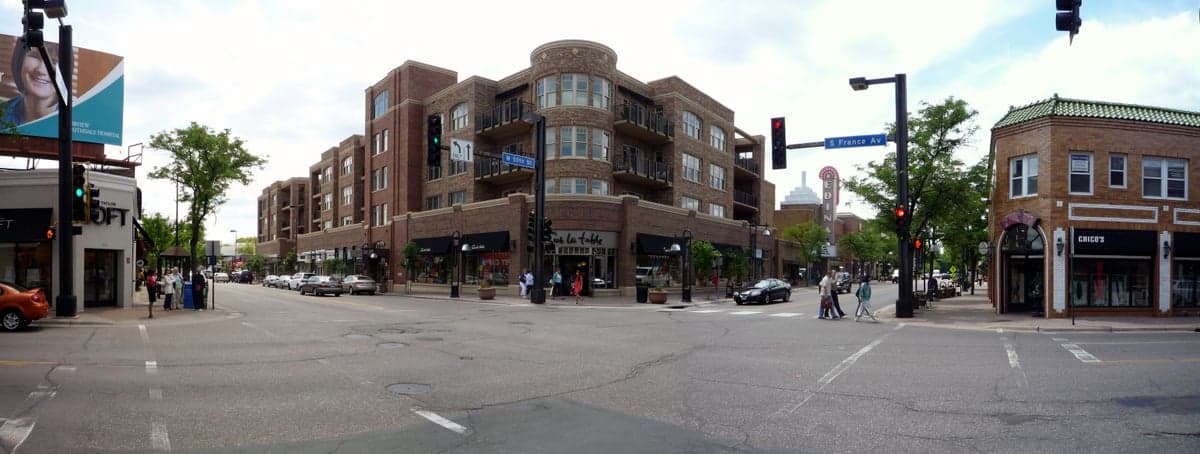
Photo: Wikipedia
Strategic Assessment of Edina, MN
Multiple tactical vulnerabilities. Population density, target proximity, or disaster risk are likely compounding. A retreat property and exit planning is required.
What does the Strategic Assessment tell us?
Our Strategic Assessment grades tactical survivability of an area. Major population centers, military targets, fallout zones, natural disasters, and border exposure all drive risk — lower exposure means a more defensible position in a crisis.
This is heavily inspired by Joel Skousen's Strategic Relocation book. Highly recommended you checkout the book ($)What does this tell us?
Our Strategic Assessment grades tactical survivability of an area. Major population centers, military targets, fallout zones, natural disasters, and border exposure all drive risk — lower exposure means a more defensible position in a crisis.
This is heavily inspired by Joel Skousen's Strategic Relocation book. Highly recommended you checkout the book ($)Strategic Pillars

Key Distances
Regional Safe Places
Below is our recommended "safe zones" in Minnesota and the surrounding area based on our strategic heuristics. For most people, it's unrealistic to live in a “safe zone” full-time due to work, family or other personal reasons. They tend to be more rural. However, many of these areas are perfect for second homes and retreat properties that double as a vacation home or even a short-term rental.
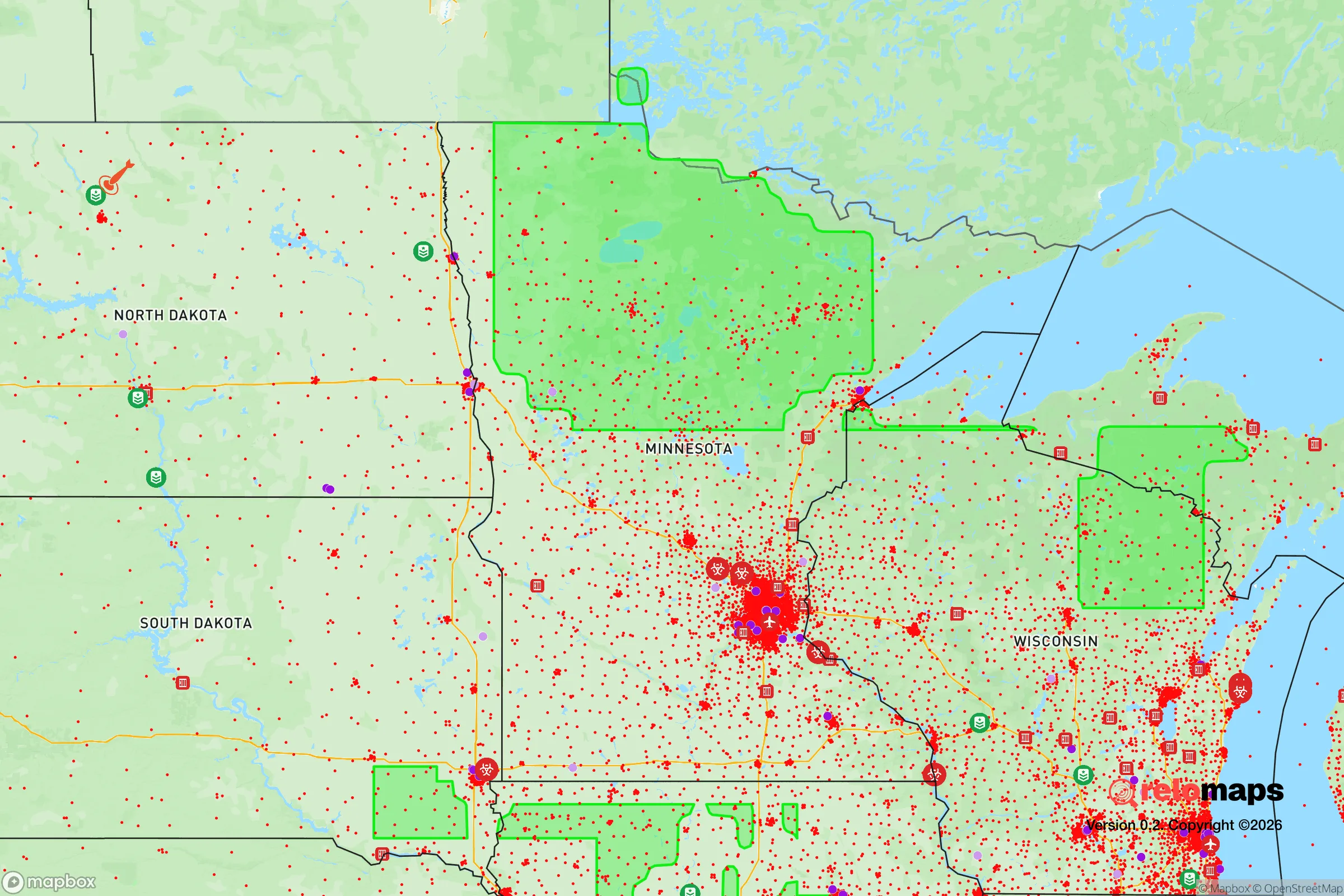
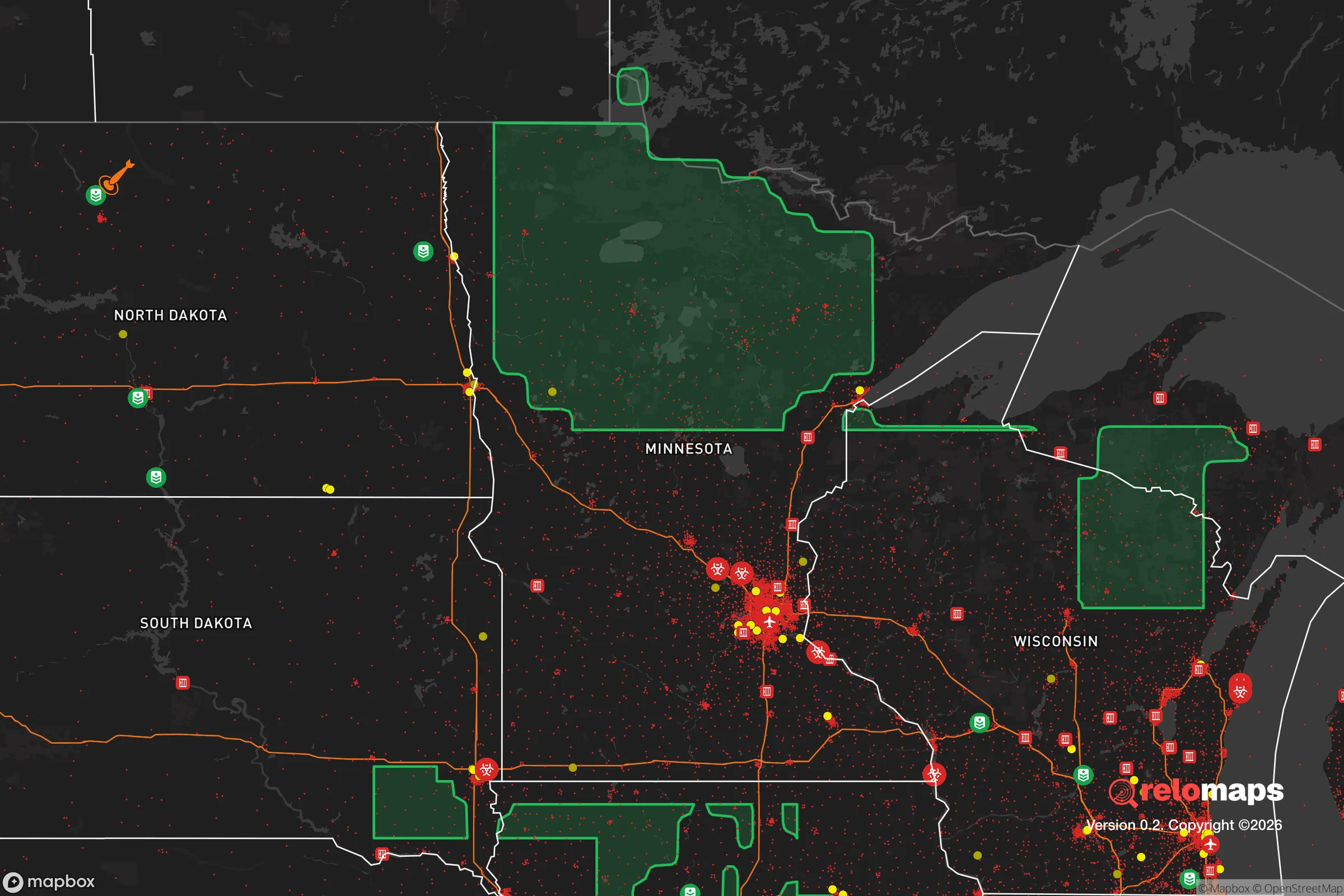


Important Note: For informational purposes only. This does not mean nothing bad ever happens in the green zones. Please use common sense. This is based on public data and modeled with AI. We tried to take a conservative approach but mistakes happen. We update this regularly as new information becomes available.
Solar Generator Recommendations
Backup power matters more here than in safer locations. We've picked three solar generators across budgets and capacity tiers — start with the budget unit if you only need a few essentials, or step up if you want to run a fridge and HVAC for days at a time.

Jackery Portable Power Station Explorer 300
Budget OptionPower on the Go: Weighing only 11 lbs, it's convenient to set up and store with book-sized foldable solar panels

BLUETTI Portable Power Station AC180
Designed for both indoor and outdoor scenarios, AC180 is highly capable as it has a robost capacity and continuous output power.

EF ECOFLOW DELTA Pro Ultra Power Station
Upgraded PickEcoFlow DELTA Pro Ultra is a whole-home energy system designed to grow with your family. Integrated with the Smart Home Panel 2, it scales to meet your evolving energy needs — keeping your home powered, intelligent, and secure through every stage of life.
We earn a commission, at no additional cost to you.
Strategic Assessment Analysis
Edina, Minnesota presents a complex strategic picture for the conservative prepper or survivalist. On the surface, it is a wealthy, well-managed suburb with strong infrastructure and a resilient tax base, but its location within the immediate blast and fallout shadow of a major metropolitan area introduces severe vulnerabilities. For a relocator prioritizing long-term survival and civic stability, Edina offers excellent day-to-day resilience but demands a hard-eyed assessment of its proximity to high-value targets and the cascading risks of a societal breakdown.
Geographic position and natural advantages for long-term stability
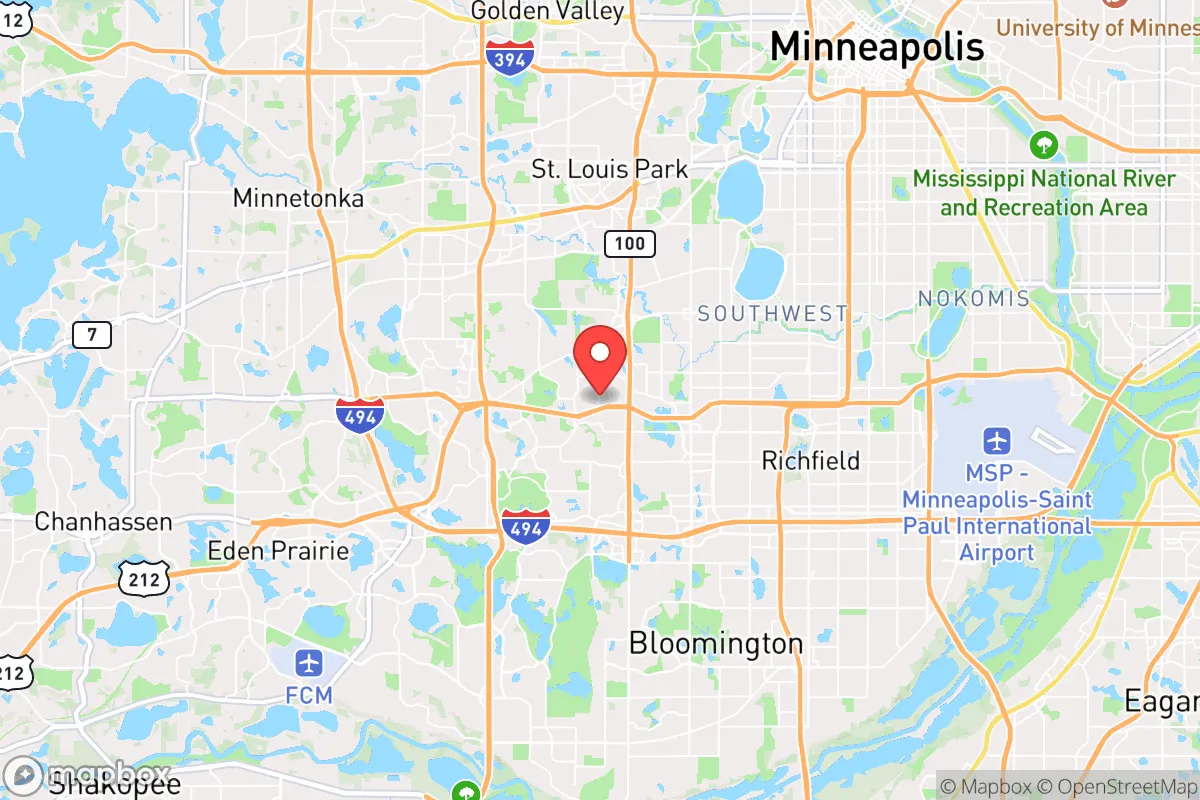
Edina sits roughly 10 miles southwest of downtown Minneapolis, placing it in the inner ring of the affluent western suburbs. Its geographic position is defined by the Minneapolis-Saint Paul metropolitan area, which is a major transportation, economic, and population hub. The city itself is landlocked, with no major river or lakefront of strategic significance, but it is within a short drive of the Minnesota River valley and the extensive chain of lakes that define the region. The natural advantages here are primarily infrastructural: the city benefits from a robust municipal water supply sourced from the Mississippi River and the Prairie du Chien-Jordan aquifer, and its electrical grid is tied into Xcel Energy's well-maintained regional system. The local topography is gently rolling, with no significant defensible high ground, but the dense tree canopy and established residential neighborhoods offer some concealment and thermal cover. The climate is a double-edged sword: harsh winters provide a natural barrier to movement and can slow the spread of unrest, but they also create serious survival challenges for those without adequate heating, food storage, and cold-weather gear. The region's agricultural hinterland is within a 30- to 60-minute drive, which is a positive for long-term food sourcing if supply chains collapse.
Risks, exposures, and proximity to fallout-relevant landmarks
This is the critical weakness of Edina from a prepper's perspective. The city lies within the immediate blast and fallout zone of several high-value targets. The Minneapolis-Saint Paul International Airport (MSP) is approximately 8 miles east, and the downtown Minneapolis central business district—home to the Federal Reserve Bank, major corporate headquarters (Target, U.S. Bancorp, Xcel Energy), and the Hennepin County Government Center—is about 10 miles northeast. In a major conflict or terrorist event involving nuclear or radiological weapons, these are prime targets. Edina is also within 15 miles of the Fort Snelling military installation and the Minneapolis VA Medical Center, both of which could be secondary targets. The fallout pattern from a ground burst at MSP or downtown would likely cover much of Edina, depending on wind direction. Beyond nuclear threats, the city's density and proximity to the urban core make it a potential flashpoint for civil unrest. The 2020 George Floyd protests and riots demonstrated that even affluent suburbs are not immune to spillover violence, looting, and arson. Edina's police force is well-funded and professional, but in a widespread breakdown, it would be overwhelmed by the sheer scale of a metropolitan crisis. The city's location on major arterial roads (Highways 100, 62, and 169) also makes it a natural corridor for displaced populations fleeing the city, which could bring both humanitarian challenges and security threats.
Practical resilience for a relocator: food, water, energy, and defensibility
For a relocator who is already prepared, Edina offers a mixed bag. Water security is a strong point: the municipal supply is treated and reliable, and the shallow aquifer means many homes have private wells or could be retrofitted with hand pumps. Rainwater collection is feasible, though local ordinances may restrict it. Food storage is a challenge: Edina is a bedroom community with limited agricultural land. Most food is imported via the commercial supply chain. A prepper would need to stockpile at least 3-6 months of supplies, and ideally have a plan to access rural farmland or community gardens. The city does have several farmers' markets and a strong local food movement, but these are not reliable in a crisis. Energy resilience is moderate: The grid is stable, but natural gas is the primary heating fuel. A prolonged power outage in winter would be life-threatening without a backup generator and a supply of propane or diesel. Solar panels with battery storage are a viable option, though HOA restrictions in some neighborhoods may limit installation. Defensibility is the weakest link: Edina is a classic suburban grid of interconnected streets, cul-de-sacs, and parks. There is no natural chokepoint or defensible perimeter. A determined group could be held at bay with a well-fortified single home, but a neighborhood-wide defense is nearly impossible. The city's proximity to major highways also means that any evacuation route would be clogged within hours of a crisis. The best strategy for a relocator is to treat Edina as a base for normal times and have a secondary bug-out location in a more rural area, such as western Wisconsin or central Minnesota, within a 2-3 hour drive.
The overall strategic picture for Edina is one of calculated risk. It is an excellent location for building wealth, accessing top-tier medical care, and raising a family in a stable, low-crime environment during normal times. The schools are among the best in the state, and the local government is competent and well-resourced. However, for the survivalist who is planning for a major societal disruption—whether from economic collapse, civil war, or a large-scale attack—Edina's strengths become liabilities. Its wealth makes it a target for looting, its location makes it a fallout zone, and its layout makes it indefensible. The conservative prepper considering Edina should view it as a high-functioning peacetime base, not a long-term survival retreat. The smart move is to establish a presence here for the lifestyle and economic opportunity, but to maintain a fully stocked, off-grid property in a lower-risk area as the primary fallback. In short: Edina works if the world stays mostly intact. If it doesn't, you need a plan B that is far from the Twin Cities' shadow.

* Values derived from national, state, county, city and local statistics and may differ in a specific area. Last updated: 2026-04-24T06:44:24.000Z
Narrative content on this page is AI-generated and may contain mistakes. Verify any details that matter before acting on them.
ReloMaps may earn a commission from affiliate links at no extra cost to you.

