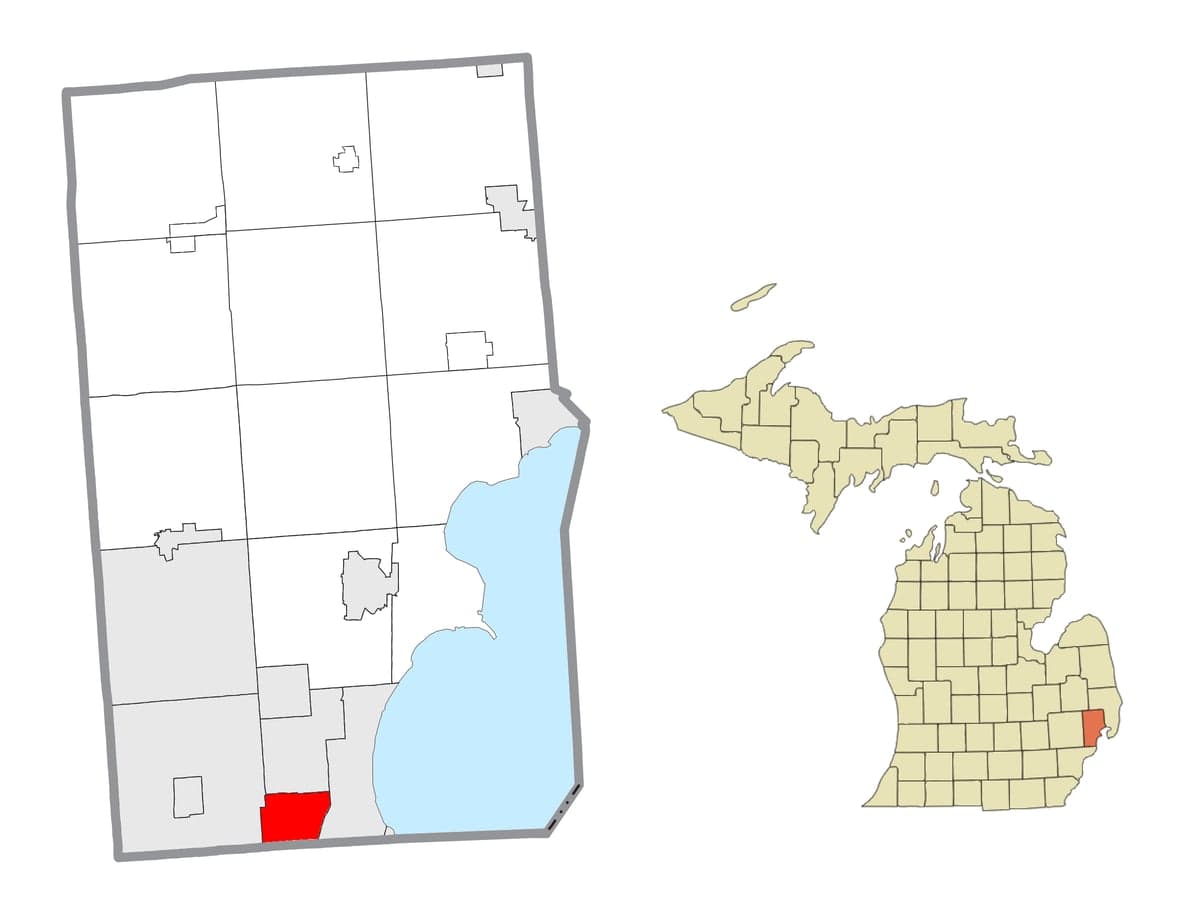
Photo: Wikipedia
Strategic Assessment of Eastpointe, MI
Multiple tactical vulnerabilities. Population density, target proximity, or disaster risk are likely compounding. A retreat property and exit planning is required.
What does the Strategic Assessment tell us?
Our Strategic Assessment grades tactical survivability of an area. Major population centers, military targets, fallout zones, natural disasters, and border exposure all drive risk — lower exposure means a more defensible position in a crisis.
This is heavily inspired by Joel Skousen's Strategic Relocation book. Highly recommended you checkout the book ($)What does this tell us?
Our Strategic Assessment grades tactical survivability of an area. Major population centers, military targets, fallout zones, natural disasters, and border exposure all drive risk — lower exposure means a more defensible position in a crisis.
This is heavily inspired by Joel Skousen's Strategic Relocation book. Highly recommended you checkout the book ($)Strategic Pillars

Key Distances
Regional Safe Places
Below is our recommended "safe zones" in Michigan and the surrounding area based on our strategic heuristics. For most people, it's unrealistic to live in a “safe zone” full-time due to work, family or other personal reasons. They tend to be more rural. However, many of these areas are perfect for second homes and retreat properties that double as a vacation home or even a short-term rental.


Important Note: For informational purposes only. This does not mean nothing bad ever happens in the green zones. Please use common sense. This is based on public data and modeled with AI. We tried to take a conservative approach but mistakes happen. We update this regularly as new information becomes available.
Solar Generator Recommendations
Backup power matters more here than in safer locations. We've picked three solar generators across budgets and capacity tiers — start with the budget unit if you only need a few essentials, or step up if you want to run a fridge and HVAC for days at a time.

Jackery Portable Power Station Explorer 300
Budget OptionPower on the Go: Weighing only 11 lbs, it's convenient to set up and store with book-sized foldable solar panels

BLUETTI Portable Power Station AC180
Designed for both indoor and outdoor scenarios, AC180 is highly capable as it has a robost capacity and continuous output power.

EF ECOFLOW DELTA Pro Ultra Power Station
Upgraded PickEcoFlow DELTA Pro Ultra is a whole-home energy system designed to grow with your family. Integrated with the Smart Home Panel 2, it scales to meet your evolving energy needs — keeping your home powered, intelligent, and secure through every stage of life.
We earn a commission, at no additional cost to you.
Strategic Assessment Analysis
Eastpointe, Michigan, presents a complex strategic picture for the conservative prepper or survivalist. Its primary advantage is its location within the Great Lakes water basin, offering a massive, defensible freshwater resource, but this is heavily offset by its position as a dense, inner-ring suburb of Detroit, placing it directly in the path of any major urban collapse, civil unrest, or fallout event. For a single individual or family prioritizing long-term resilience and self-sufficiency, Eastpointe is a high-risk, low-reward proposition that demands a clear-eyed assessment of its vulnerabilities before any relocation decision is made.
Geographic position and natural advantages for long-term survival
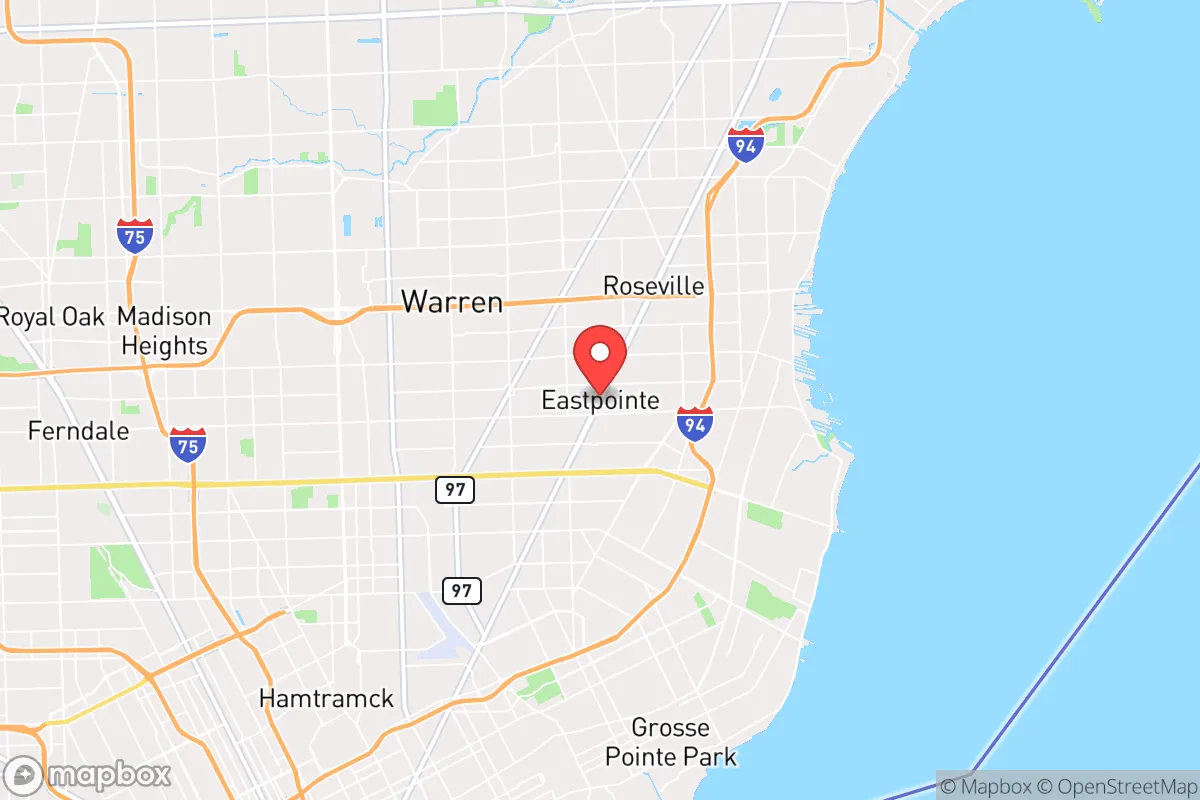
Eastpointe sits in Macomb County, roughly 10 miles north of downtown Detroit, and its most significant natural asset is its proximity to the Great Lakes system, specifically Lake St. Clair and the Detroit River. This provides a near-limitless supply of fresh water, which is the single most critical resource for any post-disaster scenario. The area's flat terrain and clay-heavy soil are not ideal for large-scale agriculture, but small-scale gardening is possible with raised beds and soil amendments. The region's four-season climate means a relocator must be prepared for harsh winters, which can act as a natural barrier to movement and a test of stored supplies. The presence of numerous state parks and recreation areas within a 30-minute drive, such as Stony Creek Metropark, offers some buffer space and potential foraging grounds, but these are not wilderness refuges. The primary natural advantage here is water security, but it comes with the massive liability of being within the immediate gravitational pull of a major, struggling urban center.
Risks, exposures, and proximity to fallout-relevant landmarks
The strategic downsides of Eastpointe are severe and should dominate any prepper's calculus. The city is a dense, built-out suburb with minimal defensible space and a high population density of over 4,000 people per square mile. In a grid-down or civil unrest scenario, this density becomes a liability, as movement is easily observed and resources are quickly depleted. The proximity to Detroit is the single greatest risk. Detroit's history of civil unrest, economic collapse, and strained public services provides a real-world template for what a larger-scale crisis could look like. Eastpointe sits directly on major evacuation routes (I-94, M-97, M-3) that would be choked with traffic during any emergency. Furthermore, the region contains several high-value fallout-relevant landmarks: the Detroit Metropolitan Airport (DTW) is a potential target, as are the numerous automotive and defense manufacturing plants in the corridor, including the General Motors Detroit-Hamtramck Assembly plant and the US Army's Detroit Arsenal in Warren, just a few miles north. The presence of the Fermi 2 nuclear power plant in Newport, about 30 miles south, introduces a low-probability but high-consequence radiological risk. Any major event in Detroit—whether a terrorist attack, a public health crisis, or a supply chain collapse—would send waves of destabilization directly into Eastpointe.
Practical resilience for a relocator: food, water, energy, and defensibility
For a relocator looking to establish a resilient homestead, Eastpointe presents significant practical hurdles. Water is the one bright spot: a prepper with a good filtration system (e.g., Berkey or a Sawyer filter) and a plan to access Lake St. Clair or the Clinton River can secure a long-term water supply. However, food security is a major challenge. The city is a food desert in many respects, with limited grocery options and a heavy reliance on just-in-time delivery. Backyard gardening is possible but limited by lot sizes and soil quality; a serious prepper would need to invest in raised beds, a greenhouse, and a robust seed bank. Energy independence is difficult due to strict local zoning and homeowners' association rules in many neighborhoods. Solar panels are often restricted, and generators are the only realistic backup, requiring a stored fuel supply that itself becomes a target. Defensibility is the weakest link. The typical Eastpointe home is a small, older house on a narrow lot with close neighbors on all sides. There is no standoff distance, no natural chokepoints, and no easy way to secure a perimeter. A single individual or family would be extremely vulnerable to organized groups or desperate individuals during a breakdown of order. The local police force, while professional, would be overwhelmed in a widespread crisis. The overall picture is one of high dependence on fragile systems with very little room for error or self-reliance.
The overall strategic picture for Eastpointe is one of calculated risk that leans heavily toward the negative for a survivalist. Its location offers a critical water advantage that cannot be ignored, but this is outweighed by the extreme vulnerability to urban contagion from Detroit, the lack of defensible space, and the difficulty of achieving any meaningful self-sufficiency in a dense suburban environment. For a conservative prepper who values security, autonomy, and low profile, Eastpointe is a poor choice. It is a location that requires constant vigilance and a high degree of external support to function, which is the opposite of what a resilient relocation strategy should aim for. A more viable option would be to look further north into the Thumb region or west toward the rural areas of Livingston County, where population density drops, land is cheaper, and the buffer from urban collapse is measured in hours, not minutes. Eastpointe is a place to pass through for supplies, not a place to dig in for the long haul.

* Values derived from national, state, county, city and local statistics and may differ in a specific area. Last updated: 2026-04-19T09:20:09.000Z
Narrative content on this page is AI-generated and may contain mistakes. Verify any details that matter before acting on them.
ReloMaps may earn a commission from affiliate links at no extra cost to you.

