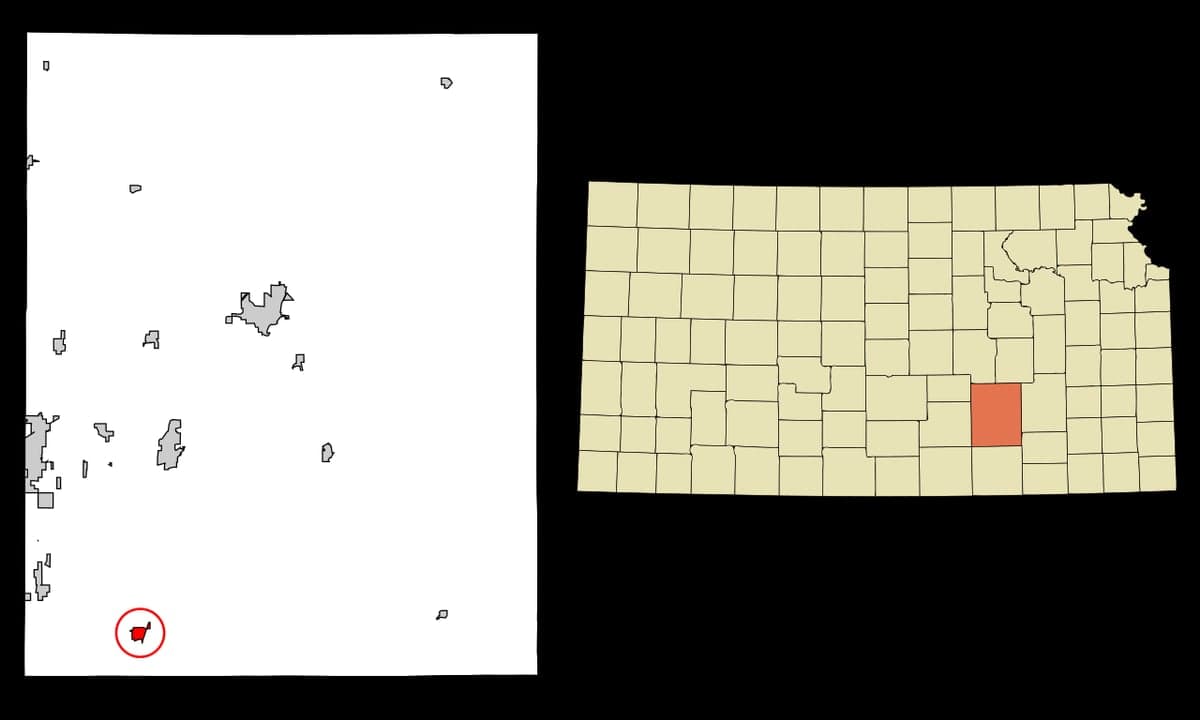
Photo: Wikipedia
Strategic Assessment of Douglass, KS
Meaningful friction. Expect exposure to either population pressure, blast zones, or natural disaster risk. Consider buying a retreat property.
What does the Strategic Assessment tell us?
Our Strategic Assessment grades tactical survivability of an area. Major population centers, military targets, fallout zones, natural disasters, and border exposure all drive risk — lower exposure means a more defensible position in a crisis.
This is heavily inspired by Joel Skousen's Strategic Relocation book. Highly recommended you checkout the book ($)What does this tell us?
Our Strategic Assessment grades tactical survivability of an area. Major population centers, military targets, fallout zones, natural disasters, and border exposure all drive risk — lower exposure means a more defensible position in a crisis.
This is heavily inspired by Joel Skousen's Strategic Relocation book. Highly recommended you checkout the book ($)Strategic Pillars

Key Distances
Regional Safe Places
Below is our recommended "safe zones" in Kansas and the surrounding area based on our strategic heuristics. For most people, it's unrealistic to live in a “safe zone” full-time due to work, family or other personal reasons. They tend to be more rural. However, many of these areas are perfect for second homes and retreat properties that double as a vacation home or even a short-term rental.
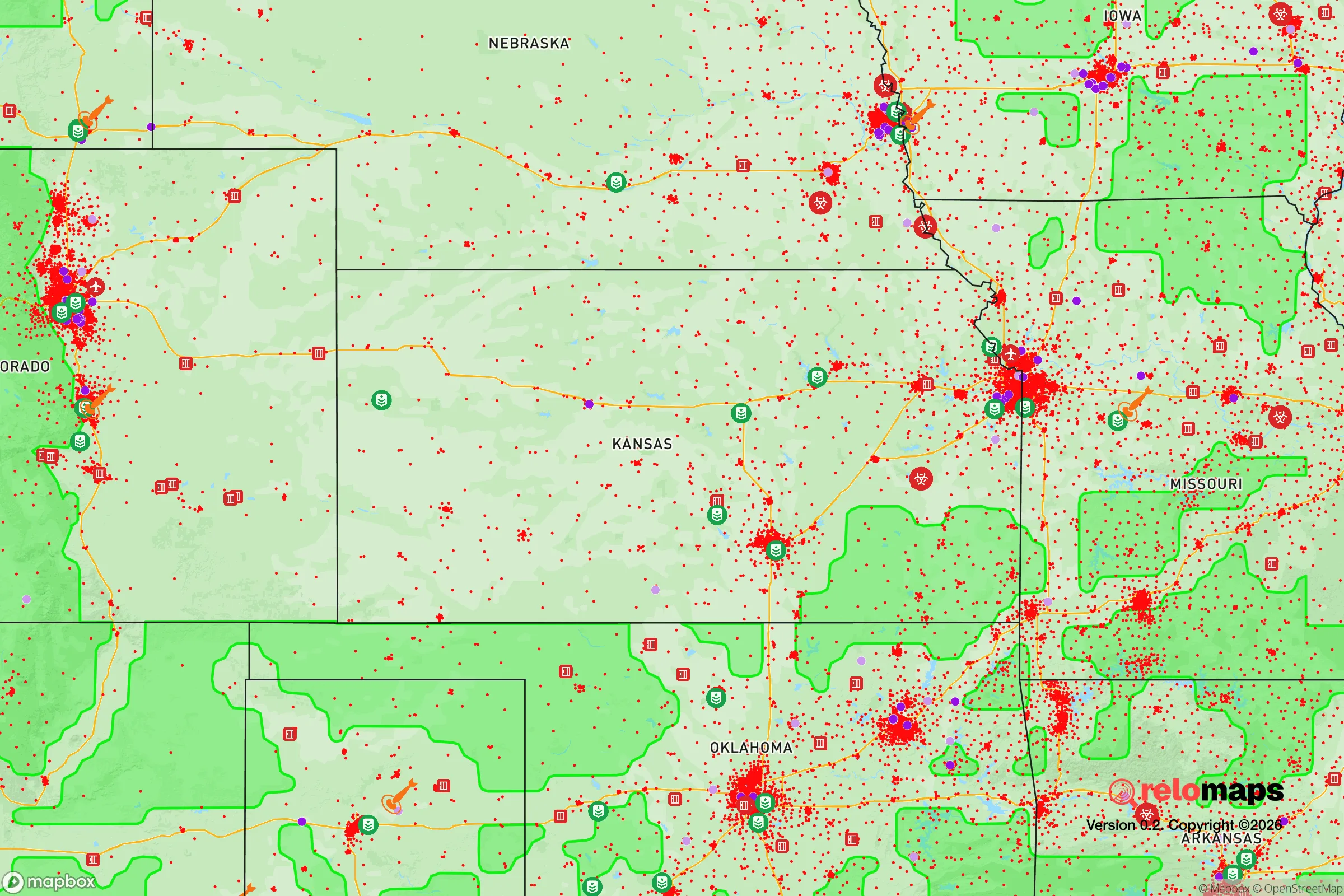
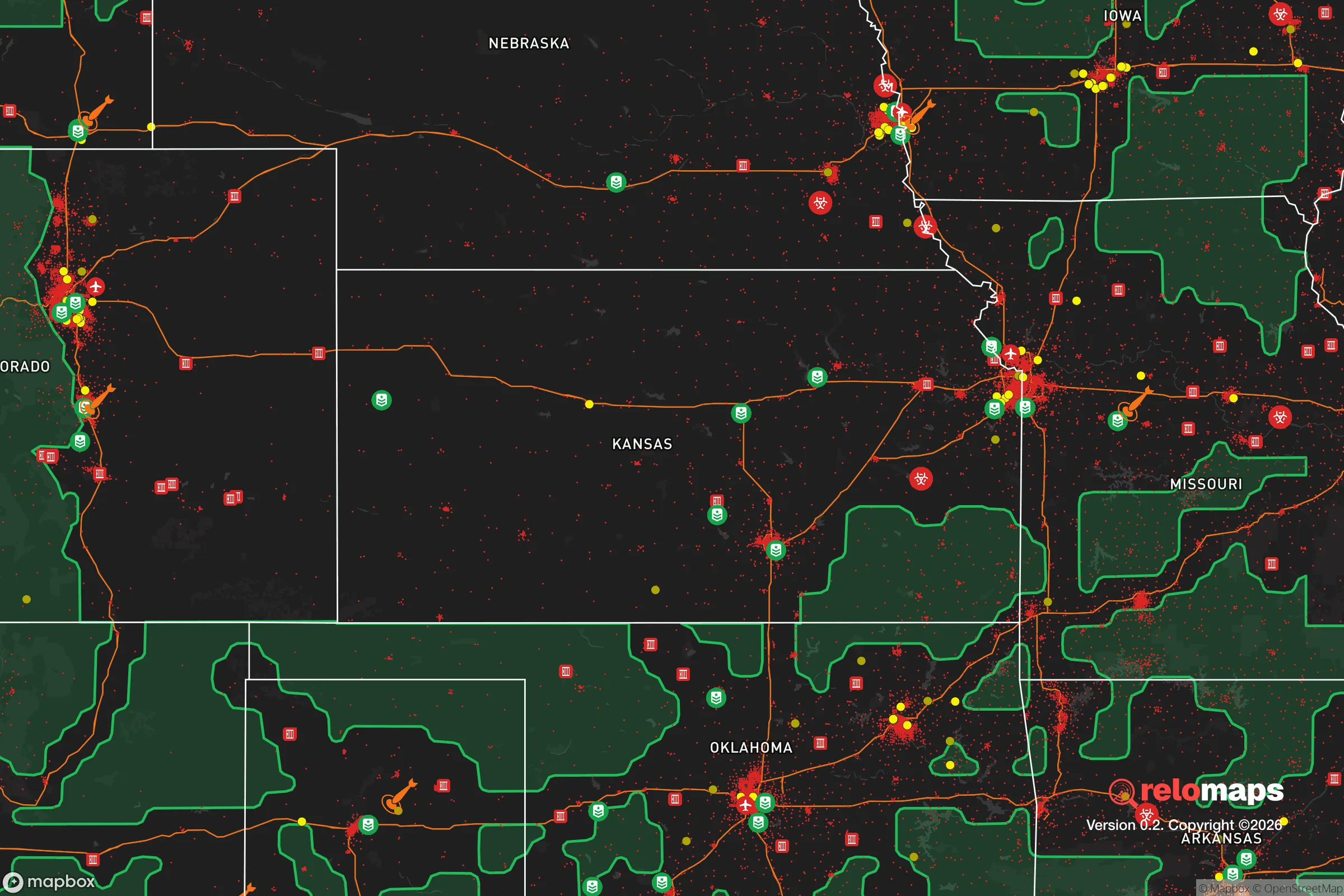


Important Note: For informational purposes only. This does not mean nothing bad ever happens in the green zones. Please use common sense. This is based on public data and modeled with AI. We tried to take a conservative approach but mistakes happen. We update this regularly as new information becomes available.
Solar Generator Recommendations
Backup power matters more here than in safer locations. We've picked three solar generators across budgets and capacity tiers — start with the budget unit if you only need a few essentials, or step up if you want to run a fridge and HVAC for days at a time.

Jackery Portable Power Station Explorer 300
Budget OptionPower on the Go: Weighing only 11 lbs, it's convenient to set up and store with book-sized foldable solar panels

BLUETTI Portable Power Station AC180
Designed for both indoor and outdoor scenarios, AC180 is highly capable as it has a robost capacity and continuous output power.

EF ECOFLOW DELTA Pro Ultra Power Station
Upgraded PickEcoFlow DELTA Pro Ultra is a whole-home energy system designed to grow with your family. Integrated with the Smart Home Panel 2, it scales to meet your evolving energy needs — keeping your home powered, intelligent, and secure through every stage of life.
We earn a commission, at no additional cost to you.
Strategic Assessment Analysis
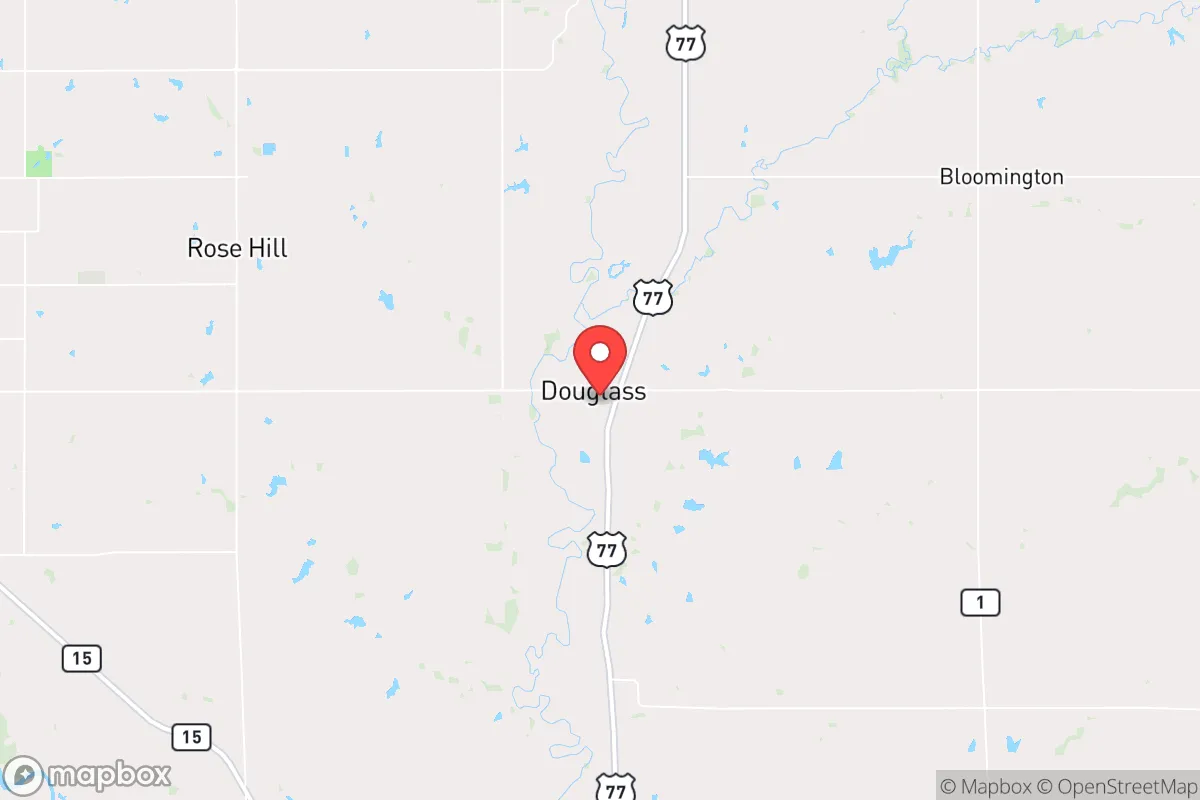
Douglass, Kansas, offers a compelling mix of strategic depth and practical resilience for those prioritizing disaster readiness and self-sufficiency, largely due to its position in the south-central part of the state. While not entirely remote, the town sits far enough from major metropolitan centers like Wichita (roughly 30 miles north) to avoid the immediate crush of a crisis, yet close enough to access critical supplies and medical infrastructure during normal times. The area’s flat to gently rolling terrain, agricultural base, and relatively low population density create a foundation for long-term stability, though the calculus shifts when considering both natural and man-made risks.
Geographic position and natural advantages for long-term stability
Douglass benefits from a location that balances seclusion with accessibility. The town is situated in Butler County, which is part of the Flint Hills region, known for its rocky, shallow soils that are less suited for row crops but excellent for grazing—meaning the local economy is tied to cattle and hay production rather than intensive, input-dependent agriculture. This gives the area a built-in food production capacity that many other parts of the country lack. The terrain offers decent natural drainage, reducing flood risk compared to river-bottom towns, and the climate, while prone to drought and occasional severe storms, is generally stable for year-round habitation. The lack of major geographic barriers (mountains, large rivers, dense forests) means road access to and from Douglass is reliable, with Kansas Highway 15 providing a direct north-south route to Wichita and points south toward the Oklahoma border. For a relocator, this means you can move supplies or evacuate in multiple directions without being funneled into a single choke point. The area’s low seismic activity and absence of hurricane or wildfire risk further bolster its baseline resilience.
Risks, exposures, and proximity to fallout-relevant landmarks
The most significant vulnerability for Douglass is its proximity to Wichita, a city of roughly 390,000 people that includes McConnell Air Force Base, a major aerial refueling hub, and several industrial facilities tied to aerospace manufacturing (Spirit AeroSystems, Textron Aviation). In a conflict scenario involving strategic strikes, Wichita’s military and industrial infrastructure makes it a potential target, and Douglass lies within the fallout plume zone for a ground burst at McConnell, depending on wind direction. The prevailing winds in Kansas are from the south and southwest, which would carry fallout northeast of Wichita—putting Douglass in a less exposed position than towns directly downwind, but not entirely out of danger. Additionally, the nearby El Dorado oil field and the Leonardville pipeline nexus add industrial risk, though these are more relevant to economic disruption than direct physical threat. Tornado risk is real—Butler County averages several warnings per year—but the flat terrain and low tree cover mean you can see weather coming from miles away, and most homes have basements or storm shelters. For the serious prepper, the primary man-made risk is not a direct hit but the secondary effects of a Wichita crisis: refugees, supply chain collapse, and potential civil unrest spilling south along the highways.
Practical resilience for a relocator: food, water, energy, and defensibility
Douglass scores well on practical self-sufficiency. The surrounding agricultural land supports cattle, hay, and some row crops (wheat, sorghum, corn), and the local farm supply co-ops and feed stores mean you can source seeds, tools, and livestock inputs without relying on big-box retailers. Water is the critical variable: the area sits atop the Equus Beds aquifer, a major groundwater source that also supplies Wichita, but well depths vary and some rural properties rely on shallow wells that can go dry during prolonged drought. A relocator should prioritize a property with a deep well (200+ feet) and consider rainwater catchment as a backup. The electric grid is served by Westar Energy (Evergy), which has a mixed reliability record during storms, but the prevalence of rural properties means many residents already have backup generators or solar setups. Natural gas is widely available in town, but rural homes often use propane, which requires storage and resupply. Defensibility is moderate: the town itself is small (roughly 1,700 people) with a grid street layout and limited natural cover, making it hard to secure a perimeter. However, the surrounding countryside offers numerous farmsteads with long sightlines, multiple access points, and the ability to control a single road approach. The local sheriff’s office is responsive but small, so community-based security arrangements are common among rural landowners. For a family, the Douglass school system is small (K-12 in one building), which fosters tight-knit community ties but also means you’ll be known quickly—good for building trust, less good for maintaining a low profile.
Overall, Douglass presents a balanced strategic picture for the disaster-conscious relocator. It avoids the worst exposures of a major city while retaining enough infrastructure and agricultural capacity to support a semi-self-sufficient lifestyle. The main trade-offs are the residual risk from Wichita’s military and industrial targets, and the need to invest in water security and backup power. For someone willing to drill a deep well, install solar panels, and build relationships with local ranchers and farmers, Douglass offers a defensible, productive base that can weather most natural and man-made disruptions better than the vast majority of suburban or exurban alternatives. It is not a bug-out location for a total collapse scenario—there are better options farther west or in the Ozarks—but for a long-term resilience strategy that still allows access to jobs, schools, and healthcare, it is a solid, under-the-radar choice.

* Values derived from national, state, county, city and local statistics and may differ in a specific area. Last updated: 2026-07-26T15:58:54.000Z
Narrative content on this page is AI-generated and may contain mistakes. Verify any details that matter before acting on them.
ReloMaps may earn a commission from affiliate links at no extra cost to you.

