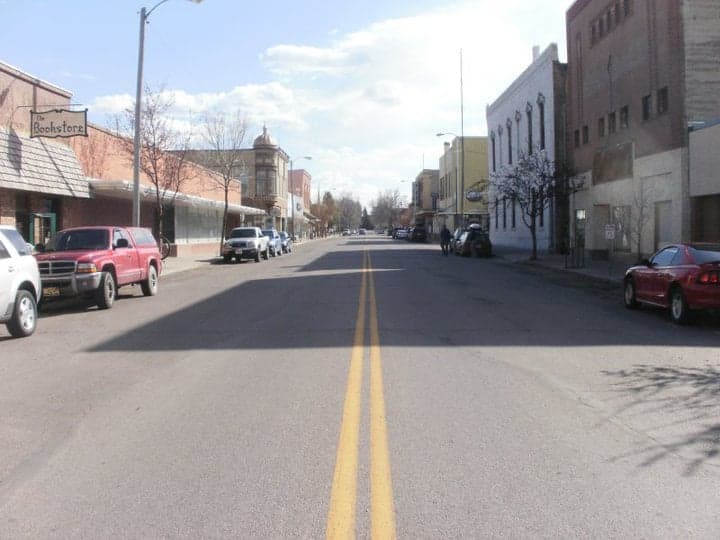
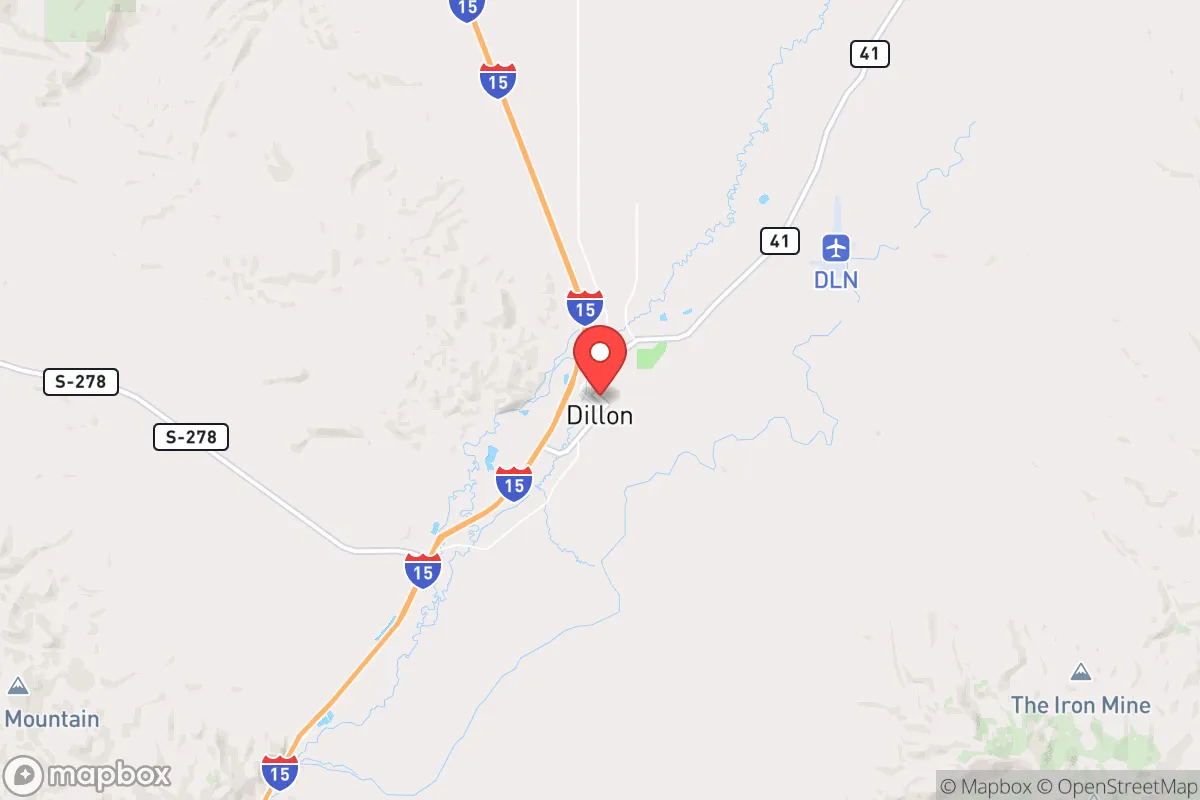
Photo: Wikipedia
Political ClimatePolitical Climate in Dillon, MT
District shown is the primary district for this city’s centroid. Cities may span multiple districts.
Local Political AnalysisPolitical Analysis of Dillon, MT
Dillon has always been a solidly conservative town, and that's not changing anytime soon. We're sitting right in the heart of Beaverhead County, and the Cook PVI of R+5 tells you the baseline, but it feels a lot redder than that on the ground. The real story isn't just the party registration numbers—it's the culture. People here still believe in minding your own business and handling your own problems. That said, I've watched over the last decade or so as some of the old-timers have started to grumble about creeping government overreach, especially from Helena and the feds. The trajectory is still conservative, but there's a growing unease that the state's bigger cities are trying to export their politics to places like ours.
How it compares
Drive an hour north to Butte, and you'll feel the difference immediately. Butte's got a strong union and working-class Democratic history that makes it a blue dot in a red state. Bozeman, two hours east, used to be a ranching town like us, but now it's a tech and outdoor recreation hub that votes much more moderate to liberal. Dillon, by contrast, is still a ranching and ag community at its core. We don't have the same influx of out-of-state transplants that have shifted Bozeman's politics. The surrounding towns—like Lima, Wisdom, and Jackson—are even more conservative than Dillon. When you get into the smaller valleys, the sentiment is overwhelmingly that the government should stay out of your life, your land, and your business. That's the lens through which most folks here view every new regulation or tax proposal.
What this means for residents
For the most part, it means you can live your life without a lot of hassle. Property taxes are a constant sore spot—everyone feels like they're climbing faster than they should—but the county commission is generally responsive to local concerns. The real worry I hear from neighbors is about the slow creep of state-level mandates. Whether it's land-use rules that don't fit a ranching county or environmental regulations that feel designed by people who've never worked a day on a farm, there's a sense that Helena doesn't always get it. The biggest red flag for me is any push toward progressive social policies that get forced down from the state level. We've seen school boards in other parts of Montana get taken over by activists pushing agendas that have nothing to do with reading, writing, and arithmetic. So far, Dillon has held the line, but you have to stay vigilant. The local elections matter more than the national ones here, because that's where the rubber meets the road on things like zoning and school curriculum.
Culturally, Dillon still has that old Montana feel. The University of Montana Western brings in some younger, more transient folks, but they don't tend to stick around and change the voting patterns. The big policy distinction you'll notice is the strong support for Second Amendment rights and property rights. There's almost no appetite for any kind of gun control or land-use restrictions that would tell a rancher what he can do with his own ground. Looking ahead, the biggest fight is going to be over water rights and development pressure from the growing population in the western part of the state. If you're thinking about moving here, you'll fit in fine if you believe in personal responsibility and keeping the government out of your backyard. Just don't expect to see any bike lanes or artisanal coffee shops anytime soon—and that's exactly how most of us like it.

State Political ClimatePolitical Climate in Montana
State Political AnalysisPolitical Environment in the State
Montana has long been a reliably Republican state at the presidential level, voting for the GOP candidate in every election since 1968 except for Bill Clinton’s 1992 win, but the internal political landscape is far more complex than a simple red-state label suggests. The dominant coalition is a mix of libertarian-leaning ranchers, conservative small-business owners, and a growing number of out-of-state transplants, many of whom are fleeing progressive policies elsewhere. Over the last 10-20 years, the state has shifted noticeably to the right on cultural and economic issues, but a simultaneous influx of new residents into the western mountain towns has created a growing blue island that is starting to challenge the state’s overall trajectory.
Urban vs. rural divide
The political map of Montana is a textbook example of the urban-rural split. The state’s largest population center, the Billings metro area in Yellowstone County, is a reliable Republican stronghold, delivering about 60% of its vote to Donald Trump in 2024. Missoula County, home to the University of Montana, is the state’s most consistently liberal area, voting for Joe Biden by a 20-point margin in 2020 and for Kamala Harris by a similar spread in 2024. Bozeman, in Gallatin County, was once a conservative outpost but has flipped dramatically in the last decade as tech workers and remote professionals from California and Colorado have poured in; Gallatin County went for Biden in 2020 by a narrow margin and has become a swing county that both parties target heavily. The Flathead Valley, anchored by Kalispell and Whitefish, is a mixed bag—Kalispell remains deeply conservative, while Whitefish has developed a progressive enclave of wealthy second-home owners and artists. The rural eastern plains, including counties like Dawson, Richland, and Custer, vote 75-80% Republican, driven by agriculture, energy extraction, and a strong independent streak. The divide isn’t just about population density—it’s about economic base and cultural identity, with the western mountain towns becoming increasingly disconnected from the rest of the state.
Policy environment
Montana’s policy environment is among the most conservative in the nation, with a strong emphasis on limited government and individual liberty. The state has no sales tax, a flat income tax rate of 5.9% (recently reduced from 6.75% via House Bill 192 in 2023), and property taxes that are relatively low compared to the national average. The regulatory posture is business-friendly, with a right-to-work law in place since 1947 and a permitting process for new construction that is generally faster than in neighboring states. Education policy is a major battleground: the state has a robust school choice movement, with a new education savings account program (HB 393, 2023) that allows parents to use public funds for private or homeschool expenses. Healthcare is a mixed bag—Montana expanded Medicaid under the Affordable Care Act in 2015, a move that was controversial among conservatives, but the state has also passed laws protecting medical conscience rights and limiting vaccine mandates. Election laws are strict: voter ID is required, same-day registration is not allowed, and the state has a closed primary system for Republicans. The legislature, which meets every two years, is dominated by a Republican supermajority that has pushed through a steady stream of conservative bills on guns, abortion, and parental rights.
Trajectory & freedom
Montana is arguably becoming more free in several key areas, but there are warning signs that this trend could reverse. On the positive side, the state has expanded gun rights significantly: in 2021, the legislature passed a permitless carry law (HB 102), and in 2023, it passed a law prohibiting local governments from enforcing federal gun regulations that conflict with state law (HB 372). Parental rights have been strengthened through the “Parental Bill of Rights” (HB 361, 2021), which requires schools to notify parents about curriculum changes and medical services. Medical autonomy has been protected by a 2023 law banning COVID-19 vaccine mandates by private employers (HB 702), though this was later struck down by a state court. Property rights remain strong, with no statewide zoning and a “right to farm” law that protects agricultural operations from nuisance lawsuits. However, the influx of new residents is driving up housing costs and creating pressure for more government intervention in land use. The biggest threat to freedom in Montana right now is the growing influence of wealthy out-of-state donors who are funding local progressive candidates in places like Bozeman and Missoula, pushing for higher taxes and stricter environmental regulations that could erode the state’s traditional libertarian character.
Civil unrest & political movements
Montana has seen relatively little civil unrest compared to other states, but political movements are active and organized. The most visible flashpoint in recent years has been the fight over public health mandates: in 2021, protests erupted at the state capitol in Helena against mask mandates and school closures, with thousands of residents rallying under the banner of “Montanans for Liberty.” The election integrity movement is strong, with groups like the Montana Conservative Alliance pushing for hand-counting of ballots and stricter voter roll maintenance—a bill to require hand-counting in all counties (HB 892) was introduced in 2023 but failed to pass. Immigration politics are less heated than in border states, but there is a growing concern about the federal government’s failure to secure the northern border, with some counties passing resolutions declaring themselves “Second Amendment sanctuaries” in response. The left is organized primarily through the Montana Democratic Party and environmental groups like the Montana Environmental Information Center, which have successfully blocked several mining and energy projects. There is no serious secession or nullification movement, but the state’s independent streak is strong, and many residents view the federal government with deep suspicion. A new resident would notice the prevalence of “Don’t Tread on Me” flags and “Keep Montana Free” bumper stickers, especially in rural areas.
Projection
Over the next 5-10 years, Montana is likely to become more politically polarized, with the western mountain counties continuing to trend blue while the rest of the state hardens into deep red. The demographic shift is the key driver: Gallatin County is projected to grow by another 20% by 2030, and if that growth continues to attract left-leaning professionals, it could flip the state’s second-largest county permanently. The state legislature is likely to remain under Republican control, but the margin could narrow as Bozeman and Missoula gain more seats. The biggest wildcard is housing affordability—if the cost of living continues to rise, it could slow in-migration and preserve the state’s conservative character. On the policy front, expect more battles over education, with a push for universal school choice and a potential ban on critical race theory in public schools. The state’s tax structure is likely to remain favorable, but there is growing pressure from local governments to raise property taxes to fund infrastructure for the growing population. Someone moving in now should expect to find a state that is still fundamentally conservative but with a vocal and growing progressive minority that will make every election a fight.
For a new resident, the bottom line is that Montana offers a high degree of personal freedom and a low-tax environment, but you need to choose your location carefully. If you want a community that aligns with traditional conservative values, stick to the eastern plains or the Flathead Valley around Kalispell. If you’re looking for a more moderate or progressive environment, Bozeman or Missoula will feel more familiar. The state’s political future is not yet written, and your vote—and your presence—will help determine whether Montana remains a beacon of liberty or drifts toward the same progressive policies that are driving people out of other states.
* Values derived from national, state, county, city and local statistics and may differ in a specific area. Last updated: 2026-04-30T01:43:42.000Z
Narrative content on this page is AI-generated and may contain mistakes. Verify any details that matter before acting on them.
ReloMaps may earn a commission from affiliate links at no extra cost to you.

