
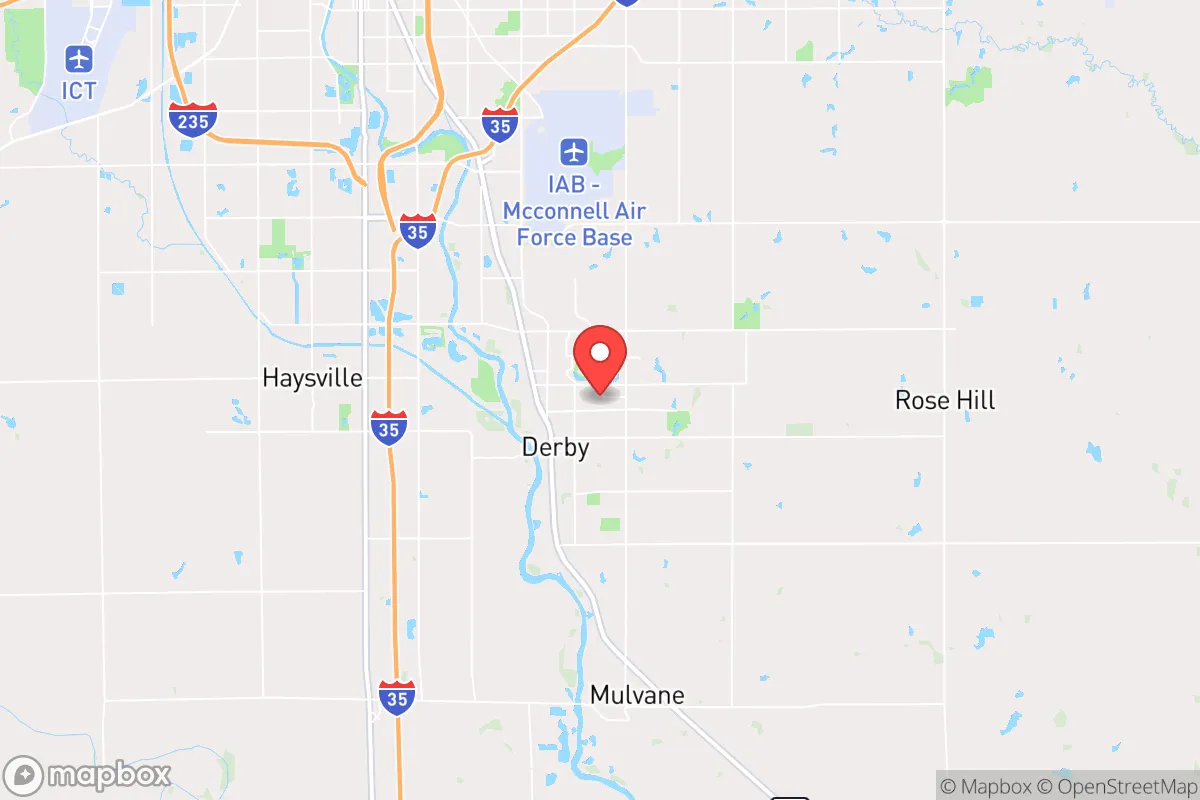
Photo: Wikipedia
Quality of Life in Derby, KS
A high quality of life with strong walkability, manageable living costs, healthy neighborhood signals, and solid amenity access.
What does Quality of Life tell us?
Quality of Life blends cost of living, nearby amenities, socioeconomic signals, and neighborhood character. City-level scores represent the whole municipality; individual neighborhoods can differ.
What does this tell us?
Quality of Life blends cost of living, nearby amenities, socioeconomic signals, and neighborhood character. City-level scores represent the whole municipality; individual neighborhoods can differ.
Cost of Living
13% below national average
The Real Cost of Living in Derby, KS for 2026
| Tier | Individual | Family (4) |
|---|---|---|
| Survival | $17k | $32k |
| Comfortable | $43k | $63k |
| Luxury | $111k+ | $172k+ |
| Elite (Top 5%) | $130k+ | $202k+ |
130%
The Area Signal
A metric tracking the socioeconomic signals of the area.
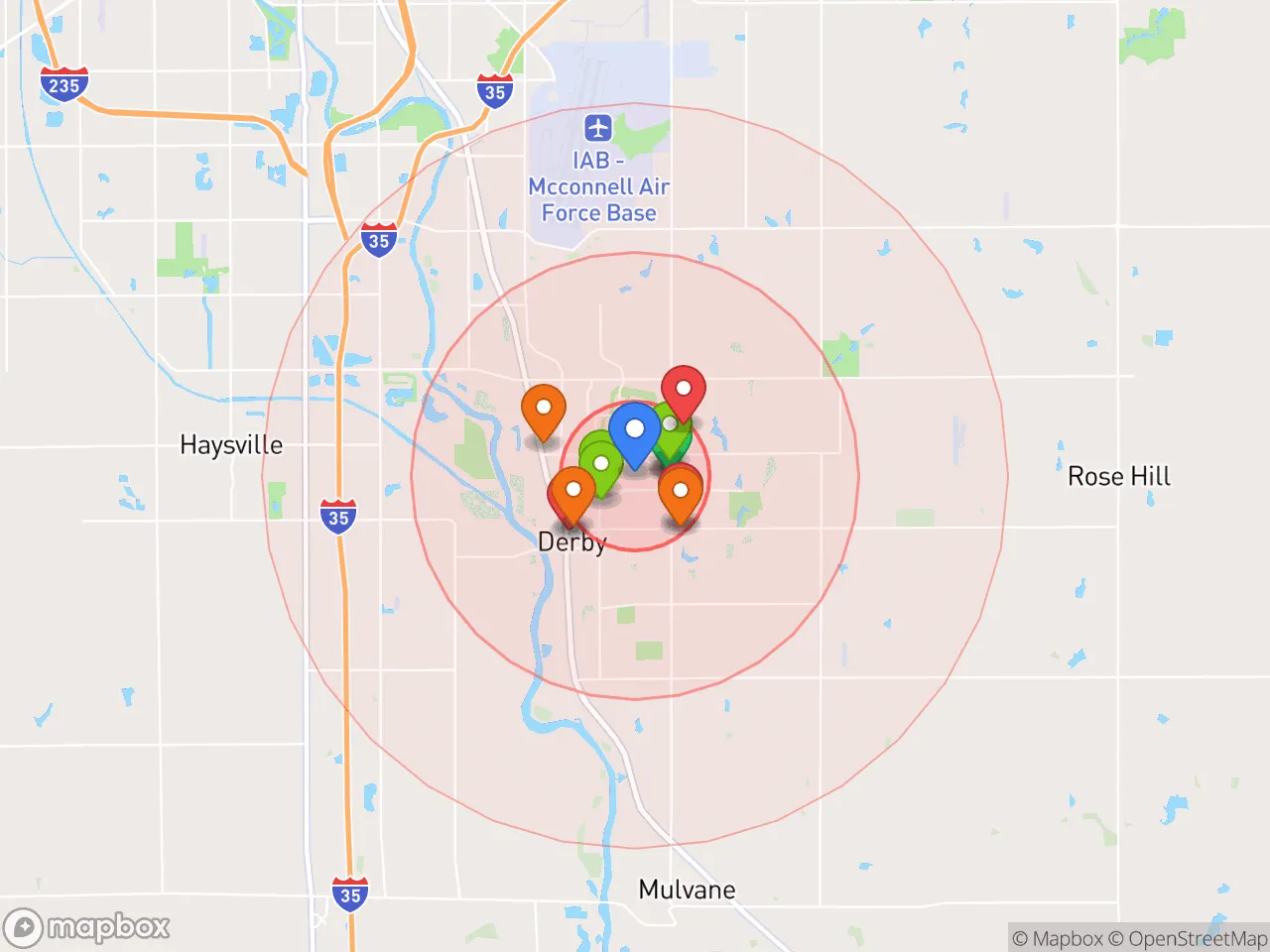
Hobbies
Explore the areaGroceries
4 within 10 miles
Gas
20 within 10 miles
Hospital
16 within 20 miles
Airport
MCI — Kansas City International
Post Office
USPS — Derby, KS
Critical Amenities
Quality-of-Life Analysis
Derby, Kansas, presents a notably affluent yet accessible quality of life, with a cost of living index of 87 (well below the U.S. average of 100) that attracts a mix of young families, aerospace professionals, and long-term residents seeking suburban stability. The city’s population skews toward married couples with children, and its median household income consistently exceeds both Sedgwick County and national averages, reflecting a community built around steady employment at nearby employers like Spirit AeroSystems and McConnell Air Force Base. This economic foundation supports a lifestyle that balances affordability with access to Wichita’s urban amenities, making Derby a deliberate choice for those prioritizing space, safety, and schools over city-center convenience.
Cost of living, housing affordability, and how Derby compares to Wichita
Derby’s cost of living index of 87 means everyday expenses—groceries, utilities, and healthcare—run roughly 13% below the national norm, a significant advantage for families stretching their budgets. The median home value of $221,600 is notably higher than the Wichita metro average of around $190,000, reflecting Derby’s premium for newer construction and lower crime rates, but remains affordable compared to national benchmarks. Median rent of $1,082 aligns closely with the metro area, though rental inventory is tighter here due to steady demand from military families and young professionals. The average commute of 23.4 minutes is slightly longer than Wichita’s citywide average of 19 minutes, a trade-off for larger lots and quieter streets, with most residents driving I-35 or K-15 into Wichita’s employment centers. Property taxes in Sedgwick County are moderate, and Derby’s lack of a city sales tax on groceries further reduces monthly outlays for households.
Schools, parks, and the daily rhythm of life in Derby
Derby’s daily life revolves around its highly rated public school system, Derby Public Schools (USD 260), which consistently earns above-average state test scores and offers strong extracurricular programs in athletics and STEM. The city maintains over 20 parks, including the sprawling 80-acre High Park with its sports complex and walking trails, and the Rock River Rapids aquatic center provides a summer focal point for families. Retail and dining cluster along North Rock Road and East Madison Avenue, with national chains like Target and local staples such as the Derby Coffee Company filling daily needs. The community calendar is anchored by events like the Derby BBQ & Music Festival and the Derby Farmers Market, which run from spring through fall. For grocery shopping, Dillons and Aldi serve most households, while specialty shopping requires a 15-minute drive to Wichita’s east-side malls. The absence of a major hospital within city limits means residents rely on Via Christi Hospital in Wichita for emergencies, a 20-minute drive under normal traffic.
Derby is best suited for families and professionals who value strong public schools, low crime rates, and a predictable suburban routine over urban nightlife or walkability. The city’s affordability and proximity to Wichita’s aerospace and healthcare job markets make it a practical choice for dual-income households, while retirees may find the slower pace appealing but should note the limited senior-specific amenities. Singles and young renters without cars may struggle with the car-dependent layout and limited public transit, but for those seeking a safe, well-maintained community with room to grow, Derby delivers a consistently high quality of life at a reasonable price.

Crime in Derby, KS
Lower crime rates than 100% of comparable U.S. locations.
Violent CrimeViolent Crime Analysis
Property CrimeProperty Crime Analysis
Crime Analysis
Derby, Kansas, stands out as one of the safest cities in the Wichita metropolitan area, with crime rates far below both state and national averages. The city reported a violent crime rate of 0 per 100,000 residents and a property crime rate of just 22.4 per 100,000 in the most recent data, figures that place it among the lowest-crime communities in the state. This safety record is a primary reason families and professionals choose Derby over neighboring Wichita or other Sedgwick County suburbs.
Crime in context
Derby’s crime statistics are exceptional when compared to broader benchmarks. The national violent crime rate hovers around 380 per 100,000, while Kansas’s state average is approximately 390 per 100,000. Derby’s violent crime rate of zero is statistically a perfect score. Property crime in Derby (22.4 per 100,000) is similarly a fraction of the national average of roughly 1,950 per 100,000 and the Kansas average of about 2,400 per 100,000. These numbers reflect a community where serious crime is virtually nonexistent, a stark contrast to the challenges seen in larger urban centers. It is important to note that Derby benefits from being part of Sedgwick County, which has not adopted the progressive prosecutorial policies seen in some large metro areas—policies that critics argue can lead to higher recidivism and reduced public safety by prioritizing offender rehabilitation over victim accountability.
What residents experience
For those living in Derby, the low crime statistics translate into a tangible sense of security. Residents commonly report leaving doors unlocked, children playing outside unsupervised, and a strong neighborhood watch culture. The Derby Police Department maintains a visible, community-oriented presence, with officers frequently engaging in local events and school programs. The most common public safety concerns are minor property incidents like bicycle theft or vandalism, rather than violent confrontations. This environment is a direct result of local governance that prioritizes law enforcement funding and traditional public safety approaches, avoiding the soft-on-crime policies that have plagued many larger jurisdictions.
Neighborhood-level variation within Derby is minimal, but some patterns exist. The newer developments on the city’s west side, near Rock Road and 71st Street South, tend to have the lowest incident reports, while areas closer to the older downtown core and the railroad tracks see slightly more calls for service, though still well below any concerning threshold. Overall, Derby offers a uniformly safe environment where the risk of becoming a crime victim is statistically negligible, making it a standout choice for safety-conscious relocators in the Wichita region.
* Values derived from national, state, county, city and local statistics and may differ in a specific area. Last updated: 2026-05-04T02:58:37.000Z
Narrative content on this page is AI-generated and may contain mistakes. Verify any details that matter before acting on them.
ReloMaps may earn a commission from affiliate links at no extra cost to you.

