Photo: Wikipedia
Strategic Assessment of DeLand, FL
Meaningful friction. Expect exposure to either population pressure, blast zones, or natural disaster risk. Consider buying a retreat property.
What does the Strategic Assessment tell us?
Our Strategic Assessment grades tactical survivability of an area. Major population centers, military targets, fallout zones, natural disasters, and border exposure all drive risk — lower exposure means a more defensible position in a crisis.
This is heavily inspired by Joel Skousen's Strategic Relocation book. Highly recommended you checkout the book ($)What does this tell us?
Our Strategic Assessment grades tactical survivability of an area. Major population centers, military targets, fallout zones, natural disasters, and border exposure all drive risk — lower exposure means a more defensible position in a crisis.
This is heavily inspired by Joel Skousen's Strategic Relocation book. Highly recommended you checkout the book ($)Strategic Pillars

Key Distances
Regional Safe Places
Below is our recommended "safe zones" in Florida and the surrounding area based on our strategic heuristics. For most people, it's unrealistic to live in a “safe zone” full-time due to work, family or other personal reasons. They tend to be more rural. However, many of these areas are perfect for second homes and retreat properties that double as a vacation home or even a short-term rental.

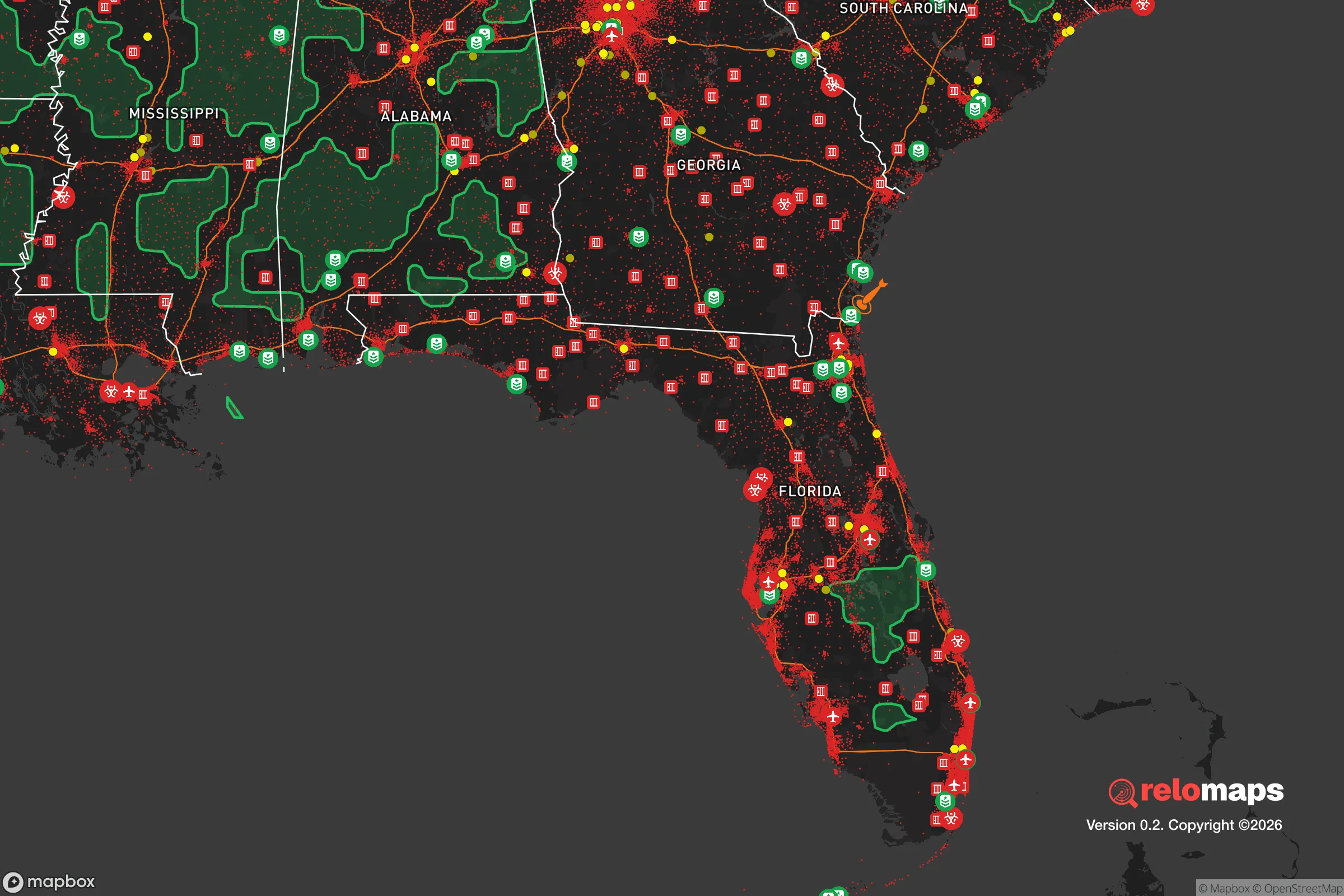


Important Note: For informational purposes only. This does not mean nothing bad ever happens in the green zones. Please use common sense. This is based on public data and modeled with AI. We tried to take a conservative approach but mistakes happen. We update this regularly as new information becomes available.
Solar Generator Recommendations
Backup power matters more here than in safer locations. We've picked three solar generators across budgets and capacity tiers — start with the budget unit if you only need a few essentials, or step up if you want to run a fridge and HVAC for days at a time.

Jackery Portable Power Station Explorer 300
Budget OptionPower on the Go: Weighing only 11 lbs, it's convenient to set up and store with book-sized foldable solar panels

BLUETTI Portable Power Station AC180
Designed for both indoor and outdoor scenarios, AC180 is highly capable as it has a robost capacity and continuous output power.

EF ECOFLOW DELTA Pro Ultra Power Station
Upgraded PickEcoFlow DELTA Pro Ultra is a whole-home energy system designed to grow with your family. Integrated with the Smart Home Panel 2, it scales to meet your evolving energy needs — keeping your home powered, intelligent, and secure through every stage of life.
We earn a commission, at no additional cost to you.
Strategic Assessment Analysis
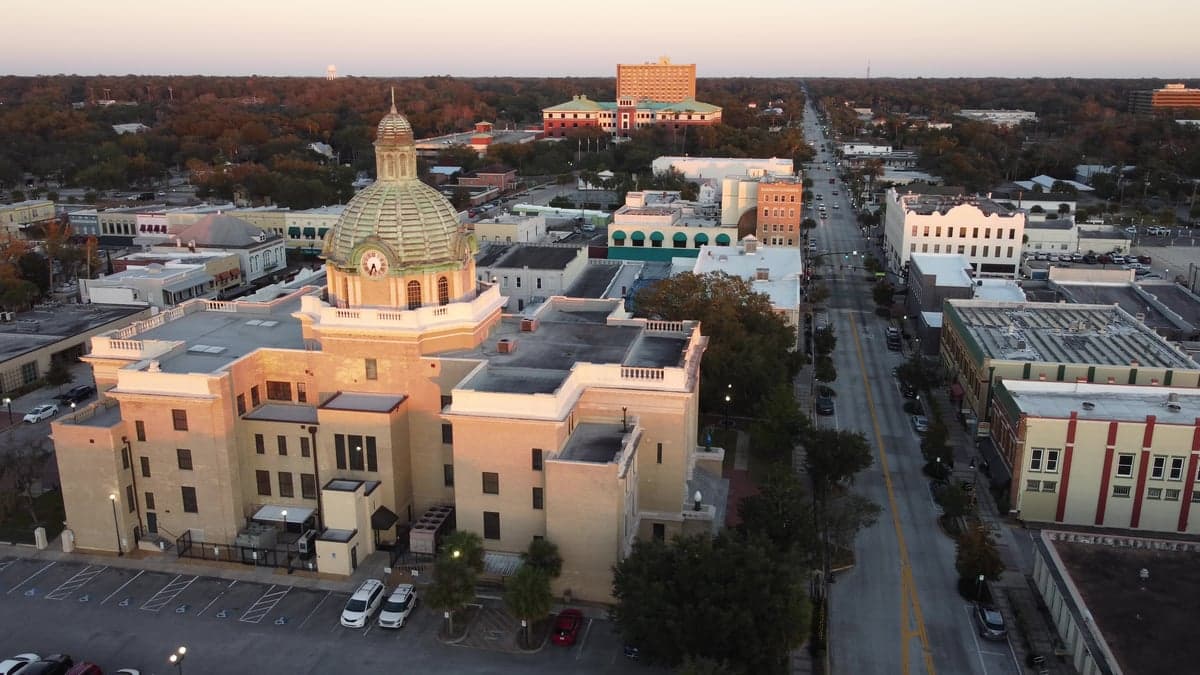
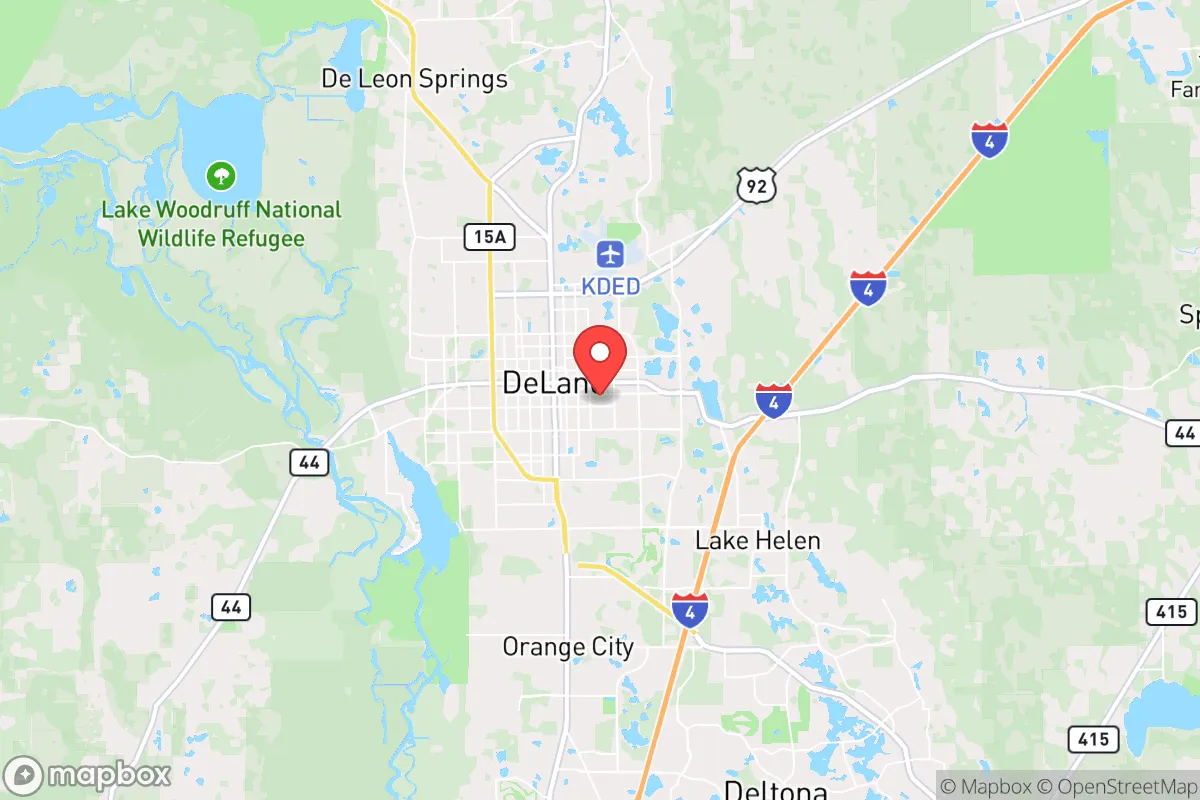
DeLand, Florida, occupies a strategic middle ground in Central Florida that balances accessibility with a degree of separation from the highest-risk zones. Its inland position, roughly 35 miles from the Atlantic coast and 25 miles from Orlando’s urban core, offers a resilience profile that appeals to relocators who want proximity to major infrastructure without being directly in the path of the most severe hurricane storm surges or the immediate fallout zone of a major metropolitan target. The city’s location in Volusia County, on the western edge of the I-4 corridor, provides a buffer that many coastal and metro-adjacent communities lack, making it a plausible base for those thinking seriously about disaster readiness and self-sufficiency.
Geographic position and natural advantages for disaster readiness
DeLand sits on a ridge of higher ground—the Atlantic Coastal Ridge system—which gives it a modest elevation advantage over much of the surrounding region. At roughly 50 to 80 feet above sea level, the city is significantly less prone to the flooding that plagues coastal Volusia County communities like Daytona Beach or New Smyrna Beach during tropical events. The St. Johns River flows to the west, but DeLand itself is not situated in a floodplain, and FEMA flood zone maps show most of the city in Zone X (minimal flood risk). This is a concrete advantage: during Hurricane Ian in 2022, while coastal areas saw catastrophic surge damage, DeLand experienced mostly wind and rain impacts with limited structural flooding. The area’s natural drainage, aided by sandy soils and numerous small lakes, also reduces the risk of prolonged standing water that can complicate post-storm recovery. For a relocator prioritizing defensible terrain, DeLand’s inland, elevated position is a clear positive compared to the vast majority of Florida’s coastal population centers.
Risks, exposures, and proximity to fallout-relevant landmarks
No location in Florida is immune to hurricanes, and DeLand’s inland position does not shield it from high winds or tornadoes spawned by tropical systems. The city lies within the typical cone for major hurricanes tracking up the Atlantic coast, and a Category 3 or higher storm passing near Daytona Beach would still bring sustained winds of 100+ mph to DeLand, with the potential for widespread tree damage and power outages lasting a week or more. The area’s dense canopy of live oaks and pines, while aesthetically pleasing, becomes a significant hazard during high winds—downed trees regularly block roads and damage structures in storms. From a man-made risk perspective, DeLand’s proximity to Orlando (about 40 miles southeast) and the Cape Canaveral space complex (about 60 miles southeast) introduces considerations that a strategic relocator should weigh. Orlando is a major population and tourism hub, and in a worst-case scenario involving a nuclear event or large-scale attack, the I-4 corridor would be a primary evacuation route and potential secondary target. Cape Canaveral, as a strategic military and aerospace asset, is a plausible target in a conflict scenario. DeLand sits far enough away to avoid direct blast effects from either location, but fallout patterns would depend heavily on wind direction. The prevailing winds in Central Florida are from the east, which means fallout from a Cape Canaveral event would likely blow inland toward Orlando and beyond, potentially affecting DeLand depending on the yield and atmospheric conditions. The city’s position west of the coast offers some buffer, but it is not a fallout-safe zone. Additionally, the presence of the Daytona Beach International Airport and the nearby Interstate 4 corridor means that in a crisis, DeLand could see significant through-traffic from evacuees, which could strain local resources and create security concerns.
Practical resilience for a relocator: food, water, energy, and defensibility
DeLand’s practical resilience profile is mixed but workable for a prepared relocator. The city sits in a region with good agricultural potential—Volusia County has active farming operations, including citrus, vegetables, and livestock, and the nearby St. Johns River and numerous springs provide freshwater sources. The Floridan Aquifer, which supplies the area’s drinking water, is deep and generally reliable, though it is vulnerable to saltwater intrusion in coastal areas and to contamination from agricultural runoff. For a self-sufficient household, rainwater catchment is feasible given the region’s average 50 inches of annual rainfall, and shallow wells can tap into the aquifer at depths of 50 to 150 feet in most parts of the county. The local power grid is served by Duke Energy Florida, which has a mixed record on storm restoration—outages after Hurricane Ian lasted 3-5 days in DeLand, compared to 7-10 days in more rural parts of the county. Solar potential is strong, with the area receiving about 5.5 peak sun hours per day, making rooftop solar with battery storage a viable option for energy independence. Natural gas is available in parts of the city but not universally, so propane backup for cooking and heating is a common workaround. Defensibility is moderate: DeLand is a compact city of roughly 35,000 people, with a walkable historic core and a grid-like street pattern that is easy to navigate but also easy to block. The surrounding area is a mix of suburban development, agricultural land, and state forests (including the 60,000-acre Lake George State Forest to the north), which provides options for retreat or resource gathering. However, the city’s location on the western edge of the Daytona Beach metropolitan area means that in a regional crisis, DeLand would likely become a chokepoint for evacuees moving west on State Road 44 or north on US 17. The Volusia County Sheriff’s Office has a substation in DeLand, and the city has its own police department, but law enforcement resources would be stretched thin in a large-scale emergency. For a relocator, the key takeaway is that DeLand offers a decent baseline for self-sufficiency—good water access, strong solar potential, and nearby agricultural land—but it requires proactive preparation, particularly in terms of food storage, water filtration, and a plan for securing your property during a prolonged grid-down scenario.
The overall strategic picture for DeLand is one of moderate resilience with clear trade-offs. It avoids the worst hurricane surge zones and is far enough from Orlando and Cape Canaveral to reduce—but not eliminate—exposure to man-made risks. Its inland elevation and access to natural water sources give it a leg up over coastal Florida communities, and the surrounding agricultural and forested land provides options for resource extension. The downsides are real: hurricane wind damage is a recurring threat, the power grid is vulnerable, and the city’s position along a major evacuation corridor could create security and resource competition issues during a crisis. For a relocator who is serious about disaster readiness and willing to invest in solar, well water, and food storage, DeLand is a viable choice—especially compared to the coast or the Orlando metro core. It is not a remote survivalist retreat, but it is a defensible, resource-accessible community that balances convenience with a reasonable risk profile. If you are looking for a Florida base that is not in the direct line of fire from either nature or geopolitics, DeLand deserves a serious look.

* Values derived from national, state, county, city and local statistics and may differ in a specific area. Last updated: 2026-09-17T20:24:07.000Z
Narrative content on this page is AI-generated and may contain mistakes. Verify any details that matter before acting on them.
ReloMaps may earn a commission from affiliate links at no extra cost to you.

