
Photo by Denise Paik on Unsplash
Political ClimatePolitical Climate in Deer Lodge, MT
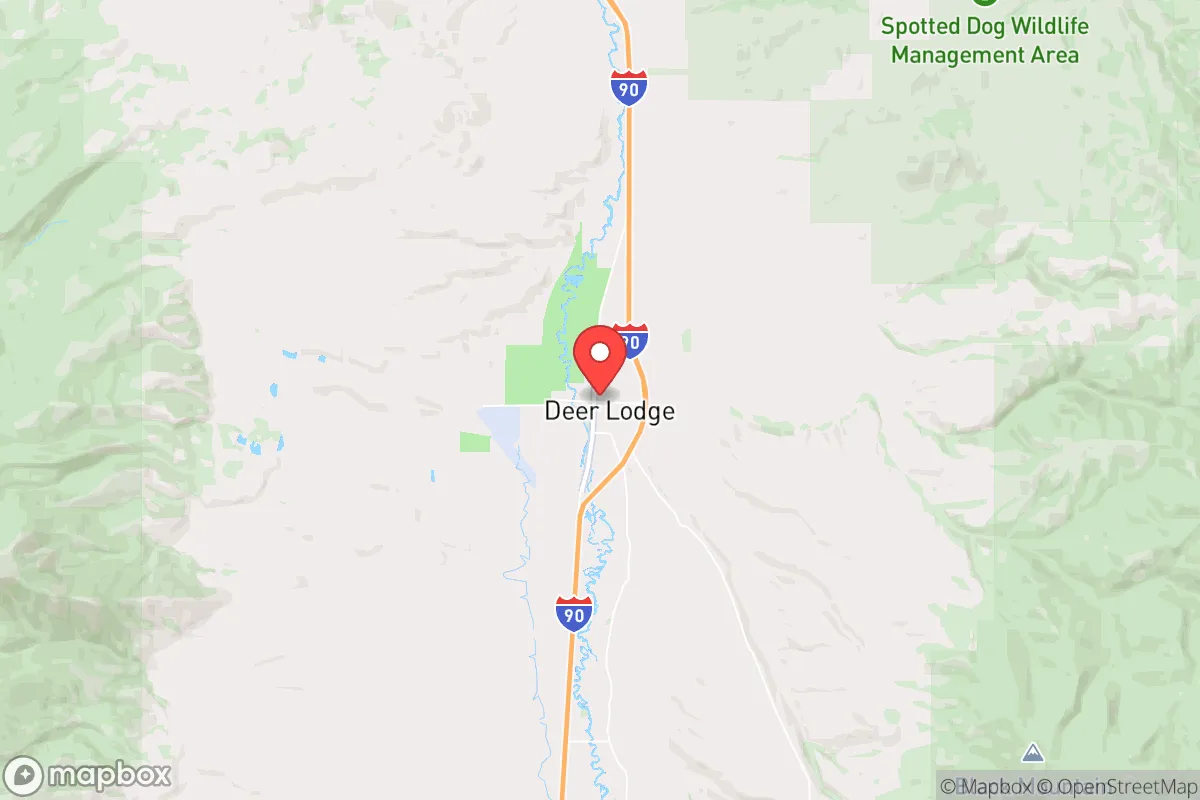
District shown is the primary district for this city’s centroid. Cities may span multiple districts.
Local Political AnalysisPolitical Analysis of Deer Lodge, MT
Deer Lodge, Montana, sits in a reliably conservative pocket of the state, with a Cook PVI of R+5 that reflects a solid Republican lean, though not as deep red as some of the surrounding rural counties. For a long time, this place was a quiet, no-nonsense community where folks kept to themselves and the government mostly stayed out of the way. But over the last decade or so, you’ve seen a subtle shift—nothing dramatic yet, but enough to make a longtime resident raise an eyebrow. The local elections and county commission races have started to see more progressive candidates popping up, especially from folks moving in from places like Missoula or Helena, and that’s where the concern creeps in. If you’re someone who values personal freedoms and minimal government overreach, the trajectory here is worth watching closely.
How it compares
Compared to the deep-red strongholds like Butte-Silver Bow or the ranching communities east of here, Deer Lodge is actually a bit of a moderate outlier. Butte, just 45 minutes south, has a strong union and labor history that leans more blue-collar Democrat, while Helena, about an hour east, is a state capital with a mix of government workers and a growing progressive base. Deer Lodge, by contrast, has historically been a place where the Second Amendment is a given, property rights are sacred, and taxes are kept low. But the R+5 rating tells you it’s not a lock—it’s a swing district in a state that’s trending redder overall. The nearby town of Anaconda, for instance, has seen a similar influx of out-of-state transplants, and that’s brought more talk of zoning restrictions and environmental regulations that feel like government overreach to locals. If you’re looking for a place where conservative values still hold strong, Deer Lodge is better than most, but you can’t ignore the slow creep of progressive ideas from the west.
What this means for residents
For residents, the practical impact of this political climate is mostly about local control. The county commission and school board races are where the rubber meets the road—decisions on land use, property taxes, and even mask mandates during the pandemic were fought tooth and nail here. The good news is that the R+5 lean still means most elected officials are wary of big government solutions. You won’t see the kind of heavy-handed housing regulations or business licensing hoops that plague places like Missoula or Bozeman. But the concern is that as more people move in from blue states, they bring their voting habits with them. The 2024 election saw a slight uptick in Democratic turnout in the county, and that’s a red flag for anyone who values personal responsibility over government programs. If you’re a hunter, a small business owner, or just someone who doesn’t want the county telling you what to do with your land, the next few election cycles are critical.
Culturally, Deer Lodge still holds onto its Montana roots—the annual Powell County Fair, the rodeo, and the strong sense of community are intact. But there’s a growing tension between the old guard and the newcomers who want more bike lanes, more public transit, and more “sustainability” initiatives that often come with new taxes or restrictions. The prison here, Montana State Prison, is a major employer, and that tends to keep things grounded in a law-and-order mindset. Still, if the trend continues, you could see the county commission flip in the next decade, and that would mean a whole new set of rules that feel like government overreach. For now, it’s a good place to live if you keep your head down and vote in every local election, but don’t expect it to stay this way forever.

State Political ClimatePolitical Climate in Montana
State Political AnalysisPolitical Environment in the State
Montana has long been a reliably Republican state at the presidential level, voting for the GOP candidate in every election since 1968 except for Bill Clinton’s 1992 win. However, the state’s political identity is more complex than a simple red-state label. Over the last 10-20 years, a surge of in-migration, particularly from California and the Pacific Northwest, has begun to shift the political landscape, creating a growing tension between the state’s traditional libertarian-conservative roots and a more progressive, urban-oriented influence. The dominant coalition remains conservative, but the margin of control is tightening in key areas, especially in the western third of the state.
Urban vs. rural divide
The political map of Montana is a textbook study in the urban-rural divide. The state’s population centers—Missoula, Bozeman, and Helena—are the primary engines of Democratic and progressive votes. Missoula County, home to the University of Montana, consistently votes blue by double digits, and its city council has pushed policies like a plastic bag ban and a local minimum wage hike. Bozeman, once a conservative ranching town, has seen its Gallatin County flip from reliably red to a swing county, with the 2020 presidential race decided by just a few hundred votes. The state capital, Helena, in Lewis and Clark County, also leans left, driven by state employees and a growing arts and tech scene.
In stark contrast, the vast rural expanse of eastern Montana—places like Miles City, Glendive, and Havre—votes overwhelmingly Republican, often by margins of 70-80%. The agricultural and energy-producing counties in the east and north-central regions are the bedrock of the GOP’s dominance. The Flathead Valley around Kalispell and Whitefish is a fascinating microcosm: Kalispell remains deeply conservative, while Whitefish, a wealthy resort town, has become a liberal enclave, creating a local political friction that mirrors the state’s broader divide.
Policy environment
Montana’s policy environment is a mixed bag for a conservative. On the positive side, the state has no sales tax, a flat income tax rate of 5.9% (recently cut from 6.75%), and a relatively light regulatory touch on businesses. The 2021 Montana Land Use Planning Act, however, raised eyebrows among property rights advocates by giving state government more say over local zoning, a move some see as a creeping encroachment on local control. Education policy is a bright spot: the state has a robust school choice program, including charter schools and a tax-credit scholarship program, and parental rights in education are generally respected, though not codified as strongly as in states like Florida.
Healthcare policy is a flashpoint. Montana expanded Medicaid under the Affordable Care Act in 2015, a decision that remains controversial among conservatives who see it as a federal overreach. The state’s election laws are generally sound, with voter ID requirements in place, but the 2021 passage of same-day voter registration was a step in the wrong direction for election integrity advocates. On the Second Amendment, Montana is a constitutional carry state, and the 2021 passage of the Montana Firearms Freedom Act explicitly exempts firearms made and kept in-state from federal regulation—a strong statement of state sovereignty.
Trajectory & freedom
Montana’s trajectory on personal freedom is a tale of two trends. On one hand, the state has become more free in several key areas. The 2021 passage of the Montana Land Use Planning Act, despite its flaws, was paired with a strong property rights bill that limits the use of eminent domain for private economic development. The 2023 legislative session saw the passage of the Montana Parental Rights Act, which affirms parents’ fundamental right to direct their children’s education and healthcare. Gun rights have been consistently expanded, with the 2021 law allowing permitless concealed carry.
On the other hand, there are concerning signs of government overreach. The 2023 passage of a law banning gender-affirming care for minors was a win for parental rights and medical autonomy, but it also signaled a willingness of the state to intervene in deeply personal medical decisions—a double-edged sword for liberty-minded individuals. The biggest threat to freedom, however, is the influx of new residents from high-tax, high-regulation states. These newcomers often bring their political preferences with them, and we’re already seeing it in local elections in Bozeman and Missoula, where progressive candidates are winning on platforms of increased government spending and zoning restrictions.
Civil unrest & political movements
Montana has not seen the kind of large-scale civil unrest seen in major coastal cities, but there have been notable flashpoints. The 2020 Black Lives Matter protests in Missoula and Bozeman were relatively small but highly visible, drawing counter-protests from armed groups. The state has a strong, organized militia movement, particularly in the Flathead Valley and around Libby, where anti-government sentiment runs deep. Immigration politics are less of a flashpoint here than in border states, but the 2023 legislative session saw a bill to ban sanctuary cities, which passed and was signed into law, sending a clear message that Montana will not tolerate jurisdictions that defy federal immigration law.
Election integrity remains a hot-button issue. The 2020 election saw no major scandals in Montana, but the 2021 law requiring signature verification for mail-in ballots was a necessary step that was met with fierce opposition from progressive groups. The most visible political movement in recent years has been the “Montana Freedom Caucus,” a group of state legislators pushing for lower taxes, school choice, and a hard line on federal overreach. Their influence has grown, but they face an uphill battle against the moderate Republican establishment that has controlled the state for decades.
Projection
Looking ahead 5-10 years, the picture is uncertain but leaning concerning for conservatives. The demographic trends are clear: the fastest-growing counties are Gallatin (Bozeman), Missoula, and Flathead (Kalispell/Whitefish). These are precisely the areas where progressive influence is strongest. If current migration patterns hold, Montana could see its state legislative districts shift from safe Republican to competitive, and eventually to lean Democratic, within a decade. The 2024 election will be a critical test: if Gallatin County flips blue, it could signal a tipping point.
However, there are reasons for cautious optimism. The state’s rural counties are not depopulating as fast as in other states, and the energy and agriculture sectors remain strong. The Montana Republican Party has shown an ability to adapt, with the 2023 session producing a conservative agenda that included tax cuts, school choice expansion, and election integrity measures. The wildcard is the quality of new arrivals: if they are primarily remote workers and retirees who value Montana’s low taxes and outdoor lifestyle, they may vote more conservatively than the current progressive activists suggest.
Bottom line for a new resident: If you’re moving to Montana for freedom and a conservative lifestyle, you’ll find a state that still largely delivers, but you need to choose your location carefully. Stick to the rural counties and the Flathead Valley if you want to avoid the progressive drift. Avoid Missoula and the Bozeman city limits if you want to keep your property rights and your tax burden low. The state is at a crossroads, and your vote—and your choice of where to settle—will help determine which direction it goes. Montana is still a great place for a family, but it’s no longer a guaranteed safe haven for conservative values. You have to be intentional about where you plant your flag.
* Values derived from national, state, county, city and local statistics and may differ in a specific area. Last updated: 2026-04-30T01:23:21.000Z
Narrative content on this page is AI-generated and may contain mistakes. Verify any details that matter before acting on them.
ReloMaps may earn a commission from affiliate links at no extra cost to you.

