
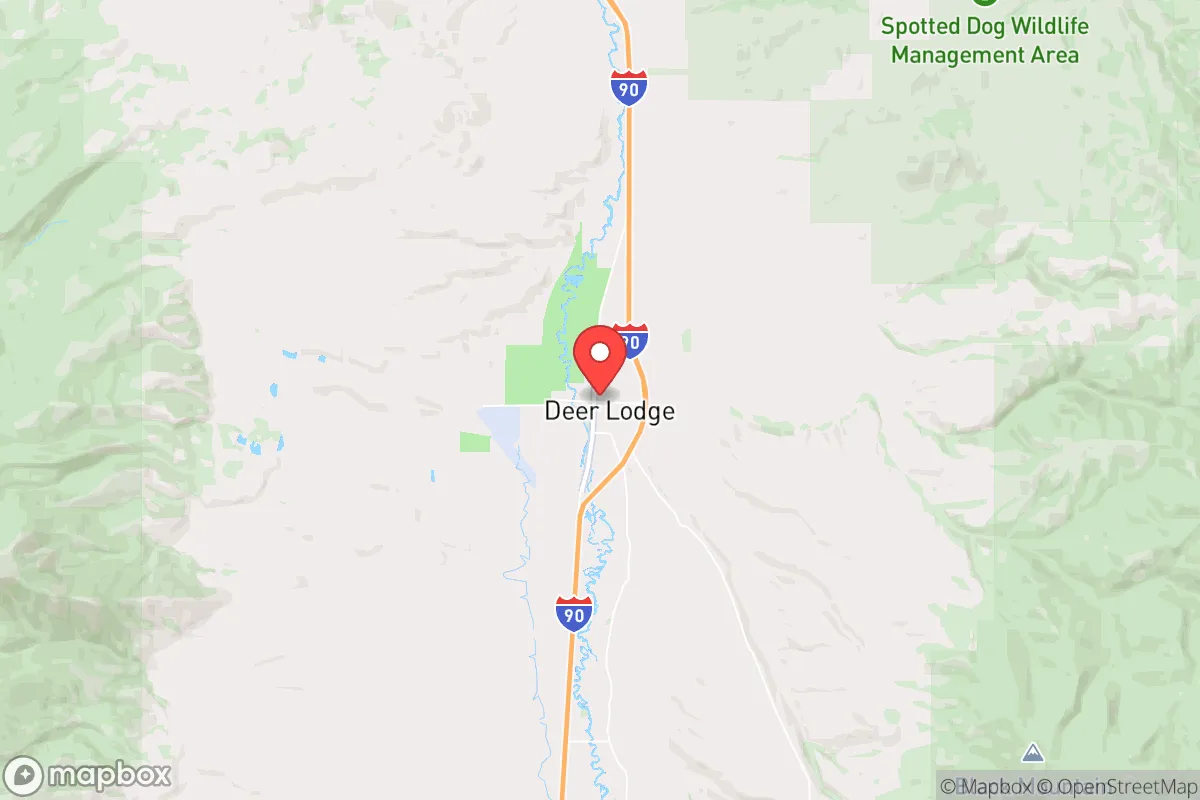
Photo by Denise Paik on Unsplash
Strategic Assessment of Deer Lodge, MT
Strong survivability profile. Good buffer from population centers, with manageable environmental and tactical risks.
What does the Strategic Assessment tell us?
Our Strategic Assessment grades tactical survivability of an area. Major population centers, military targets, fallout zones, natural disasters, and border exposure all drive risk — lower exposure means a more defensible position in a crisis.
This is heavily inspired by Joel Skousen's Strategic Relocation book. Highly recommended you checkout the book ($)What does this tell us?
Our Strategic Assessment grades tactical survivability of an area. Major population centers, military targets, fallout zones, natural disasters, and border exposure all drive risk — lower exposure means a more defensible position in a crisis.
This is heavily inspired by Joel Skousen's Strategic Relocation book. Highly recommended you checkout the book ($)Strategic Pillars

Key Distances
Regional Safe Places
Below is our recommended "safe zones" in Montana and the surrounding area based on our strategic heuristics. For most people, it's unrealistic to live in a “safe zone” full-time due to work, family or other personal reasons. They tend to be more rural. However, many of these areas are perfect for second homes and retreat properties that double as a vacation home or even a short-term rental.
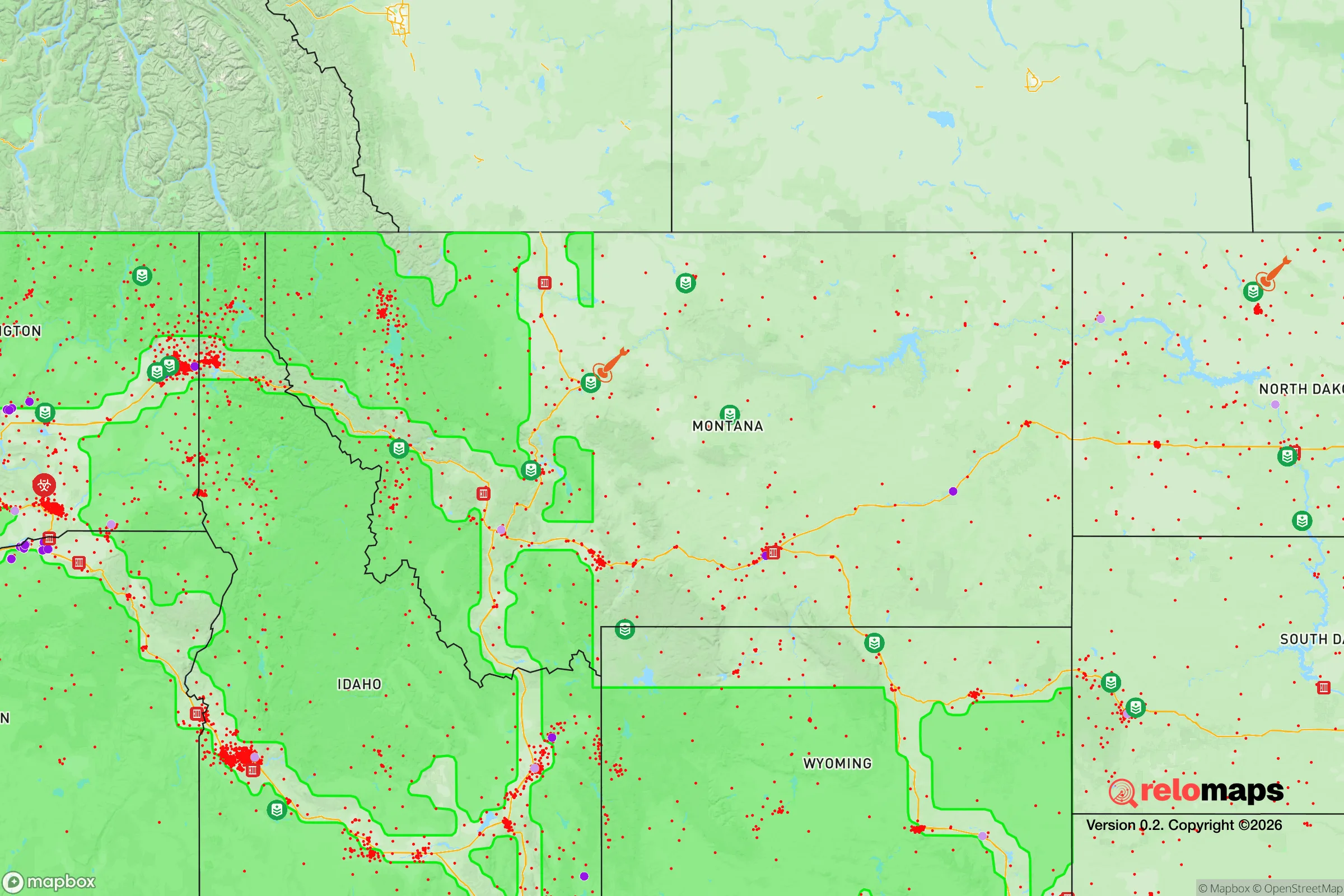


Important Note: For informational purposes only. This does not mean nothing bad ever happens in the green zones. Please use common sense. This is based on public data and modeled with AI. We tried to take a conservative approach but mistakes happen. We update this regularly as new information becomes available.
Solar Generator Recommendations
Backup power matters more here than in safer locations. We've picked three solar generators across budgets and capacity tiers — start with the budget unit if you only need a few essentials, or step up if you want to run a fridge and HVAC for days at a time.

Jackery Portable Power Station Explorer 300
Budget OptionPower on the Go: Weighing only 11 lbs, it's convenient to set up and store with book-sized foldable solar panels

BLUETTI Portable Power Station AC180
Designed for both indoor and outdoor scenarios, AC180 is highly capable as it has a robost capacity and continuous output power.

EF ECOFLOW DELTA Pro Ultra Power Station
Upgraded PickEcoFlow DELTA Pro Ultra is a whole-home energy system designed to grow with your family. Integrated with the Smart Home Panel 2, it scales to meet your evolving energy needs — keeping your home powered, intelligent, and secure through every stage of life.
We earn a commission, at no additional cost to you.
Strategic Assessment Analysis
Deer Lodge, Montana, offers a compelling strategic position for those prioritizing resilience and self-sufficiency in an uncertain future. Tucked away in the Powell County valley, roughly 45 miles west of Butte and 90 miles southeast of Missoula, this small town of roughly 3,000 people sits at a critical intersection of geographic isolation and practical accessibility. For a relocator with a survivalist mindset, Deer Lodge provides a rare combination: a low-population density buffer from urban chaos, proximity to vast public lands for resource extraction, and a location that is far enough from major population centers to avoid the immediate fallout of a major event, yet close enough to supply routes and regional infrastructure to sustain a long-term strategy. The area's historical roots as a mining and agricultural hub mean the local culture already values hard work, self-reliance, and a distrust of overreach—traits that align well with a conservative, prepper-oriented worldview.
Geographic position and natural advantages for long-term survival
Deer Lodge's location in the Deer Lodge Valley, flanked by the Pintler and Garnet mountain ranges, provides a natural defensive perimeter. The valley floor sits at roughly 4,500 feet, offering a moderate climate compared to higher elevations in the state, with four distinct seasons that support both agriculture and hunting. The area is a short drive from the Beaverhead-Deerlodge National Forest, the largest national forest in Montana, which offers over 3.3 million acres of public land for foraging, timber, and game. This is not a place where you'll be boxed in by suburban sprawl; the nearest city of any real size—Butte—is a 45-minute drive, and Missoula is over an hour away. For a relocator, this means you can establish a homestead with acreage without being hemmed in by neighbors or zoning restrictions that might limit your ability to store supplies, raise livestock, or build off-grid infrastructure. The valley's water table is generally reliable, with the Clark Fork River running through town, providing a surface water source that, while requiring treatment, is a strategic asset in a grid-down scenario. The surrounding mountains also offer natural choke points for anyone approaching from the east or west, giving residents a tactical advantage in monitoring movement.
Risks, exposures, and proximity to fallout-relevant landmarks
No location is without vulnerabilities, and Deer Lodge has a few that a serious prepper must weigh. The most immediate concern is the Montana State Prison, located just north of town. In a scenario involving civil unrest or a breakdown of order, a correctional facility housing over 1,500 inmates becomes a significant liability. The prison's presence also means a higher-than-average law enforcement and emergency response footprint, which could be a double-edged sword—helpful for immediate security but also a potential target for those seeking to exploit chaos. Additionally, Deer Lodge sits within 100 miles of the Yellowstone Caldera supervolcano, though the primary risk there is ashfall rather than direct blast damage. More practically, the town is about 120 miles from the Malmstrom Air Force Base near Great Falls, which is a primary hub for the U.S. nuclear missile silos. While Deer Lodge is not in a direct fallout zone for most scenarios, any major conflict involving strategic assets in the northern Rockies could create secondary risks from military movements or supply chain disruptions. The area also experiences occasional wildfire threats, particularly in dry summers, and the valley can see heavy winter snow that may isolate residents for days at a time. For a relocator, these risks are manageable with proper planning—adequate food stores, a reliable vehicle, and a defensible property—but they are not negligible.
Practical resilience for a relocator: food, water, energy, and defensibility
Deer Lodge's practical resilience hinges on its agricultural heritage and the local mindset. The valley has a long history of ranching and farming, meaning local food production is a viable long-term strategy. You can find acreage with existing irrigation rights, and the growing season, while short (roughly 100-120 frost-free days), is sufficient for cold-hardy crops like potatoes, carrots, and grains. The area also supports cattle, sheep, and poultry, and the surrounding public lands offer elk, deer, and antelope hunting. Water is generally accessible via wells, though drilling depths can vary; the Clark Fork River provides a backup source, but you'll need filtration or boiling capacity. For energy, the region has good solar potential despite the winter cloud cover—solar panels with battery storage can cover basic needs, and the area's wind patterns are consistent enough for small-scale wind turbines. Wood heating is a no-brainer here, with ample timber on public lands for harvesting (with proper permits). Defensibility is a strong point: the valley's layout means you can choose a property with clear sightlines and limited access points. The local population is sparse and largely self-reliant, which reduces the risk of resource conflicts in a crisis. However, note that the town itself has a limited grocery store and hardware store, so you must be prepared to stockpile critical supplies—ammunition, medical gear, and spare parts—well in advance. The nearest major supply hub for prepper gear is Missoula, which is a 90-minute drive, but in a collapse scenario, that route could become contested.
The overall strategic picture for Deer Lodge
Deer Lodge presents a solid, if not perfect, strategic option for a conservative-minded relocator seeking a balance between isolation and access. It avoids the extreme remoteness of places like Libby or Eureka, which can be logistically challenging for resupply, while still offering the buffer from urban centers that is critical for avoiding the initial wave of unrest. The presence of the prison is a genuine concern, but it also means the town has a hardened infrastructure—secure buildings, emergency services, and a population accustomed to dealing with security threats. For a single individual or a family, the key is to secure property outside the immediate town limits, ideally with a well, septic, and a defensible perimeter. The local culture is conservative, with a strong emphasis on property rights and self-defense, which means you'll find like-minded neighbors rather than hostile urban transplants. The biggest trade-off is the harsh winter climate, which demands serious preparation in terms of heating, food storage, and vehicle maintenance. But for those willing to put in the work, Deer Lodge offers a realistic foundation for a long-term survival strategy—one that doesn't rely on government bailouts or urban infrastructure that could fail overnight. It's not a bug-out location for a weekend; it's a place to build a life that can withstand the shocks ahead.

* Values derived from national, state, county, city and local statistics and may differ in a specific area. Last updated: 2026-04-30T01:23:21.000Z
Narrative content on this page is AI-generated and may contain mistakes. Verify any details that matter before acting on them.
ReloMaps may earn a commission from affiliate links at no extra cost to you.

