Photo: Wikipedia
Political ClimatePolitical Climate in Custer, SD
District shown is the primary district for this city’s centroid. Cities may span multiple districts.
Inherited from parent state — no local data available.
Local Political AnalysisPolitical Analysis of Custer, SD
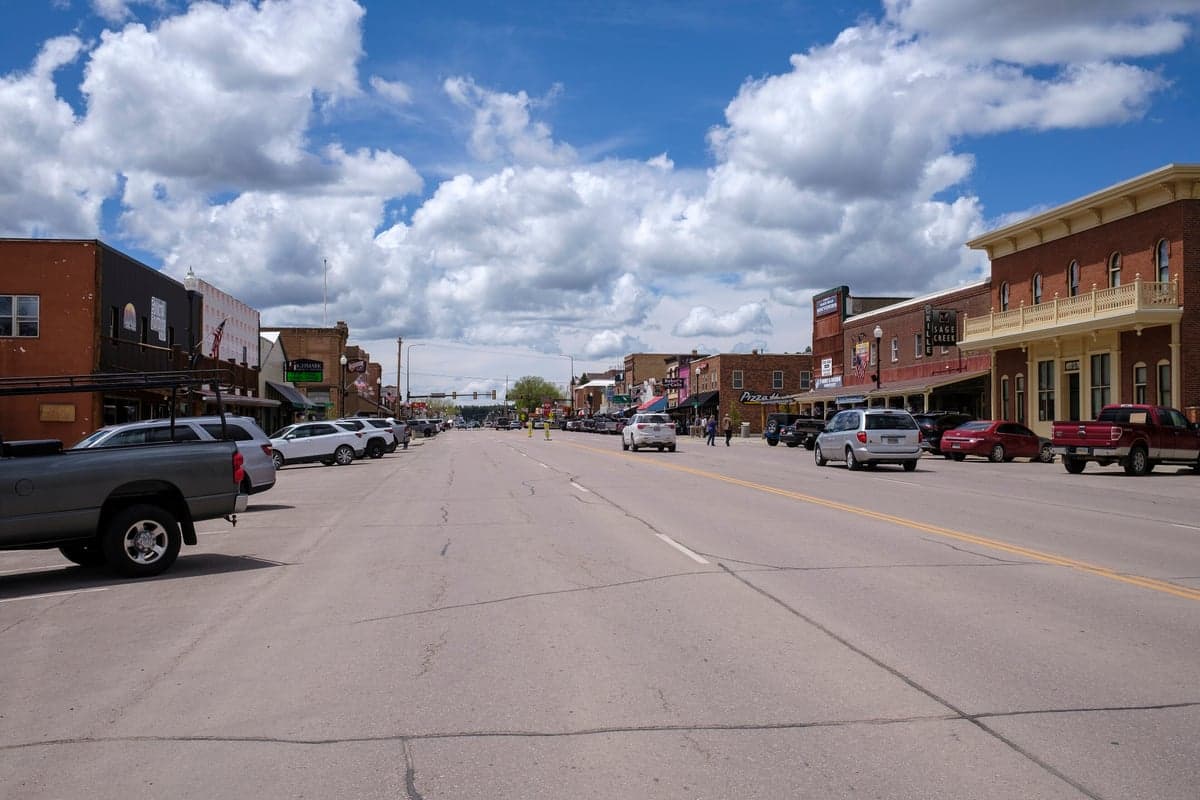
Custer, South Dakota, is about as reliably conservative as a town can get, with a Cook PVI of R+15 that tells you the political math hasn't budged much in decades. You're looking at a community where the Republican primary is often the real election, and where the idea of "government staying out of your business" isn't just a bumper sticker—it's the operating principle for most folks. The trajectory here is steady, not swinging; while some parts of the Black Hills have seen a trickle of out-of-state transplants bringing more progressive ideas, Custer's core has held firm, anchored by a strong ranching, tourism, and small-business culture that values self-reliance over government programs.
How it compares
If you drive thirty minutes north to Rapid City, you'll find a more mixed political landscape—still red overall, but with a noticeable progressive minority, especially among younger residents and city government circles. Head west to Newcastle, Wyoming, and you're in even deeper red territory, where the libertarian streak runs stronger and the federal land management debates get heated. But Custer sits in a sweet spot: it's conservative without the hard-edge libertarianism of some Wyoming towns, and it's far enough from Rapid City's urban drift to avoid the cultural friction. The surrounding Custer County votes consistently Republican, and local offices—from the county commission to the school board—tend to be filled by people who believe in limited government, low taxes, and personal responsibility. The contrast is most visible during election cycles: you won't see many yard signs for progressive candidates here, and the local paper's letters to the editor are overwhelmingly focused on property rights, Second Amendment issues, and skepticism of federal mandates.
What this means for residents
For someone moving here, the political climate translates into a daily life with fewer government intrusions. There's no city income tax, zoning is minimal compared to coastal or even Midwestern suburbs, and the local sheriff's office is known for a "don't call us unless you need us" approach to minor matters. The school system emphasizes traditional values and local control—you won't see the kind of curriculum battles that dominate news in blue states. Property rights are taken seriously; if you want to build a shop on your land or keep a few chickens, the county isn't going to send an inspector to hassle you. That said, the trade-off is that public services are lean. Don't expect robust public transit, extensive social programs, or a city government that jumps to solve every complaint. The attitude is: you take care of yourself, and the government stays out of your way. For folks who value freedom over convenience, that's a feature, not a bug.
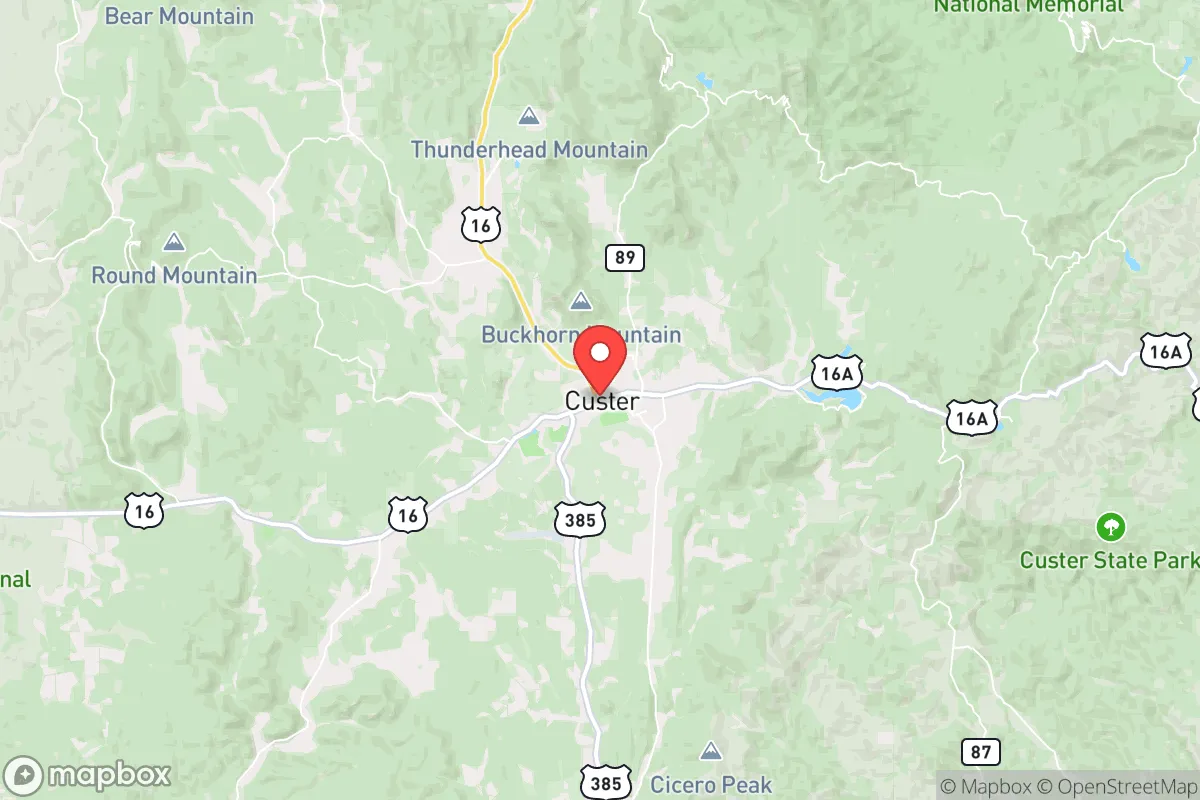
One cultural distinction worth noting is Custer's relationship with federal land management. The town is surrounded by Black Hills National Forest and Custer State Park, which means constant tension between local autonomy and federal or state regulations. You'll hear plenty of grumbling about forest service restrictions, grazing permits, and fire management policies that locals feel are heavy-handed. There's also a strong strain of skepticism toward any "green" initiatives that come from Washington—solar mandates, electric vehicle incentives, or land-use restrictions are viewed as overreach. The long-term concern among residents is that as more people move to the Black Hills for the scenery, they'll bring big-government voting habits with them. So far, Custer has resisted that shift, but it's something the old-timers keep an eye on. If you're looking for a place where the government still answers to the people—and not the other way around—Custer is holding the line.

State Political ClimatePolitical Climate in South Dakota
State Political AnalysisPolitical Environment in the State
South Dakota is one of the most reliably conservative states in the nation, with a Republican trifecta that has held for decades and a cultural DNA that prizes self-reliance and limited government. The state hasn’t voted for a Democratic presidential candidate since 1964, and in 2024, Donald Trump carried it by over 30 points. The dominant coalition is a blend of rural ranchers, small-town business owners, and a growing wave of conservative transplants from California and the Midwest, all united by a deep skepticism of federal overreach. Over the past 10-20 years, the state has only hardened its conservative posture, moving from a quiet, live-and-let-live ethos to a more aggressive, legislatively active brand of freedom-focused governance.
Urban vs. rural divide
The political map is starkly divided between a few small urban islands and a vast, deeply red rural expanse. Sioux Falls, the state’s largest city (pop. ~210,000), is the only real blue-leaning metro, though even there, the county (Minnehaha) went +12 for Trump in 2024. The city’s growth has brought in younger professionals and some out-of-state moderates, but it’s still a conservative town by national standards—just with a few more craft breweries and bike lanes. Rapid City and Pennington County are solidly red, driven by a strong military and tourism economy around Ellsworth Air Force Base and Mount Rushmore. The real action is in the rural counties: Harding County in the northwest gave Trump 92% of the vote, and Jones County in the central plains hit 91%. The divide isn’t about culture war so much as density—the fewer people per square mile, the more libertarian the vote. Brookings, home to South Dakota State University, is a slight outlier, with a younger, more moderate tilt, but it’s still safely red in statewide races.
Policy environment
South Dakota’s policy environment is a conservative dream: no state income tax, a flat 4.2% corporate income tax, and some of the lowest property tax rates in the region. The state has no personal income tax at all, which is a huge draw for remote workers and retirees. The regulatory posture is aggressively pro-business—permitting for a new home or business is often measured in weeks, not months. On education, the state passed a robust school choice law in 2024, allowing Education Savings Accounts (ESAs) for families, and has resisted federal curriculum mandates. Healthcare is a mixed bag: the state expanded Medicaid under Trump-era waivers, but it’s managed with a light touch, and there’s no state-run insurance exchange. Election laws are among the most secure in the nation—voter ID is required, same-day registration is not allowed, and the state uses paper ballots with hand-count audits in many counties. Governor Kristi Noem has been a national figure for pushing back on federal mandates, especially during COVID, when the state never issued a stay-at-home order.
Trajectory & freedom
South Dakota is becoming more free, not less, and the trend is accelerating. In 2023, the legislature passed a near-total ban on abortion (triggered by Dobbs), with exceptions only for the life of the mother—a clear expansion of the state’s pro-life stance. Gun rights are virtually unrestricted: permitless carry has been law since 2019, and the state has a strong preemption law that prevents local governments from passing their own restrictions. In 2024, the state passed the “Parents’ Bill of Rights,” which requires schools to notify parents of any curriculum involving sexuality or gender identity and prohibits schools from hiding a child’s gender transition from parents. Property rights were strengthened with a 2022 law limiting eminent domain for carbon pipelines, a direct response to the Summit Carbon Solutions controversy. On taxes, the legislature has been cutting rates: the sales tax was reduced from 4.5% to 4.2% in 2023, and there’s talk of eliminating the corporate income tax entirely. The only concerning trend is a slight uptick in state-level spending on social programs, but it’s still far below national averages.
Civil unrest & political movements
South Dakota is remarkably stable—you won’t see the kind of street protests or activist clashes common in coastal states. The most visible political flashpoint in recent years was the Keystone XL pipeline and the related Standing Rock protests (2016-2017), which drew national attention but were largely contained to the reservation area near Mobridge. Since then, the state has passed laws to criminalize trespassing by pipeline protesters and limit out-of-state funding for local activism. On the right, the South Dakota Freedom Caucus has become a powerful force in the legislature, pushing for even more aggressive tax cuts and school choice expansion. Immigration politics are quiet—the state has a very small foreign-born population (about 4%), and there’s no sanctuary city movement. Election integrity is a settled issue: the state’s Republican Secretary of State, Monae Johnson, has been a vocal advocate for hand-counting ballots in smaller precincts, and there’s been no serious controversy since 2020. A new resident would notice that political conversations happen over coffee or at the county fair, not on street corners with bullhorns.
Projection
Over the next 5-10 years, South Dakota will likely become more conservative, not less, driven by two forces: in-migration of freedom-seeking families from blue states, and a growing rural population that is increasingly skeptical of federal power. The state is projected to add 50,000-70,000 new residents by 2035, with most settling in the Sioux Falls metro and the Black Hills region around Rapid City. This influx will push the political center even further right, as these newcomers are often fleeing high taxes and heavy regulation. The only wildcard is the Native American vote (about 9% of the population), which leans heavily Democratic but has low turnout—if that changes, it could shift a few legislative seats. Expect more school choice expansion, further tax cuts, and a continued push to limit federal influence in land management (especially in the Black Hills). The state’s biggest challenge will be managing growth without losing its character—but given the political culture, that’s a problem most residents are happy to have.
For a new resident, the bottom line is simple: South Dakota offers a level of personal and economic freedom that’s increasingly rare in the United States. You’ll pay no income tax, carry a firearm without a permit, send your kids to a school that respects your values, and live in a state where the government mostly stays out of your way. The trade-off is a harsh winter, limited cultural amenities, and a political scene that can feel insular—but if you value liberty over convenience, this is one of the best bets in the country. Just don’t expect to find a Whole Foods in Wall anytime soon.
* Values derived from national, state, county, city and local statistics and may differ in a specific area. Last updated: 2026-05-01T05:57:08.000Z
Narrative content on this page is AI-generated and may contain mistakes. Verify any details that matter before acting on them.
ReloMaps may earn a commission from affiliate links at no extra cost to you.

