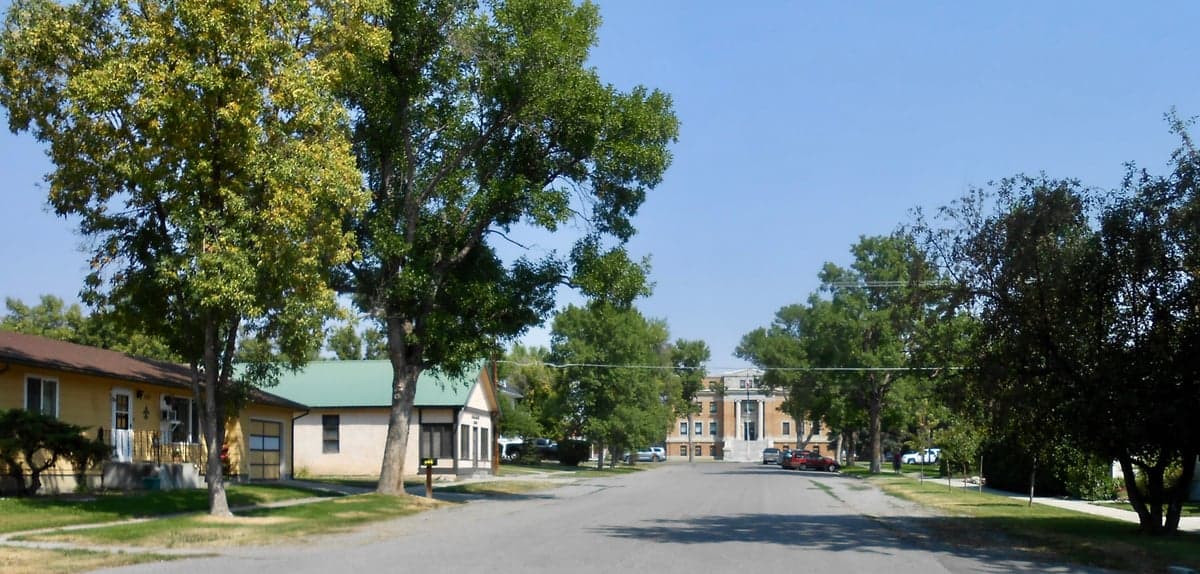
Photo: Wikipedia
Political ClimatePolitical Climate in Columbus, MT
District shown is the primary district for this city’s centroid. Cities may span multiple districts.
Local Political AnalysisPolitical Analysis of Columbus, MT
Columbus, Montana, sits in a solidly conservative pocket of the state, with a Cook PVI of R+15 that reflects decades of consistent Republican voting. This isn't a purple area that flips on a dime; it's a place where the political culture is deeply rooted in self-reliance, limited government, and a healthy skepticism of federal overreach. The trajectory here has been one of steady, quiet conservatism, though like many rural towns, there's a growing unease about outside influences creeping in from the more progressive corners of the state, particularly from Bozeman and Missoula.
How it compares
To understand Columbus, you have to look at its neighbors. Drive an hour west to Bozeman, and you'll find a rapidly growing city that's shifted noticeably left in recent years, with a younger, more transient population and a political vibe that feels increasingly disconnected from rural Montana values. Head east to Billings, and you get a more mixed bag—still conservative overall, but with a larger urban core that introduces more moderate and occasionally progressive voices. Columbus, by contrast, feels like a holdout. It's closer in spirit to smaller towns like Absarokee or Reed Point, where the local economy still revolves around agriculture, ranching, and energy, and where the prevailing attitude is "leave us alone to live our lives." The R+15 rating isn't just a number; it's a reflection of a community that hasn't been swayed by the coastal transplants or the tech money that's reshaping other parts of the state.
What this means for residents
For the people who live here, the political climate translates into a daily life that's largely free from the kind of government overreach that's become common in more progressive areas. You won't find the same level of zoning restrictions, mask mandates, or heavy-handed business regulations that have choked smaller towns in other states. The local school board and county commission are filled with folks who understand that personal freedoms—whether it's the right to own firearms, make medical decisions without state interference, or run a small business without endless red tape—are non-negotiable. That said, there's a quiet concern among long-time residents that the same forces pushing for change in Bozeman are starting to eye Columbus. The influx of remote workers and retirees looking for "affordable Montana" has brought some new voices to town, and while most are still conservative, there's a noticeable shift in tone at local meetings. It's not a crisis yet, but it's something people are watching closely.
Culturally, Columbus still holds onto distinctions that set it apart. The annual Labor Day Rodeo and the Stillwater County Fair are more than just events; they're statements of identity. There's a strong tradition of volunteerism and neighborly support that doesn't rely on government programs. Policy-wise, the county has resisted adopting the kind of land-use planning that gives bureaucrats more control over private property, and there's a general consensus that the Second Amendment isn't up for debate. The biggest red flag on the horizon is the potential for state-level mandates from Helena, where a growing urban population is pushing for policies that don't align with rural realities. For now, Columbus remains a place where you can still live your life the way you see fit, but the fight to keep it that way is far from over. If you're looking for a community that values freedom over convenience, this is still one of the best spots in the state—but don't take it for granted.

State Political ClimatePolitical Climate in Montana
State Political AnalysisPolitical Environment in the State
Montana has long been a reliably Republican state in presidential elections, voting for the GOP candidate in every contest since 1992, but the political climate here is far more nuanced than a simple red-state label suggests. The dominant coalition is a mix of libertarian-leaning ranchers, conservative small-town residents, and a growing number of out-of-state transplants, many of whom are fleeing progressive policies elsewhere. Over the last 10-20 years, the state has shifted from a more moderate, "live and let live" Western conservatism toward a sharper, more culturally conservative posture, driven largely by rapid growth in places like Bozeman and Missoula that has sparked a backlash in rural areas.
Urban vs. rural divide
The political map of Montana is a classic study in contrast. The western mountain corridor, anchored by Missoula and Bozeman, has become a Democratic stronghold, with Missoula County routinely voting +20 points or more for Democratic candidates. Bozeman, once a sleepy college town, has exploded with tech workers and out-of-state arrivals, and Gallatin County has trended blue in recent cycles, though it still flips depending on the race. Meanwhile, the eastern plains and smaller cities like Billings, Great Falls, and Kalispell are deeply Republican. Billings, the state's largest city, leans Republican but is more moderate than the rural hinterlands. The real action is in the exurban and rural counties: Flathead County (Kalispell) has become a conservative stronghold, while Ravalli County (Hamilton) is among the most reliably red in the state. The divide isn't just about population density—it's about culture. Urbanites in Missoula and Bozeman push for environmental regulations and progressive social policies, while rural Montanans see those as direct threats to their way of life, especially regarding land use and property rights.
Policy environment
Montana's policy environment is a mixed bag for conservatives. On the plus side, there is no state sales tax, which is a huge draw for those fleeing high-tax states like California or Washington. Property taxes are moderate, and the state has a flat income tax rate of 6.75%, though there have been recent pushes to lower it further. The regulatory posture is generally business-friendly, especially in energy and agriculture, but the state's land-use planning can be a headache—counties like Gallatin and Missoula have imposed growth restrictions that drive up housing costs. Education policy is a flashpoint: the state has a robust school choice movement, with charter schools and homeschooling widely accepted, but public school funding remains a perennial battle. Healthcare is a mixed bag—Montana expanded Medicaid under the Affordable Care Act in 2015, a move that still rankles many conservatives, but the state also protects medical freedom with relatively loose vaccine mandates compared to blue states. Election laws are solid: Montana requires voter ID, has no same-day registration, and conducts all-mail elections, which has been a source of controversy among some conservatives who prefer in-person voting. The state also has a strong initiative process, allowing citizens to bypass the legislature on issues like marijuana legalization (passed in 2020) and Medicaid expansion.
Trajectory & freedom
Over the last five years, Montana has taken a decidedly more libertarian-conservative turn on several fronts. The Montana Firearms Freedom Act (2013) and subsequent preemption laws have made the state a haven for gun owners, with no permit required for concealed carry and no state-level red flag law. In 2021, the legislature passed a parental rights bill (HB 112) that requires schools to notify parents of any medical or mental health services offered to minors, a direct response to progressive school boards in Missoula and Bozeman. The state also passed a critical race theory ban in public schools (HB 102) and a law prohibiting transgender athletes from competing in women's sports (HB 112, later signed into law). On medical freedom, Montana passed a law in 2023 prohibiting employers from mandating COVID-19 vaccines, and the state has resisted federal vaccine mandates for healthcare workers. However, there are concerning trends: the influx of wealthy newcomers from California and Colorado is driving up property values and pushing a more progressive agenda in local elections, especially in Bozeman and Missoula. The state's property tax system is under strain, with valuations skyrocketing, leading to calls for reform that could either protect or burden homeowners.
Civil unrest & political movements
Montana is not a hotbed of street protests, but there have been notable flashpoints. The Yellowstone County (Billings) area saw large pro-Trump rallies in 2020, and the state was a key battleground for election integrity debates after the 2020 election, with Republican Secretary of State Christi Jacobsen defending the state's mail-in ballot system against criticism from within her own party. The Montana Freedom Caucus, a group of hardline conservative legislators, has been increasingly vocal, pushing for further restrictions on abortion (the state has a 20-week ban and a trigger law that would ban abortion if Roe v. Wade is overturned) and opposing any new taxes. On the left, the Montana Environmental Information Center and other green groups have been active in protesting fossil fuel development, particularly the proposed Keystone XL pipeline (which was canceled) and coal mining in the Powder River Basin. Immigration is a minor issue here—Montana has a very small foreign-born population, but there have been localized tensions over migrant farm workers in the Flathead Valley. The state has no sanctuary cities, and local law enforcement generally cooperates with federal immigration authorities. The most visible political movement is the anti-government land-use sentiment in rural counties, where residents have clashed with federal agencies over grazing rights and forest management, particularly in the Beaverhead-Deerlodge National Forest area.
Projection
Looking ahead 5-10 years, Montana is likely to become more polarized, not less. The in-migration wave from blue states shows no signs of slowing, with Bozeman and Missoula continuing to attract remote workers and retirees. This will likely turn Gallatin and Missoula counties even bluer, while the rural counties double down on conservative politics. The state legislature, which is currently under Republican supermajority control, may face increasing pressure from the growing urban population, but the rural districts are so heavily weighted that the GOP is likely to hold power for the foreseeable future. The key battleground will be suburban counties like Flathead and Lewis and Clark (Helena), where transplants are more moderate. Expect continued fights over property taxes, land use, and education—the latter being the most likely flashpoint as progressive school boards in Bozeman and Missoula clash with state-level conservative mandates. The state's freedom index is likely to remain high on gun rights and medical freedom, but economic freedom could erode if housing costs continue to spiral and the state is forced to raise taxes to pay for infrastructure.
For a new resident, the bottom line is this: Montana is still a great place for those who value personal liberty, low taxes, and wide-open spaces, but you need to pick your location carefully. If you want a conservative, family-friendly environment with strong property rights and minimal government overreach, look at Kalispell, Billings, or Great Falls. If you're more moderate and can tolerate higher costs and more regulation, Bozeman or Missoula might work, but be prepared for a culture that is increasingly at odds with the rest of the state. The political climate here is dynamic and shifting, but the core values of independence and self-reliance still run deep—just keep an eye on the ballot box and the zoning board.
* Values derived from national, state, county, city and local statistics and may differ in a specific area. Last updated: 2026-04-29T21:22:13.000Z
Narrative content on this page is AI-generated and may contain mistakes. Verify any details that matter before acting on them.
ReloMaps may earn a commission from affiliate links at no extra cost to you.

