Photo: Wikipedia
Personal Sovereignty in Arapahoe County
Viable for self-reliance. Generally workable, though some barriers may limit total independence.
What does Personal Sovereignty tell us?
Personal Sovereignty measures your capacity for self-reliance and independence with minimal government friction. Higher scores mean fewer barriers between you and the way you want to live... but it assumes you have the space you need and good neighbors.
What does this tell us?
Personal Sovereignty measures your capacity for self-reliance and independence with minimal government friction. Higher scores mean fewer barriers between you and the way you want to live... but it assumes you have the space you need and good neighbors.
State Policy
Energy independence: Net exporter (110% of energy produced in-state)
Personal Liberty
Homesteading

Personal Liberty Analysis
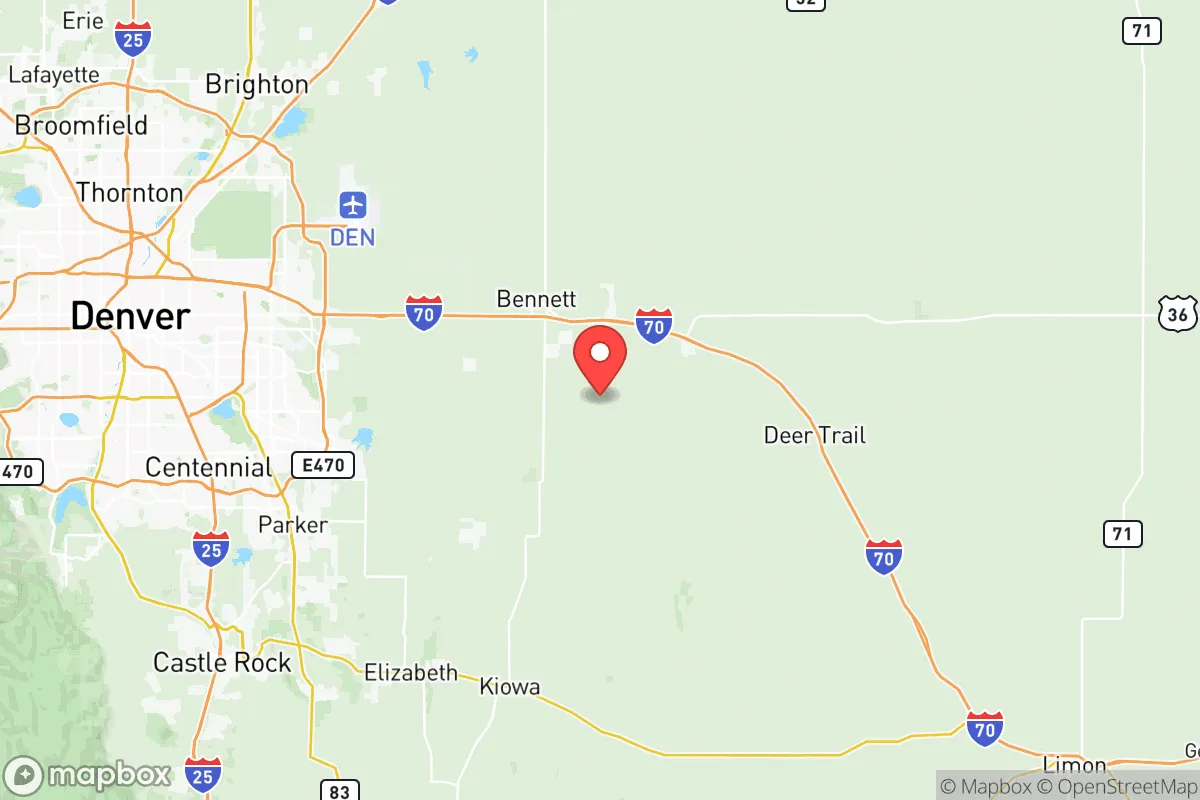
Arapahoe County presents a nuanced environment for personal sovereignty, where state-level mandates create a baseline regulatory framework that local jurisdictions can either amplify or moderate. As a suburban and urban county stretching from the Denver city limits eastward onto the plains, the autonomy a resident experiences varies significantly depending on whether they live in a dense city like Aurora or a more rural unincorporated area near Byers. The county's political landscape is a competitive mix, with the western half leaning more progressive and the eastern half trending conservative, creating a patchwork of local ordinances that directly impact tax burden, self-defense rights, and the feasibility of self-reliant living.
Tax burden and regulatory posture across Arapahoe County
Colorado's state-level tax structure is relatively light compared to the national average, with a flat income tax rate of 4.4% and a state sales tax of 2.9%. However, Arapahoe County adds its own layers. The county's total sales tax rate ranges from 7.27% in unincorporated areas to over 8.81% in Aurora and 8.31% in Centennial, depending on city and special district taxes. Property taxes are assessed at a residential rate of 6.7% of actual value (after a 55% assessment rate reduction for residential property), which is moderate by national standards but has been rising with home values. The regulatory posture is mixed: the county follows state-mandated building codes and environmental regulations, but cities like Littleton and Englewood have adopted additional local zoning and business licensing requirements that can feel burdensome to entrepreneurs. In contrast, unincorporated areas east of Deer Trail have fewer layers of local oversight, making them more attractive for those seeking a lighter regulatory touch.
Self-defense and gun law specifics in Arapahoe County
Colorado is a "shall-issue" state for concealed carry permits, meaning Arapahoe County issues permits to qualified applicants without discretionary denial. The county sheriff's office processes permits with a typical turnaround of 30-60 days. Open carry is legal in unincorporated Arapahoe County and in most towns within the county, though cities like Aurora and Centennial have ordinances restricting open carry in certain public buildings and parks. Magazine capacity is limited to 15 rounds under state law, and private firearm transfers require a background check through a licensed dealer. The county has a mixed record on "Second Amendment Sanctuary" resolutions; while some eastern precincts have pushed for such measures, the county commission has not adopted a formal sanctuary status. For practical self-defense, residents in unincorporated areas near Strasburg and Byers enjoy more permissive discharge ordinances for target practice on private land, whereas those in suburban neighborhoods face stricter noise and discharge regulations.
Self-reliance and homesteading viability: lot sizes, zoning, and off-grid feasibility
Homesteading viability in Arapahoe County is highly location-dependent. The western half of the county, including Littleton and Englewood, is largely platted with suburban lot sizes of 0.1 to 0.25 acres, making significant self-reliance difficult. Zoning codes in these areas require connection to municipal water and sewer, and backyard chickens are permitted only with strict coop setbacks and noise restrictions. Moving east, unincorporated areas near Deer Trail and Byers offer 5-acre minimum lot sizes in agricultural zoning districts, with some parcels exceeding 35 acres. These areas allow for livestock, private wells, and septic systems. Off-grid living is legally challenging: Colorado state law requires new dwellings to have a permitted water source and sewage system, and solar-only homes must still meet minimum habitability codes. However, residents on large parcels in eastern Arapahoe County can achieve a high degree of energy and food self-reliance, with fewer neighbors to object to composting toilets or rainwater collection systems (which are legal but limited to 3,000 gallons per property under state water law).
Personal liberties: parental rights, medical autonomy, speech, and property
Colorado's state constitution provides strong protections for free speech and religious exercise, and Arapahoe County does not impose additional restrictions beyond state law. Parental rights have been a contentious issue: the state has adopted universal school curriculum standards that include comprehensive sex education and social-emotional learning, which some parents in conservative precincts near Centennial and Parker have opposed. School districts in the county, including Cherry Creek and Littleton Public Schools, have varying opt-out policies for specific lessons. Medical autonomy is limited by state mandates: Colorado requires childhood vaccinations for school attendance (with medical and religious exemptions available, but not philosophical exemptions), and the state has legalized recreational marijuana and psilocybin therapy, which some residents view as an expansion of personal medical choice. Property rights are generally respected, but homeowners associations (HOAs) govern a large portion of suburban housing stock, particularly in Aurora and Centennial, imposing restrictions on landscaping, vehicle storage, and home businesses that can feel intrusive to those prioritizing personal autonomy.
Overall, personal sovereignty in Arapahoe County is best understood as a spectrum from west to east. The western suburbs offer convenience and services but come with denser regulation and higher taxes, while the eastern plains provide more room for self-reliant living with fewer local restrictions. Compared to more heavily regulated areas like Boulder County or the City of Denver, Arapahoe County's eastern half offers a notably lighter regulatory touch, though it still operates within Colorado's state-level framework. For the freedom-oriented individual or family, the key decision is whether to accept the trade-offs of suburban convenience or seek the greater autonomy available on the county's eastern agricultural lands.

* Values derived from national, state, county, city and local statistics and may differ in a specific area. Last updated: 2026-06-15T20:41:15.000Z
Narrative content on this page is AI-generated and may contain mistakes. Verify any details that matter before acting on them.
ReloMaps may earn a commission from affiliate links at no extra cost to you.

