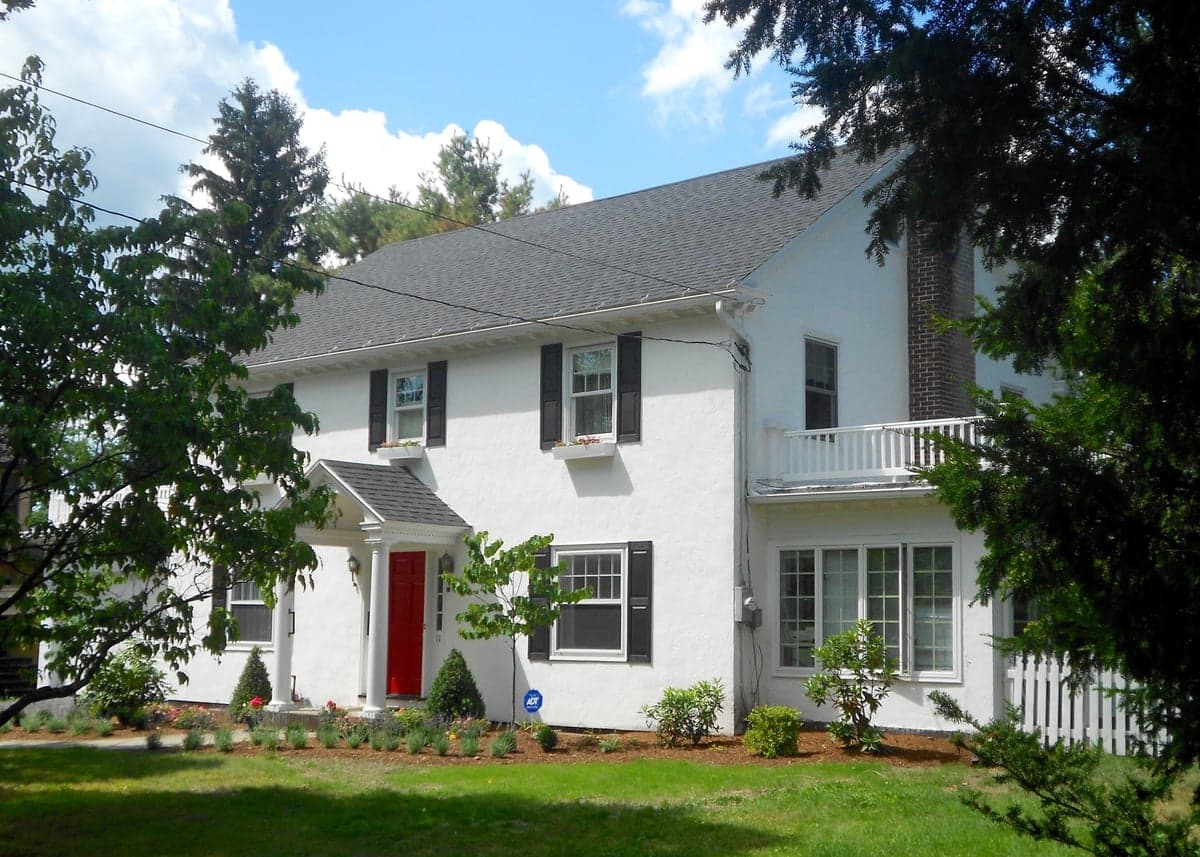
Photo: Wikipedia
Strategic Assessment of Clarks Green, PA
Multiple tactical vulnerabilities. Population density, target proximity, or disaster risk are likely compounding. A retreat property and exit planning is required.
What does the Strategic Assessment tell us?
Our Strategic Assessment grades tactical survivability of an area. Major population centers, military targets, fallout zones, natural disasters, and border exposure all drive risk — lower exposure means a more defensible position in a crisis.
This is heavily inspired by Joel Skousen's Strategic Relocation book. Highly recommended you checkout the book ($)What does this tell us?
Our Strategic Assessment grades tactical survivability of an area. Major population centers, military targets, fallout zones, natural disasters, and border exposure all drive risk — lower exposure means a more defensible position in a crisis.
This is heavily inspired by Joel Skousen's Strategic Relocation book. Highly recommended you checkout the book ($)Strategic Pillars

Key Distances
Regional Safe Places
Below is our recommended "safe zones" in Pennsylvania and the surrounding area based on our strategic heuristics. For most people, it's unrealistic to live in a “safe zone” full-time due to work, family or other personal reasons. They tend to be more rural. However, many of these areas are perfect for second homes and retreat properties that double as a vacation home or even a short-term rental.
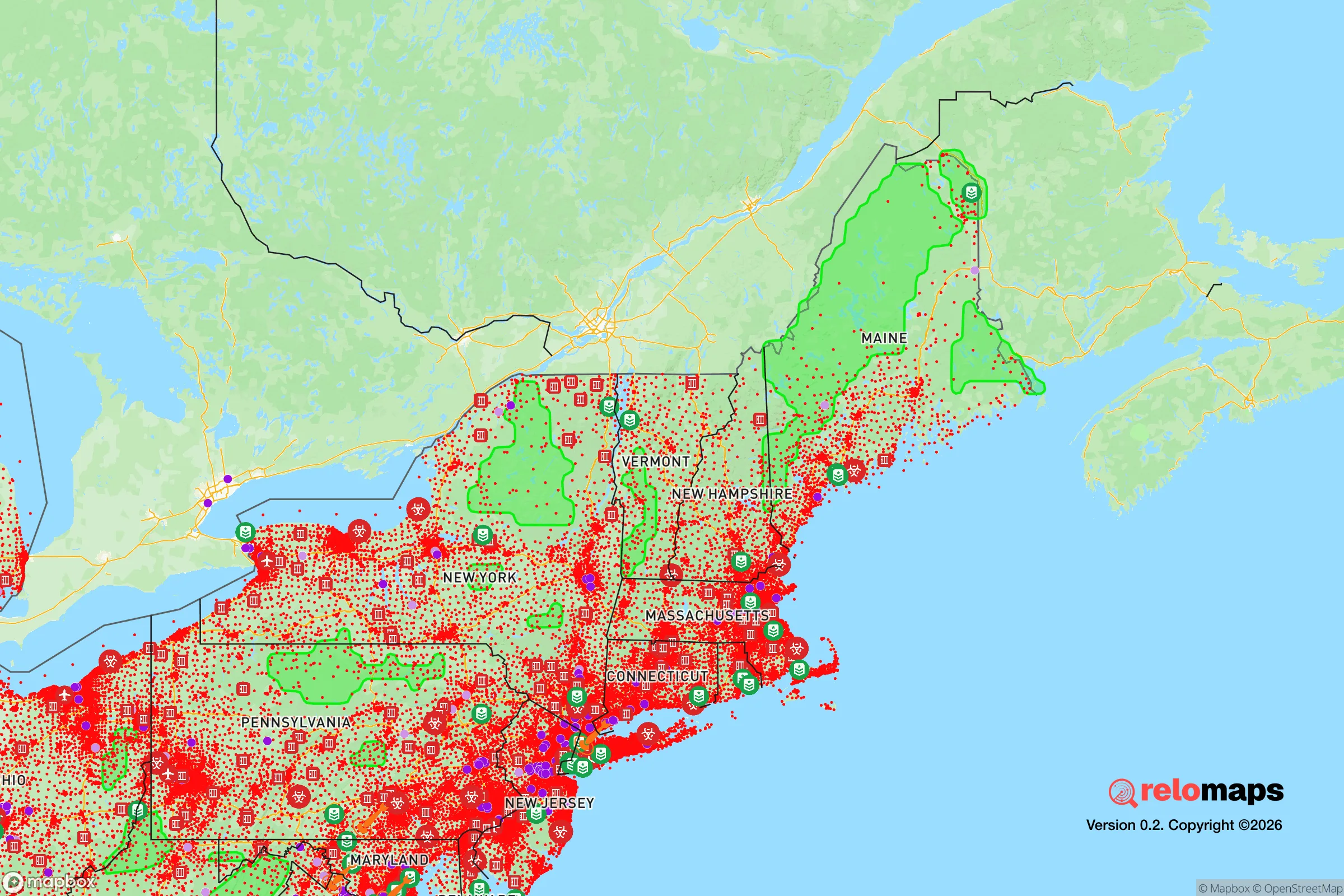
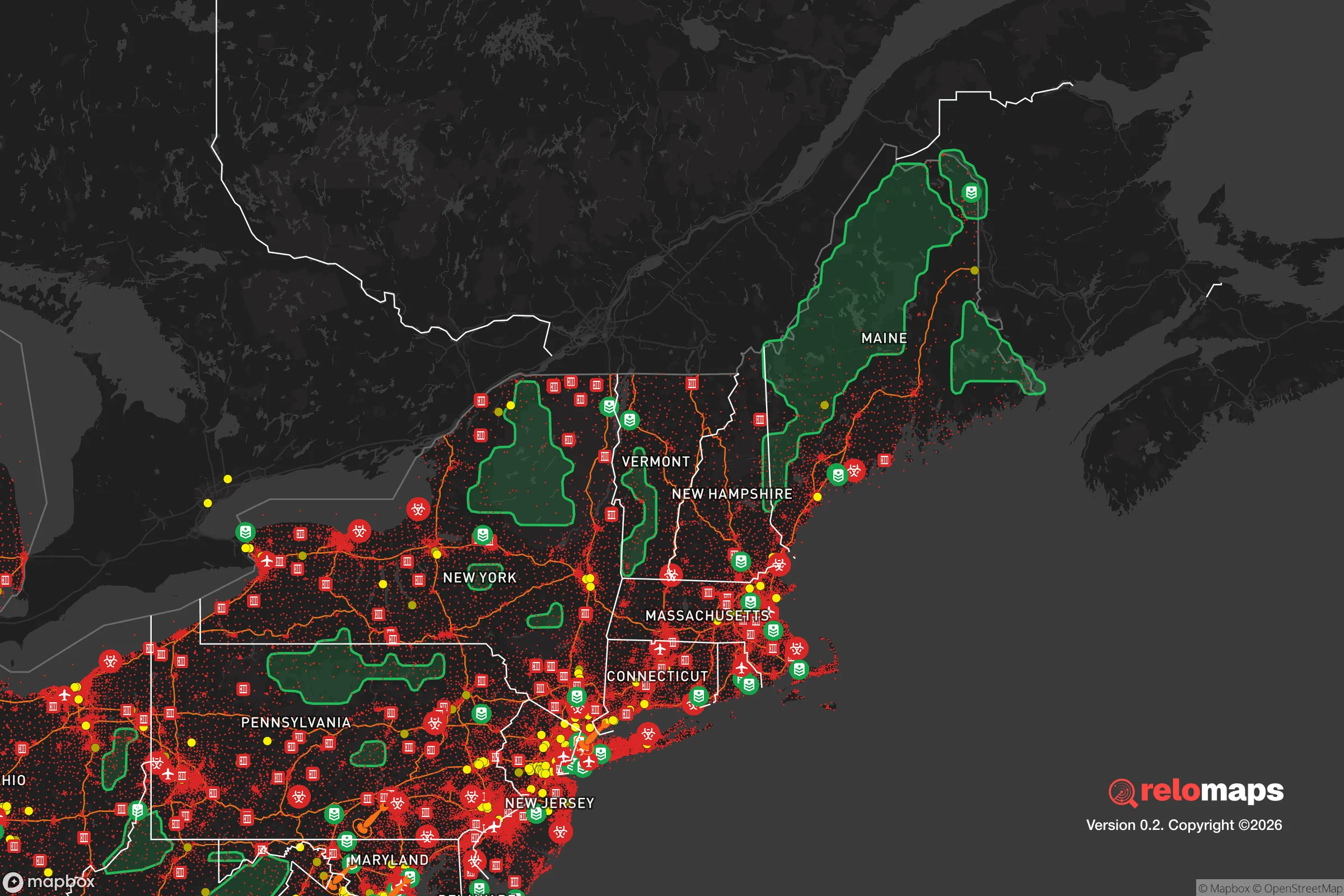


Important Note: For informational purposes only. This does not mean nothing bad ever happens in the green zones. Please use common sense. This is based on public data and modeled with AI. We tried to take a conservative approach but mistakes happen. We update this regularly as new information becomes available.
Solar Generator Recommendations
Backup power matters more here than in safer locations. We've picked three solar generators across budgets and capacity tiers — start with the budget unit if you only need a few essentials, or step up if you want to run a fridge and HVAC for days at a time.

Jackery Portable Power Station Explorer 300
Budget OptionPower on the Go: Weighing only 11 lbs, it's convenient to set up and store with book-sized foldable solar panels

BLUETTI Portable Power Station AC180
Designed for both indoor and outdoor scenarios, AC180 is highly capable as it has a robost capacity and continuous output power.

EF ECOFLOW DELTA Pro Ultra Power Station
Upgraded PickEcoFlow DELTA Pro Ultra is a whole-home energy system designed to grow with your family. Integrated with the Smart Home Panel 2, it scales to meet your evolving energy needs — keeping your home powered, intelligent, and secure through every stage of life.
We earn a commission, at no additional cost to you.
Strategic Assessment Analysis
Clarks Green, Pennsylvania, presents a surprisingly resilient relocation option for those prioritizing disaster readiness and self-sufficiency, largely due to its position within the relatively stable and resource-rich Endless Mountains region. While it sits within the Scranton/Wilkes-Barre metro area, its specific location in Lackawanna County offers a blend of suburban convenience and access to rural buffers that many other northeastern towns lack. For a single individual or family thinking seriously about long-term preparedness, Clarks Green’s strategic value lies in its moderate distance from major urban centers, its position within a historically self-sufficient region, and its access to abundant natural resources, though it is not without significant risks tied to its proximity to critical infrastructure and population centers.
Geographic position and natural advantages for long-term stability
Clarks Green’s geographic position is its strongest asset for resilience. Situated at an elevation of roughly 1,200 feet in the Pocono Plateau, the borough benefits from cooler summers and a reduced risk of heat-related emergencies compared to lower-lying areas. The surrounding Lackawanna Valley is part of the Appalachian Ridge-and-Valley province, which provides natural topographic shielding from certain weather extremes. The area is not prone to hurricanes (the coast is over 100 miles east), and the risk of tornadoes is low—the region averages fewer than two tornado touchdowns per decade. Flooding is a moderate concern in low-lying areas near the Lackawanna River, but Clarks Green itself sits on higher ground, reducing that exposure. The region’s bedrock is largely composed of sandstone and shale, which provides stable foundations for structures and limits the risk of landslides. For a relocator, this means a lower likelihood of catastrophic natural events disrupting daily life, and the terrain offers natural defensibility—the hills and valleys create chokepoints and observation advantages that would be valuable in a grid-down scenario.
Risks, exposures, and proximity to fallout-relevant landmarks
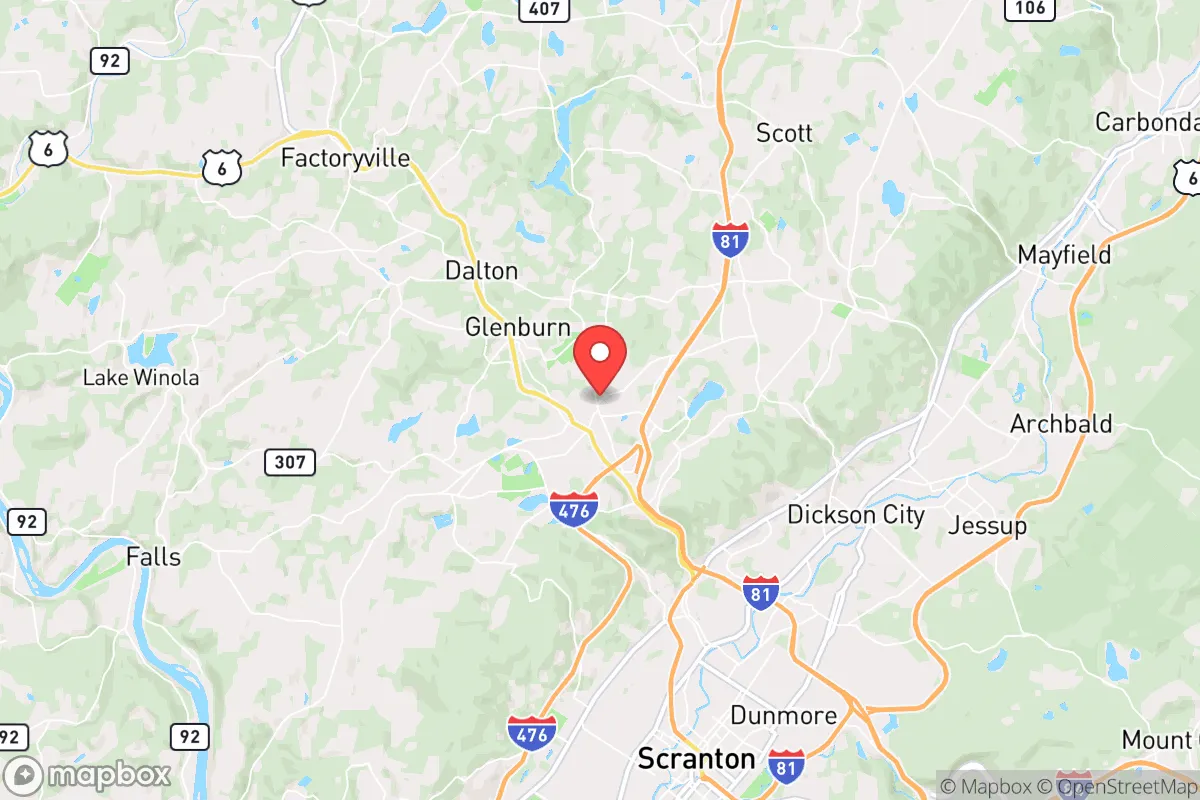
The most significant risk for Clarks Green is its proximity to what could be considered high-value targets in a major conflict or terrorist event. The borough lies roughly 10 miles from the Scranton/Wilkes-Barre urban core, which includes the Wilkes-Barre/Scranton International Airport (a potential military logistics hub) and the I-81/I-476 interchange—a critical transportation corridor. More concerning is the presence of the Susquehanna Steam Electric Station, a nuclear power plant located about 30 miles southwest in Berwick. While the plant is designed to modern safety standards, its proximity means that a major accident or targeted attack could create a fallout plume affecting the Clarks Green area, depending on wind patterns. Additionally, the region is within 120 miles of New York City and Philadelphia, both of which are high-probability targets for nuclear or EMP attacks. In a worst-case scenario, Clarks Green would likely see a significant influx of refugees from those cities, straining local resources. The area also sits near the Pocono Mountains, which contain several large natural gas storage facilities and pipelines, including the Transco pipeline corridor—a potential target for sabotage. For a relocator, these risks are real but manageable with proper planning: the key is to have a bug-in strategy that accounts for potential fallout sheltering and a plan to secure property against transient populations.
Practical resilience for a relocator: food, water, energy, and defensibility
Clarks Green offers a surprisingly strong foundation for practical self-sufficiency, though it requires active effort. Water is the area’s standout resource: the region receives an average of 40-45 inches of rainfall annually, and the Lackawanna River and numerous smaller creeks provide surface water sources. The borough’s municipal water supply comes from the Lackawanna River Basin, but a relocator should plan for a backup—a well on a private property is ideal, but many homes in the borough are on town water. Rainwater catchment is feasible, though local regulations may require permits. Food production is viable: the growing season runs from mid-May to early October (roughly 140 frost-free days), suitable for cold-hardy crops like potatoes, kale, and root vegetables. The surrounding farmland in Lackawanna and Wyoming counties is among the most productive in Pennsylvania for dairy and hay, and local farmers’ markets (like the Scranton Cooperative Farmers Market) provide access to fresh produce. For long-term storage, the area’s cool, dry climate is excellent for root cellaring. Energy is a mixed picture: the grid is moderately reliable, but winter storms can cause multi-day outages. Solar potential is decent—the region gets about 4.5 peak sun hours per day in summer—but winter cloud cover reduces output significantly. A backup generator (propane or diesel) is strongly recommended, and wood heat is a viable option given the abundance of hardwood forests. Defensibility is moderate: Clarks Green is a compact borough (about 0.5 square miles) with a grid-like street layout, which is not ideal for perimeter defense. However, the surrounding rural areas offer better options—properties on the outskirts with long driveways, natural tree lines, and limited road access are available within a 15-minute drive. The local community is tight-knit, with a strong volunteer fire department and a police force that covers the borough and surrounding Clarks Summit. For a relocator, the practical takeaway is that Clarks Green is a good base for a prepared household, but not a standalone fortress—it requires active investment in water storage, food production, and energy backup.
Overall, Clarks Green offers a balanced strategic picture for the disaster-conscious relocator. Its natural advantages—elevation, water availability, and moderate climate—are genuine assets, and its position within a region with a strong agricultural heritage provides a foundation for long-term self-sufficiency. The risks are real but manageable: proximity to potential targets and urban centers means a relocator must plan for refugee influx and fallout scenarios, but the area’s topography and resource base make it far more resilient than most suburban or exurban locations in the Northeast. For a family or individual willing to invest in backup systems and community integration, Clarks Green represents a solid, if not perfect, choice for a strategic relocation. The key is to treat it as a base camp, not a bunker—and to build relationships with the local farming and outdoor communities that already practice the self-reliance this analysis values.

* Values derived from national, state, county, city and local statistics and may differ in a specific area. Last updated: 2026-10-10T16:27:11.000Z
Narrative content on this page is AI-generated and may contain mistakes. Verify any details that matter before acting on them.
ReloMaps may earn a commission from affiliate links at no extra cost to you.

