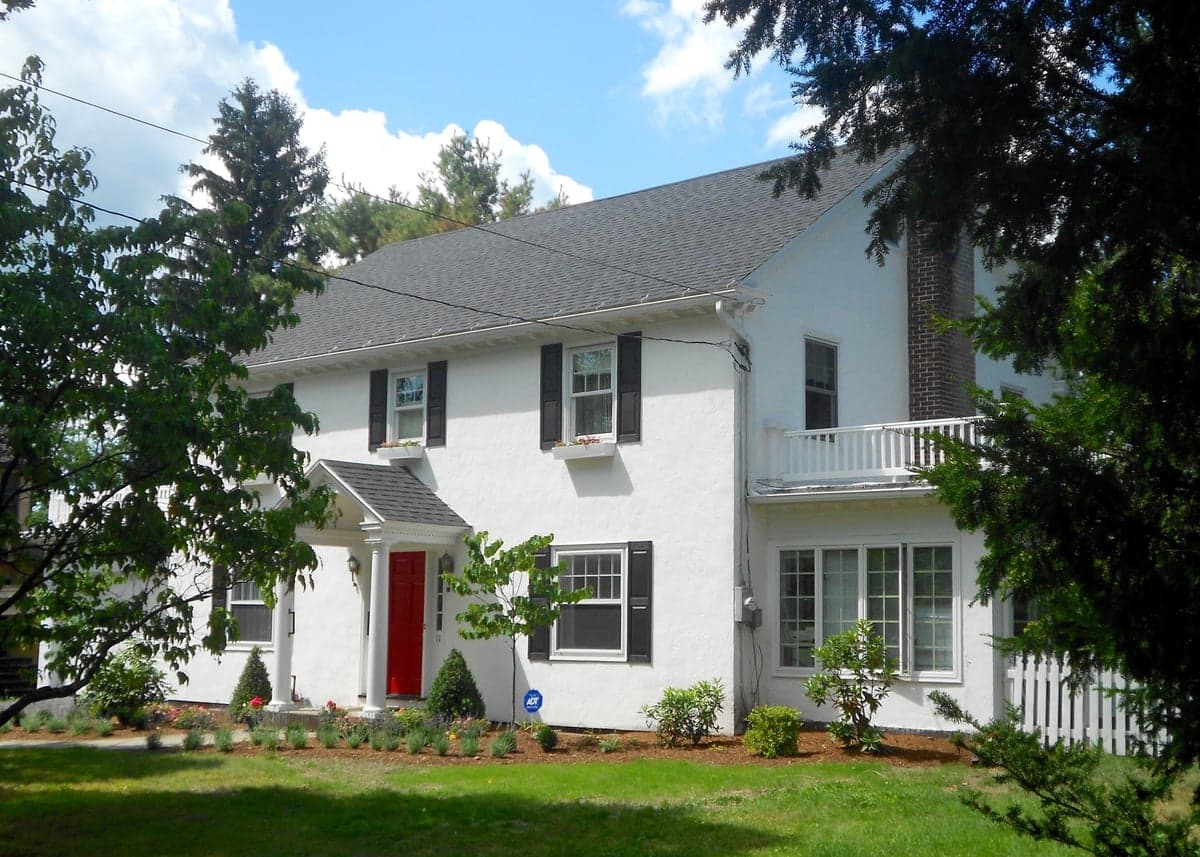
Photo: Wikipedia
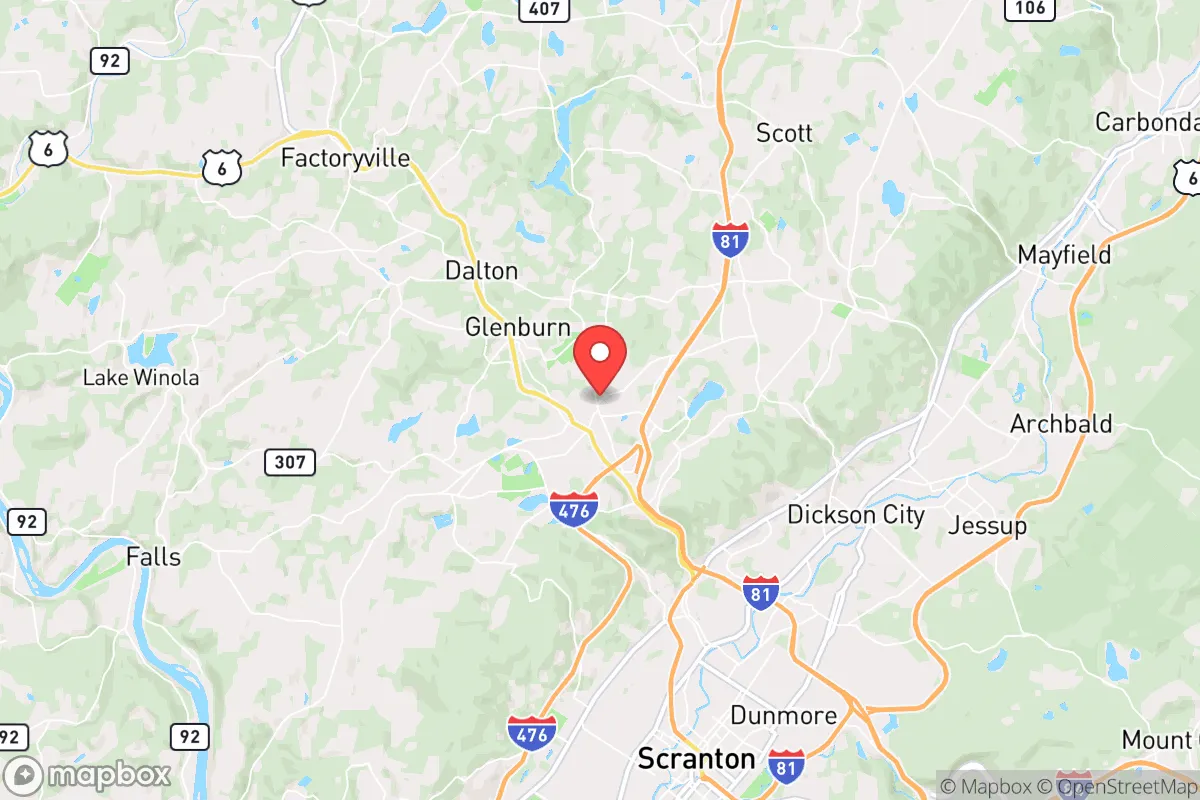
Personal Sovereignty in Clarks Green, PA
Strong independent fundamentals that actively favor personal liberty and low regulation.
What does Personal Sovereignty tell us?
Personal Sovereignty measures your capacity for self-reliance and independence with minimal government friction. Higher scores mean fewer barriers between you and the way you want to live... but it assumes you have the space you need and good neighbors.
What does this tell us?
Personal Sovereignty measures your capacity for self-reliance and independence with minimal government friction. Higher scores mean fewer barriers between you and the way you want to live... but it assumes you have the space you need and good neighbors.
State Policy
Energy independence: Net exporter (150% of energy produced in-state)
Personal Liberty
Homesteading

Personal Liberty Analysis
Clarks Green, Pennsylvania, offers a personal sovereignty environment shaped by the state’s strong tradition of local control and a relatively light regulatory touch, particularly in areas like property rights and self-defense. While Pennsylvania is not a libertarian free-for-all, its legal framework generally respects individual autonomy, especially when compared to neighboring states like New York or New Jersey. For a conservative-leaning individual or family, Clarks Green provides a solid baseline of personal freedom, with the key trade-offs being moderate property taxes and a state-level income tax that funds a robust public infrastructure.
Tax burden and regulatory posture in Clarks Green
Pennsylvania’s tax structure is a mixed bag for those prioritizing low fiscal burden. The state levies a flat personal income tax of 3.07%, one of the lowest flat rates in the nation, which is a clear advantage for earners. However, property taxes in Lackawanna County, where Clarks Green is located, are above the national average. The effective property tax rate in the borough is approximately 1.8% of assessed home value, driven largely by school district levies. This is a meaningful cost for homeowners, but it funds well-regarded local schools like Abington Heights School District, which many families view as a worthwhile trade-off. On the regulatory side, Pennsylvania is a Dillon’s Rule state, meaning municipalities only have powers expressly granted by the state. In practice, this limits Clarks Green’s ability to impose overly burdensome local ordinances. The borough itself is small (roughly 1.5 square miles) and maintains a light-touch zoning code that primarily governs land use rather than personal behavior. There are no local income taxes beyond the state level, and business licensing requirements are minimal for home-based operations. The state’s regulatory climate for small businesses is ranked in the middle of the pack nationally, but for an individual or family not running a heavily regulated enterprise, the day-to-day regulatory friction is low.
Self-defense and gun law specifics in Pennsylvania
Pennsylvania is a shall-issue state for concealed carry permits, meaning that if you meet basic criteria (age 21, no felony record, no involuntary mental health commitment), the county sheriff must issue a license. Lackawanna County processes these permits efficiently, typically within 45 days. Open carry is legal without a permit for anyone who can legally possess a firearm, though it is restricted in Philadelphia. For residents of Clarks Green, this means carrying a firearm for self-defense is straightforward and legally protected. The state also has a preemption law that prohibits municipalities from enacting their own firearm ordinances, so Clarks Green cannot impose local bans on carry in parks or other public spaces. Stand-your-ground laws are in effect: Pennsylvania does not impose a duty to retreat before using deadly force if you are in a place where you have a legal right to be. Castle Doctrine protections are strong, covering both your home and your vehicle. Magazine capacity is not restricted, and there is no state-level assault weapons ban. For a gun owner, Pennsylvania’s legal framework is among the most permissive in the Northeast, offering a high degree of personal sovereignty in self-defense decisions.
Self-reliance and homesteading viability in Clarks Green
Clarks Green is a densely developed borough with typical lot sizes ranging from 0.25 to 0.5 acres. This limits large-scale homesteading, but small-scale self-reliance is feasible. Zoning permits backyard chickens in most residential areas, though roosters are typically prohibited due to noise ordinances. Vegetable gardens, composting, and rainwater collection for non-potable uses are allowed without special permits. The borough’s code does not explicitly address off-grid systems like solar panels or greywater recycling, but Pennsylvania’s statewide Uniform Construction Code generally allows solar installations as a permitted use, subject to standard building permits. For those seeking more land, rural areas within a 15-minute drive, such as South Abington Township or Dalton, offer parcels of 2 to 10 acres with agricultural zoning that permits livestock, larger gardens, and even small-scale farming. The growing season in northeastern Pennsylvania is about 150 days, suitable for cool-weather crops like potatoes, kale, and apples. Water access is straightforward: most homes are on public water, but well water is common in surrounding townships. Off-grid living is legally possible in unincorporated areas, though the state requires connection to a septic system and compliance with building codes. For a family wanting to produce a meaningful portion of their own food, Clarks Green itself is too small, but the surrounding region offers viable options within a short commute.
Personal liberties in Clarks Green: parental rights, medical autonomy, speech, and property
Pennsylvania has a strong tradition of protecting parental rights in education. The state does not mandate any specific curriculum for private or homeschooled children beyond basic subject requirements, and parents have broad latitude to choose educational methods. Homeschooling is regulated but not onerous: parents must file a notarized affidavit annually and maintain a portfolio of work, but there are no standardized testing requirements for homeschoolers. Medical autonomy is more mixed. Pennsylvania has a state-level vaccine mandate for school attendance, but medical and religious exemptions are available. The state does not have a right-to-try law for experimental treatments, but it does allow terminally ill patients to access investigational drugs under federal law. On speech, Pennsylvania’s constitution provides robust protections, and Clarks Green has no local ordinances restricting signs, leafleting, or public assembly. Property rights are well-protected: eminent domain is limited to public use projects, and the state’s Agricultural Area Security Law helps preserve farmland from overdevelopment. There is no state-level rent control, and short-term rentals like Airbnb are permitted in Clarks Green with a simple business license. For a family or individual who values making their own decisions about health, education, and property use, Pennsylvania’s legal environment is generally supportive, with the main constraint being the state’s vaccine mandate for school attendance.
Overall, Clarks Green offers a personal sovereignty profile that is strong for the Northeast, with clear advantages in self-defense law, parental educational choice, and property rights. The main trade-offs are moderate property taxes and a state-level income tax that funds public services many residents value. Compared to areas like New York’s Hudson Valley or New Jersey’s Bergen County, Clarks Green provides significantly more autonomy in daily life, particularly for gun owners and those who want to homeschool or run a small business. For a conservative-leaning individual or family seeking a balance between personal freedom and access to good schools and infrastructure, Clarks Green represents a solid, middle-of-the-road choice that avoids the extremes of both high-regulation urban centers and completely unregulated rural areas.

* Values derived from national, state, county, city and local statistics and may differ in a specific area. Last updated: 2026-10-10T16:27:11.000Z
Narrative content on this page is AI-generated and may contain mistakes. Verify any details that matter before acting on them.
ReloMaps may earn a commission from affiliate links at no extra cost to you.

