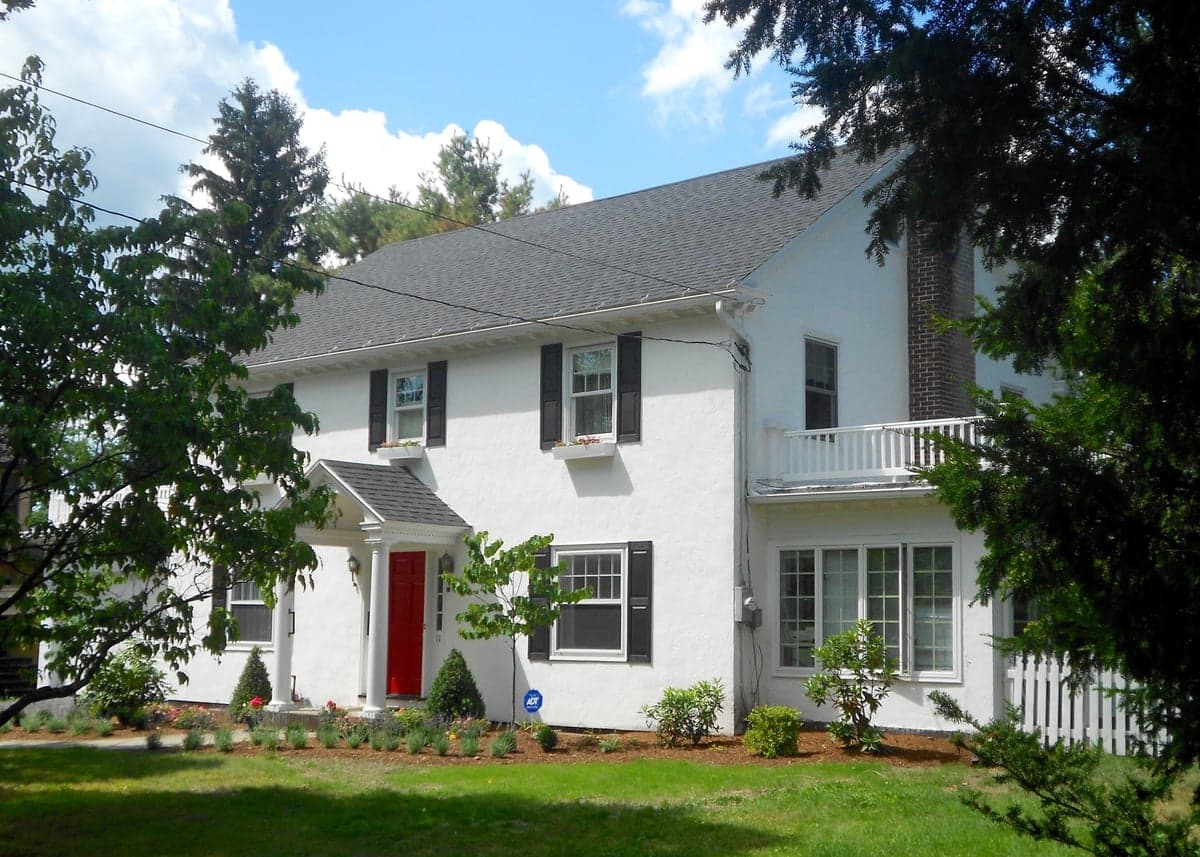
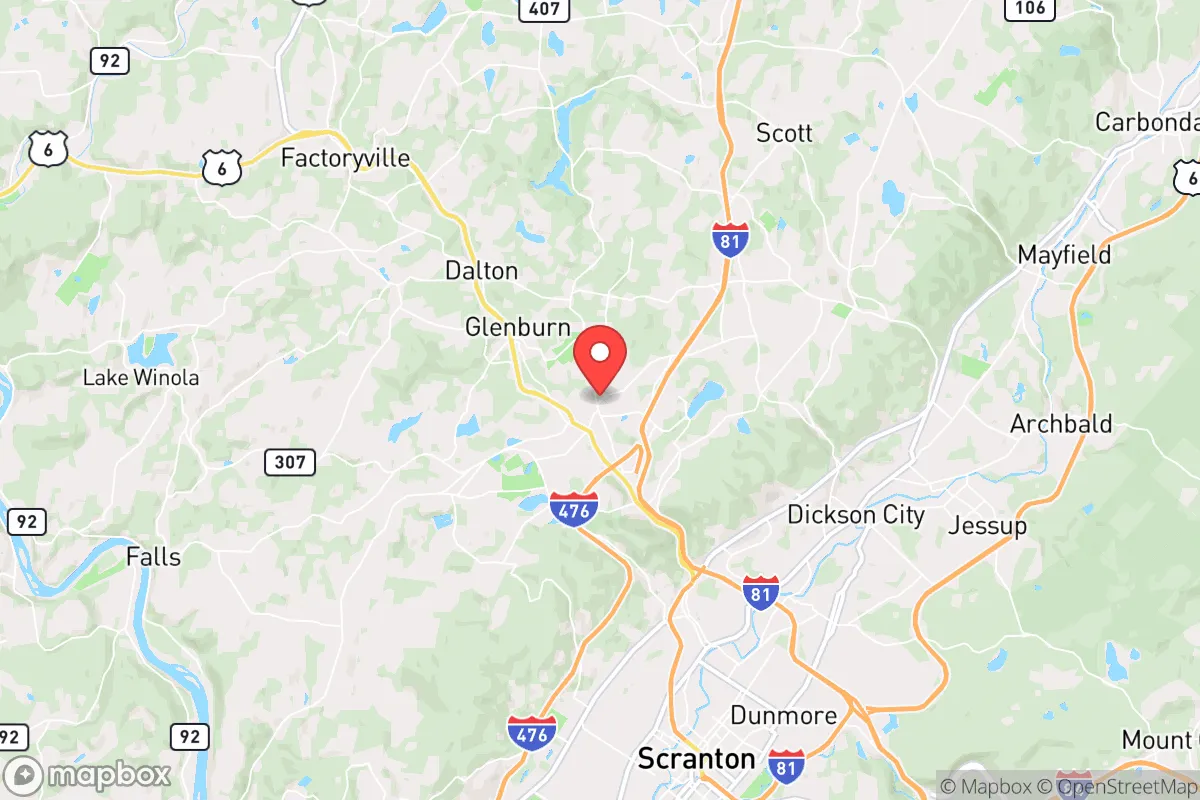
Photo: Wikipedia
Demographics of Clarks Green, PA
Affluence Level in Clarks Green, PA
An upper-middle-class area. Household wealth, education levels, and homeownership run ahead of national benchmarks.
People of Clarks Green, PA
Clarks Green, Pennsylvania, is a small, tightly-knit borough of 1,594 residents that blends historic New England-style village character with a modern, highly educated professional base. The population is predominantly white (89.1%) with a notable and growing Indian-subcontinent community (5.8%), giving the borough a distinctive demographic profile compared to surrounding Lackawanna County towns. With a median age around 40 and a college attainment rate of 55.9%, Clarks Green is a place where established families and professionals seeking top-ranked schools and a quiet, walkable environment have increasingly concentrated.
How the city was settled and grew
Clarks Green was originally part of the 1787 Abington Township settlement, carved from the larger Providence Township. The land was granted to Revolutionary War veterans, and the first permanent settlers—primarily English and Welsh farmers—arrived in the early 1800s. The borough itself was incorporated in 1849, named after the Clark family, who owned much of the central land. The arrival of the Delaware, Lackawanna & Western Railroad in the 1850s transformed Clarks Green from a rural crossroads into a commuter suburb for Scranton’s growing industrial elite. The historic Clark’s Green Village district, centered around the intersection of North Abington Road and State Street, was built by these early Anglo-Protestant families, with many of the original Federal and Greek Revival homes still standing. A second wave of Irish and German immigrants arrived in the late 19th century to work on the railroad and in the nearby coal fields, settling in the East Clarks Green area along Grove Street and East Grove Street, where smaller worker cottages and rowhouses were built. The borough remained a small, overwhelmingly white, Protestant enclave through the mid-20th century, with its population peaking at around 1,800 in the 1950s.
Modern era (post-1965)
The post-1965 period saw Clarks Green evolve from a sleepy commuter suburb into a magnet for professionals drawn by the Abington Heights School District, consistently ranked among Pennsylvania’s best. The borough’s population stabilized after a slight decline in the 1970s, and the character shifted from working-class railroad families to a more affluent, college-educated base. The most significant demographic change began in the 1990s and accelerated after 2000: the arrival of Indian-subcontinent professionals, many employed in healthcare (Geisinger, Moses Taylor Hospital) and information technology. This community concentrated in the Newton-Ransom Boulevard corridor and the newer subdivisions off North Abington Road, such as the Hickory Ridge development, where larger single-family homes built in the 1990s and 2000s attracted families seeking good schools. Today, Indian-subcontinent residents make up 5.8% of the population—a share roughly 10 times the county average—while East/Southeast Asian residents (0.3%) and Hispanic residents (2.4%) remain small but present. The Black population (0.6%) is minimal. The foreign-born share (1.6%) is low overall, indicating that most Indian-subcontinent residents are likely second-generation or long-established families rather than recent immigrants.
The future
Clarks Green’s population is projected to remain stable or grow very slowly, constrained by limited developable land and strict zoning that preserves the borough’s historic character. The Indian-subcontinent community is likely to continue growing as families already in the area attract relatives and as professionals from nearby Scranton and Wilkes-Barre seek the school district. New construction is concentrated in the South Abington Township border area, particularly around Winola Road and Linden Street, where infill townhomes and small-lot single-family homes are being built. The overall population is becoming slightly more diverse, but the borough will remain predominantly white and highly educated. The cultural identity is shifting from a purely Anglo-American historic village to a more multi-ethnic professional suburb, though this change is gradual and largely confined to the newer subdivisions rather than the historic core.
For a family or individual moving in now, Clarks Green offers a stable, low-crime environment with exceptional schools and a strong sense of community, but little rental housing or ethnic diversity outside the Indian-subcontinent professional class. The borough is becoming a quiet, prosperous haven for educated families who value tradition and academic excellence over urban amenities or rapid change.

* Values derived from national, state, county, city and local statistics and may differ in a specific area. Last updated: 2026-10-10T16:27:11.000Z
Narrative content on this page is AI-generated and may contain mistakes. Verify any details that matter before acting on them.
ReloMaps may earn a commission from affiliate links at no extra cost to you.

