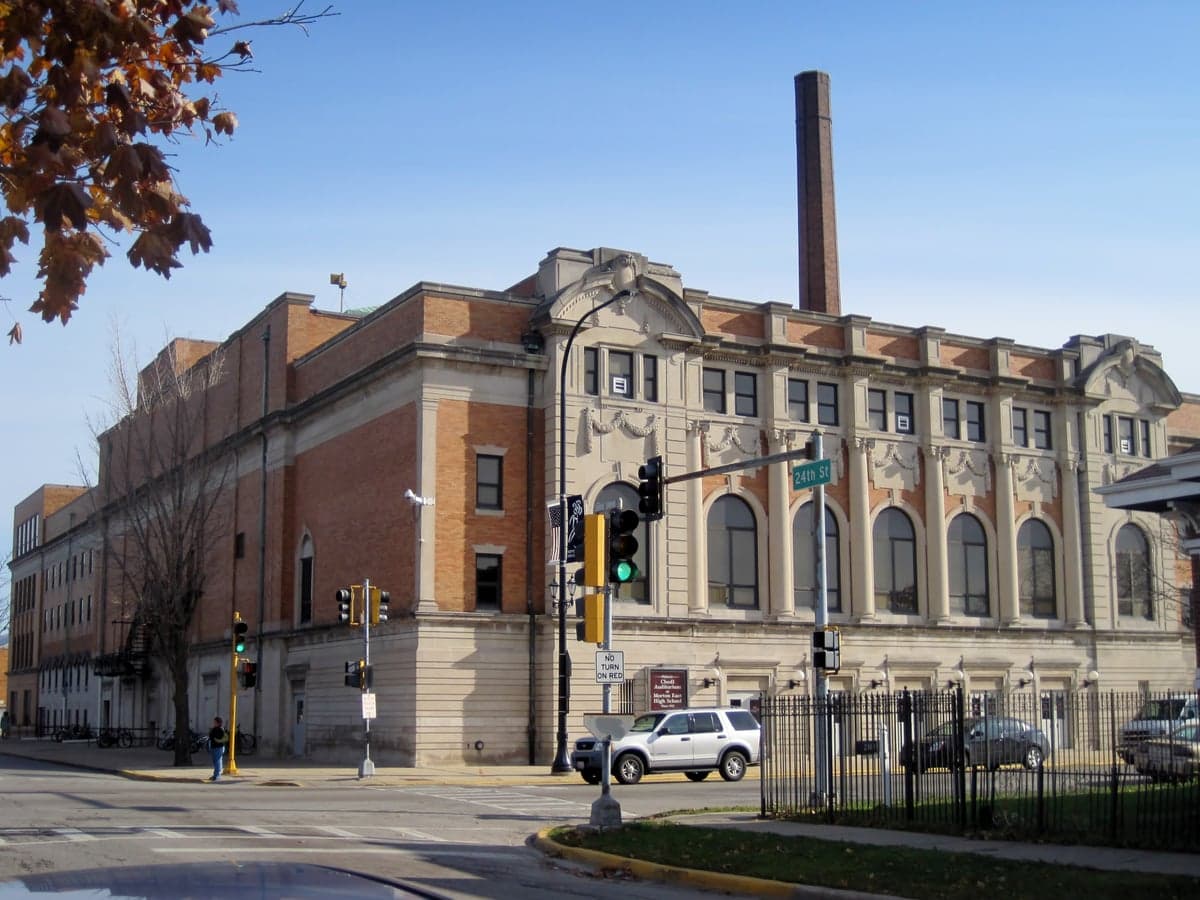
Photo: Wikipedia
Strategic Assessment of Cicero, IL
Multiple tactical vulnerabilities. Population density, target proximity, or disaster risk are likely compounding. A retreat property and exit planning is required.
What does the Strategic Assessment tell us?
Our Strategic Assessment grades tactical survivability of an area. Major population centers, military targets, fallout zones, natural disasters, and border exposure all drive risk — lower exposure means a more defensible position in a crisis.
This is heavily inspired by Joel Skousen's Strategic Relocation book. Highly recommended you checkout the book ($)What does this tell us?
Our Strategic Assessment grades tactical survivability of an area. Major population centers, military targets, fallout zones, natural disasters, and border exposure all drive risk — lower exposure means a more defensible position in a crisis.
This is heavily inspired by Joel Skousen's Strategic Relocation book. Highly recommended you checkout the book ($)Strategic Pillars

Key Distances
Regional Safe Places
Below is our recommended "safe zones" in Illinois and the surrounding area based on our strategic heuristics. For most people, it's unrealistic to live in a “safe zone” full-time due to work, family or other personal reasons. They tend to be more rural. However, many of these areas are perfect for second homes and retreat properties that double as a vacation home or even a short-term rental.
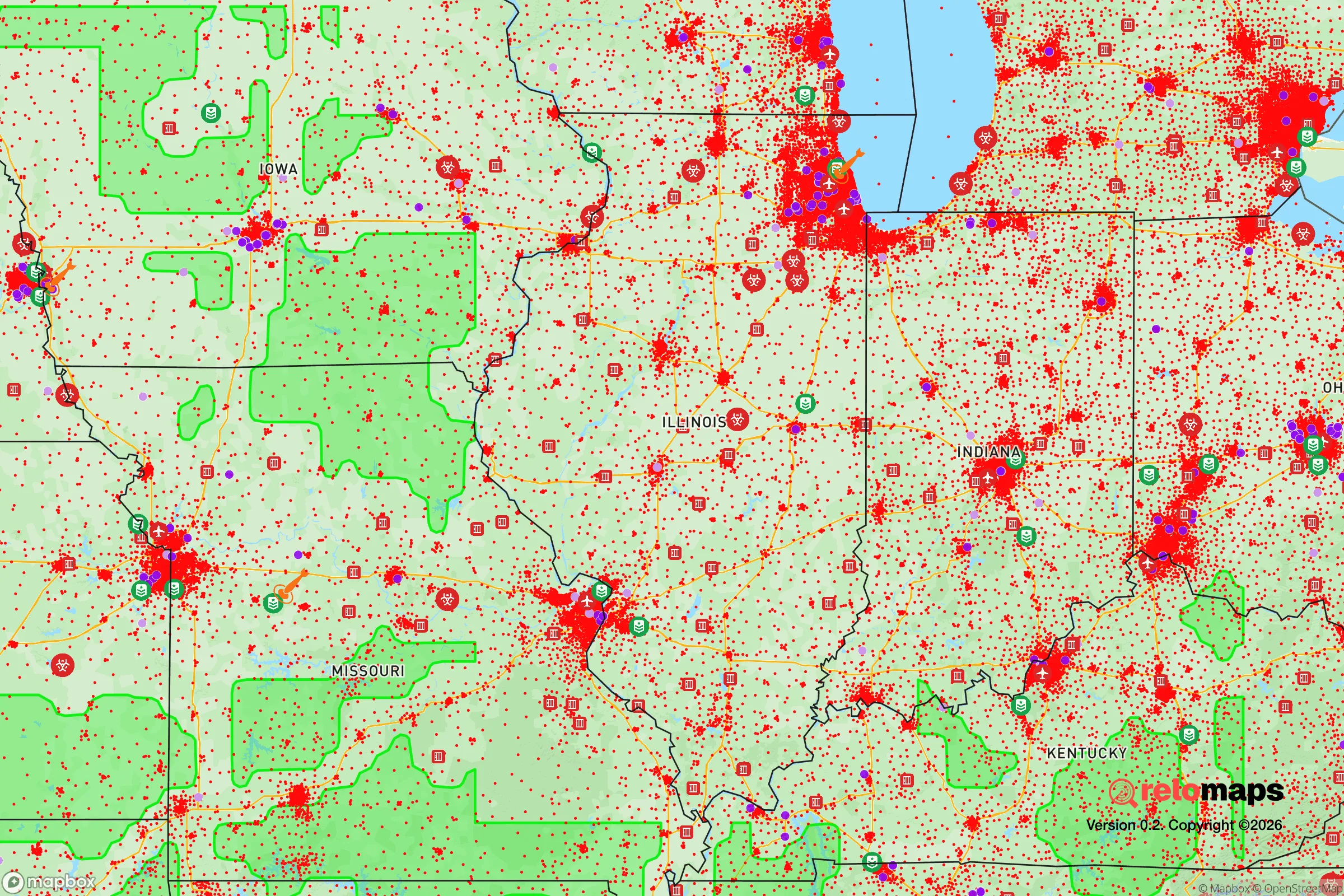
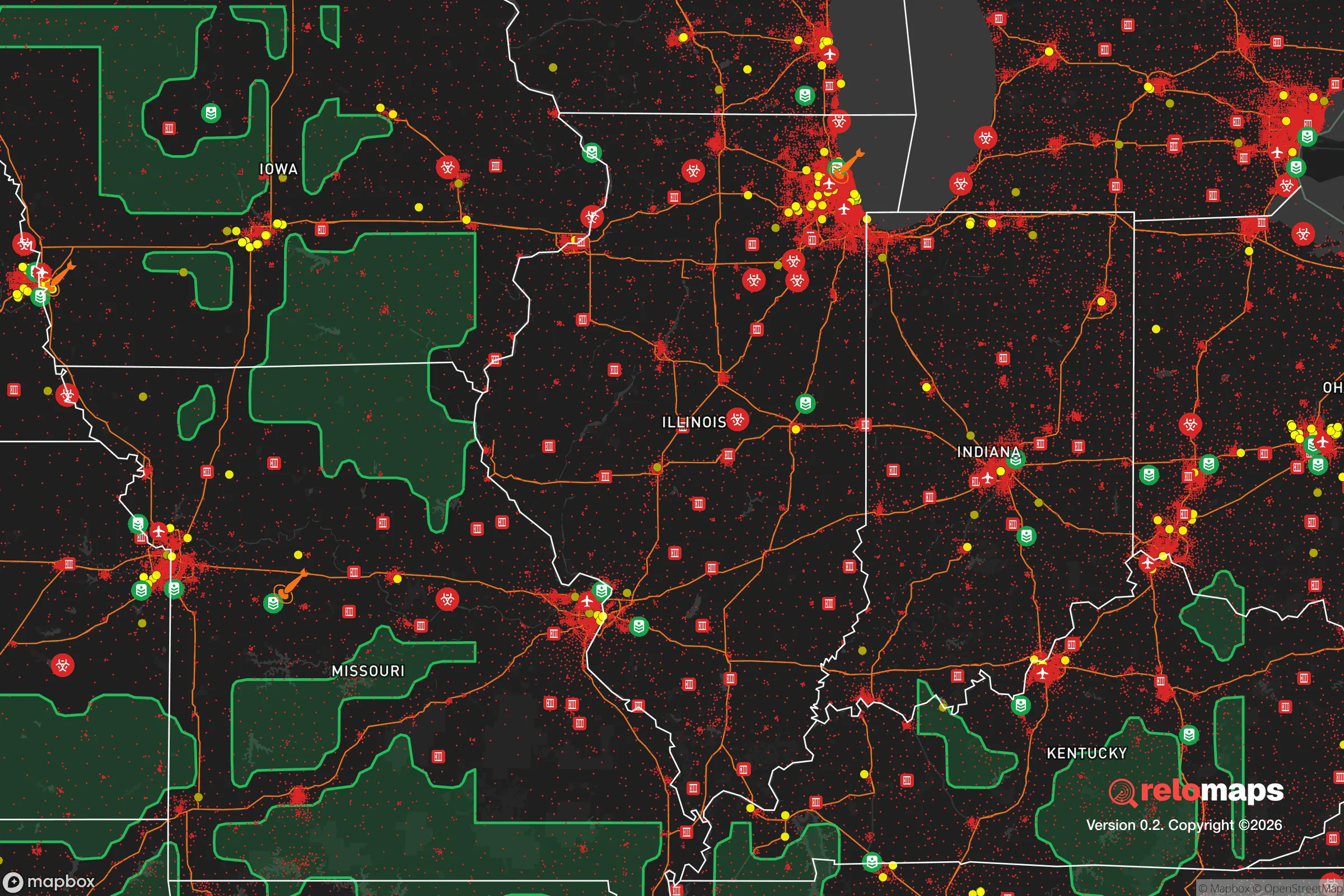


Important Note: For informational purposes only. This does not mean nothing bad ever happens in the green zones. Please use common sense. This is based on public data and modeled with AI. We tried to take a conservative approach but mistakes happen. We update this regularly as new information becomes available.
Solar Generator Recommendations
Backup power matters more here than in safer locations. We've picked three solar generators across budgets and capacity tiers — start with the budget unit if you only need a few essentials, or step up if you want to run a fridge and HVAC for days at a time.

Jackery Portable Power Station Explorer 300
Budget OptionPower on the Go: Weighing only 11 lbs, it's convenient to set up and store with book-sized foldable solar panels

BLUETTI Portable Power Station AC180
Designed for both indoor and outdoor scenarios, AC180 is highly capable as it has a robost capacity and continuous output power.

EF ECOFLOW DELTA Pro Ultra Power Station
Upgraded PickEcoFlow DELTA Pro Ultra is a whole-home energy system designed to grow with your family. Integrated with the Smart Home Panel 2, it scales to meet your evolving energy needs — keeping your home powered, intelligent, and secure through every stage of life.
We earn a commission, at no additional cost to you.
Strategic Assessment Analysis
Cicero, Illinois, presents a complex strategic picture for the conservative prepper or survivalist. While its location offers certain logistical advantages in terms of transportation and industrial infrastructure, its proximity to Chicago and dense urban environment introduce significant vulnerabilities that must be weighed carefully. The town’s resilience is a double-edged sword: it benefits from established supply chains and a working-class ethos, but it sits squarely within a high-risk zone for civil unrest, mass casualty events, and the cascading failures that follow a major disaster. For a relocator prioritizing long-term security and self-sufficiency, Cicero demands a clear-eyed assessment of its trade-offs.
Geographic position and natural advantages for long-term survival
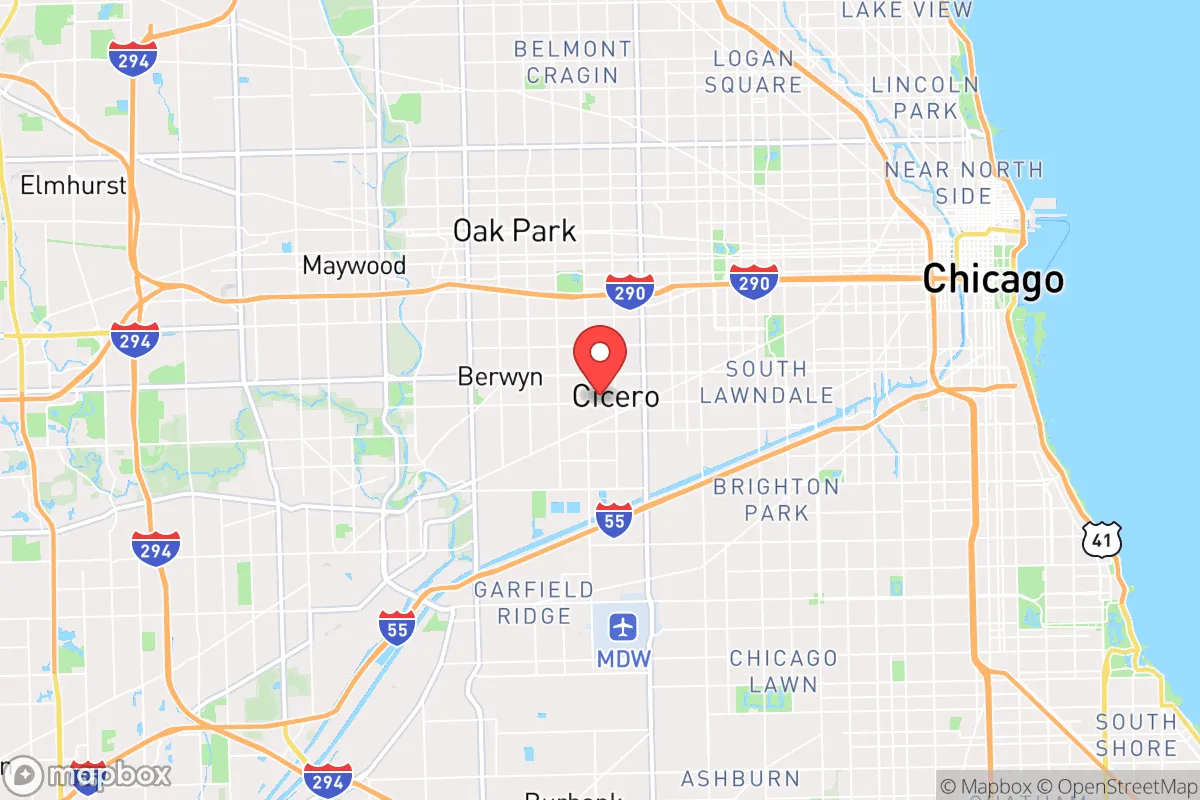
Cicero’s geographic position is defined by its adjacency to Chicago—roughly 8 miles west of the Loop—and its location within the broader Chicago metropolitan area. This places it near major transportation arteries, including Interstate 290 (the Eisenhower Expressway), Interstate 55, and the Stevenson Expressway, as well as rail lines and the Chicago Sanitary and Ship Canal. For a prepper, these routes offer potential for movement of supplies or evacuation, but they also represent choke points that could become impassable during a crisis. The area’s natural advantages are limited: Cicero sits on flat, former prairie land with no significant elevation changes, no natural barriers like rivers or mountains, and no nearby forests for cover or foraging. The Des Plaines River runs to the west, but it is heavily industrialized and not a reliable source of clean water without extensive filtration. The town’s soil is fertile, but the urban footprint leaves little room for meaningful agriculture—backyard gardens are possible but insufficient for long-term food security. The climate is typical of the Midwest: cold winters with snow and ice, hot summers with thunderstorms, and a risk of tornadoes. This means a relocator must plan for seasonal extremes, including potential power outages from winter storms or summer heat waves. Overall, Cicero’s natural advantages are minimal; its value lies in its man-made infrastructure, which is both a strength and a liability.
Risks, exposures, and proximity to fallout-relevant landmarks
The most glaring risk for a survivalist in Cicero is its proximity to Chicago, a major population center that is a prime target for civil unrest, terrorist attacks, or mass casualty events. Chicago’s history of riots, protests, and crime spikes—such as the 2020 unrest that saw looting and arson spread to nearby suburbs—demonstrates how quickly instability can radiate outward. Cicero itself has a dense population of over 83,000 people in just 4.5 square miles, making it one of the most crowded towns in Illinois. In a crisis, this density becomes a liability: evacuation routes would clog, resources would deplete rapidly, and the risk of violence from desperate individuals would spike. The town is also near several fallout-relevant landmarks. The Argonne National Laboratory, about 15 miles southwest, is a nuclear research facility that could be a target or a source of contamination in a major event. The O’Hare International Airport, roughly 10 miles north, is a high-value target for any coordinated attack. Additionally, the Chicago Sanitary and Ship Canal and the nearby oil refineries in the southwest suburbs (like the ExxonMobil Joliet Refinery) represent industrial hazards that could cause chemical spills or explosions. The presence of rail lines carrying hazardous materials through Cicero adds another layer of risk. For a prepper, these exposures mean that a major disaster—whether natural, man-made, or geopolitical—could quickly turn Cicero into a dangerous zone with limited escape options. The town’s lack of defensible terrain, such as hills or forests, further compounds the problem; there are few places to retreat to or fortify within the immediate area.
Practical resilience for a relocator: food, water, energy, and defensibility
For a relocator considering Cicero, practical resilience requires a hard look at the basics. Food security is poor: the town has no significant agricultural land, and local grocery stores rely on just-in-time supply chains that would fail within days of a disruption. Stockpiling is essential, but space is at a premium in the dense housing stock, which consists mostly of older single-family homes, duplexes, and apartment buildings. Water is a major concern: Cicero gets its water from Lake Michigan via the Chicago water system, which is vulnerable to contamination, pump failures, or sabotage. A backup plan—such as a well, rainwater collection, or stored water—is non-negotiable, but drilling a well in this urban area is often impractical or illegal. Energy reliability is moderate: the grid is part of the ComEd system, which has seen outages from storms and equipment failures. Solar panels are possible but may be restricted by homeowners’ associations or local codes, and natural gas is the primary heating fuel. A generator and fuel storage are wise investments, but noise and space constraints make them challenging in close quarters. Defensibility is the weakest link: Cicero’s flat, grid-like street layout offers no natural chokepoints, and the high population density means neighbors are close—good for community but bad for security. The town’s police force is active, but during a widespread crisis, response times would lengthen dramatically. The working-class character of Cicero does offer one advantage: many residents have blue-collar skills—mechanical, construction, or trade expertise—that could be valuable in a post-disaster scenario. However, this is offset by the area’s crime rate, which is above the national average, with property crime being a particular concern. For a relocator, Cicero is a location that demands constant vigilance and a robust prepping strategy, not a place where one can relax into self-sufficiency.
The overall strategic picture for Cicero is one of high risk with limited reward for the survivalist-minded relocator. Its location near Chicago and its dense urban fabric make it a poor choice for those seeking a secure, defensible retreat. The town’s infrastructure is a double-edged sword: it provides access to supplies and transportation but also creates dependencies that are fragile in a crisis. For a conservative prepper concerned with civil unrest, mass casualty events, and societal collapse, Cicero is best viewed as a temporary waypoint or a location to avoid unless one has a specific reason to be there—such as family ties or a job that cannot be relocated. The prudent move is to look farther west or south, where lower population density, more land, and better natural defenses offer a stronger foundation for long-term resilience. Cicero’s working-class grit is admirable, but in a world where the grid could fail and the cities could burn, grit alone won’t keep you safe.

* Values derived from national, state, county, city and local statistics and may differ in a specific area. Last updated: 2026-04-29T19:08:57.000Z
Narrative content on this page is AI-generated and may contain mistakes. Verify any details that matter before acting on them.
ReloMaps may earn a commission from affiliate links at no extra cost to you.

