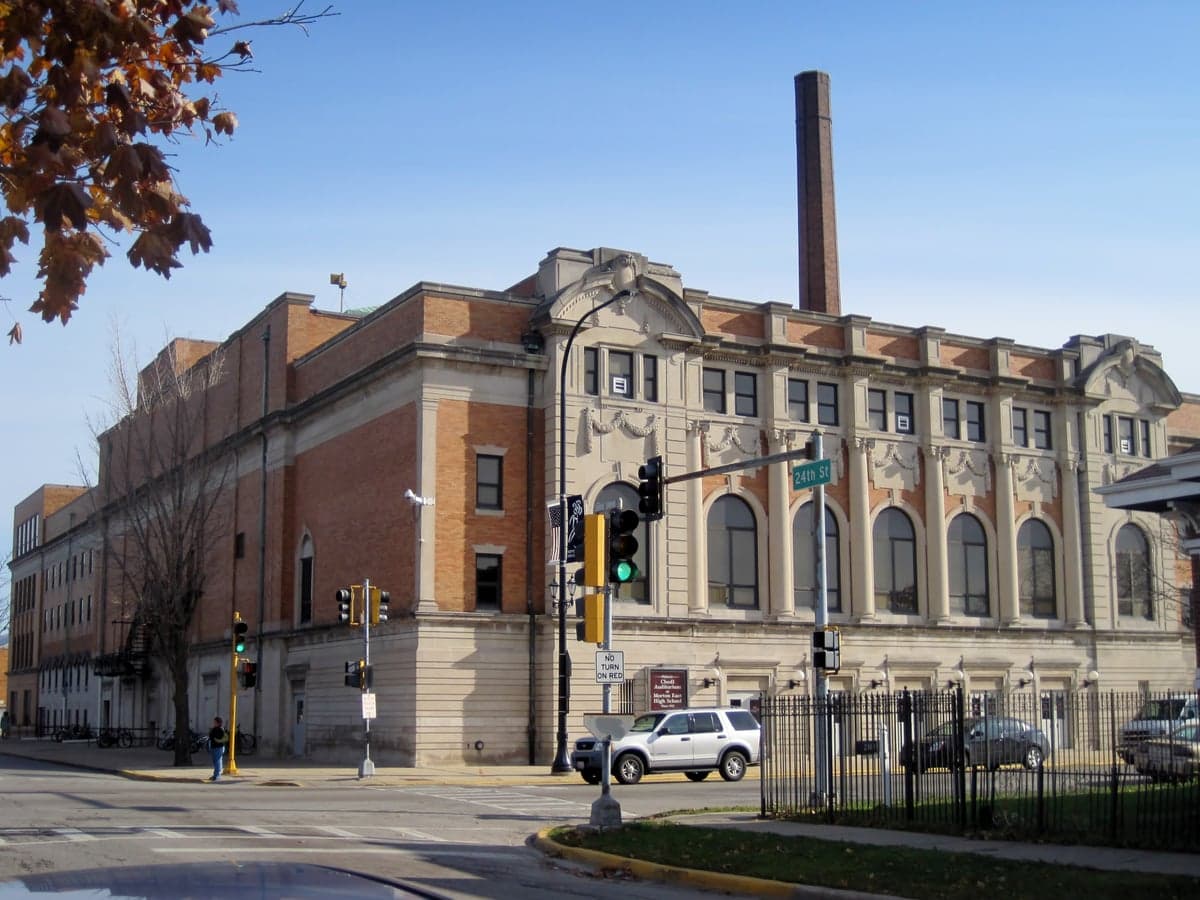
Photo: Wikipedia
Political ClimatePolitical Climate in Cicero, IL
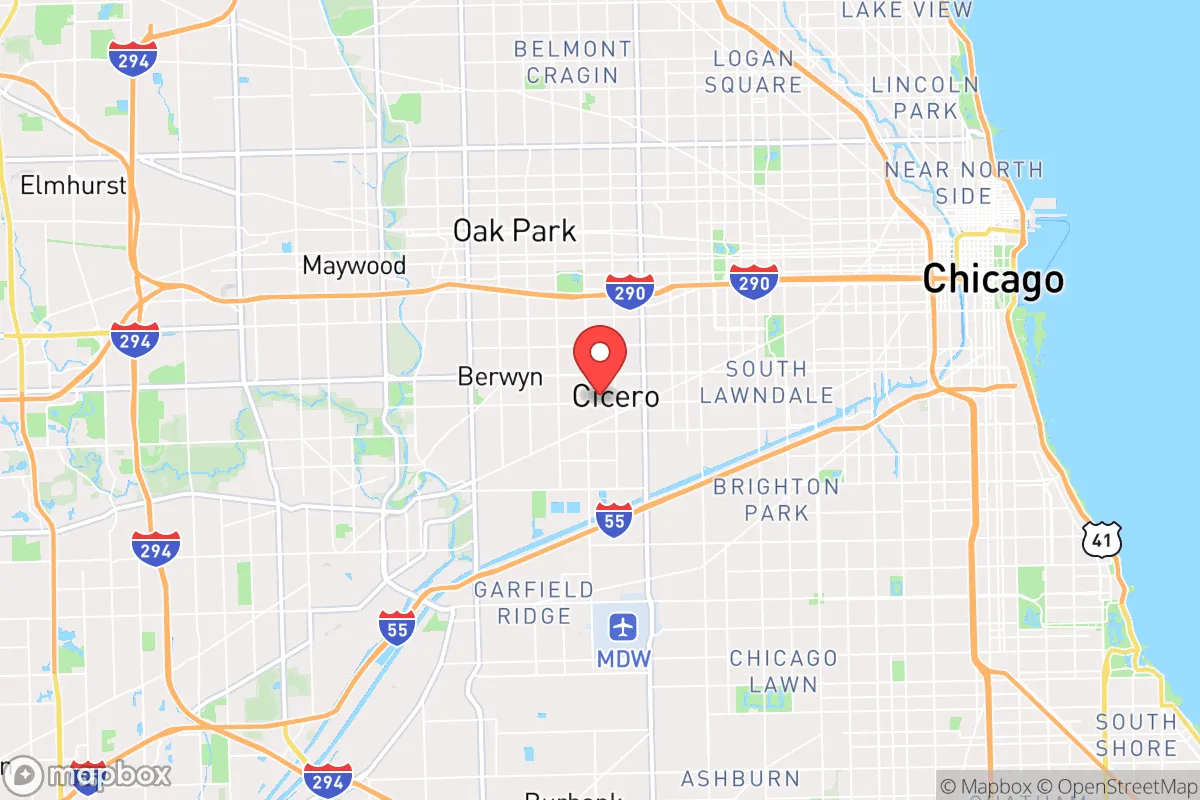
District shown is the primary district for this city’s centroid. Cities may span multiple districts.
Local Political AnalysisPolitical Analysis of Cicero, IL
Cicero, Illinois, is a deep blue stronghold, and it’s been that way for a long time. The Cook PVI of D+17 tells you the headline: Democrats have a massive built-in advantage here, and that’s not changing anytime soon. But if you’ve lived here as long as I have, you know the real story isn’t just about party registration—it’s about how that political machine has shifted from a more moderate, working-class pragmatism into something that feels a lot more like top-down control. The old Cicero was about getting the job done and keeping the streets safe; the new Cicero is about aligning with a state government that seems to forget we exist unless they need our votes.
How it compares
Drive ten minutes west to Berwyn, and you’ll find a similar blue tilt, but with a more independent streak—people there still vote Democrat, but they’re quicker to grumble about property taxes and school mandates. Head south to Stickney or Forest View, and you get a slightly more mixed bag, with pockets of conservative-leaning voters who feel like their voices are drowned out by the Chicago machine. The real contrast is just a few miles east: Chicago itself, where the progressive agenda is in full swing, with things like sanctuary city policies and a mayor who seems more focused on national politics than potholes. Cicero, by comparison, has historically been more about local control and keeping things orderly, but that’s eroding. The state legislature in Springfield, which is even bluer than Cicero, keeps passing laws that make it harder for towns like ours to push back—like the SAFE-T Act, which gutted cash bail and made it harder for local cops to hold repeat offenders. That’s not a partisan opinion; it’s a reality that anyone who’s had their car broken into twice in a year can feel in their gut.
What this means for residents
For the average family here, the political climate translates into a few concrete headaches. First, taxes: Cook County’s property tax burden is among the highest in the nation, and Cicero residents get no break. The local government has been cozy with the same political families for decades, and that means less competition and more of the same—higher fees, more regulations, and a feeling that your voice doesn’t matter unless you know the right person. Second, schools: Cicero’s public schools are underfunded and over-regulated by state mandates that prioritize social-emotional learning over basic math and reading. If you’re a parent who wants your kid to get a solid education without the political indoctrination, you’re looking at private or charter options, which are scarce and expensive. Third, public safety: the shift toward progressive criminal justice reforms has made it harder for Cicero police to do their jobs. You see more petty crime, more open drug use, and a general sense that the system is more worried about the rights of offenders than the rights of victims. It’s not a crisis yet, but it’s a slow bleed that worries anyone who remembers when you could leave your garage door open without a second thought.
On the cultural side, Cicero has a strong, proud working-class identity—mostly Hispanic and Eastern European families who value hard work, faith, and tradition. That’s been the backbone of the town for generations. But the political direction from Springfield and Cook County is pulling us away from that. You see it in the push for more government-funded programs that sound nice on paper but come with strings attached, like housing policies that prioritize “equity” over property rights, or health mandates that treat your personal medical decisions as public business. The long-term trend is concerning: if Cicero keeps following the same path as Chicago, we’ll end up with the same problems—higher crime, worse schools, and a government that treats you like a subject rather than a citizen. The hope is that enough of us remember what made this town work in the first place, and push back before it’s too late.

State Political ClimatePolitical Climate in Illinois
State Political AnalysisPolitical Environment in the State
Illinois is a deeply blue state in statewide elections, with Democrats holding every statewide office and supermajorities in both legislative chambers, but that blue veneer masks a political landscape that is far more fractured than the national narrative suggests. The state has shifted leftward over the past 20 years, driven overwhelmingly by the Chicago metro area, while the rest of Illinois has moved in the opposite direction. For a conservative considering relocation, the reality is that your experience will depend almost entirely on which of the state’s three distinct political zones you choose to live in.
Urban vs. rural divide
The political map of Illinois is a textbook case of the urban-rural chasm. Cook County, home to Chicago, casts roughly 40% of the state’s votes and delivers margins of 70-80% for Democrats. That alone is enough to decide every statewide race. The collar counties — DuPage, Lake, Kane, Will, and McHenry — were once reliably Republican but have been trending purple-to-blue since 2016, especially in suburban Chicago districts. For example, DuPage County, which voted for George W. Bush by 18 points in 2004, voted for Joe Biden by 8 points in 2020. Meanwhile, downstate Illinois — everything south of I-80 — is overwhelmingly red. Counties like Williamson, Effingham, and Adams routinely vote 70-75% Republican. The divide is so stark that downstate voters often refer to Chicago as “the state of Chicago” and feel completely disenfranchised by Springfield’s one-party rule. The city of Peoria is a rare purple island in a red sea, while Rockford in the north has become a Democratic stronghold thanks to union and minority voters. The result is a state where your vote literally counts for nothing if you live in a red county — your voice is drowned out by the Chicago machine.
Policy environment
Illinois’s policy environment is a cautionary tale for anyone who values limited government. The state has the second-highest property tax burden in the nation, with effective rates averaging over 2.0% — and in counties like Lake and DuPage, you can easily pay $8,000-$12,000 annually on a median home. The state income tax is a flat 4.95%, but a 2020 graduated income tax amendment (which failed) was a clear signal of where the legislature wants to go. Illinois is one of only a handful of states that taxes retirement income, including Social Security benefits, which is a major deterrent for retirees. On the regulatory front, Illinois has some of the strictest gun laws in the nation, including a 2023 ban on assault weapons and high-capacity magazines (the Protect Illinois Communities Act) that was pushed through without a single Republican vote. The state also mandates parental notification for abortion for minors, but otherwise has no meaningful parental rights protections in education. Election laws are deeply concerning: Illinois has no voter ID requirement, same-day registration, and automatic mail-in ballots for all registered voters — a system that conservatives view as ripe for fraud. The state’s sanctuary status, codified by the TRUST Act and the Keep Illinois Families Together Act, prohibits local law enforcement from cooperating with federal immigration authorities, making Illinois a magnet for illegal immigration and straining public resources.
Trajectory & freedom
On the freedom index, Illinois is moving in the wrong direction. The Protect Illinois Communities Act (2023) was the most significant expansion of government control over personal firearms in state history, banning hundreds of commonly owned rifles and magazines. The Healthcare Right of Conscience Act was gutted in 2021 to force medical providers to participate in abortion procedures, stripping away religious liberty protections. On the parental rights front, the state passed a law in 2021 requiring schools to adopt policies that affirm “gender identity” without parental notification, effectively allowing schools to socially transition children behind parents’ backs. The Worker Freedom of Speech Act (2024) banned mandatory union meetings, which was a rare win for individual liberty, but it was immediately challenged in court. Meanwhile, property rights are under constant assault from Chicago’s progressive tax agenda and downstate’s inability to push back against Springfield’s mandates. The state’s pension crisis — $140 billion in unfunded liabilities — means that every new resident is on the hook for decades of broken promises to public unions, and the state’s credit rating is the worst in the nation (just above junk status).
Civil unrest & political movements
Illinois has a long history of political activism, but the flashpoints have intensified. The 2020 George Floyd protests in Chicago turned into widespread looting and arson, with the city’s mayor and state’s attorney refusing to prosecute many offenders — a pattern that has fueled a massive exodus from the city. The Awake Illinois movement emerged in 2021 as a grassroots conservative response to school board overreach, particularly in suburban districts like Naperville and Barrington, where parents fought against critical race theory and mask mandates. The movement scored some school board wins but has struggled to translate that into state-level change. Immigration politics are a constant flashpoint: Chicago’s sanctuary status has led to an influx of over 40,000 migrants since 2022, overwhelming shelters and straining city budgets, while downstate communities like Murphysboro and Carbondale have seen tensions rise over bused-in migrants. Election integrity remains a hot-button issue, with conservatives pointing to the state’s lack of voter ID and the 2020 election where mail-in ballots were sent to all registered voters without a request. The Illinois Freedom Caucus in the state legislature has grown from a handful of members to over a dozen, but they remain powerless against the Democratic supermajority.
Projection
Over the next 5-10 years, Illinois is likely to continue its current trajectory: Chicago and its suburbs will become more Democratic and more progressive, while downstate will become more Republican and more frustrated. The state’s population loss — Illinois lost over 300,000 residents between 2020 and 2024 — will accelerate as high taxes, crime, and a hostile business climate drive people to Indiana, Wisconsin, Tennessee, and Florida. The Democratic supermajority will likely push for a graduated income tax again, further taxing the wealthy to fund pensions and social programs. The gun ban will face continued legal challenges but is likely to survive in some form. The biggest wild card is the pension crisis: if the state defaults or is forced into bankruptcy, the consequences for every resident — including property tax hikes and service cuts — would be catastrophic. For a conservative moving in now, the realistic expectation is that you will be a permanent political minority, your vote will not matter in statewide elections, and you will be subsidizing Chicago’s progressive experiments with your tax dollars.
The bottom line for a new resident: If you are a conservative, do not move to Cook County or the collar counties unless you are prepared to pay high taxes and have no political voice. The best bet is to target downstate communities like Edwardsville, Quincy, or Champaign (the latter being a blue island in a red sea, but with a strong conservative rural periphery). Even there, you will still pay Illinois’s high property taxes and retirement income tax, and you will still be subject to Chicago’s gun laws and sanctuary policies. The honest truth is that Illinois is a state that has made its choice — and it’s not a conservative one. If you value personal freedom, low taxes, and a government that respects your rights, you are better off looking at Indiana, Missouri, or Tennessee. But if you are tied to Illinois for family or work, know that your best strategy is to live in a red county, vote in every local election, and brace for the next round of tax hikes and mandates from Springfield.
* Values derived from national, state, county, city and local statistics and may differ in a specific area. Last updated: 2026-04-29T19:08:57.000Z
Narrative content on this page is AI-generated and may contain mistakes. Verify any details that matter before acting on them.
ReloMaps may earn a commission from affiliate links at no extra cost to you.

