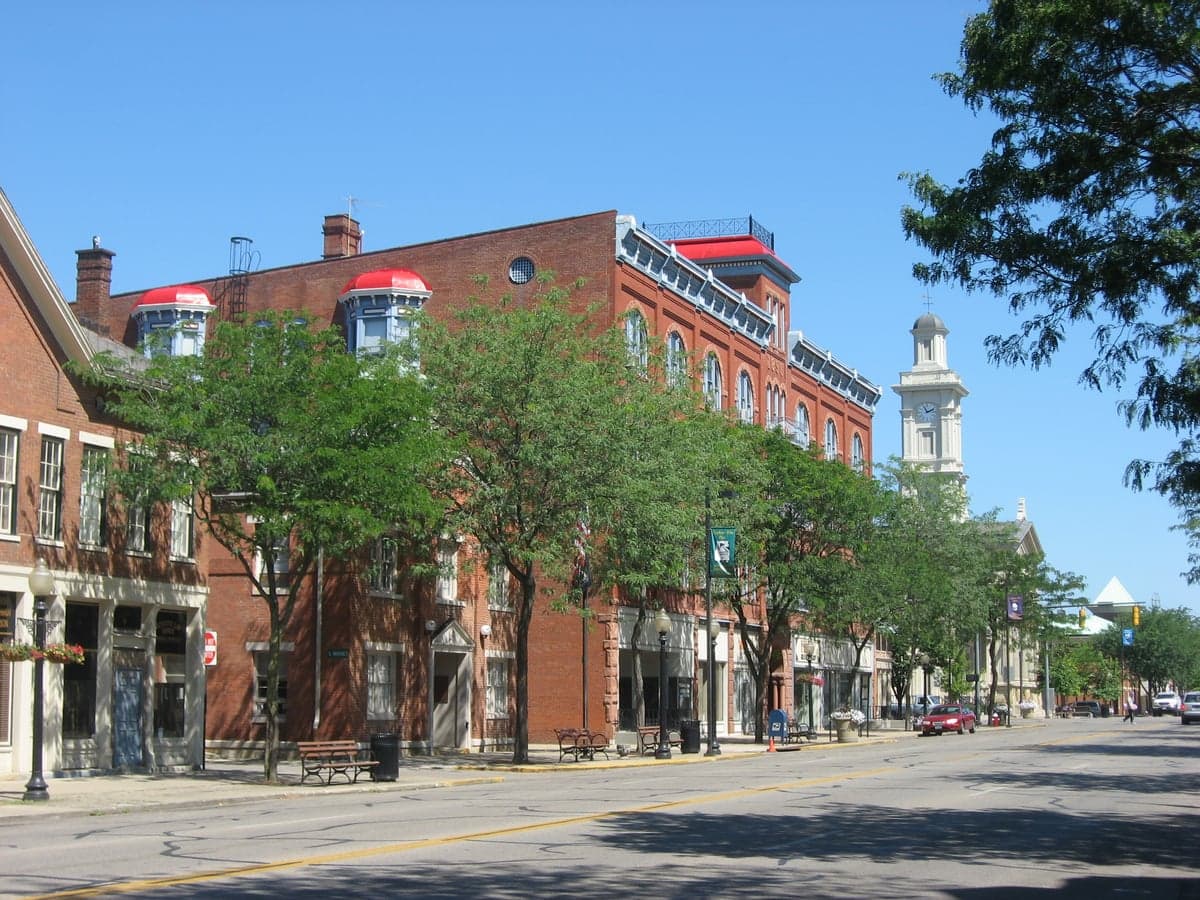
Photo: Wikipedia
Strategic Assessment of Chillicothe, OH
Meaningful friction. Expect exposure to either population pressure, blast zones, or natural disaster risk. Consider buying a retreat property.
What does the Strategic Assessment tell us?
Our Strategic Assessment grades tactical survivability of an area. Major population centers, military targets, fallout zones, natural disasters, and border exposure all drive risk — lower exposure means a more defensible position in a crisis.
This is heavily inspired by Joel Skousen's Strategic Relocation book. Highly recommended you checkout the book ($)What does this tell us?
Our Strategic Assessment grades tactical survivability of an area. Major population centers, military targets, fallout zones, natural disasters, and border exposure all drive risk — lower exposure means a more defensible position in a crisis.
This is heavily inspired by Joel Skousen's Strategic Relocation book. Highly recommended you checkout the book ($)Strategic Pillars
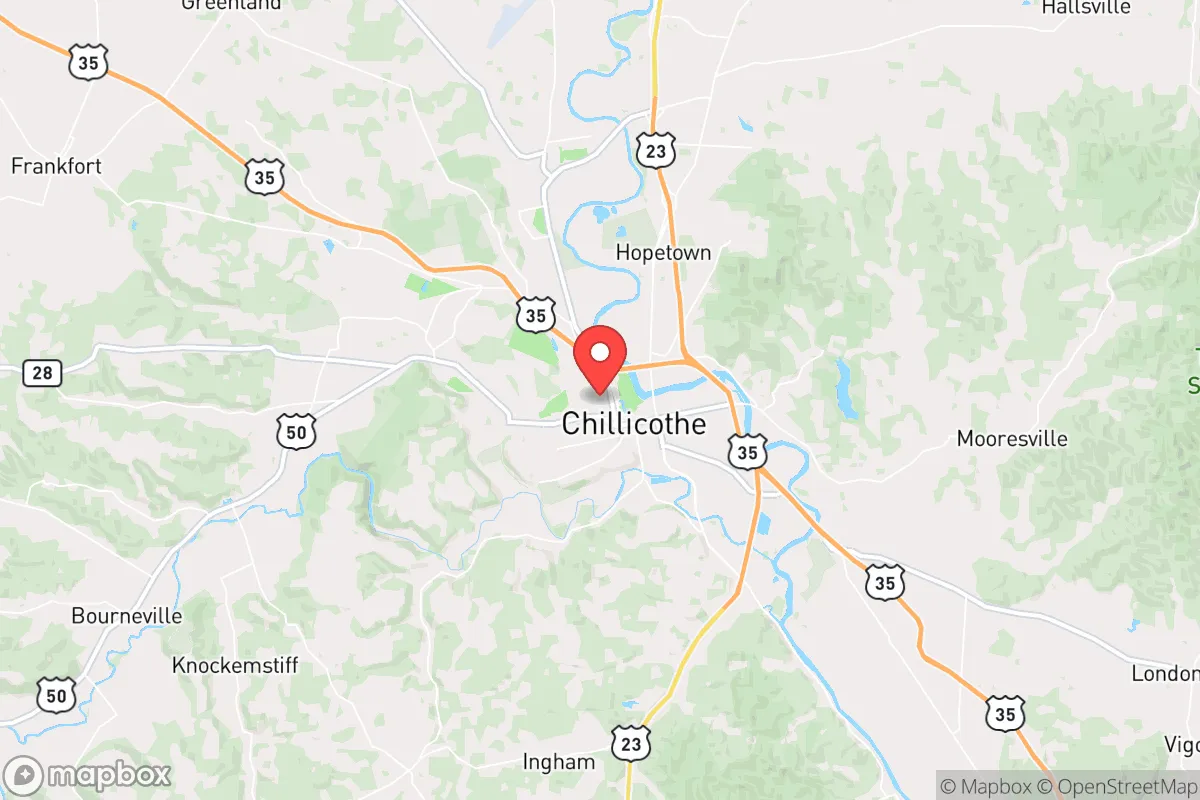
Key Distances
Regional Safe Places
Below is our recommended "safe zones" in Ohio and the surrounding area based on our strategic heuristics. For most people, it's unrealistic to live in a “safe zone” full-time due to work, family or other personal reasons. They tend to be more rural. However, many of these areas are perfect for second homes and retreat properties that double as a vacation home or even a short-term rental.

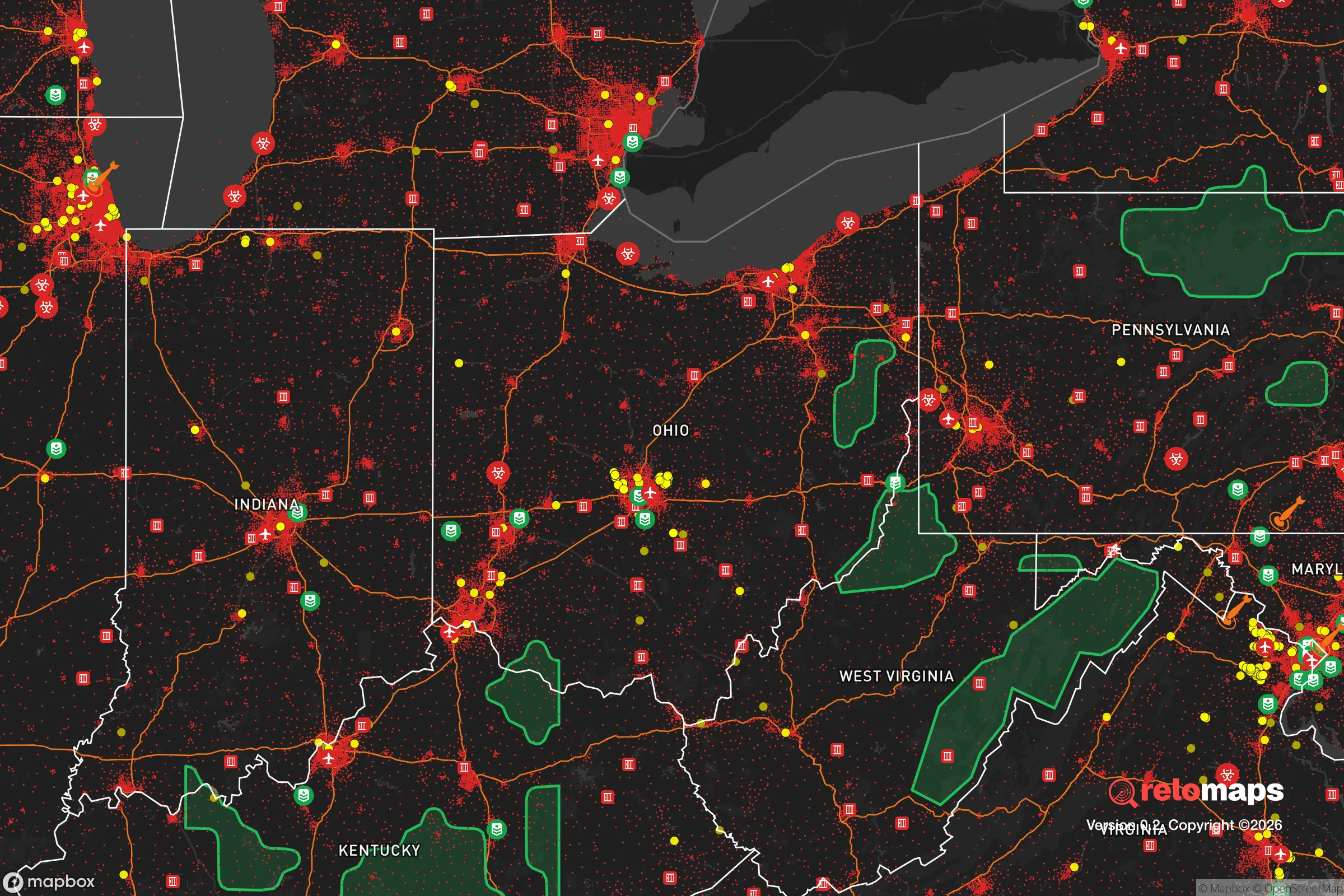


Important Note: For informational purposes only. This does not mean nothing bad ever happens in the green zones. Please use common sense. This is based on public data and modeled with AI. We tried to take a conservative approach but mistakes happen. We update this regularly as new information becomes available.
Solar Generator Recommendations
Backup power matters more here than in safer locations. We've picked three solar generators across budgets and capacity tiers — start with the budget unit if you only need a few essentials, or step up if you want to run a fridge and HVAC for days at a time.
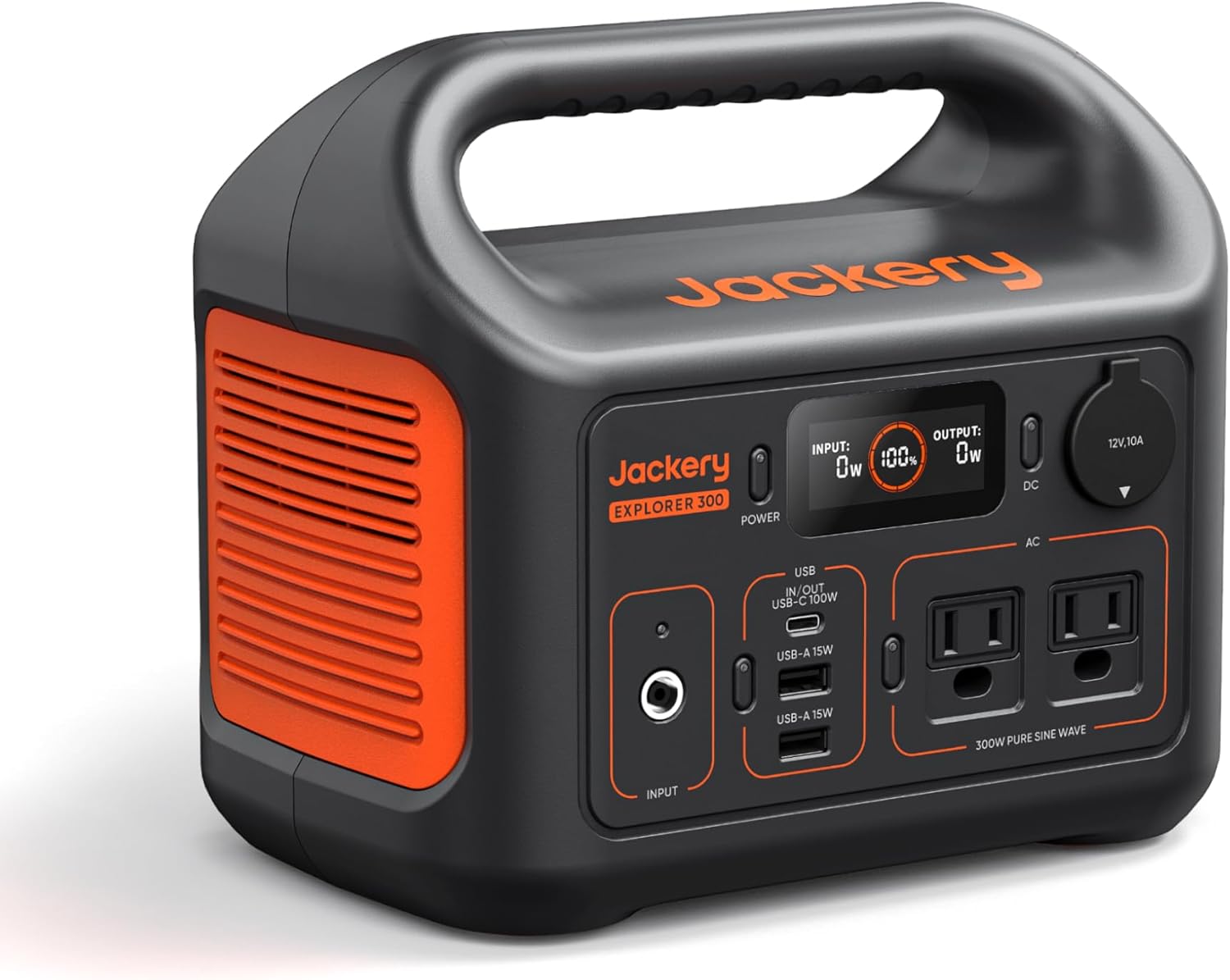
Jackery Portable Power Station Explorer 300
Budget OptionPower on the Go: Weighing only 11 lbs, it's convenient to set up and store with book-sized foldable solar panels

BLUETTI Portable Power Station AC180
Designed for both indoor and outdoor scenarios, AC180 is highly capable as it has a robost capacity and continuous output power.

EF ECOFLOW DELTA Pro Ultra Power Station
Upgraded PickEcoFlow DELTA Pro Ultra is a whole-home energy system designed to grow with your family. Integrated with the Smart Home Panel 2, it scales to meet your evolving energy needs — keeping your home powered, intelligent, and secure through every stage of life.
We earn a commission, at no additional cost to you.
Strategic Assessment Analysis
Chillicothe, Ohio, offers a compelling mix of strategic depth and practical resilience for those prioritizing disaster readiness and self-sufficiency. Its location in the rolling hills of south-central Ohio, roughly 45 miles south of Columbus, places it far enough from major metropolitan targets to avoid the worst of a man-made or natural catastrophe, yet close enough to access critical supplies and medical infrastructure when conditions are stable. The area’s historical role as Ohio’s first capital and its position along the Scioto River have long made it a natural hub, but for the modern relocator, the key advantages are its distance from primary fallout zones, its agricultural potential, and its relatively low population density—Ross County has about 77,000 residents, with the city itself holding roughly 22,000. This combination of isolation and accessibility gives Chillicothe a genuine resilience profile that warrants a serious look.
Geographic position and natural advantages for long-term stability
Chillicothe sits in a valley carved by the Scioto River, surrounded by the Appalachian foothills. This topography provides natural defensibility: the hills and forests create visual and physical barriers, slowing any ground-level movement and offering numerous choke points for those who know the back roads. The area is far from any major fault lines, so seismic risk is negligible. Tornado risk exists—Ohio averages about 20 tornadoes per year—but Ross County is not in the core of “Tornado Alley,” and the hilly terrain tends to break up storm systems before they reach full intensity. Flooding along the Scioto is the primary natural hazard, but the U.S. Army Corps of Engineers maintains the Paint Creek Lake and Deer Creek Lake dams upstream, which have significantly reduced flood frequency since their construction. For a relocator, the key takeaway is that the land itself is stable, well-watered, and defensible without being isolated to the point of impracticality. The nearby Wayne National Forest (about 30 miles southeast) and Tar Hollow State Forest provide additional buffer zones and resources, while the Ohio River is roughly 50 miles south, offering a secondary water and transport corridor.
Risk exposure, fallout proximity, and man-made threat assessment
The primary man-made risk for Chillicothe is its proximity to potential high-value targets in Ohio. Columbus, with its state government, major data centers, and the Rickenbacker Air National Guard Base, is a plausible target in a conflict scenario. Chillicothe lies 45 miles south of Columbus—far enough to be outside the immediate blast radius of a single warhead, but within the range of fallout if winds are unfavorable. The same logic applies to the Portsmouth Gaseous Diffusion Plant (now decommissioned but still a legacy site) about 40 miles south, and the General Dynamics plant in Lima (about 100 miles northwest) that produces Abrams tanks. The good news is that prevailing winds in Ohio are from the west and southwest, meaning fallout from a Columbus strike would likely drift east-northeast, away from Chillicothe. The Scioto River valley also creates a natural drainage pattern that would carry contaminated water south, not into the city’s aquifer. For a relocator, the practical risk is moderate: you are not in a primary target zone, but you are close enough that a multi-day shelter-in-place plan with HEPA filtration and stored water is non-negotiable. The area’s lack of major military installations or nuclear power plants (the closest is the Davis-Besse plant near Toledo, 150 miles north) reduces the chance of a secondary event.
Practical resilience for a relocator: food, water, energy, and defensibility
Chillicothe’s practical resilience is where it truly shines for a self-sufficiency-minded individual or family. The surrounding Ross County is prime agricultural land—corn, soybeans, and livestock dominate—and the city itself hosts a strong Amish and Mennonite presence in the nearby communities of Bainbridge and Frankfort. This means local food production is not a theoretical exercise; there are working farms, farmers’ markets, and a culture of canning and preservation that a relocator can tap into. The Scioto River provides a reliable surface water source, and the area’s groundwater is generally good, with many rural properties relying on wells. For energy, the region is served by American Electric Power, but the grid here is less congested than in Columbus, meaning shorter outage durations during storms. Solar potential is moderate—Ohio averages about 170 sunny days per year—but the hills allow for good panel placement on south-facing slopes. Wood heating is common and practical, given the surrounding forests. Defensibility is aided by the terrain: the city itself is compact and walkable, but the rural outskirts offer properties with long driveways, natural sightlines, and limited access points. The local law enforcement presence is modest—Ross County Sheriff’s Office has about 40 deputies—so in a prolonged disruption, community self-policing would be the norm. The presence of the Chillicothe Correctional Institution (a state prison) just north of town is a double-edged sword: it provides a local law enforcement and emergency response hub, but also a potential source of instability if the facility were compromised. On balance, the area offers a strong foundation for a relocator willing to invest in off-grid water, solar, and food storage.
The overall strategic picture for Chillicothe is one of moderate risk with high practical reward. It is not a remote bunker location—you are still within a two-hour drive of three major cities (Columbus, Cincinnati, and Huntington, WV)—but that proximity also means you can access specialized medical care, hardware stores, and supply chains when the grid is up. The area’s agricultural base, water resources, and defensible terrain make it a viable long-term homestead location for someone who wants to be prepared without living in total isolation. The biggest trade-off is the fallout risk from Columbus, which is real but manageable with proper planning. For a conservative-leaning relocator who values community, self-reliance, and a slower pace of life, Chillicothe deserves a spot on the short list. It is not a perfect fortress, but it is a solid, livable base with genuine strategic depth.

* Values derived from national, state, county, city and local statistics and may differ in a specific area. Last updated: 2026-11-27T15:04:31.000Z
Narrative content on this page is AI-generated and may contain mistakes. Verify any details that matter before acting on them.
ReloMaps may earn a commission from affiliate links at no extra cost to you.

