Photo: Wikipedia
Political ClimatePolitical Climate in Chester, NJ
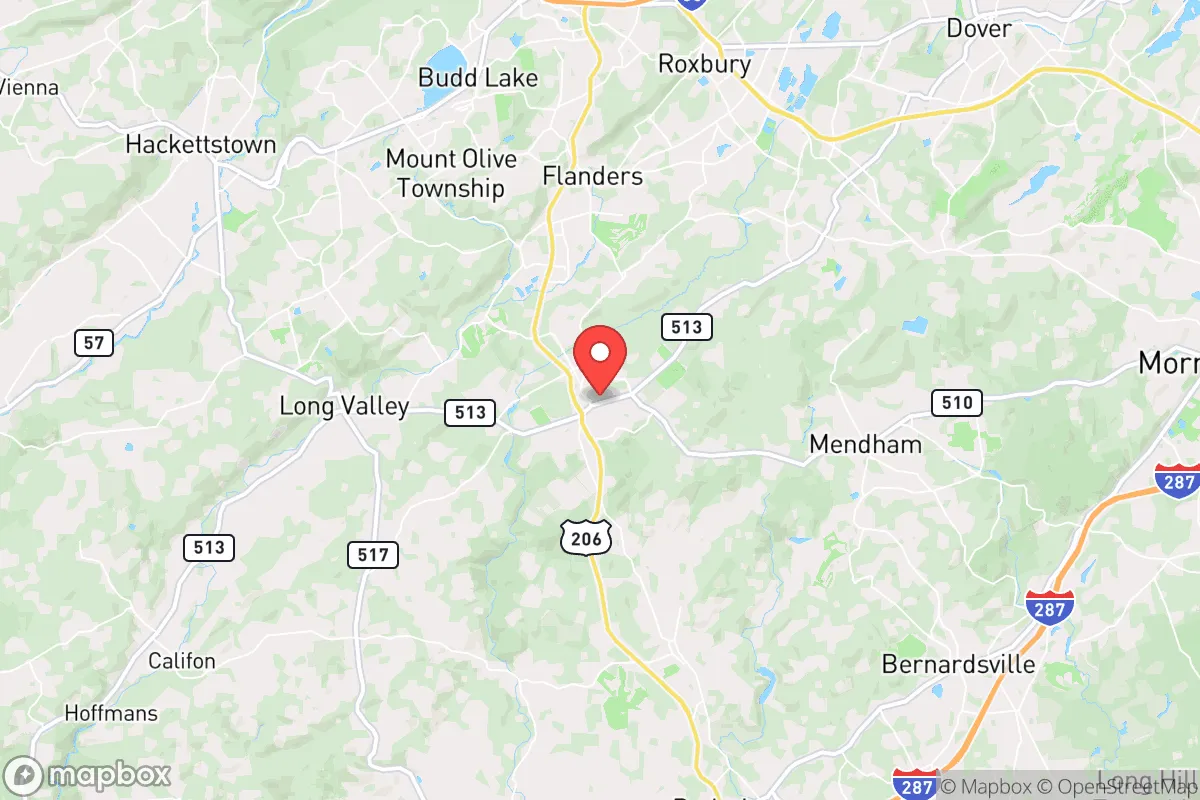
District shown is the primary district for this city’s centroid. Cities may span multiple districts.
Local Political AnalysisPolitical Analysis of Chester, NJ
Chester, New Jersey, sits in a unique political pocket. While the state as a whole leans comfortably Democratic with a Cook PVI of D+5, Chester itself is a battleground, clocking in at exactly EVEN. That means it’s a true toss-up town, and over the last decade, it’s actually drifted a bit to the right relative to the rest of Morris County. You’ll see a lot of "I Voted" stickers on both sides here, and the local elections often come down to a few hundred votes. It’s not a deep-red stronghold like you’d find further west in Sussex County, but it’s definitely not the reliably blue suburbs closer to Newark.
How it compares
Drive ten minutes east to Mendham or Bernardsville, and you’ll feel a shift toward the GOP—those towns are solidly red. Head south to Chatham or Madison, and you’re in D+10 territory, where Democratic candidates routinely win by double digits. Chester is the fulcrum. In the 2024 presidential race, the town split almost exactly 50-50, while surrounding Morris County went about 52% Republican. That’s a stark contrast to the statewide D+5 lean, which is driven by huge Democratic margins in Essex, Hudson, and Bergen counties. Locally, the Chester Township Committee has been a mix of Republicans and independents for years, with Democrats occasionally winning a seat when turnout is high. The school board elections are where you really see the split—bond referendums and curriculum debates get heated, and the outcomes are never a sure thing.
What this means for residents
For conservative residents, Chester feels like a place where their vote actually matters. You’re not shouting into the wind like you might be in Montclair or Maplewood. The local GOP is active but not dominant, so you’ll need to show up at town hall meetings to keep the tax cap in place or push back on zoning changes. For liberal residents, it’s a bit of an island. You’ll find plenty of like-minded neighbors, especially among the younger families moving in from the city, but you’re still outnumbered in the countywide elections. The practical upshot is that Chester tends to be a moderate, pragmatic town. Big statewide issues like marijuana legalization or gun laws get debated here with a lot of nuance—people aren’t shouting past each other. The town’s budget is usually balanced without drama, and the schools are well-funded, which keeps the temperature down compared to more polarized districts.
Culturally, Chester’s political balance means you get a mix of both worlds. The annual Chester Day festival feels like a small-town Americana event, with fire trucks and face painting, but you’ll also see a few "In This House We Believe" signs on the same block as "Don’t Tread on Me" flags. The local diners and coffee shops are where the real politics happen—overheard conversations range from property taxes to school board transparency, rarely national culture wars. Looking ahead, the trajectory is toward a slight rightward tilt as more families from redder parts of the state move in for the good schools and rural feel, but the influx of remote workers from New York City could balance that out. For now, Chester remains one of the few truly purple towns in a blue state, and that makes it a fascinating place to live if you want your vote to actually count.

State Political ClimatePolitical Climate in New Jersey
State Political AnalysisPolitical Environment in the State
New Jersey is a solidly Democratic state with a Cook PVI of D+5, but that number masks a deeply complex political reality that has shifted significantly over the past two decades. The state hasn't voted Republican for president since 1988, yet it consistently elects moderate Republican governors like Chris Christie (2009-2018) and Phil Murphy's predecessor, and it maintains one of the most competitive state legislative landscapes in the Northeast. The real story is a slow but steady Democratic consolidation in the suburbs, driven by professional-class migration from New York and Philadelphia, while the rural and exurban counties have hardened into reliable Republican strongholds.
Urban vs. rural divide
The political map of New Jersey is a tale of three distinct regions. The urban core — Newark, Jersey City, Paterson, and Elizabeth — delivers massive Democratic margins, often exceeding 70-80% of the vote. These cities are home to dense populations of union members, public-sector workers, and minority communities that form the backbone of the state party. The suburban ring, particularly Bergen, Essex, and Middlesex counties, has been the battleground for the last decade. These once-purple areas have shifted decisively blue since 2016, driven by college-educated voters and Asian-American communities in towns like Edison, Fort Lee, and Montclair. Meanwhile, the rural and exurban counties — Sussex, Warren, Hunterdon, and Salem — vote Republican by margins of 15-25 points. Ocean County, a massive retirement and shore community, is the state's largest Republican stronghold, routinely delivering 60%+ for GOP candidates. The divide isn't just geographic; it's cultural. A voter in Newton (Sussex County) lives in a different political universe than one in Hoboken, and the state's political class in Trenton largely ignores the former.
Policy environment
New Jersey's policy environment is defined by its aggressive tax-and-spend posture. The state has the highest property taxes in the nation, averaging over $9,500 annually, and a progressive income tax that tops out at 10.75% for earners over $1 million. The regulatory climate is dense: the state has its own environmental standards that often exceed federal ones, a strict gun licensing regime (requiring a permit to purchase and a separate carry permit), and some of the nation's strongest tenant protections. On education, New Jersey spends more per pupil than almost any other state, and its public schools consistently rank among the top five nationally. Healthcare is heavily regulated, with the state running its own insurance exchange and expanding Medicaid under the ACA. Election laws are relatively liberal: no-excuse mail-in voting, automatic voter registration at the DMV, and same-day registration during early voting. The state also has a strong public-sector union presence, with teachers, police, and state workers wielding significant political influence through their pension systems.
Recent policy direction
The last five years have seen a clear leftward acceleration. In 2022, Governor Phil Murphy signed a comprehensive gun safety package that banned .50 caliber rifles, raised the purchasing age to 21, and required liability insurance for gun owners. The state also passed a clean energy mandate requiring 100% carbon-free electricity by 2035, and a paid family leave expansion that now provides 12 weeks of partially paid leave. On education, the state adopted a sex education curriculum that includes LGBTQ+ content in elementary grades, sparking significant backlash in conservative counties. Property tax increases have been capped at 2% annually, but the underlying burden remains crushing. On voting, the state made mail-in voting permanent after the pandemic, and in 2024, it passed a ballot access law that made it harder for third-party candidates to qualify. For a conservative relocator, the key takeaway is that the state's regulatory appetite shows no sign of abating, and the political momentum is firmly with the progressive wing of the Democratic party.
Civil unrest & political movements
New Jersey has a history of organized political activism on both sides. The 2020 Black Lives Matter protests were large and sustained in Newark, Jersey City, and Trenton, leading to police reform legislation that included a ban on chokeholds and a requirement for body cameras. The anti-lockdown movement during COVID was particularly vocal in Ocean and Sussex counties, with armed protests outside the governor's mansion in Princeton and at the Statehouse. The state's sanctuary policies are a flashpoint: New Jersey is a "sanctuary state" by executive order, meaning state law enforcement does not cooperate with federal immigration detainers, and several cities — including Newark, Jersey City, and Trenton — have formal sanctuary ordinances. This has led to ongoing tension with ICE and periodic federal lawsuits. Election integrity has been a persistent issue in conservative circles, particularly after the 2020 election when mail-in ballots were used widely; the state's Republican party has filed multiple lawsuits challenging voting procedures, though none have succeeded. A new resident will notice the political divide in everyday life: bumper stickers, yard signs, and local Facebook groups are sharply polarized, and the state's media ecosystem (led by NJ.com and the Star-Ledger) leans left.
Projection
Over the next 5-10 years, New Jersey's political trajectory points toward continued Democratic dominance, but with important caveats. The state's population is aging and slowly declining, with net domestic out-migration of about 30,000 people per year, many of them moving to Florida, Texas, and the Carolinas. This outflow is disproportionately conservative and middle-class, which further concentrates Democratic power in the remaining population. However, the state is also seeing an influx of immigrants, particularly from India, China, and Latin America, who tend to vote Democratic. The wild card is the state's fiscal health: pension obligations for public workers exceed $100 billion, and property taxes are unsustainable for many homeowners. If a future Republican governor can successfully push for structural tax reform or pension restructuring, it could realign the electorate. For now, expect the state to remain D+5 to D+7, with the suburbs continuing to drift left and the rural areas hardening into irrelevance in statewide elections. A conservative moving in should expect to live in a state where their vote is largely symbolic in presidential races but can still matter in local and legislative contests.
For a conservative relocator, the bottom line is this: New Jersey offers excellent schools, strong infrastructure, and proximity to major job markets, but you will pay heavily for it in taxes and live under a regulatory regime that is actively expanding. Your vote in state and federal races will be a minority one, but you can find like-minded communities in the rural northwest and the shore counties. If you value low taxes, gun rights, or limited government, this is not the state for you. If you can afford the cost and are willing to accept the political reality, the quality of life in New Jersey's better suburbs is genuinely high. Just know what you're signing up for.
* Values derived from national, state, county, city and local statistics and may differ in a specific area. Last updated: 2026-09-29T21:23:46.000Z
Narrative content on this page is AI-generated and may contain mistakes. Verify any details that matter before acting on them.
ReloMaps may earn a commission from affiliate links at no extra cost to you.

