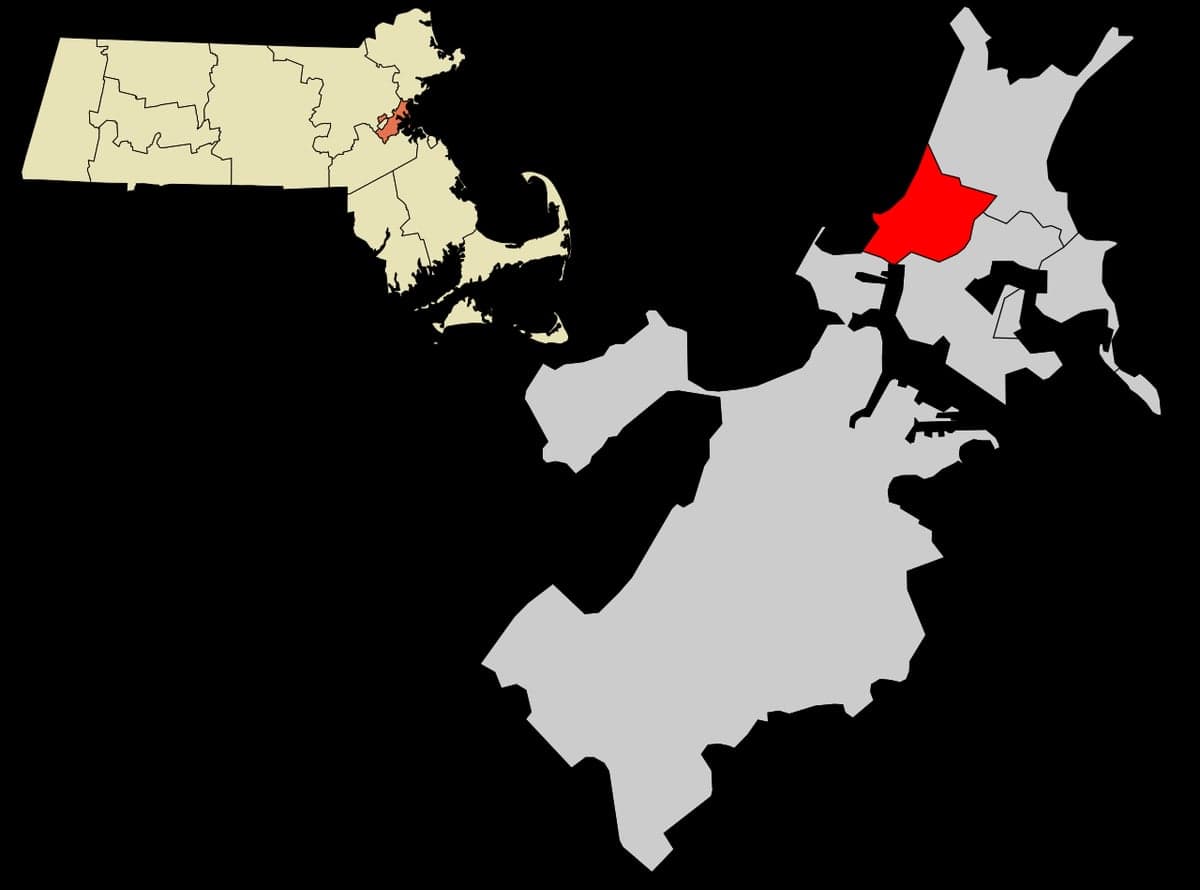
Photo: Wikipedia
Political ClimatePolitical Climate in Chelsea, MA
District shown is the primary district for this city’s centroid. Cities may span multiple districts.
Local Political AnalysisPolitical Analysis of Chelsea, MA
Chelsea, Massachusetts, is about as deep blue as it gets in New England, with a Cook PVI of D+34 that puts it in the top tier of Democratic strongholds nationwide. If you’ve lived here as long as I have, you’ve watched the political pendulum swing hard left over the past two decades, and it’s not showing any signs of coming back. The city council and school board are uniformly progressive, and local elections often turn on who can promise the most aggressive government programs, not who can protect your wallet or your rights. It’s a far cry from the more moderate, working-class town I remember from the 1990s, and the trajectory is concerning for anyone who values personal freedom over top-down social engineering.
How it compares
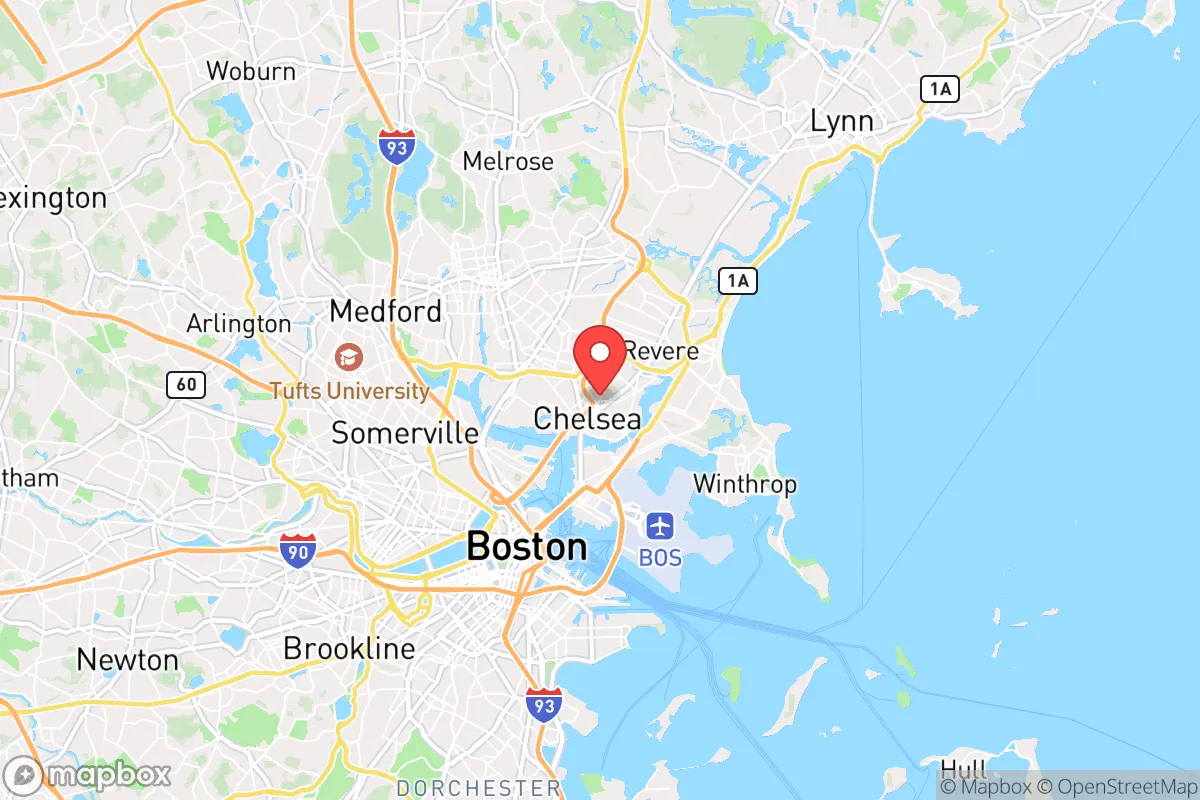
To understand Chelsea’s political isolation, you only need to look a few miles in any direction. Revere, just to the east, is also reliably Democratic but with a PVI around D+15—still left-leaning, but with a sizable contingent of independent and even conservative-leaning voters who push back on the most extreme proposals. Everett, to the north, is similar, with a more mixed working-class base that hasn’t fully embraced the progressive agenda. Then there’s Winthrop, a short drive away, which has a PVI of D+8 and a strong Italian-American community that tends to be socially moderate but fiscally conservative—a world apart from Chelsea’s single-party rule. Even Boston, which is famously liberal, has neighborhoods like South Boston or Charlestown where you’ll find more political diversity than in Chelsea. The contrast is stark: Chelsea is an echo chamber where dissenting voices are rare, and the few that exist are often drowned out by well-funded activist groups pushing for rent control, sanctuary city policies, and defunding the police.
What this means for residents
For the average person living here, the political climate translates directly into your daily life—and not always in a good way. Property taxes have climbed steadily as the city expands its social services and affordable housing mandates, with little regard for the burden on homeowners or small landlords. If you run a business, you’re navigating a maze of new regulations, from paid sick leave mandates to strict zoning laws that make it hard to open a shop without jumping through government hoops. School choice is virtually nonexistent—the district has doubled down on its public school system, even as test scores lag behind neighboring communities. And if you value Second Amendment rights, well, you’re out of luck: Massachusetts already has some of the strictest gun laws in the country, and Chelsea’s local officials have pushed for even tighter restrictions, including safe storage ordinances that feel more like surveillance than safety. The message is clear: the government knows better than you do, and your personal freedoms are secondary to the collective agenda.
Looking ahead, I don’t see the trend reversing. The city’s growing immigrant population, while a vital part of Chelsea’s character, has been heavily courted by progressive groups that promise government benefits in exchange for political loyalty. Younger, college-educated transplants from Boston are also moving in, drawn by lower rents but bringing their urban-left politics with them. The result is a political monoculture where any candidate who questions the orthodoxy—on taxes, on policing, on housing—is branded as out of touch. If you’re a conservative or even a moderate libertarian, you’ll find yourself constantly swimming against the current, watching your tax dollars fund programs you don’t support and your rights eroded in the name of social justice. It’s a tough spot, and it’s only getting tougher.

State Political ClimatePolitical Climate in Massachusetts
State Political AnalysisPolitical Environment in the State
Massachusetts has been a one-party Democratic stronghold for decades, but the real story is how far left the state has moved in just the last 10-15 years. While it still elects the occasional moderate Republican governor (Charlie Baker served until 2023), the legislature is overwhelmingly progressive, and the state’s voting patterns have shifted from “blue but pragmatic” to “deep blue and activist.” In 2024, Kamala Harris carried Massachusetts by over 25 points, and the state’s congressional delegation is now entirely Democratic. For a conservative-leaning individual or family, the political climate here is increasingly hostile to traditional values, fiscal restraint, and personal freedom.
Urban vs. rural divide
The political map of Massachusetts is a tale of two worlds. The Boston metro area, including Cambridge, Somerville, and Brookline, is the engine of the state’s progressive politics—these are among the most left-leaning jurisdictions in the entire country, with policies on housing, taxes, and education that push far beyond the national Democratic platform. Western Massachusetts, particularly Berkshire County (home to Pittsfield and North Adams), is also reliably blue, driven by a mix of college towns and aging liberal populations. The true conservative strongholds are the small towns and rural areas of Central and Southeastern Massachusetts. Plymouth County and Bristol County (including Taunton and Fall River) have shown more resistance, with Trump improving his margins there in 2020 and 2024. Worcester County is a genuine battleground—the city of Worcester itself leans Democratic, but the surrounding towns like Holden and Paxton vote reliably Republican. The Cape and Islands (Barnstable, Nantucket) are a mixed bag, trending blue in recent cycles but still electing some local Republicans. The bottom line: if you want to live among like-minded conservatives, you’re looking at the outer suburbs of Boston (e.g., Norfolk or Wrentham) or the rural towns west of Worcester.
Policy environment
Massachusetts’ policy environment is a textbook case of progressive governance. The state income tax is a flat 5%, but voters rejected a 2022 ballot measure to lower it to 4%—and instead passed a “millionaire’s tax” (a 4% surcharge on income over $1 million) that now funds education and transportation. Property taxes are high, averaging 1.1% of home value, and the state’s regulatory burden is among the heaviest in the nation. On education, Massachusetts has some of the best public schools in the country, but also some of the most restrictive curriculum mandates, including a 2021 law requiring “culturally responsive” teaching and LGBTQ+ inclusive history. Healthcare is dominated by the state’s 2006 universal coverage law (the model for Obamacare), and the state has aggressively expanded Medicaid. Election laws are among the most liberal: no-excuse mail-in voting, same-day registration, and automatic voter registration are all in place. For a conservative, the policy environment feels like a slow but steady erosion of local control and fiscal sanity.
Trajectory & freedom
The trajectory in Massachusetts is unmistakably toward less personal freedom, especially for gun owners, parents, and taxpayers. In 2024, the legislature passed the Massachusetts Gun Safety Act, which bans “ghost guns,” expands the state’s already strict assault weapons ban, and requires gun owners to lock up firearms even in their own homes. This followed a 2023 law that made it harder to get a license to carry. On parental rights, the state’s 2022 “Parentage Act” allows same-sex couples to establish legal parentage without a biological connection, and the Department of Elementary and Secondary Education has pushed policies that allow students to change their gender identity in school records without parental consent. Medical freedom took a hit with the state’s strict COVID-19 vaccine mandates for healthcare workers and school staff, which remain in place for some settings. On the tax front, the millionaire’s tax is just the beginning—there’s constant talk of a wealth tax or a capital gains tax increase. Property rights are also under pressure, with the state’s 2023 “MBTA Communities Law” forcing towns to rezone for high-density housing near transit stations, overriding local zoning boards. For a conservative, the trend is clear: the state government is becoming more intrusive, not less.
Civil unrest & political movements
Massachusetts has a long history of political activism, but the flashpoints have intensified. The 2020 Black Lives Matter protests in Boston were large and occasionally violent, leading to property damage in the Downtown Crossing area. The state’s sanctuary status—Massachusetts is a “Trust Act” state, meaning local police cannot cooperate with federal immigration enforcement—has made it a magnet for illegal immigration, with the state spending over $100 million on emergency shelter for migrants in 2023-2024. This has sparked backlash in working-class cities like Fall River and New Bedford, where local officials have complained about the strain on schools and housing. On the right, the “Massachusetts Republican Party” is weak but has seen a small resurgence in grassroots activism, particularly around school board elections and parental rights. The 2022 election saw a wave of conservative parents winning seats in towns like Andover and Lexington, though those gains have been largely symbolic. Election integrity is a hot topic—Massachusetts uses paper ballots and has strong security, but the state’s no-excuse mail-in voting system has raised concerns about ballot harvesting and chain of custody. Overall, the political climate is tense but not explosive; the left dominates the institutions, and the right is fighting a rear-guard action.
Projection
Over the next 5-10 years, Massachusetts will likely become even more progressive. The state’s population is aging and declining in rural areas, while Boston and its suburbs continue to attract young, educated, left-leaning transplants. The 2024 election results showed that even traditionally purple towns like Weymouth and Braintree are shifting blue. The Republican Party in Massachusetts is essentially a rump organization, with no clear path to winning statewide office in the near future. The most likely scenario is a continued march toward single-party rule, with the legislature passing more gun control, higher taxes, and expanded government programs. For a conservative moving in now, expect to be a permanent minority in state politics, with your vote having little impact on statewide races. Your best bet is to focus on local elections—school board, town council, and select board—where conservative voices can still make a difference in smaller communities.
For a new resident, the bottom line is this: Massachusetts offers world-class education, healthcare, and infrastructure, but you will pay for it with high taxes, heavy regulation, and a political culture that is increasingly hostile to traditional values. If you value personal freedom, gun rights, and local control, you will find yourself swimming against a strong tide. The state is not for everyone, but if you can afford it and are willing to fight for your beliefs at the local level, there are still pockets of conservative community—especially in the outer suburbs and rural towns. Just don’t expect the state government to have your back.
* Values derived from national, state, county, city and local statistics and may differ in a specific area. Last updated: 2026-05-01T04:16:12.000Z
Narrative content on this page is AI-generated and may contain mistakes. Verify any details that matter before acting on them.
ReloMaps may earn a commission from affiliate links at no extra cost to you.

