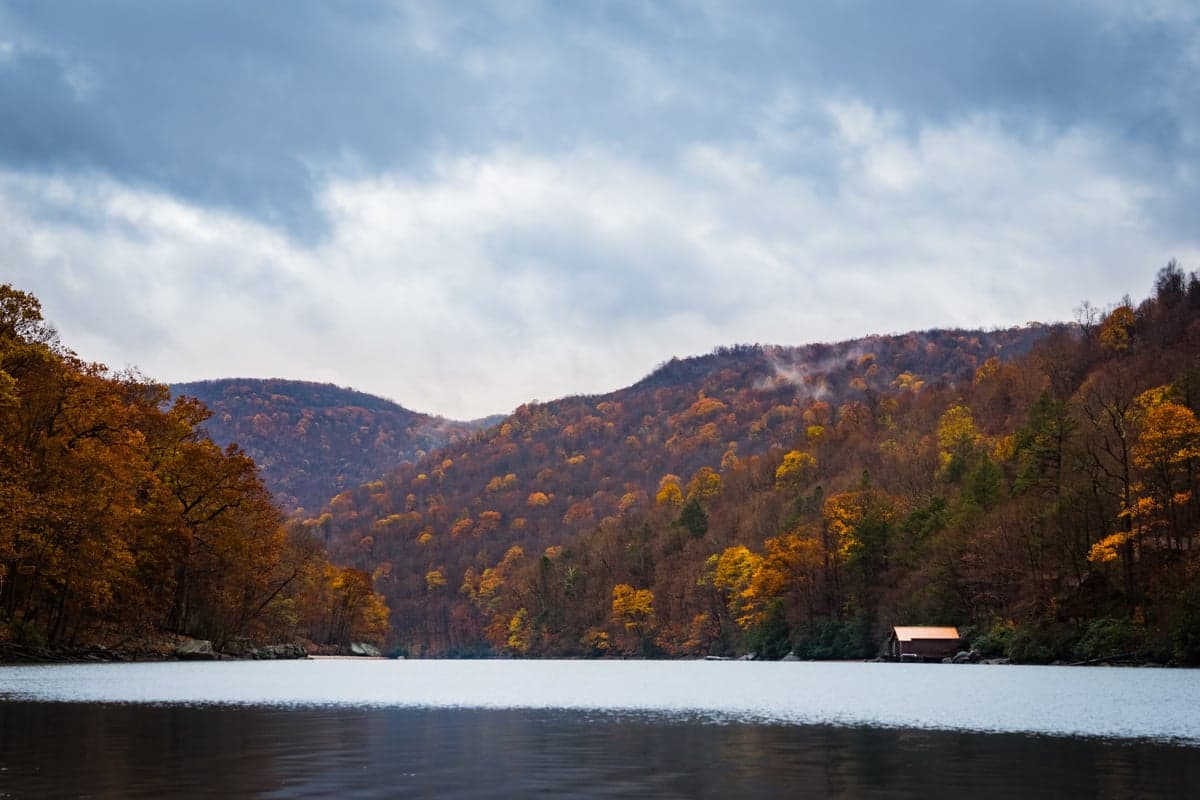
Photo: Wikipedia
Political ClimatePolitical Climate in Cheat Lake, WV
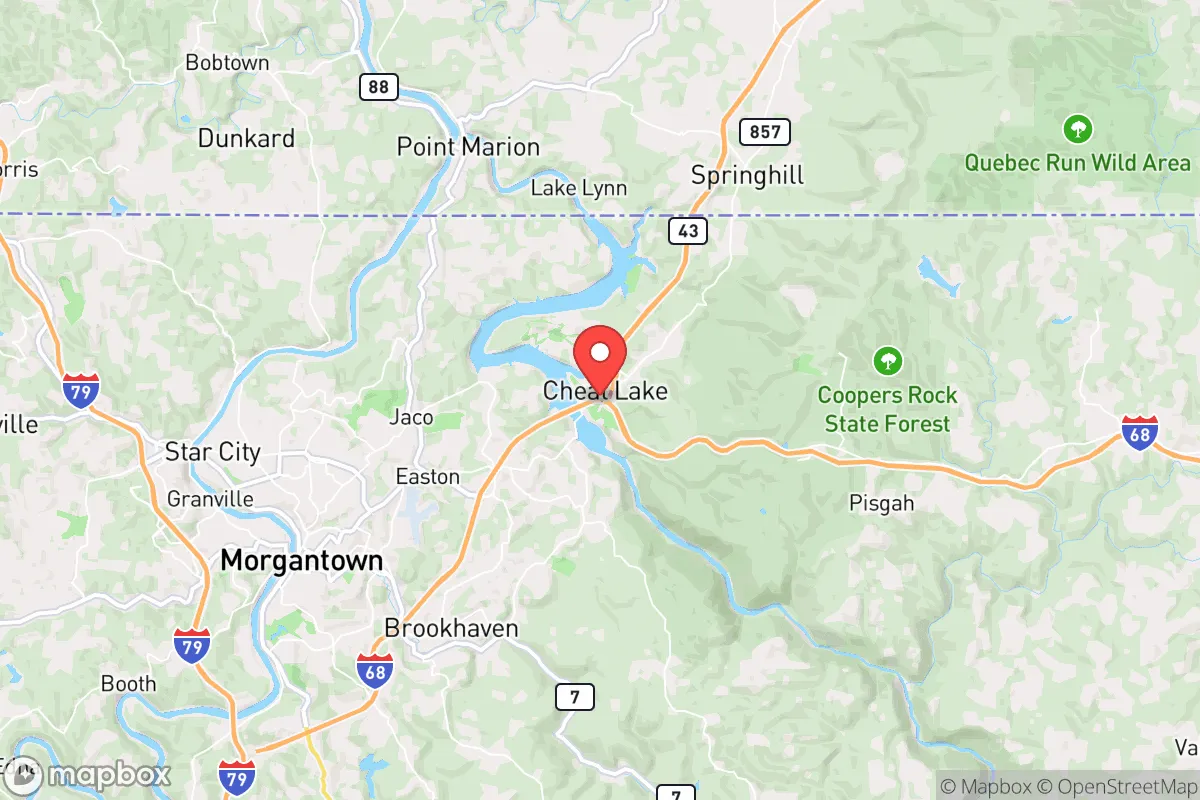
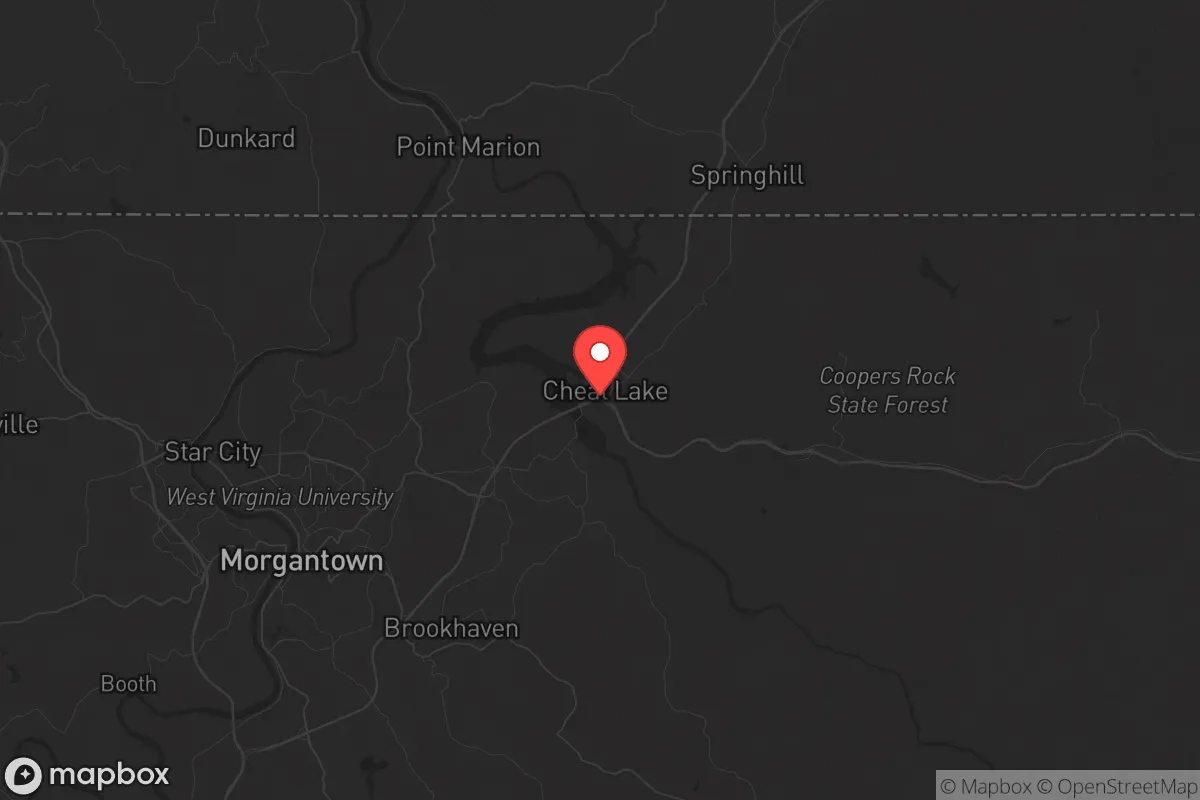
District shown is the primary district for this city’s centroid. Cities may span multiple districts.
Local Political AnalysisPolitical Analysis of Cheat Lake, WV
Cheat Lake, West Virginia, sits in a deeply conservative pocket of the state, with a Cook PVI of R+20 that reflects a longstanding Republican stronghold. This isn't a recent shift—it's been the way of things for decades, and the area's political DNA is baked into its culture of self-reliance and distrust of big government. You'll find that most folks here vote their conscience on personal freedoms, and they don't take kindly to anyone telling them how to live their lives, whether it's about property rights, school choices, or what they can do with their land.
How it compares
Drive 15 minutes south into Morgantown, and you'll feel like you've entered a different world. Morgantown, home to West Virginia University, leans more moderate-to-liberal, with a younger, transient population that often brings progressive ideas about zoning, environmental regulations, and public spending. Cheat Lake, by contrast, is where families and retirees settle down precisely to escape that kind of overreach. The contrast is stark: Morgantown's city council debates bike lanes and density bonuses, while Cheat Lake residents are more concerned with keeping property taxes low and ensuring the county sheriff doesn't get defunded. Further west, places like Granville and Star City have seen some spillover from Morgantown's growth, but Cheat Lake remains a bulwark of traditional values, where the local school board meetings are more about curriculum transparency than diversity initiatives.
What this means for residents
For those living here, the political climate translates into a tangible sense of freedom. You won't find heavy-handed HOA rules dictating your fence color or lawn height—most of Cheat Lake is unincorporated, meaning county government stays out of your business. Property taxes are low, and there's no city income tax, which is a big draw for people coming from high-tax states like Maryland or Virginia. The downside? You're on your own for services like snow removal and road maintenance, but that trade-off is exactly what most residents signed up for. The local economy is driven by small businesses, trades, and remote workers who value the lack of red tape. There's a growing concern, though, that as more people move in from blue states, they'll bring their voting habits with them. We've already seen a few local races get tighter, and some folks worry that the county commission could flip if the transplants don't adapt to the local way of thinking.
Culturally, Cheat Lake is still a place where the Second Amendment is a given, not a debate. You'll see "Come and Take It" stickers on trucks, and the local gun club is one of the busiest spots on weekends. The schools, part of Monongalia County, have managed to avoid the worst of the culture wars so far, but there's a quiet vigilance among parents who attend every board meeting to ensure critical race theory and gender ideology don't creep into the curriculum. The biggest policy distinction is the area's resistance to any form of regional planning that could lead to more government control. A few years back, there was talk of creating a municipal government for Cheat Lake proper—it was shot down fast. People here prefer the county's light touch. Looking ahead, the long-term trend is cautiously optimistic, but only if the community stays engaged. If the progressive wave from Morgantown keeps pushing north, Cheat Lake could become a battleground. For now, though, it's still a place where your neighbor minds his own business, and you're free to do the same.

State Political ClimatePolitical Climate in West Virginia
State Political AnalysisPolitical Environment in the State
West Virginia has long been one of the most reliably Republican states in the nation, but that wasn’t always the case. As recently as the 1990s, it was a Democratic stronghold at the state and local level, but a massive realignment over the past 20 years has flipped it hard red. In 2024, Donald Trump carried the state by nearly 40 points, and Republicans now hold supermajorities in both chambers of the legislature, the governorship, and all three congressional seats. The shift is driven by cultural conservatism, union-member disillusionment with national Democrats, and a deep distrust of federal environmental and energy policies. For a conservative-leaning individual or family looking to relocate, West Virginia offers one of the most politically aligned environments in the country, but the picture isn’t uniform — there are distinct pockets and trends worth understanding.
Urban vs. rural divide
The political map of West Virginia is straightforward: rural and small-town areas are overwhelmingly Republican, while the few urban centers lean Democratic but lack the population to swing statewide elections. Charleston, the capital and largest city, is the state’s blue dot — Kanawha County voted for Joe Biden in 2020, though by a slim margin. Morgantown, home to West Virginia University, is another liberal-leaning enclave, driven by the academic and student population. Huntington and Wheeling are more mixed but trend Republican in recent cycles. The real action is in the rural counties: Mingo, Logan, McDowell, and Wyoming in the southern coalfields routinely deliver 75-80% of their votes to Republican candidates. The Eastern Panhandle — counties like Berkeley, Jefferson, and Morgan — is a fast-growing region that leans Republican but is seeing an influx of former D.C. metro residents, which could moderate the politics over time. For now, the rural-urban divide is stark: if you want a deep-red environment, avoid the college towns and the capital, and head to the small towns and unincorporated areas.
Policy environment
West Virginia’s policy environment is aggressively conservative, especially compared to neighboring states like Maryland and Virginia. There is no state income tax on Social Security benefits, and the state has been phasing down its personal income tax — the top rate dropped from 6.5% to 5.12% in 2023, with a goal of elimination. Property taxes are among the lowest in the nation, and there is no estate or inheritance tax. The regulatory climate is business-friendly, particularly for energy, manufacturing, and timber. Education policy has shifted rightward: the state passed a robust school choice law in 2021, creating the Hope Scholarship program, which allows parents to use state funds for private school tuition, homeschooling, or other educational expenses. On healthcare, West Virginia expanded Medicaid under the Affordable Care Act, but the state has not pursued a state-based exchange or other progressive reforms. Election laws are moderately restrictive: voter ID is required, early voting is available, and absentee voting requires an excuse. There are no sanctuary city policies — in fact, the legislature has passed laws prohibiting them. For a conservative family, the policy environment is largely welcoming, though the income tax phase-down is still a work in progress.
Trajectory & freedom
West Virginia is moving in a direction of greater personal freedom, particularly on gun rights, parental rights, and taxation. In 2023, the legislature passed constitutional carry — permitless carry of a concealed firearm — making West Virginia the 25th state to do so. The same year, the governor signed the Parental Bill of Rights, which requires schools to notify parents about curriculum changes and medical services, and gives parents the right to opt their children out of any instruction they find objectionable. On medical autonomy, the state passed a law in 2022 prohibiting COVID-19 vaccine mandates by private employers, and in 2024, it banned gender-affirming care for minors. Property rights have been strengthened by the passage of a constitutional amendment in 2022 that prohibits the state from taking private property for economic development purposes (a response to the Kelo v. New London Supreme Court decision). The one area where freedom has contracted is on abortion: the state passed a near-total ban in 2022, with exceptions only for rape, incest, and medical emergencies. For a conservative, the trajectory is overwhelmingly positive — the state is actively rolling back government overreach in most domains.
Civil unrest & political movements
West Virginia has a history of labor unrest, particularly in the coal fields, but modern political movements are more focused on cultural and election integrity issues. The 2020 election saw significant controversy in the state, with some Republican county officials questioning the security of Dominion voting machines, though no widespread fraud was ever proven. The West Virginia Freedom Caucus, a hardline conservative group within the state legislature, has been active in pushing for further tax cuts, school choice expansion, and restrictions on transgender athletes. On the left, the West Virginia Democratic Party is a shell of its former self, but activist groups like Mountain State Justice and West Virginia Citizen Action Group organize around environmental justice and healthcare access. Immigration politics are muted — the state has a very small foreign-born population (about 1.5%), so there are no sanctuary city debates or immigration-related protests. The most visible flashpoint in recent years was the 2021-2022 teacher strike, which shut down schools across the state and resulted in a 5% pay raise, but that was more about labor than culture war. For a new resident, the political atmosphere is calm compared to states like Oregon or Pennsylvania — you won’t see daily protests or street-level activism.
Projection
Over the next 5-10 years, West Virginia is likely to become even more conservative, but with some caveats. The in-migration pattern is small but notable: retirees and remote workers from the D.C. area are moving to the Eastern Panhandle, which could introduce a more moderate, suburban Republicanism into a state that is currently dominated by rural, populist conservatism. The state’s population is aging and declining — it lost about 3% of its population between 2020 and 2024 — which means the political base is shrinking and aging. Younger West Virginians who stay tend to be more conservative than their national peers, but many leave for better job opportunities. The biggest wildcard is the energy transition: if coal continues to decline, the economic base of southern West Virginia will erode, potentially accelerating out-migration and further concentrating political power in the northern and eastern parts of the state. For now, the state is on a clear trajectory of tax cuts, school choice expansion, and cultural conservatism. A family moving in today should expect to find a state that is deeply red, increasingly free from government overreach, and politically stable — but one that is also economically fragile and demographically shrinking.
For a conservative-leaning individual or parent, West Virginia offers a rare combination of low taxes, strong gun rights, parental control over education, and a culture that values self-reliance. The trade-offs are real: the economy is weak, job opportunities are limited outside of healthcare and energy, and the state’s infrastructure (roads, internet, healthcare access) lags behind much of the country. But if your priority is living in a place where the government stays out of your life and your values are the norm, West Virginia is one of the best bets in the nation. Just be prepared for a slower pace, fewer amenities, and a climate that can be harsh in winter. It’s not for everyone, but for the right person, it’s home.
* Values derived from national, state, county, city and local statistics and may differ in a specific area. Last updated: 2026-04-23T05:35:54.000Z
Narrative content on this page is AI-generated and may contain mistakes. Verify any details that matter before acting on them.
ReloMaps may earn a commission from affiliate links at no extra cost to you.

